Search News
Industry Portal
Hot Articles
- How destructible tamper evident tags prevent label removal and reuseDestructible tamper evident tags prevent label removal and reuse with visible evidence. Explore materials, adhesives, surface testing, and installation tips.
- Where to find packaging specification resources for compliance checksPackaging specification resources: discover trusted regulations, test standards, and supplier documents to streamline compliance checks, reduce risk, and approve packaging confidently.
- How adhesive labels hold up in cold chain shipping conditionsAdhesive Labels cold chain performance depends on more than freezer rating. Learn how adhesion, print durability, condensation, and substrate choice affect reliable shipping.
Popular Tags
Biodegradable Packaging Compostable: Key Claims, Standards, and Common Mistakes
Time
Click Count
Biodegradable Packaging Compostable: why the wording matters before the material does
Biodegradable Packaging compostable sounds simple on a label, yet it often hides the hardest compliance questions.
A pack may break down in one setting, fail in another, and still be marketed too broadly.
That gap creates risk across logistics, shelf life, waste handling, and regulatory review.
In practice, the issue is rarely just the resin.
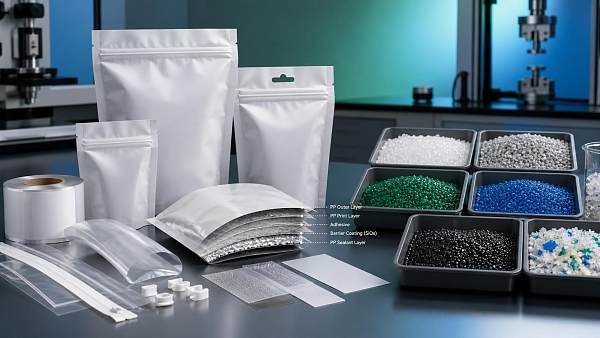
Adhesives, inks, barrier layers, seals, and labels can all affect whether a compostable claim remains defensible.
This is especially relevant in packaging systems where protection, traceability, and visual performance must work together.
That is why packaging intelligence platforms such as PPCS track biodegradable cushioning, films, coatings, labels, and print systems as one connected compliance chain.
The real question is not whether a supplier says Biodegradable Packaging compostable.
The real question is what exactly was tested, under which standard, and on which final structure.
Is biodegradable the same as compostable, or is that where most mistakes begin?
Most mistakes begin there.
Biodegradable means a material can be broken down by microorganisms over time.
That statement alone says little about speed, residue, temperature, or disposal route.
Compostable is narrower.
It usually means the material disintegrates and biodegrades within a defined composting environment, while meeting limits for ecotoxicity and heavy metals.
So a material can be biodegradable without being compostable in any useful commercial sense.
It can also be industrially compostable, but unsuitable for home compost.
That difference matters for shipping cushions, pouches, labels, and laminated films.
A compostable air column film used in ecommerce may pass one lab protocol, yet fail if its valve, ink, or tape was never assessed.
More common than many expect, the marketing claim follows the base polymer while the converting details are ignored.
A fast way to separate the two claims
If the evidence stops at “biodegradable,” the claim is usually too weak for external communication.
Which standards actually support a Biodegradable Packaging compostable claim?
The most cited standards are EN 13432 in Europe and ASTM D6400 or ASTM D6868 in the United States.
They are not interchangeable in every detail, but they aim at similar proof points.
Those proof points usually include biodegradation, disintegration, compost quality, and controlled limits for hazardous substances.
For paper-based structures, other test routes may also apply.
Still, the central discipline remains the same: test the article that goes to market, not only its main substrate.
That point becomes critical in high-barrier and decorated packaging.
A film may look compliant until metallization, cold seal, pressure-sensitive label stock, or thermal transfer print enters the structure.
PPCS often frames this as a systems question.
The polymer, coating chemistry, adhesive balance, and data-marking layer should be reviewed together.
What should be present in the technical file?
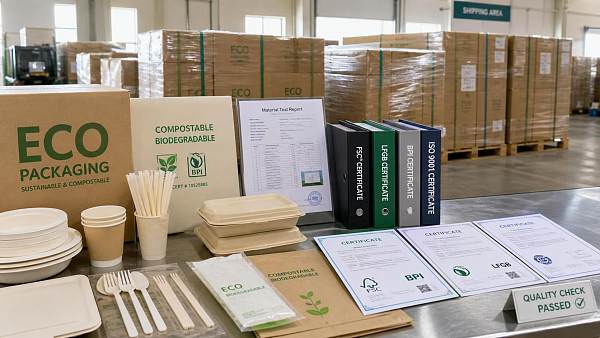
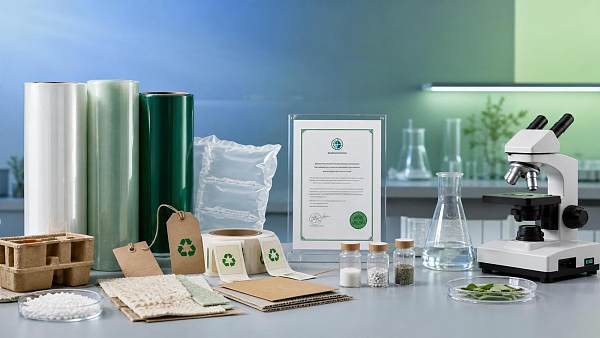
- Named standard and edition, not a generic “tested to compostability requirements.”
- Certificate scope showing whether it covers resin, film, ink, adhesive, or final pack.
- Laboratory or certification body details and expiry status.
- Statement on industrial composting versus home composting.
- Change-control note for formulation, thickness, print coverage, and laminate structure.
Without that file, Biodegradable Packaging compostable remains a sales phrase, not a controlled claim.
Can a compostable pack still fail in real distribution and storage?
Yes, and the failure mode is not always degradation.
Often it is performance drift before disposal.
Barrier loss, seal weakness, curl, print rub, delamination, or label detachment can appear first.
This is where compliance and protection have to be balanced carefully.
A compostable cushioning format may be suitable for short-cycle ecommerce, but not for export lanes with humidity shocks.
A compostable pouch may suit dry goods, but not oxygen-sensitive products requiring aggressive barrier performance.
In actual operations, a claim is only useful if the package survives handling, scanning, warehousing, and delivery.
That includes printed identifiers.
If the thermal ribbon or ink system smears, traceability risk can outweigh environmental messaging.
A practical judgment table before approval
Where do teams most often get Biodegradable Packaging compostable claims wrong?
The first mistake is treating material identity as claim identity.
PLA, PBAT, starch blends, paper composites, and coated fibers all need structure-specific review.
The second mistake is ignoring local end-of-life reality.
Industrial compostability has limited value if collection infrastructure is absent where the pack is sold.
The third mistake is underestimating the “minor” components.
Tie layers, release coatings, anti-counterfeit labels, tamper features, and decorative foils can all disrupt a clean claim.
Another frequent issue is uncontrolled wording.
Saying “eco-friendly” or “earth-safe” may appear softer, but it often increases ambiguity rather than reducing it.
A narrower, evidenced statement is safer than a broad emotional one.
Common red flags worth stopping early
- Certificate issued for raw pellets, while the sold item is printed, laminated, and sealed.
- Supplier declaration has no reference number, no date, and no standard edition.
- Home compost wording appears without home compost evidence.
- Marketing text promises full decomposition in soil or ocean without specific proof.
- No retesting plan after changing ink load, adhesive grade, or film thickness.
How should a verification workflow look before a claim reaches packaging artwork?
A usable workflow starts with the final article, not the brochure.
Map every material layer and every converting input.
Then link each one to evidence, restrictions, and revision control.
That may sound basic, but it prevents most downstream disputes.
A strong process usually includes four checks.
- Confirm the disposal route the claim refers to, and whether that route exists in the target market.
- Verify standard coverage for the finished packaging structure, including print and closure elements.
- Run fit-for-purpose tests for transport, shelf life, code readability, and tamper performance.
- Approve exact on-pack wording, symbols, and supporting documents under document control.
This is where a broader packaging view helps.
PPCS, for example, treats coatings, labels, cushioning, and data-marking as interacting functions, not isolated purchases.
That mindset is useful whenever Biodegradable Packaging compostable must coexist with barrier demands and traceability rules.
What is the clearest next step when the claim looks promising but the evidence still feels thin?
Do not reject the format too early, but do not approve the wording too early either.
Start by narrowing the claim to what is already proven.
If only industrial compostability is documented, say that and avoid broader language.
If only the substrate is certified, hold the full-pack claim until the converting layers are checked.
Then build a short gap list.
Ask for missing certificates, version dates, formulation boundaries, and final article test scope.
Where distribution conditions are demanding, add transport and performance trials before artwork release.
The best Biodegradable Packaging compostable programs are disciplined, not dramatic.
They translate environmental intent into controlled language, verified structure data, and disposal instructions that real systems can support.
That is the safer route for packaging that must protect products, preserve identity, and still align with changing standards.
Recommended News
 Aug 27, 2026Where to find packaging specification resources for compliance checksPackaging specification resources: discover trusted regulations, test standards, and supplier documents to streamline compliance checks, reduce risk, and approve packaging confidently.
 Aug 22, 2026How to verify whether recyclable flexible packaging in Europe meets PPWR expectationsRecyclable flexible packaging Europe: learn how to verify PPWR readiness, assess sorting and barrier performance, and avoid weak claims with a practical evaluation framework.
 Aug 16, 2026China Enforces Eco-Environment Code, Raising Export Packaging Compliance RequirementsChina enforces its Eco-Environment Code, tightening export packaging compliance for food, FMCG, e-commerce, and pharma. Learn the new risks, certification checks, and sourcing actions now.
 Aug 05, 2026Packaging Compliance in North America: Which Labels and Material Rules Matter Most?Packaging compliance North America explained: learn the label, bilingual, material, recyclability, and EPR rules that matter most to reduce risk and speed market access.
 Jul 14, 2026Packaging Compliance Materials Guide for Plastic Ban ReadinessPackaging compliance materials guide for plastic-ban readiness: compare films, labels, cushioning, and print systems to reduce risk, protect performance, and stay ahead of changing regulations.
 Jul 13, 2026Biodegradable Packaging Compostable: Key Claims, Standards, and Common MistakesBiodegradable Packaging compostable explained: learn the key differences, standards, compliance checks, and common claim mistakes before choosing or marketing sustainable packaging.
 Jul 10, 2026How Mono Material Packaging Affects Recyclability and Shelf AppealMono material packaging can improve recyclability without sacrificing shelf appeal. Discover key trade-offs, hidden risks, and practical evaluation tips for smarter packaging decisions.
 Jul 04, 2026Mono Material Packaging Europe: What Changes Under New Recycling RulesMono material packaging Europe is rapidly becoming a compliance and cost priority. Learn how new EU recycling rules reshape packaging design, market access, and competitive advantage.
 Jul 01, 2026Mono Material Flexible Packaging: When It Works and Where It Falls ShortMono material flexible packaging explained: discover where it improves recyclability and efficiency, where barrier and machinability limits remain, and how to judge the right fit.
 Jun 29, 2026Compostable Sustainable Packaging in 2026: What Regulations and Costs Are ChangingCompostable sustainable packaging in 2026 is being reshaped by stricter regulations and shifting costs. Learn where it fits, what compliance demands, and how to choose smarter, scalable packaging strategies.
 Jun 28, 2026PPWR Packaging Europe: What Changes for Packaging Specs in 2026PPWR packaging Europe in 2026 will reshape packaging specs across films, labels, adhesives, and cushioning. Learn the key compliance shifts, risks, and smart actions brands should take now.
 Jun 25, 2026Mono-Material Recyclable Science Explained for Practical Packaging DesignMono-material recyclable science explained for practical packaging design. Learn how to balance recyclability, barrier performance, compliance, and cost with smarter material choices.
 Jun 24, 2026Packaging Compliance Resources for PPWR and Plastic Ban ReadinessPackaging compliance resources for PPWR and plastic ban readiness: learn how to assess materials, labeling, recyclability, and supplier data to reduce risk and stay market-ready.
 Jun 21, 2026Sustainable Packaging Materials Certification: What Standards Matter in 2026Sustainable packaging materials certification in 2026: learn which standards truly matter for recyclability, compostability, fiber sourcing, and compliance to reduce risk and choose smarter packaging.
 Jun 21, 2026How to Evaluate PLA PBAT Packaging for Cost, Strength, and CompliancePLA PBAT packaging evaluation starts with real cost, strength, and compliance. Learn how to compare suppliers, reduce sourcing risk, and choose packaging that performs.
 Jun 20, 2026Sustainable Packaging Materials Trends Shaping 2026 Compliance PlansSustainable packaging materials are redefining 2026 compliance plans. Explore key trends, risks, and smart material choices that improve recyclability, traceability, and cost control.
 Jun 16, 2026Sustainable Packaging Science and the 2026 Compliance ShiftSustainable packaging science is reshaping 2026 compliance, helping brands balance recyclability, protection, traceability, and cost before new rules tighten.
 Jun 12, 2026How PLA Biodegradable Packaging Performs Under New Plastic Ban RulesPLA biodegradable packaging under new plastic ban rules: explore where it delivers compliance, protection, and cost efficiency—and where smart packaging design still matters.
 Jun 11, 2026Vietnam Requires ISPM15 and REACH Declarations for ImportsVietnam Requires ISPM15 and REACH Declarations for Imports from July 1, 2026. Learn how the new packaging compliance rule may impact customs clearance, costs, and shipment planning.
 Jun 10, 2026EU PPWR Rule Takes Effect July 1: Recyclability Proof Required for BOPP/PET Film ExportsEU PPWR rule takes effect July 1, requiring recyclability proof for BOPP/PET film exports. Learn compliance risks, EN 13432 or ISO 14855 document needs, and how to avoid EU customs delays.
 Jun 06, 2026Green Packaging Becomes an EU Market Entry RuleGreen packaging is becoming a real EU market entry rule. Learn how BOPP Barrier Films, Stretch Wrap Films, and RFID Smart Labels exporters can meet new compliance, certification, and packaging cost requirements.
![]() Jun 06, 2026Peru Tightens Mandatory Compliance for Food PackagingPeru Tightens Mandatory Compliance for Food Packaging: learn how WTO notice G/TBT/N/PER/178 may affect exporters, importers, and food-contact packaging supply chains.
Jun 06, 2026Peru Tightens Mandatory Compliance for Food PackagingPeru Tightens Mandatory Compliance for Food Packaging: learn how WTO notice G/TBT/N/PER/178 may affect exporters, importers, and food-contact packaging supply chains.![]() Jun 03, 2026Mono-Material Recyclable Packaging Under PPWDMono-material recyclable packaging helps brands meet PPWD/PPWR demands, cut compliance risk, and protect performance—learn how to redesign smarter for EU markets.
Jun 03, 2026Mono-Material Recyclable Packaging Under PPWDMono-material recyclable packaging helps brands meet PPWD/PPWR demands, cut compliance risk, and protect performance—learn how to redesign smarter for EU markets. Jun 02, 2026Sustainable Packaging Science for PPWD Risk PlanningSustainable packaging science helps brands plan PPWD risks, compare films, labels, cushioning and foils, and build compliant packaging that protects trust and cost.