Search News
Industry Portal
Hot Articles
- EU PPWR Rule Takes Effect for BOPP Barrier FilmsEU PPWR rule now reshapes BOPP barrier films in the EU market. Learn mandatory labeling, recyclability, traceability, and customs compliance risks before exports are delayed.
- Packaging Compliance in North America: Which Labels and Material Rules Matter Most?Packaging compliance North America explained: learn the label, bilingual, material, recyclability, and EPR rules that matter most to reduce risk and speed market access.
- EU PPWR Rules Now Apply to BOPP Barrier Film LabelsEU PPWR rules now apply to BOPP barrier film labels. Learn the new EU labeling, recyclability, and material disclosure requirements to avoid customs delays, fines, and compliance risks.
Popular Tags
Sustainable Packaging Materials Trends Shaping 2026 Compliance Plans
Time
Click Count
As 2026 compliance deadlines approach, sustainable packaging materials are no longer a side topic in brand communication. They now shape risk control, material selection, logistics efficiency, and long-term cost planning across global packaging decisions.
The pressure comes from several directions at once. Rules are tightening, recyclability claims face more scrutiny, and packaging must still protect products, preserve appearance, and move smoothly through automated supply chains.
That is why sustainable packaging materials matter far beyond retail image. In practice, they connect polymer science, labeling performance, cushioning design, data traceability, and the economics of compliance.
Why 2026 changes the conversation
For years, many packaging teams treated sustainability as a gradual transition. By 2026, that mindset becomes harder to defend because regulatory frameworks increasingly ask for measurable design choices, not broad environmental promises.
In Europe, PPWR discussions have accelerated expectations around recyclability, material reduction, and packaging waste accountability. Similar pressure appears in extended producer responsibility schemes, plastic taxes, and disclosure rules in other markets.
This means sustainable packaging materials must be evaluated as compliance assets. A film, label, ribbon, or cushioning format now carries legal, operational, and financial consequences.
The practical question is not whether a material sounds greener. The real issue is whether it supports collection, sorting, recovery, traceability, and reliable product protection at commercial scale.
What counts as sustainable packaging materials now
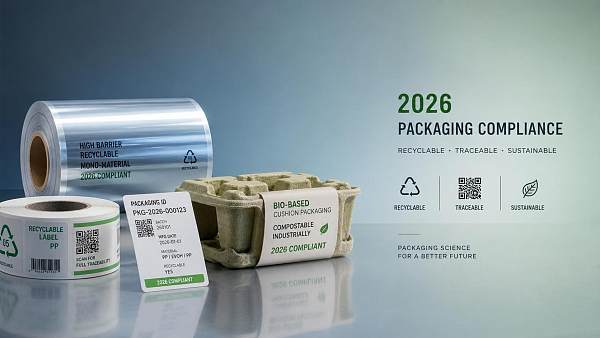
The term covers more than compostable paper or recycled plastic. In current packaging strategy, sustainable packaging materials include structures designed to reduce waste, improve recyclability, lower material intensity, and maintain performance under real distribution conditions.
Sometimes that means mono-material packaging. In other situations, it means downgauged high-barrier films, water-based adhesive systems, biodegradable cushioning, or labels engineered to avoid disrupting recycling streams.
A useful definition is performance with lower system impact. If a package uses less material, survives transport, protects data integrity, and fits recovery infrastructure, it usually creates stronger compliance value than a simple material swap.
The material trends reshaping compliance plans
Mono-material and downgauged film structures
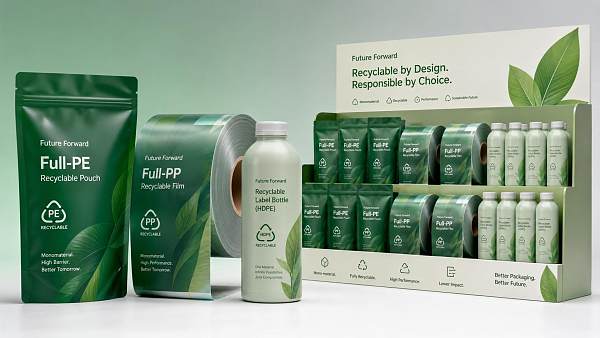
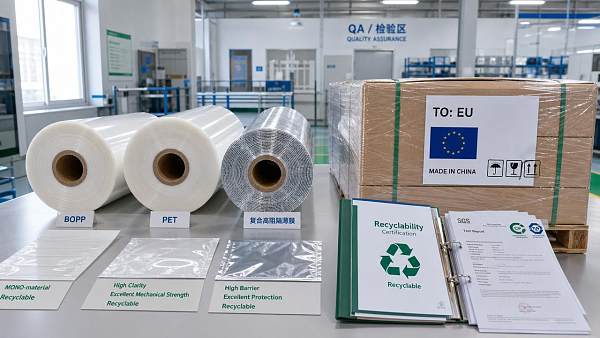
High-barrier BOPP and PET films remain central to food, electronics, and consumer goods packaging. The trend is moving toward thinner structures and designs that simplify recycling without sacrificing tensile strength or moisture protection.
For compliance planning, lightweighting is attractive because it cuts material use and transport weight at the same time. Yet the decision only works when sealing, machinability, and shelf-life performance remain stable.
Labels and adhesives that support recovery
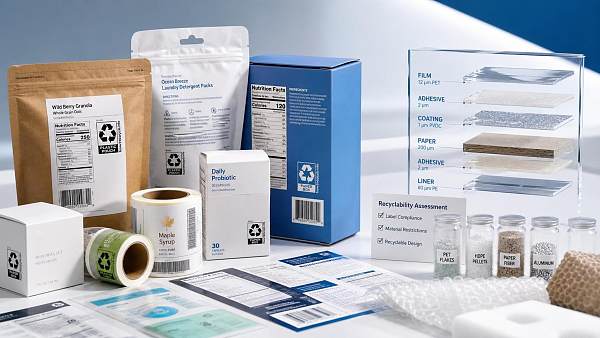
Labels are often overlooked in sustainability reviews. However, pressure-sensitive adhesives, release systems, and tamper-evident constructions can affect recycling outcomes, wash-off behavior, and packaging traceability.
This is especially relevant in pharmaceutical, luxury, and cold-chain sectors. Anti-counterfeit labels still need to deliver security, but they increasingly must align with eco-design expectations and recycling compatibility.
Biodegradable and fiber-based cushioning alternatives
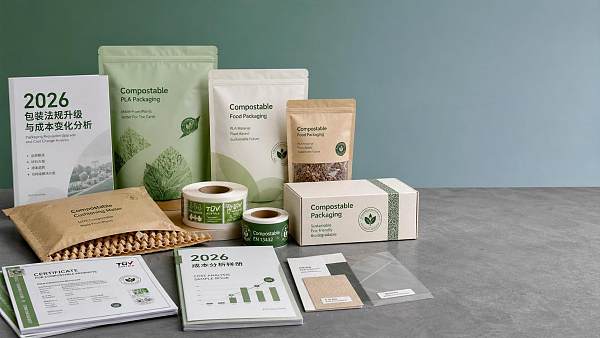
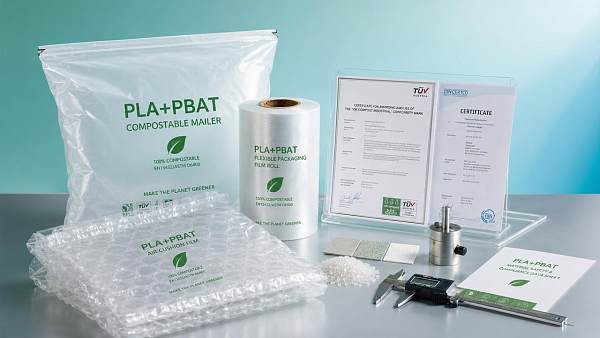
Protective packaging is under pressure where expanded foam once dominated. PLA/PBAT air columns, molded alternatives, and honeycomb kraft structures are gaining attention because they can reduce conventional plastic dependence while preserving drop protection.
Still, biodegradability alone is not enough. Businesses need to confirm disposal pathways, compression strength, storage stability, and the total shipping footprint created by replacement formats.
Traceability materials with longer compliance value
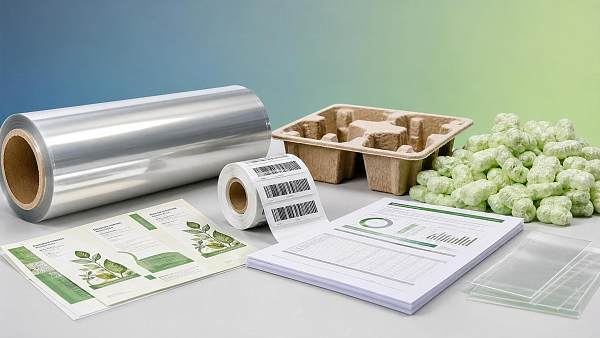
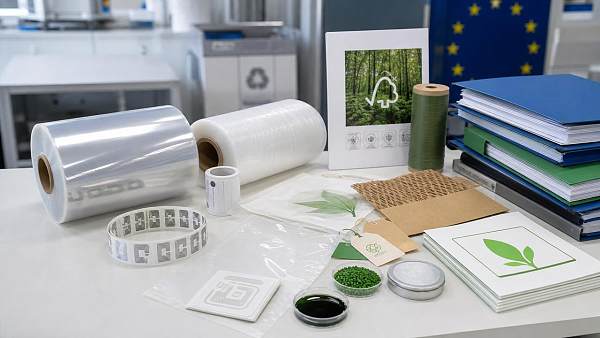
Thermal transfer ribbons and durable inks are becoming more strategic. Sustainable packaging materials must also preserve data quality because unreadable codes can create waste, returns, relabeling, and regulatory exposure.
In high-volume logistics, material sustainability and digital traceability now belong in the same discussion. A recyclable package with poor barcode durability is still an operational failure.
Where these trends matter most
The compliance impact of sustainable packaging materials varies by product category. High-value goods, sensitive goods, and fast-moving goods each place different demands on films, coatings, labels, and cushioning.
This cross-industry view explains why packaging decisions can no longer be isolated by procurement category. Sustainable packaging materials influence product safety, machine uptime, claim credibility, and post-use recovery all at once.
How to evaluate material choices in real business terms
The most reliable assessments compare total system performance rather than unit price alone. A lower-cost substrate may create higher compliance costs if it increases waste, fails in logistics, or complicates recycling declarations.
This is where material intelligence becomes important. PPCS tracks the interaction between coating chemistry, film orientation, security labeling, cushioning behavior, and code durability because these details often determine whether a compliance plan survives operational reality.
- Check whether the structure reduces material mass without reducing product protection.
- Review recyclability by component, not only by the main substrate.
- Test labels, inks, and ribbons under real transport and storage conditions.
- Compare disposal assumptions with the infrastructure of target markets.
- Quantify freight, damage, relabeling, and tax exposure together.
In many cases, the smartest route is not a dramatic material replacement. It may be a thinner stretch film, a recyclable label construction, or a cushioning redesign that lowers total impact without disrupting operations.
Signals worth watching through 2026
Several signals are likely to influence the next wave of sustainable packaging materials decisions. The first is evidence quality. Claims will need more technical backing, especially where recycled content, compostability, or recyclability are used in market-facing statements.
The second is design simplification. Multi-layer complexity may remain necessary in some high-barrier uses, but pressure will keep building toward structures that are easier to classify, recover, and explain.
The third is integration of physical and digital protection. Security labels, durable ribbons, and anti-counterfeit coatings are becoming part of sustainability thinking because product loss, diversion, and relabeling all create hidden waste.
A final signal is cost discipline. Compliance planning will favor sustainable packaging materials that improve both environmental outcomes and capital efficiency, especially where downgauging or optimized consumables deliver measurable savings.
A practical path forward
A strong 2026 plan begins with mapping packaging components by risk, not by habit. Films, labels, cushioning, inks, and decorative layers should be reviewed as a connected system rather than separate sourcing lines.
Then compare each component against a short set of decision filters: regulatory fit, recovery compatibility, protection performance, automation readiness, and total delivered cost. This usually reveals where sustainable packaging materials create real leverage.
The companies that move well are not simply buying greener inputs. They are building packaging portfolios that protect products, preserve data integrity, support brand presentation, and reduce compliance friction across markets.
For the next step, it is worth reviewing current packaging formats against likely 2026 obligations, then prioritizing the materials with the highest exposure or the fastest payback. That approach turns sustainable packaging materials from a vague objective into a workable decision framework.
Recommended News
 Aug 05, 2026Packaging Compliance in North America: Which Labels and Material Rules Matter Most?Packaging compliance North America explained: learn the label, bilingual, material, recyclability, and EPR rules that matter most to reduce risk and speed market access.
 Jul 14, 2026Packaging Compliance Materials Guide for Plastic Ban ReadinessPackaging compliance materials guide for plastic-ban readiness: compare films, labels, cushioning, and print systems to reduce risk, protect performance, and stay ahead of changing regulations.
 Jul 13, 2026Biodegradable Packaging Compostable: Key Claims, Standards, and Common MistakesBiodegradable Packaging compostable explained: learn the key differences, standards, compliance checks, and common claim mistakes before choosing or marketing sustainable packaging.
 Jul 10, 2026How Mono Material Packaging Affects Recyclability and Shelf AppealMono material packaging can improve recyclability without sacrificing shelf appeal. Discover key trade-offs, hidden risks, and practical evaluation tips for smarter packaging decisions.
 Jul 04, 2026Mono Material Packaging Europe: What Changes Under New Recycling RulesMono material packaging Europe is rapidly becoming a compliance and cost priority. Learn how new EU recycling rules reshape packaging design, market access, and competitive advantage.
 Jul 01, 2026Mono Material Flexible Packaging: When It Works and Where It Falls ShortMono material flexible packaging explained: discover where it improves recyclability and efficiency, where barrier and machinability limits remain, and how to judge the right fit.
 Jun 29, 2026Compostable Sustainable Packaging in 2026: What Regulations and Costs Are ChangingCompostable sustainable packaging in 2026 is being reshaped by stricter regulations and shifting costs. Learn where it fits, what compliance demands, and how to choose smarter, scalable packaging strategies.
 Jun 28, 2026PPWR Packaging Europe: What Changes for Packaging Specs in 2026PPWR packaging Europe in 2026 will reshape packaging specs across films, labels, adhesives, and cushioning. Learn the key compliance shifts, risks, and smart actions brands should take now.
 Jun 25, 2026Mono-Material Recyclable Science Explained for Practical Packaging DesignMono-material recyclable science explained for practical packaging design. Learn how to balance recyclability, barrier performance, compliance, and cost with smarter material choices.
 Jun 24, 2026Packaging Compliance Resources for PPWR and Plastic Ban ReadinessPackaging compliance resources for PPWR and plastic ban readiness: learn how to assess materials, labeling, recyclability, and supplier data to reduce risk and stay market-ready.
 Jun 21, 2026Sustainable Packaging Materials Certification: What Standards Matter in 2026Sustainable packaging materials certification in 2026: learn which standards truly matter for recyclability, compostability, fiber sourcing, and compliance to reduce risk and choose smarter packaging.
 Jun 21, 2026How to Evaluate PLA PBAT Packaging for Cost, Strength, and CompliancePLA PBAT packaging evaluation starts with real cost, strength, and compliance. Learn how to compare suppliers, reduce sourcing risk, and choose packaging that performs.
 Jun 20, 2026Sustainable Packaging Materials Trends Shaping 2026 Compliance PlansSustainable packaging materials are redefining 2026 compliance plans. Explore key trends, risks, and smart material choices that improve recyclability, traceability, and cost control.
 Jun 16, 2026Sustainable Packaging Science and the 2026 Compliance ShiftSustainable packaging science is reshaping 2026 compliance, helping brands balance recyclability, protection, traceability, and cost before new rules tighten.
 Jun 12, 2026How PLA Biodegradable Packaging Performs Under New Plastic Ban RulesPLA biodegradable packaging under new plastic ban rules: explore where it delivers compliance, protection, and cost efficiency—and where smart packaging design still matters.
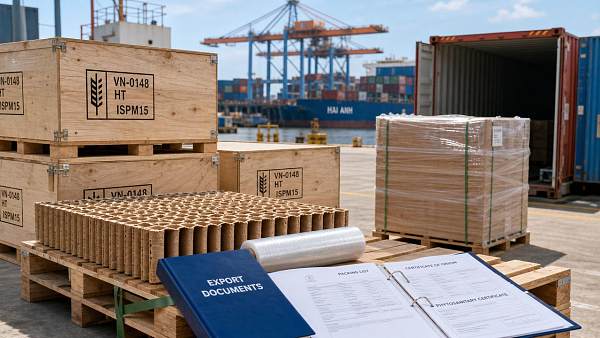
 Jun 11, 2026Vietnam Requires ISPM15 and REACH Declarations for ImportsVietnam Requires ISPM15 and REACH Declarations for Imports from July 1, 2026. Learn how the new packaging compliance rule may impact customs clearance, costs, and shipment planning.
 Jun 10, 2026EU PPWR Rule Takes Effect July 1: Recyclability Proof Required for BOPP/PET Film ExportsEU PPWR rule takes effect July 1, requiring recyclability proof for BOPP/PET film exports. Learn compliance risks, EN 13432 or ISO 14855 document needs, and how to avoid EU customs delays.
 Jun 06, 2026Green Packaging Becomes an EU Market Entry RuleGreen packaging is becoming a real EU market entry rule. Learn how BOPP Barrier Films, Stretch Wrap Films, and RFID Smart Labels exporters can meet new compliance, certification, and packaging cost requirements.
![]() Jun 06, 2026Peru Tightens Mandatory Compliance for Food PackagingPeru Tightens Mandatory Compliance for Food Packaging: learn how WTO notice G/TBT/N/PER/178 may affect exporters, importers, and food-contact packaging supply chains.
Jun 06, 2026Peru Tightens Mandatory Compliance for Food PackagingPeru Tightens Mandatory Compliance for Food Packaging: learn how WTO notice G/TBT/N/PER/178 may affect exporters, importers, and food-contact packaging supply chains.![]() Jun 03, 2026Mono-Material Recyclable Packaging Under PPWDMono-material recyclable packaging helps brands meet PPWD/PPWR demands, cut compliance risk, and protect performance—learn how to redesign smarter for EU markets.
Jun 03, 2026Mono-Material Recyclable Packaging Under PPWDMono-material recyclable packaging helps brands meet PPWD/PPWR demands, cut compliance risk, and protect performance—learn how to redesign smarter for EU markets. Jun 02, 2026Sustainable Packaging Science for PPWD Risk PlanningSustainable packaging science helps brands plan PPWD risks, compare films, labels, cushioning and foils, and build compliant packaging that protects trust and cost.
 Jun 01, 2026Sustainable Packaging Materials Certification in 2026Sustainable packaging materials certification in 2026 helps buyers verify claims, reduce sourcing risk, meet regulations, and choose credible films, labels, cushioning, and foils.
 May 31, 2026Sustainable Packaging Materials Under 2026 PPWD RulesSustainable packaging materials guide for 2026 PPWD rules: compare recyclable films, cushioning, labels and inks to cut compliance risk, waste fees and protect product performance.
 May 28, 2026PLA PBAT Packaging in 2026: Compliance Risks and Material LimitsPLA PBAT packaging in 2026 faces tighter compliance checks, compostability limits, and real performance trade-offs. Discover key risks, best-fit uses, and smarter packaging decisions.