Search News
Industry Portal
Hot Articles
- How adhesive labels hold up in cold chain shipping conditionsAdhesive Labels cold chain performance depends on more than freezer rating. Learn how adhesion, print durability, condensation, and substrate choice affect reliable shipping.
- When do high strength cast films outperform blown film in pallet wrapping?High strength cast films outperform blown film in pallet wrapping when pre-stretch efficiency, load stability, and downgauging matter most. Learn when they cut film use and boost uptime.
- How to evaluate barrier film suppliers in Europe for food packagingBarrier film Europe sourcing made practical: learn how to assess food packaging suppliers on barrier performance, compliance, machinability, and total cost before you buy.
Popular Tags
How Mono Material Packaging Affects Recyclability and Shelf Appeal
Time
Click Count
Why is mono material packaging getting so much attention now?
Mono material packaging has moved from a design preference to a business issue.
The reason is simple. Recycling systems work better when packs use one dominant material stream.
At the same time, shelves have become more competitive, both in stores and in digital product thumbnails.
That puts pressure on packaging to do two jobs well.
It must support recyclability, and it must still deliver strong shelf appeal.
This is why mono material packaging matters across food, personal care, electronics, logistics, and healthcare.
In practical terms, it reduces material complexity.
That makes sorting, washing, and reprocessing more realistic at industrial scale.
From the brand side, cleaner structures often improve print consistency, finishing control, and pack appearance.
PPCS tracks this shift closely because material choices rarely end with the film alone.
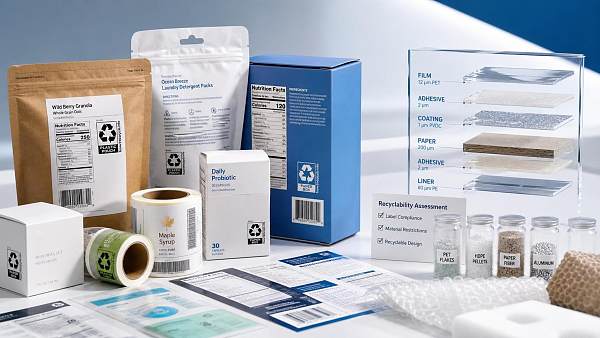
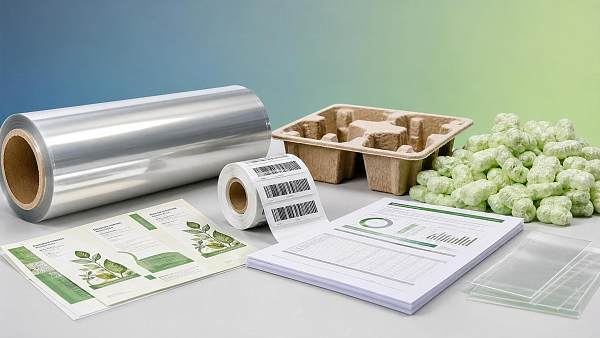
Labels, barrier coatings, thermal transfer marks, cushioning formats, and decorative foils all affect the final result.
So the real question is not whether mono material packaging is attractive.
It is whether the full pack structure can meet recovery rules without losing product protection or visual impact.
What exactly counts as mono material packaging in real applications?
Many people assume mono material packaging means a package made from only one substance with no exceptions.
That is too narrow for real production.
More often, it means the pack is designed around one recyclable base family.
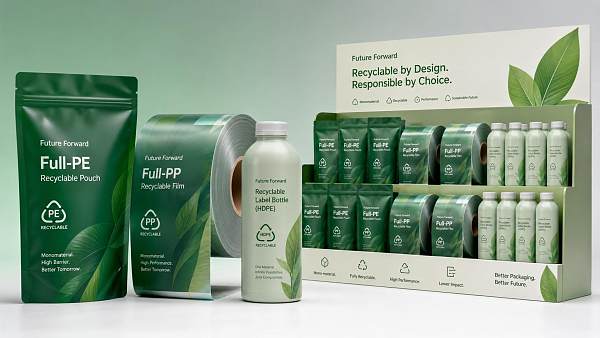
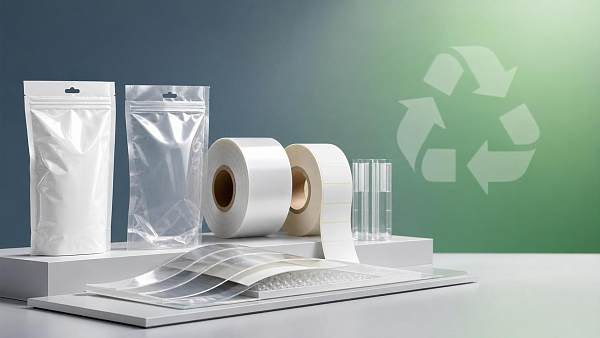
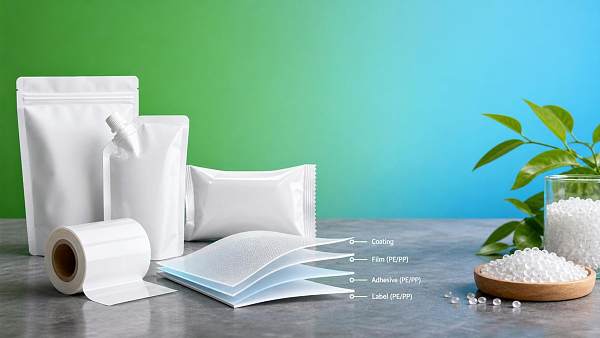
Common examples include all-PE pouches or all-PP flexible structures.
The supporting layers, inks, adhesives, and labels still matter, but they should not disrupt recycling performance.
This is where confusion usually appears.
A package may look simple, yet contain incompatible laminations, metallized layers, or adhesive systems that reduce recyclability.
In flexible packaging, the challenge is even sharper.
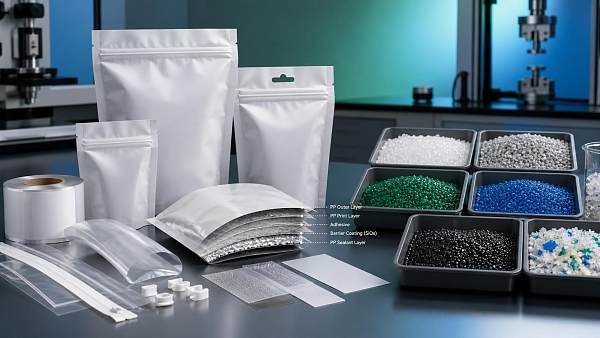
Traditional high-barrier formats often combine PET, PE, foil, and multiple coatings for strength and protection.
Mono material packaging tries to keep performance while reducing those mixed structures.
That may involve high-barrier PE films, compatible coatings, downgauged films, or wash-off label systems.
PPCS often frames this as a systems question.
The film, coating chemistry, print layer, and identification marks must work together, not against each other.
A quick way to judge the structure
Does better recyclability automatically mean weaker shelf appeal?
Not necessarily, and that is one of the biggest misconceptions.
Well-designed mono material packaging can actually sharpen shelf presence.
A simplified structure often creates cleaner surfaces for graphics and more stable converting results.
That improves color control, register accuracy, and visual consistency across production runs.
In retail, consistency matters almost as much as creativity.
If every pack on shelf looks slightly different, the brand loses trust cues.
Mono material packaging can support a more disciplined visual language.
Still, there are tradeoffs.
Some premium effects rely on multi-material decoration, such as heavy foil layers or incompatible laminates.
The better approach is to redesign the effect, not force the old structure into a new sustainability claim.
For example, brands may shift toward tactile coatings, selective gloss, optimized white layers, or recyclable label stocks.
Thermal transfer readability also deserves attention in logistics-heavy sectors.
If package redesign causes barcode failure, operational value disappears fast.
That is why PPCS looks at shelf appeal and traceable data marking as part of the same packaging decision.
Where does mono material packaging work best, and where is it still difficult?
Mono material packaging performs well when the product needs moderate barrier and high volume efficiency.
It is increasingly common in dry foods, household products, e-commerce mailers, and secondary packaging formats.
It also fits applications where downgauging can reduce material use without hurting handling strength.
The harder cases usually involve extreme oxygen sensitivity, long shelf life, or severe temperature exposure.
Medical, premium cosmetics, and some export food formats often sit in this zone.
There, the barrier package is not just branding.
It is the product’s physical armor.
That said, difficulty does not mean the idea should be rejected.
It means the transition should be evidence-based.
- Check barrier needs against actual shelf-life data, not legacy assumptions.
- Review whether anti-counterfeit labels remain compatible with the new substrate.
- Test sealing windows, puncture resistance, and print durability under transport stress.
- Confirm whether eco-friendly cushioning and outer packaging use the same recovery logic.
This broader view matters because recyclability claims are judged on the total pack experience, not one film specification.
What risks are often missed when switching to mono material packaging?
The first risk is assuming regulatory alignment without checking local recycling reality.
A pack can be designed for recyclability and still face limited collection or sorting infrastructure.
The second risk is performance drift.
When moving away from mixed laminates, seal integrity, stiffness, and aroma protection may change.
That can affect product waste, returns, and retail presentation.
Another frequent issue is hidden incompatibility in labels and decorative layers.
Tamper evidence, security adhesives, and metallic effects are valuable, but they need redesign discipline.
PPCS sees this often in sectors where brand protection and visual premium cues are non-negotiable.
The answer is rarely to strip them out completely.
It is to choose compatible constructions and test them in full packaging workflows.
Cost is the final blind spot.
Material simplification can reduce long-term complexity, yet trial costs, line tuning, and artwork updates still need budget.
A sound transition model weighs total cost of ownership, not only unit film price.
How should a company evaluate mono material packaging before making a change?
A practical review starts with four questions.
What must the package protect, what must it communicate, how will it be recovered, and what can operations tolerate?
These questions keep the discussion grounded.
They also prevent mono material packaging from becoming a purely symbolic project.
In many cases, the strongest results come from phased conversion.
Start with formats where recycling gains are clear and barrier risk is manageable.
Then expand after line data, shelf tests, and distribution feedback confirm the structure.
So what is the practical takeaway?
Mono material packaging is not just a materials trend.
It is a packaging strategy that links compliance, recoverability, product protection, and visual performance.
When it works, it simplifies recycling pathways and strengthens brand presentation at the same time.
When it is handled poorly, it creates weak claims, unstable conversion, and avoidable redesign costs.
The better path is to judge mono material packaging as a full system.
That includes films, coatings, labels, markings, and decorative effects.
PPCS approaches the market from that exact systems view, where polymer physics, coating chemistry, and shelf communication all meet.
A sensible next step is to map current pack structures, flag incompatible elements, and compare redesign options by barrier need, visual goals, and recovery fit.
That process usually reveals which formats are ready for mono material packaging now, and which still need technical development.
Recommended News
 Aug 22, 2026How to verify whether recyclable flexible packaging in Europe meets PPWR expectationsRecyclable flexible packaging Europe: learn how to verify PPWR readiness, assess sorting and barrier performance, and avoid weak claims with a practical evaluation framework.
 Aug 16, 2026China Enforces Eco-Environment Code, Raising Export Packaging Compliance RequirementsChina enforces its Eco-Environment Code, tightening export packaging compliance for food, FMCG, e-commerce, and pharma. Learn the new risks, certification checks, and sourcing actions now.
 Aug 05, 2026Packaging Compliance in North America: Which Labels and Material Rules Matter Most?Packaging compliance North America explained: learn the label, bilingual, material, recyclability, and EPR rules that matter most to reduce risk and speed market access.
 Jul 14, 2026Packaging Compliance Materials Guide for Plastic Ban ReadinessPackaging compliance materials guide for plastic-ban readiness: compare films, labels, cushioning, and print systems to reduce risk, protect performance, and stay ahead of changing regulations.
 Jul 13, 2026Biodegradable Packaging Compostable: Key Claims, Standards, and Common MistakesBiodegradable Packaging compostable explained: learn the key differences, standards, compliance checks, and common claim mistakes before choosing or marketing sustainable packaging.
 Jul 10, 2026How Mono Material Packaging Affects Recyclability and Shelf AppealMono material packaging can improve recyclability without sacrificing shelf appeal. Discover key trade-offs, hidden risks, and practical evaluation tips for smarter packaging decisions.
 Jul 04, 2026Mono Material Packaging Europe: What Changes Under New Recycling RulesMono material packaging Europe is rapidly becoming a compliance and cost priority. Learn how new EU recycling rules reshape packaging design, market access, and competitive advantage.
 Jul 01, 2026Mono Material Flexible Packaging: When It Works and Where It Falls ShortMono material flexible packaging explained: discover where it improves recyclability and efficiency, where barrier and machinability limits remain, and how to judge the right fit.
 Jun 29, 2026Compostable Sustainable Packaging in 2026: What Regulations and Costs Are ChangingCompostable sustainable packaging in 2026 is being reshaped by stricter regulations and shifting costs. Learn where it fits, what compliance demands, and how to choose smarter, scalable packaging strategies.
 Jun 28, 2026PPWR Packaging Europe: What Changes for Packaging Specs in 2026PPWR packaging Europe in 2026 will reshape packaging specs across films, labels, adhesives, and cushioning. Learn the key compliance shifts, risks, and smart actions brands should take now.
 Jun 25, 2026Mono-Material Recyclable Science Explained for Practical Packaging DesignMono-material recyclable science explained for practical packaging design. Learn how to balance recyclability, barrier performance, compliance, and cost with smarter material choices.
 Jun 24, 2026Packaging Compliance Resources for PPWR and Plastic Ban ReadinessPackaging compliance resources for PPWR and plastic ban readiness: learn how to assess materials, labeling, recyclability, and supplier data to reduce risk and stay market-ready.
 Jun 21, 2026Sustainable Packaging Materials Certification: What Standards Matter in 2026Sustainable packaging materials certification in 2026: learn which standards truly matter for recyclability, compostability, fiber sourcing, and compliance to reduce risk and choose smarter packaging.
 Jun 21, 2026How to Evaluate PLA PBAT Packaging for Cost, Strength, and CompliancePLA PBAT packaging evaluation starts with real cost, strength, and compliance. Learn how to compare suppliers, reduce sourcing risk, and choose packaging that performs.
 Jun 20, 2026Sustainable Packaging Materials Trends Shaping 2026 Compliance PlansSustainable packaging materials are redefining 2026 compliance plans. Explore key trends, risks, and smart material choices that improve recyclability, traceability, and cost control.
 Jun 16, 2026Sustainable Packaging Science and the 2026 Compliance ShiftSustainable packaging science is reshaping 2026 compliance, helping brands balance recyclability, protection, traceability, and cost before new rules tighten.
 Jun 12, 2026How PLA Biodegradable Packaging Performs Under New Plastic Ban RulesPLA biodegradable packaging under new plastic ban rules: explore where it delivers compliance, protection, and cost efficiency—and where smart packaging design still matters.
 Jun 11, 2026Vietnam Requires ISPM15 and REACH Declarations for ImportsVietnam Requires ISPM15 and REACH Declarations for Imports from July 1, 2026. Learn how the new packaging compliance rule may impact customs clearance, costs, and shipment planning.
 Jun 10, 2026EU PPWR Rule Takes Effect July 1: Recyclability Proof Required for BOPP/PET Film ExportsEU PPWR rule takes effect July 1, requiring recyclability proof for BOPP/PET film exports. Learn compliance risks, EN 13432 or ISO 14855 document needs, and how to avoid EU customs delays.
 Jun 06, 2026Green Packaging Becomes an EU Market Entry RuleGreen packaging is becoming a real EU market entry rule. Learn how BOPP Barrier Films, Stretch Wrap Films, and RFID Smart Labels exporters can meet new compliance, certification, and packaging cost requirements.
![]() Jun 06, 2026Peru Tightens Mandatory Compliance for Food PackagingPeru Tightens Mandatory Compliance for Food Packaging: learn how WTO notice G/TBT/N/PER/178 may affect exporters, importers, and food-contact packaging supply chains.
Jun 06, 2026Peru Tightens Mandatory Compliance for Food PackagingPeru Tightens Mandatory Compliance for Food Packaging: learn how WTO notice G/TBT/N/PER/178 may affect exporters, importers, and food-contact packaging supply chains.![]() Jun 03, 2026Mono-Material Recyclable Packaging Under PPWDMono-material recyclable packaging helps brands meet PPWD/PPWR demands, cut compliance risk, and protect performance—learn how to redesign smarter for EU markets.
Jun 03, 2026Mono-Material Recyclable Packaging Under PPWDMono-material recyclable packaging helps brands meet PPWD/PPWR demands, cut compliance risk, and protect performance—learn how to redesign smarter for EU markets. Jun 02, 2026Sustainable Packaging Science for PPWD Risk PlanningSustainable packaging science helps brands plan PPWD risks, compare films, labels, cushioning and foils, and build compliant packaging that protects trust and cost.
 Jun 01, 2026Sustainable Packaging Materials Certification in 2026Sustainable packaging materials certification in 2026 helps buyers verify claims, reduce sourcing risk, meet regulations, and choose credible films, labels, cushioning, and foils.