Search News
Industry Portal
Hot Articles
- How destructible tamper evident tags prevent label removal and reuseDestructible tamper evident tags prevent label removal and reuse with visible evidence. Explore materials, adhesives, surface testing, and installation tips.
- Where to find packaging specification resources for compliance checksPackaging specification resources: discover trusted regulations, test standards, and supplier documents to streamline compliance checks, reduce risk, and approve packaging confidently.
- How adhesive labels hold up in cold chain shipping conditionsAdhesive Labels cold chain performance depends on more than freezer rating. Learn how adhesion, print durability, condensation, and substrate choice affect reliable shipping.
Popular Tags
Packaging Compliance Materials Guide for Plastic Ban Readiness
Time
Click Count
Why is a packaging compliance materials guide suddenly a board-level issue?
Plastic bans used to feel like a regional packaging problem. That is no longer true.
Today, rules on recyclability, material reduction, labeling, and traceability directly affect cost, market access, and product continuity.
A practical packaging compliance materials guide helps turn scattered regulation into a usable materials strategy.
The main challenge is not simply replacing plastic. It is choosing compliant materials without weakening barrier performance, shelf appeal, or transport protection.
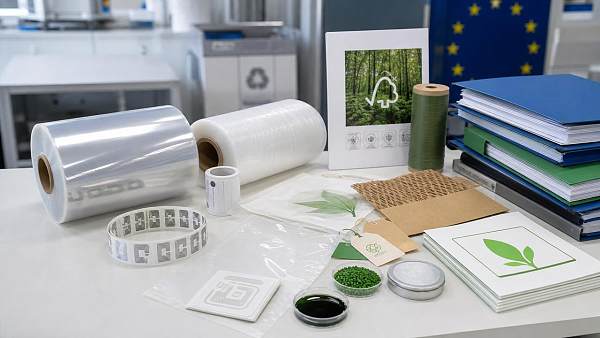
That is why high-barrier films, anti-counterfeit labels, biodegradable cushioning, and compliant print systems now sit in the same decision framework.
In practice, the smartest reviews combine regulation, polymer science, coating chemistry, and packaging economics.
PPCS tracks that intersection closely, especially where film structure, adhesives, digital identification, and eco-compliance meet real global distribution pressure.
What should a packaging compliance materials guide actually cover?
A useful guide should answer more than “Is this material banned?” That question is too narrow.
A better packaging compliance materials guide looks at five linked checks.
- Material composition: mono-material, multilayer, compostable, or mixed substrate.
- Recovery pathway: recyclable, reusable, industrially compostable, or difficult to sort.
- Functional performance: oxygen barrier, moisture barrier, puncture resistance, adhesion, and print durability.
- Regulatory exposure: PPWR readiness, local plastic taxes, EPR rules, and labeling obligations.
- Commercial fit: line speed, sourcing stability, conversion cost, and brand presentation.
This is where many packaging teams lose time. They compare materials by purchase price while missing disposal costs or redesign risk.
For example, a downgauged BOPP or PET structure may improve material efficiency, but only if barrier and machinability remain stable.
The same logic applies to labels. A tamper-evident adhesive can support compliance, yet still cause recycling issues if the facestock and adhesive system are poorly matched.
A good packaging compliance materials guide should therefore connect specification details with likely regulatory outcomes.
Which materials deserve the earliest review when plastic-ban readiness is the goal?
Not every component carries equal risk. The earliest review should focus on the materials that combine high volume with high compliance sensitivity.
High-barrier films usually come first because they often rely on layered structures that are hard to recycle.
BOPP and PET films remain critical in food, electronics, and consumer goods. They protect contents, but format choice matters.
More packaging programs are now asking whether mono-material pathways can replace complex laminates without losing shelf life.
Labels deserve equal attention. Anti-counterfeit and cold-chain labels are often essential, especially in pharmaceuticals, luxury products, and cross-border logistics.
The issue is not whether security features are needed. The issue is whether the total label system remains compatible with sorting, washing, and substrate recovery.
Cushioning materials are another common pressure point. Traditional EPS foam is increasingly exposed under plastic reduction rules and retailer sustainability screens.
That is why PLA or PBAT air columns, molded fiber, and honeycomb kraft formats are receiving more serious evaluation.
Finally, print systems should not be overlooked. Thermal transfer ribbons, inks, and decorative foils may seem secondary, yet they affect recyclability claims and data durability.
A quick screening table helps separate urgent reviews from routine checks
How do you judge compliant alternatives without sacrificing protection or brand impact?
This is usually the hardest question, because compliance and performance rarely move in a straight line together.
A packaging compliance materials guide should treat alternatives as tradeoff models, not as simple replacements.
Take high-barrier film conversion. A mono-material structure may improve recyclability, but oxygen transmission can rise if coating design is not optimized.
That matters in dry foods, personal care, and moisture-sensitive electronics.
With labels, a switch to water-based acrylic systems may strengthen compliance logic, yet line performance still depends on tack, holding power, and surface energy.
In fast labeling lines, weak adhesive balance becomes an operational problem before it becomes a sustainability success.
For cushioning, the better question is not “Is it biodegradable?” It is “Will it protect the product in the actual logistics path?”
A material that composts well but fails a 50G drop event creates waste, returns, and emissions elsewhere.
Visual finish also needs a balanced view. Hot and cold stamping can remain relevant if used with substrate-aware design and limited coverage.
The practical way to compare options is to score each one across compliance pathway, physical protection, print or decoration performance, and total cost-to-use.
Where do plastic-ban readiness programs usually go wrong?
The first mistake is relying on broad claims such as “eco,” “compostable,” or “recyclable” without checking the exact disposal context.
Industrial compostability is not the same as home compostability. Technical recyclability is not the same as collected recyclability.
Another common error is reviewing packaging components one by one, instead of as a system.
Film, adhesive, ink, ribbon, and decorative layer interact. A compliant base film can still fail overall if the coating stack creates recovery problems.
There is also a timing issue. Some teams wait for final regulation language, then rush substitution under supply pressure.
That usually increases qualification cost and limits better redesign options.
A stronger approach is to watch leading indicators early.
- Export exposure to PPWR and local plastic taxes.
- Dependency on multilayer or hard-to-sort formats.
- Use of labels or foils that interfere with material recovery.
- High-volume packs where downgauging can change economics quickly.
- Traceability obligations requiring durable print and anti-tamper features.
This is one reason intelligence-led material screening has become more valuable. It connects technical detail with rule changes before the problem becomes urgent.
What does a realistic implementation path look like over the next 6 to 18 months?
A packaging compliance materials guide is most useful when it ends with execution, not theory.
Start by mapping the top packaging formats by shipment volume, regulatory exposure, and failure impact.
Then identify which packs depend on complex films, problematic labels, conventional foam, or fragile print performance.
The next step is targeted validation. Test alternatives under line speed, warehouse handling, transport stress, and end-market disposal assumptions.
In many cases, thin-gauge film optimization, mono-material redesign, compliant adhesive selection, and more durable thermal print systems can move together.
That is especially true where packaging must protect, authenticate, and communicate at the same time.
PPCS is relevant here not as a catalog, but as a reference point for the technical links between coatings, films, traceability layers, and eco-readiness.
The most effective next move is usually a structured review checklist.
- Confirm material composition and likely recovery route.
- Check barrier, cushioning, and print durability against real operating conditions.
- Review label, adhesive, and foil interactions with recyclability goals.
- Model total landed cost, including tax exposure, redesign, and line adjustment.
- Prioritize formats where compliance gains also improve packaging efficiency.
In simple terms, plastic-ban readiness works best when compliance, protection, and economics are evaluated as one packaging system.
That is the real value of a packaging compliance materials guide: clearer decisions, fewer false shortcuts, and better timing on material change.
Recommended News
 Aug 27, 2026Where to find packaging specification resources for compliance checksPackaging specification resources: discover trusted regulations, test standards, and supplier documents to streamline compliance checks, reduce risk, and approve packaging confidently.
 Aug 22, 2026How to verify whether recyclable flexible packaging in Europe meets PPWR expectationsRecyclable flexible packaging Europe: learn how to verify PPWR readiness, assess sorting and barrier performance, and avoid weak claims with a practical evaluation framework.
 Aug 16, 2026China Enforces Eco-Environment Code, Raising Export Packaging Compliance RequirementsChina enforces its Eco-Environment Code, tightening export packaging compliance for food, FMCG, e-commerce, and pharma. Learn the new risks, certification checks, and sourcing actions now.
 Aug 05, 2026Packaging Compliance in North America: Which Labels and Material Rules Matter Most?Packaging compliance North America explained: learn the label, bilingual, material, recyclability, and EPR rules that matter most to reduce risk and speed market access.
 Jul 14, 2026Packaging Compliance Materials Guide for Plastic Ban ReadinessPackaging compliance materials guide for plastic-ban readiness: compare films, labels, cushioning, and print systems to reduce risk, protect performance, and stay ahead of changing regulations.
 Jul 13, 2026Biodegradable Packaging Compostable: Key Claims, Standards, and Common MistakesBiodegradable Packaging compostable explained: learn the key differences, standards, compliance checks, and common claim mistakes before choosing or marketing sustainable packaging.
 Jul 10, 2026How Mono Material Packaging Affects Recyclability and Shelf AppealMono material packaging can improve recyclability without sacrificing shelf appeal. Discover key trade-offs, hidden risks, and practical evaluation tips for smarter packaging decisions.
 Jul 04, 2026Mono Material Packaging Europe: What Changes Under New Recycling RulesMono material packaging Europe is rapidly becoming a compliance and cost priority. Learn how new EU recycling rules reshape packaging design, market access, and competitive advantage.
 Jul 01, 2026Mono Material Flexible Packaging: When It Works and Where It Falls ShortMono material flexible packaging explained: discover where it improves recyclability and efficiency, where barrier and machinability limits remain, and how to judge the right fit.
 Jun 29, 2026Compostable Sustainable Packaging in 2026: What Regulations and Costs Are ChangingCompostable sustainable packaging in 2026 is being reshaped by stricter regulations and shifting costs. Learn where it fits, what compliance demands, and how to choose smarter, scalable packaging strategies.
 Jun 28, 2026PPWR Packaging Europe: What Changes for Packaging Specs in 2026PPWR packaging Europe in 2026 will reshape packaging specs across films, labels, adhesives, and cushioning. Learn the key compliance shifts, risks, and smart actions brands should take now.
 Jun 25, 2026Mono-Material Recyclable Science Explained for Practical Packaging DesignMono-material recyclable science explained for practical packaging design. Learn how to balance recyclability, barrier performance, compliance, and cost with smarter material choices.
 Jun 24, 2026Packaging Compliance Resources for PPWR and Plastic Ban ReadinessPackaging compliance resources for PPWR and plastic ban readiness: learn how to assess materials, labeling, recyclability, and supplier data to reduce risk and stay market-ready.
 Jun 21, 2026Sustainable Packaging Materials Certification: What Standards Matter in 2026Sustainable packaging materials certification in 2026: learn which standards truly matter for recyclability, compostability, fiber sourcing, and compliance to reduce risk and choose smarter packaging.
 Jun 21, 2026How to Evaluate PLA PBAT Packaging for Cost, Strength, and CompliancePLA PBAT packaging evaluation starts with real cost, strength, and compliance. Learn how to compare suppliers, reduce sourcing risk, and choose packaging that performs.
 Jun 20, 2026Sustainable Packaging Materials Trends Shaping 2026 Compliance PlansSustainable packaging materials are redefining 2026 compliance plans. Explore key trends, risks, and smart material choices that improve recyclability, traceability, and cost control.
 Jun 16, 2026Sustainable Packaging Science and the 2026 Compliance ShiftSustainable packaging science is reshaping 2026 compliance, helping brands balance recyclability, protection, traceability, and cost before new rules tighten.
 Jun 12, 2026How PLA Biodegradable Packaging Performs Under New Plastic Ban RulesPLA biodegradable packaging under new plastic ban rules: explore where it delivers compliance, protection, and cost efficiency—and where smart packaging design still matters.
 Jun 11, 2026Vietnam Requires ISPM15 and REACH Declarations for ImportsVietnam Requires ISPM15 and REACH Declarations for Imports from July 1, 2026. Learn how the new packaging compliance rule may impact customs clearance, costs, and shipment planning.
 Jun 10, 2026EU PPWR Rule Takes Effect July 1: Recyclability Proof Required for BOPP/PET Film ExportsEU PPWR rule takes effect July 1, requiring recyclability proof for BOPP/PET film exports. Learn compliance risks, EN 13432 or ISO 14855 document needs, and how to avoid EU customs delays.
 Jun 06, 2026Green Packaging Becomes an EU Market Entry RuleGreen packaging is becoming a real EU market entry rule. Learn how BOPP Barrier Films, Stretch Wrap Films, and RFID Smart Labels exporters can meet new compliance, certification, and packaging cost requirements.
![]() Jun 06, 2026Peru Tightens Mandatory Compliance for Food PackagingPeru Tightens Mandatory Compliance for Food Packaging: learn how WTO notice G/TBT/N/PER/178 may affect exporters, importers, and food-contact packaging supply chains.
Jun 06, 2026Peru Tightens Mandatory Compliance for Food PackagingPeru Tightens Mandatory Compliance for Food Packaging: learn how WTO notice G/TBT/N/PER/178 may affect exporters, importers, and food-contact packaging supply chains.![]() Jun 03, 2026Mono-Material Recyclable Packaging Under PPWDMono-material recyclable packaging helps brands meet PPWD/PPWR demands, cut compliance risk, and protect performance—learn how to redesign smarter for EU markets.
Jun 03, 2026Mono-Material Recyclable Packaging Under PPWDMono-material recyclable packaging helps brands meet PPWD/PPWR demands, cut compliance risk, and protect performance—learn how to redesign smarter for EU markets. Jun 02, 2026Sustainable Packaging Science for PPWD Risk PlanningSustainable packaging science helps brands plan PPWD risks, compare films, labels, cushioning and foils, and build compliant packaging that protects trust and cost.