Search News
Industry Portal
Hot Articles
- How to verify FDA compliance for packaging inks used on food packagingPackaging inks FDA compliant? Learn how to verify food-contact safety through regulatory citations, migration testing, supplier declarations, and process controls.
- When do holographic foils add value to luxury goods packaging?Packaging materials for luxury goods gain impact with holographic foils that elevate shelf appeal, authenticity, and premium unboxing—learn when this finish delivers real value.
- Can nano encryption technology stop counterfeit labels from being copied?Nano encryption technology anti counterfeit labels combine physical security, tamper evidence, and serialization to make copying harder. Explore smarter protection.
Popular Tags
Sustainable Packaging Science for PPWD Risk Planning
Time
Click Count
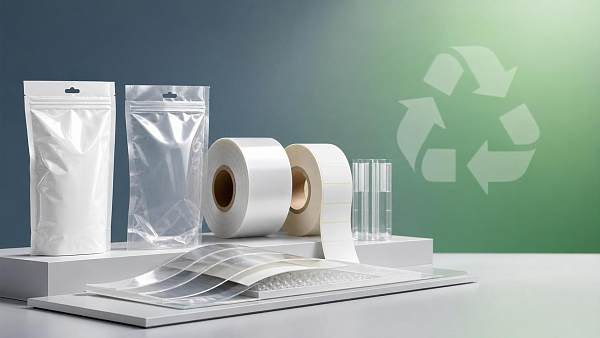
As packaging rules tighten across global markets, sustainable packaging science is becoming a board-level risk planning tool rather than a technical afterthought.
The challenge is no longer simply choosing recyclable films, biodegradable cushioning, or compliant labels.
It is aligning material performance, regulatory exposure, supply continuity, and brand trust before new packaging waste obligations reshape costs.
This article examines how sustainable packaging science helps companies anticipate PPWD-related risks, reduce uncertainty, and protect product integrity.
Why PPWD Risk Planning Now Depends on Sustainable Packaging Science
Packaging and Packaging Waste Directive requirements have evolved from waste targets into a full commercial risk system.
The direction is clear: less unnecessary packaging, stronger recyclability, higher recycled content, and better proof across supply chains.
Sustainable packaging science translates these regulatory signals into material choices, coating decisions, and measurable technical evidence.
For PPCS, this means connecting polymer stretching physics, micron-level coating chemistry, and packaging intelligence into practical risk planning.
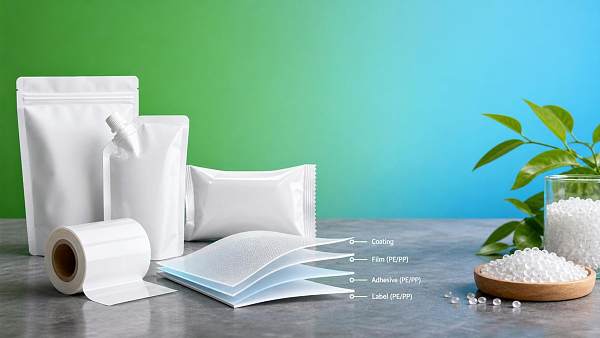
A film may appear lightweight, but fail recyclability screening because of incompatible coatings, inks, adhesives, or multilayer structures.
A label may support traceability, but create recycling contamination if the adhesive does not release during washing.
Sustainable packaging science therefore evaluates the whole pack, not a single green claim or isolated material certificate.
Scenario Background: Different Packaging Uses Create Different PPWD Risks
Risk planning must begin with the application scenario, because each packaging function creates a different compliance pressure.
Food packaging prioritizes barrier performance, hygiene, shelf life, and material contact safety.
E-commerce logistics prioritizes cushioning efficiency, label durability, void reduction, and recovery after use.
Luxury goods prioritize shelf impact, anti-counterfeit protection, tactile finishes, and controlled use of decorative foils.
Pharmaceutical packaging prioritizes traceability, tamper evidence, cold-chain survival, and data readability under harsh handling.
Sustainable packaging science helps compare these conflicting needs before regulation, cost, and performance collide.
Scenario One: High-Barrier Food Films Under Recyclability Pressure
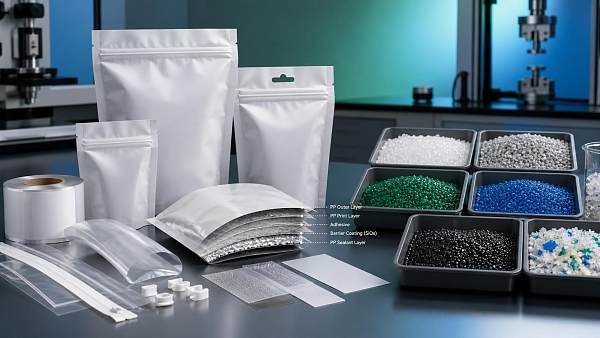
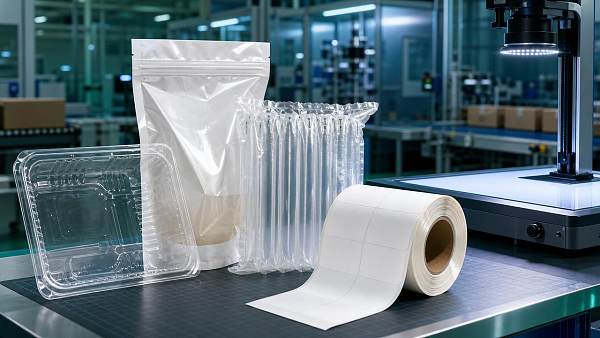
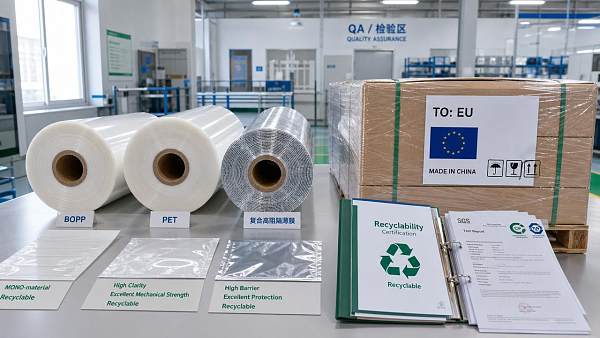
BOPP and PET films remain critical polymer jackets for snacks, dry foods, frozen goods, and moisture-sensitive products.
Their strength comes from biaxial orientation, which aligns macromolecular chains and improves tensile strength, clarity, and barrier behavior.
However, PPWD risk rises when high-barrier performance depends on mixed polymers, aluminum layers, or unrecyclable laminates.
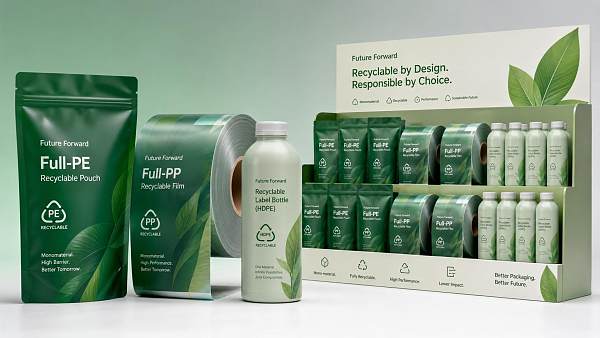
Sustainable packaging science focuses on mono-material pathways, downgauging, functional coatings, and sealant compatibility.
The core judgment is not whether film is thinner, but whether thinner film still protects shelf life.
A poor barrier substitution can increase food waste, creating a worse environmental outcome than the original structure.
Scenario Two: E-Commerce Cushioning Facing Plastic Reduction Targets
Parcel growth makes cushioning a visible target for packaging waste scrutiny.
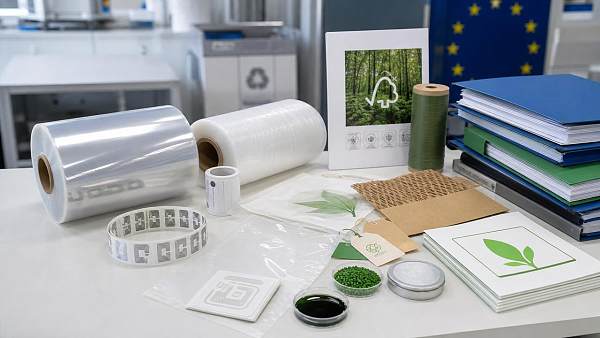
Air columns, honeycomb kraft paper, molded fiber, and biodegradable cushioning all compete against traditional EPS foam.
Sustainable packaging science evaluates compression strength, drop resistance, storage efficiency, biodegradation route, and contamination risk.
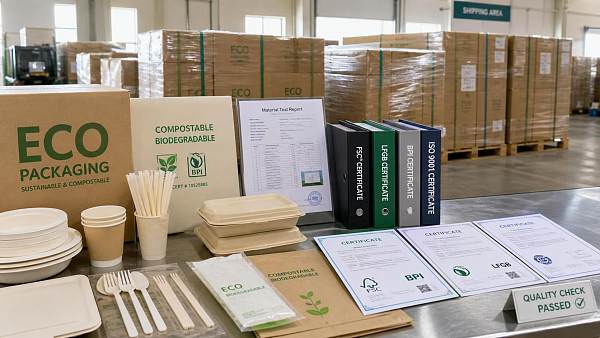
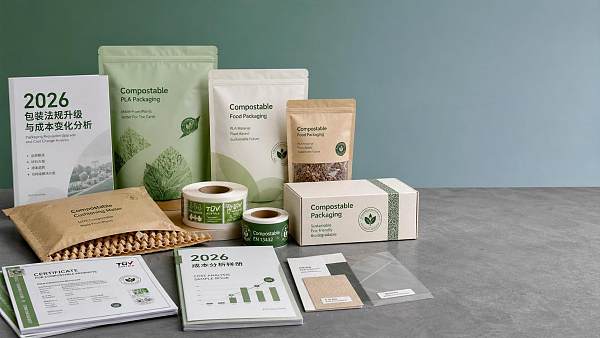
PLA and PBAT materials may support compostability claims, but only when collection and treatment conditions are realistic.
Paper cushioning may look simple, yet humidity can reduce strength during sea freight or long warehouse storage.
The best scenario fit balances shock protection, waste reduction, package volume, and available end-of-life infrastructure.
Scenario Three: Labels, Adhesives, and Traceability Under Recycling Rules
Labels carry barcodes, anti-counterfeit features, safety warnings, batch codes, and brand signals.
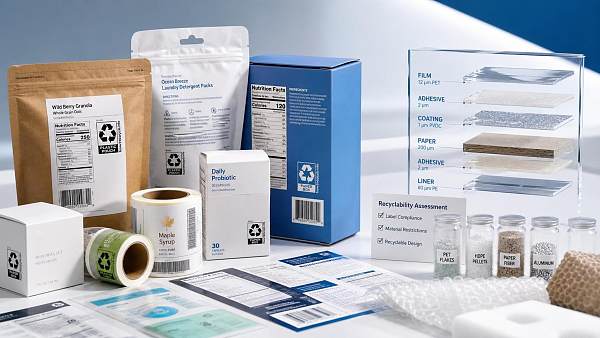
They also create hidden PPWD risk when face stock, adhesive, ink, and container material conflict.
Sustainable packaging science examines adhesive release, wash-off behavior, migration control, and label substrate compatibility.
Cold-chain labels need adhesion at extremely low temperatures, especially for pharmaceuticals, seafood, and biotechnology products.
Tamper-evident labels must leave reliable VOID evidence without destroying recyclability assumptions for the main container.
This scenario requires testing beyond peel strength, including aging, washing, abrasion, and recycling stream behavior.
Scenario Four: Thermal Transfer Ribbons and Data Marks in Circular Systems
Logistics, retail, healthcare, and industrial packaging depend on readable codes across long handling chains.
Thermal transfer ribbons melt wax, resin, or hybrid ink layers onto label surfaces within milliseconds.
Sustainable packaging science connects print durability with material simplification and lower waste generation.
If codes fade, parcels are relabeled, returned, delayed, or discarded, increasing operational and environmental costs.
The practical question is whether a ribbon, label, and substrate combination survives friction, sunlight, moisture, and scanning stress.
A compliant package still fails commercially if its digital identity disappears before final processing.
Scenario Five: Decorative Foils and Shelf Impact Without Greenwashing
Hot and cold stamping foils create metallic reflections, holographic effects, and premium shelf recognition.
Yet decorative layers can trigger recyclability questions when used heavily or combined with incompatible substrates.
Sustainable packaging science helps define where optical impact adds commercial value and where it becomes unnecessary packaging burden.
The decision should consider coverage area, transfer efficiency, substrate recycling route, and anti-counterfeit function.
A small security hologram may justify its footprint better than broad decorative metallization with limited functional benefit.
Different Scenario Needs: A Practical Comparison Matrix
Scenario Adaptation Advice for PPWD-Ready Packaging
Sustainable packaging science becomes useful when translated into repeatable evaluation steps.
- Map each packaging component, including films, coatings, adhesives, inks, labels, foils, and cushioning.
- Identify the dominant function: barrier, protection, security, branding, coding, or logistics efficiency.
- Screen recyclability by whole-pack behavior, not by single-material marketing claims.
- Test performance under real storage, shipping, temperature, humidity, and handling conditions.
- Compare environmental gains against failure risks, including breakage, spoilage, relabeling, and returns.
- Document evidence early, because PPWD risk is also an audit and reporting challenge.
For high-barrier films, adaptation often starts with downgauging and mono-material structure development.
For cushioning, adaptation should prioritize right-sized packaging and verified drop protection.
For labels, adaptation requires adhesive chemistry that supports both security and recyclability.
For thermal printing, adaptation depends on durable codes with minimal rework and material waste.
Common Scenario Misjudgments That Increase Compliance Exposure
Mistake One: Treating Biodegradable as Automatically Compliant
Biodegradable materials are not automatically suitable for every recovery system.
Sustainable packaging science checks whether degradation conditions match actual collection, composting, or disposal infrastructure.
Mistake Two: Reducing Thickness Without Testing Failure Cost
Lightweighting can reduce material use, but excessive reduction may damage pallets, food, electronics, or instruments.
A 12-micron stretch wrap may save cost only when puncture resistance and load stability remain adequate.
Mistake Three: Ignoring Micro-Coatings and Adhesives
Small coating layers can decide whether packaging is recyclable, washable, scannable, or contaminating.
Sustainable packaging science places these invisible layers at the center of PPWD risk planning.
Mistake Four: Separating Security From Sustainability
Counterfeit prevention, tamper evidence, and traceability are not secondary concerns.
Weak security can cause recalls, returns, fake goods, and consumer distrust, creating larger system losses.
How PPCS Connects Materials Intelligence With Risk Planning
PPCS observes the physical armor and digital IDs of global commodities through science-led packaging intelligence.
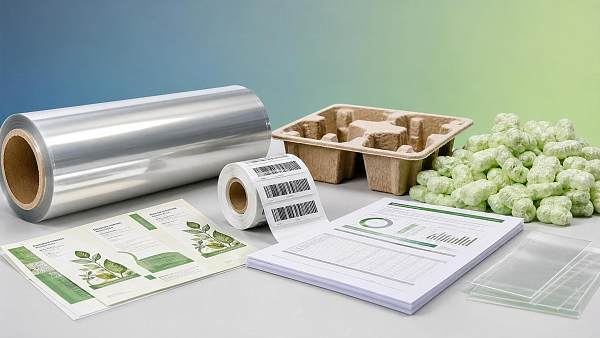
Its focus spans high-barrier films, anti-counterfeit adhesive labels, biodegradable cushioning, thermal transfer ribbons, and stamping foils.
The Strategic Intelligence Center tracks regulatory movement, coating chemistry, film physics, and packaging capital efficiency.
This approach supports PPWD risk planning with evidence, not assumptions.
Sustainable packaging science can reveal where formula patents, green design, and commercial savings reinforce each other.
It can also reveal where a fashionable material creates hidden cost, operational fragility, or recycling conflict.
Action Guide: Turning Sustainable Packaging Science Into Decisions
A practical PPWD risk plan should begin with packaging families, not isolated stock-keeping units.
Group structures by material type, function, market destination, and recovery pathway.
Then prioritize the highest-risk combinations, such as multilayer films, heavy decoration, permanent adhesives, and excessive void fill.
Next, build test protocols for barrier, drop, adhesion, print durability, recyclability, and aging performance.
Finally, link test results to cost models, regulatory documentation, supplier qualification, and packaging redesign roadmaps.
Sustainable packaging science is most valuable when it prevents reactive redesign after rules, taxes, or customer audits arrive.
For complex packaging portfolios, science-led intelligence provides a clearer path from compliance anxiety to measurable resilience.
The next step is to review current films, labels, cushioning, ribbons, and foils against scenario-specific PPWD exposure.
With PPCS insight, sustainable packaging science becomes a practical method for guarding commodities, reducing waste, and strengthening market trust.
Recommended News
 Aug 27, 2026Where to find packaging specification resources for compliance checksPackaging specification resources: discover trusted regulations, test standards, and supplier documents to streamline compliance checks, reduce risk, and approve packaging confidently.
 Aug 22, 2026How to verify whether recyclable flexible packaging in Europe meets PPWR expectationsRecyclable flexible packaging Europe: learn how to verify PPWR readiness, assess sorting and barrier performance, and avoid weak claims with a practical evaluation framework.
 Aug 16, 2026China Enforces Eco-Environment Code, Raising Export Packaging Compliance RequirementsChina enforces its Eco-Environment Code, tightening export packaging compliance for food, FMCG, e-commerce, and pharma. Learn the new risks, certification checks, and sourcing actions now.
 Aug 05, 2026Packaging Compliance in North America: Which Labels and Material Rules Matter Most?Packaging compliance North America explained: learn the label, bilingual, material, recyclability, and EPR rules that matter most to reduce risk and speed market access.
 Jul 14, 2026Packaging Compliance Materials Guide for Plastic Ban ReadinessPackaging compliance materials guide for plastic-ban readiness: compare films, labels, cushioning, and print systems to reduce risk, protect performance, and stay ahead of changing regulations.
 Jul 13, 2026Biodegradable Packaging Compostable: Key Claims, Standards, and Common MistakesBiodegradable Packaging compostable explained: learn the key differences, standards, compliance checks, and common claim mistakes before choosing or marketing sustainable packaging.
 Jul 10, 2026How Mono Material Packaging Affects Recyclability and Shelf AppealMono material packaging can improve recyclability without sacrificing shelf appeal. Discover key trade-offs, hidden risks, and practical evaluation tips for smarter packaging decisions.
 Jul 04, 2026Mono Material Packaging Europe: What Changes Under New Recycling RulesMono material packaging Europe is rapidly becoming a compliance and cost priority. Learn how new EU recycling rules reshape packaging design, market access, and competitive advantage.
 Jul 01, 2026Mono Material Flexible Packaging: When It Works and Where It Falls ShortMono material flexible packaging explained: discover where it improves recyclability and efficiency, where barrier and machinability limits remain, and how to judge the right fit.
 Jun 29, 2026Compostable Sustainable Packaging in 2026: What Regulations and Costs Are ChangingCompostable sustainable packaging in 2026 is being reshaped by stricter regulations and shifting costs. Learn where it fits, what compliance demands, and how to choose smarter, scalable packaging strategies.
 Jun 28, 2026PPWR Packaging Europe: What Changes for Packaging Specs in 2026PPWR packaging Europe in 2026 will reshape packaging specs across films, labels, adhesives, and cushioning. Learn the key compliance shifts, risks, and smart actions brands should take now.
 Jun 25, 2026Mono-Material Recyclable Science Explained for Practical Packaging DesignMono-material recyclable science explained for practical packaging design. Learn how to balance recyclability, barrier performance, compliance, and cost with smarter material choices.
 Jun 24, 2026Packaging Compliance Resources for PPWR and Plastic Ban ReadinessPackaging compliance resources for PPWR and plastic ban readiness: learn how to assess materials, labeling, recyclability, and supplier data to reduce risk and stay market-ready.
 Jun 21, 2026Sustainable Packaging Materials Certification: What Standards Matter in 2026Sustainable packaging materials certification in 2026: learn which standards truly matter for recyclability, compostability, fiber sourcing, and compliance to reduce risk and choose smarter packaging.
 Jun 21, 2026How to Evaluate PLA PBAT Packaging for Cost, Strength, and CompliancePLA PBAT packaging evaluation starts with real cost, strength, and compliance. Learn how to compare suppliers, reduce sourcing risk, and choose packaging that performs.
 Jun 20, 2026Sustainable Packaging Materials Trends Shaping 2026 Compliance PlansSustainable packaging materials are redefining 2026 compliance plans. Explore key trends, risks, and smart material choices that improve recyclability, traceability, and cost control.
 Jun 16, 2026Sustainable Packaging Science and the 2026 Compliance ShiftSustainable packaging science is reshaping 2026 compliance, helping brands balance recyclability, protection, traceability, and cost before new rules tighten.
 Jun 12, 2026How PLA Biodegradable Packaging Performs Under New Plastic Ban RulesPLA biodegradable packaging under new plastic ban rules: explore where it delivers compliance, protection, and cost efficiency—and where smart packaging design still matters.
 Jun 11, 2026Vietnam Requires ISPM15 and REACH Declarations for ImportsVietnam Requires ISPM15 and REACH Declarations for Imports from July 1, 2026. Learn how the new packaging compliance rule may impact customs clearance, costs, and shipment planning.
 Jun 10, 2026EU PPWR Rule Takes Effect July 1: Recyclability Proof Required for BOPP/PET Film ExportsEU PPWR rule takes effect July 1, requiring recyclability proof for BOPP/PET film exports. Learn compliance risks, EN 13432 or ISO 14855 document needs, and how to avoid EU customs delays.
 Jun 06, 2026Green Packaging Becomes an EU Market Entry RuleGreen packaging is becoming a real EU market entry rule. Learn how BOPP Barrier Films, Stretch Wrap Films, and RFID Smart Labels exporters can meet new compliance, certification, and packaging cost requirements.
![]() Jun 06, 2026Peru Tightens Mandatory Compliance for Food PackagingPeru Tightens Mandatory Compliance for Food Packaging: learn how WTO notice G/TBT/N/PER/178 may affect exporters, importers, and food-contact packaging supply chains.
Jun 06, 2026Peru Tightens Mandatory Compliance for Food PackagingPeru Tightens Mandatory Compliance for Food Packaging: learn how WTO notice G/TBT/N/PER/178 may affect exporters, importers, and food-contact packaging supply chains.![]() Jun 03, 2026Mono-Material Recyclable Packaging Under PPWDMono-material recyclable packaging helps brands meet PPWD/PPWR demands, cut compliance risk, and protect performance—learn how to redesign smarter for EU markets.
Jun 03, 2026Mono-Material Recyclable Packaging Under PPWDMono-material recyclable packaging helps brands meet PPWD/PPWR demands, cut compliance risk, and protect performance—learn how to redesign smarter for EU markets. Jun 02, 2026Sustainable Packaging Science for PPWD Risk PlanningSustainable packaging science helps brands plan PPWD risks, compare films, labels, cushioning and foils, and build compliant packaging that protects trust and cost.