Search News
Industry Portal
Hot Articles
- How adhesive labels hold up in cold chain shipping conditionsAdhesive Labels cold chain performance depends on more than freezer rating. Learn how adhesion, print durability, condensation, and substrate choice affect reliable shipping.
- When do high strength cast films outperform blown film in pallet wrapping?High strength cast films outperform blown film in pallet wrapping when pre-stretch efficiency, load stability, and downgauging matter most. Learn when they cut film use and boost uptime.
- How to evaluate barrier film suppliers in Europe for food packagingBarrier film Europe sourcing made practical: learn how to assess food packaging suppliers on barrier performance, compliance, machinability, and total cost before you buy.
Popular Tags
Artificial Leather Coating Line: Process, Risk and Procurement Notes
Time
Click Count
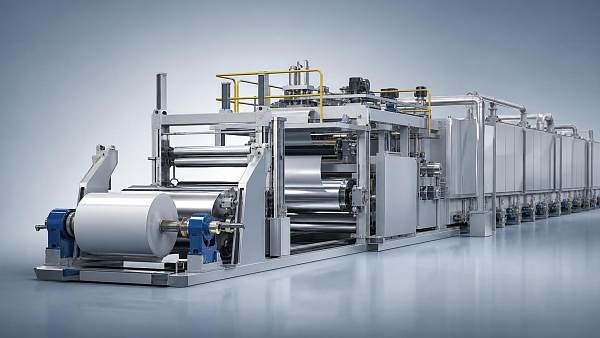
An artificial leather coating line is often discussed as one piece of equipment, but in production it is a connected process: substrate preparation, coating, leveling, drying, calendering or lamination, surface treatment, cooling, inspection and winding. Buyers who evaluate only line length or quoted price may miss the real cost drivers. The right line depends on the intended product, coating chemistry, backing material, output target and quality tolerance.
This article explains process flow, operating risks and procurement notes for artificial leather production equipment. It also looks at the PVC route because many buyers compare coating and calendering equipment before deciding how to produce coated textile, decorative film, synthetic leather or flexible surface material. A pvc coating calendering line may be part of that decision, but the buyer should confirm whether the offered system truly matches the planned material structure.
The practical goal is not to claim that one process is always best. Direct coating, transfer coating, dry coating, calendering and lamination can each be suitable in the right context. The buyer's task is to define the product first, then evaluate the machine against that product instead of forcing the product to fit an attractive used-equipment offer.
Basic Process Flow
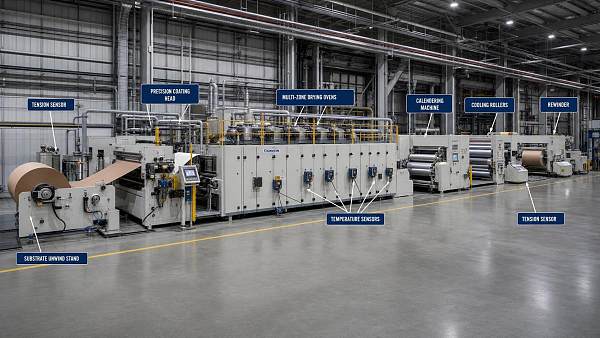
Artificial leather production usually starts with a backing material such as woven fabric, knitted fabric, nonwoven, paper or another carrier. The coating layer is applied by knife, roll, transfer paper, calendering or lamination, depending on the product. The coated material then passes through drying, curing, cooling, surface finishing, embossing or winding. Each step has its own quality risks.
In a direct coating route, the coating is applied directly to the substrate. This makes substrate tension, surface cleanliness and coating-head adjustment very important. In a transfer route, the coating may be applied to release paper first, then bonded to the backing. This can improve surface control but adds release-paper handling and lamination requirements. In a PVC calendering route, film formation and thickness control depend heavily on roll condition, temperature and gap accuracy.
Buyers should not treat process names as labels only. A line described as a coating line may include drying ovens but no embossing section. A line described as a calendering line may produce film but still need lamination equipment for the final artificial leather structure. The equipment list must be checked against the actual product flow.
Where Production Risks Usually Appear
Common risks include uneven coating weight, poor adhesion, surface streaks, bubbles, wrinkles, curling, odor, color variation, unstable width and winding defects. These problems can come from material formulation, but they can also come from mechanical and control issues. A used line with worn rolls, unstable temperature zones or weak tension control can create quality problems even when the formulation is acceptable.
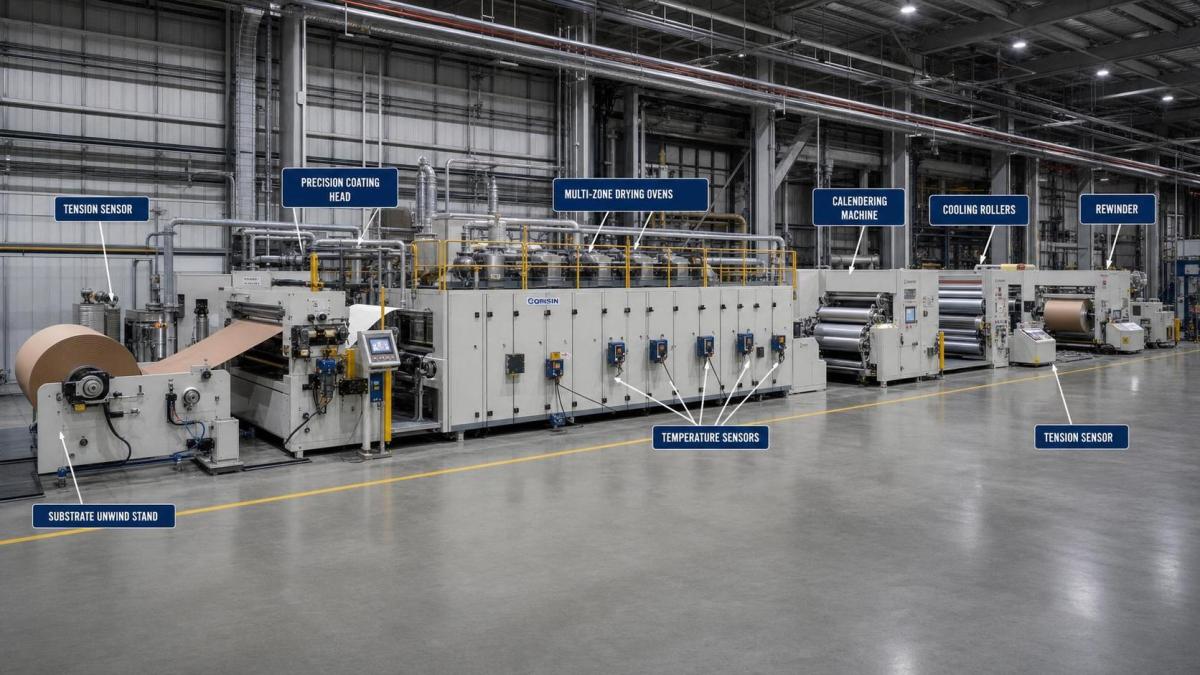
Drying is a frequent bottleneck. If the oven does not remove solvent or moisture evenly, the finished material may show residual odor, weak bonding or surface defects. If drying is too aggressive, the surface may skin over or the backing may shrink. If drying is too slow, the line speed drops and cost rises. For this reason, oven zones, air circulation, exhaust and temperature sensors should be inspected carefully.
Tension control is another major risk. Artificial leather materials often combine layers with different stretch behavior. If tension is unstable, the product may wrinkle, skew, curl or wind poorly. A buyer should review unwinder, stenter, dancer rolls, load cells, haul-off and rewinder condition before assuming the line can handle the desired width and substrate.
Process and Risk Review Table
Used Machine Inspection Priorities
When buying a used artificial leather coating line, the first inspection priority is fit for the buyer's product. The second is the condition of high-value components. The third is the cost and difficulty of bringing the line into stable operation. Buyers should ask for close photos, previous product history, repair scope and trial evidence whenever possible.
Roll surfaces should be inspected for scratches, dents, corrosion and uneven wear. Coating knives and gap mechanisms should move smoothly and hold position. Stenter chains, clips, rails and guide systems should be checked for alignment and wear. Ovens should be checked for heater condition, insulation, exhaust, fan condition and temperature uniformity. Electrical cabinets should be reviewed for component brands, wiring quality and safety circuits.
If the line is already dismantled, the buyer loses the chance to observe running condition. In that case, the seller should provide stronger documentation: dismantling photos, cable marks, packing records, component close-ups and known repair notes. If such documentation is not available, the buyer should treat the line as higher risk and price it accordingly.
Procurement Notes for Buyers
A buyer should request a written equipment scope. The scope should state whether the offer includes unwinder, coating head, oven, calender, lamination, embossing, cooling, edge trimming, rewinder, electrical cabinet, spare parts and installation documents. Without a written scope, it is easy to discover missing parts after shipment.
The buyer should also ask what has been tested. A line may be complete but untested. Another may have been run without material. Another may have completed a material trial. These are different risk levels. A trial with a similar substrate and coating material is the most useful evidence, but even a structured mechanical and electrical inspection can reduce uncertainty.
Payment and delivery terms should reflect risk. If major components are unverified, the buyer may request additional inspection before deposit, repair before shipment or a more detailed packing and documentation commitment. Negotiation should be based on specific risks rather than a general request for a lower price.
Checklist Before Signing
- Define the artificial leather product structure, backing material and coating chemistry.
- Confirm whether the process route is direct coating, transfer coating, calendering, lamination or a combination.
- Check line width, product thickness range, coating weight and expected line speed.
- Inspect coating head, roll surfaces, calender gap, oven zones and tension system.
- Review electrical cabinet, PLC, inverter, heater controls and safety devices.
- Ask for previous product history and whether the line ran similar materials.
- Separate included refurbishment from optional paid repairs.
- Clarify dismantling, cable marking, packing, loading and reinstallation support.
- Budget for trial material, local utilities, safety review and operator training.
- Do not accept broad output claims without material, width, thickness and speed conditions.
Application Matching
Artificial leather may be used for footwear, bags, upholstery, automotive interiors, sports goods, decorative panels and industrial coated textiles. Each application has different acceptance criteria. Footwear material may need flexibility and abrasion resistance. Upholstery may need width stability, surface appearance and color consistency. Automotive or industrial uses may require stricter durability and documentation.
A line that makes one product well may need changes for another product. Embossing, surface treatment, lamination and drying conditions should be matched to the final use. Buyers planning multiple applications should ask how quickly the line can change recipes, substrates and widths. Flexibility is useful, but it has limits. The line should be selected around the most important products, not around every possible future idea.
For projects involving PVC coating or calendering, material behavior is especially important. Heat, plasticizer system, roll temperature, surface finish and cooling all interact. Buyers should request process information rather than relying only on the machine model.
FAQ
Is an artificial leather coating line the same as a PVC calendering line?
No. A PVC calendering line may produce film used in artificial leather, but a full artificial leather process may also require coating, lamination, drying, embossing and winding sections.
What is the biggest risk when buying used coating equipment?
The biggest risks are poor product fit, worn high-value components, unstable drying or tension control, obsolete electrical systems and missing documentation.
Should buyers request a material trial?
Yes, if the line is assembled and suitable material is available. A trial with similar backing and coating material provides stronger evidence than no-load operation.
How should output claims be checked?
Output should be tied to material, coating weight, width, thickness, drying condition and acceptable defect level. A single maximum output number is not enough.
What should be included in the purchase contract?
The contract should define included equipment, condition, repair scope, missing parts, packing method, documentation, loading responsibility and support after shipment.
Final Procurement Advice
An artificial leather coating line should be purchased only after the buyer understands the product route and the machine condition. The best used-equipment deal is not always the lowest price. It is the line with a clear process fit, inspected components, realistic repair scope and enough documentation to support installation.
Buyers should focus on evidence: previous product history, component photos, test records, repair details and packing plans. With those pieces in place, a used coating or calendering line can support a practical production project. Without them, the buyer may inherit unknown process risk along with the machine.
Editorial Review Note
This article is buyer-facing guidance for evaluating artificial leather coating and PVC coating calendering equipment. It avoids fabricated prices, unsupported output claims and invented case numbers. Before final upload, the publisher should check the destination portal's house style, category fit and any safety wording required for coating, oven or calendering equipment.
Recommended News
 Aug 23, 2026When does solvent free film coating technology improve coating consistency?Solvent free film coating technology improves coating consistency when drying variability, thermal stress, and residual solvent risks limit quality. Learn when it truly delivers repeatable performance.
 Aug 15, 2026What drives micro coating materials price in industrial use?Micro coating materials price depends on chemistry, process control, substrate fit, and compliance. Learn what really drives cost in industrial use and how to choose smarter.
 Jul 22, 2026Metallized Film Physics in Vacuum Deposition: Key Factors Behind Barrier and Optical PerformanceMetallized film physics vacuum deposition explained: discover how substrate, chamber control, and layer uniformity shape barrier, gloss, and converting performance across packaging applications.
 Jul 27, 2026How to Evaluate a Used PVC Coating Calendering Line Before PurchaseUsed PVC coating calendering line buyers: learn how to assess process fit, roller condition, controls, compliance, and total cost before purchase to avoid hidden risks.
 Jul 21, 2026Vacuum Metallized Paper: Key Properties, Uses, and LimitsVacuum metallized paper explained: discover its key properties, packaging uses, print benefits, and limits to choose the right premium, cost-effective material.
 Jul 18, 2026How to Evaluate Micro Coating Materials in Europe for Performance and ComplianceMicro coating materials Europe buyers can use this guide to compare performance, compliance, recyclability, and supplier quality for smarter sourcing and faster qualification.
 Jul 15, 2026Film Coating Technology for BOPP: Key Methods and Performance TradeoffsFilm coating technology for BOPP explained: compare acrylic, PVDC, water-based, and specialty coatings, understand barrier and sealing tradeoffs, and choose the right path for cost, compliance, and performance.
 Jul 09, 2026Packaging Supplier References for Films: What to Verify Before ApprovalPackaging supplier references for films help you verify quality, compliance, consistency, and delivery risk before approval. Learn what to check to avoid costly packaging failures.
 Jul 08, 2026Biaxial Film Europe: 2026 Supply, Pricing, and Regulation OutlookBiaxial film Europe in 2026 faces shifting supply, pricing, and PPWR pressure. Explore key BOPP and PET risks, cost drivers, and smart sourcing strategies.
 Jul 05, 2026How Thin Film Coating Technology Improves Barrier and Surface PerformanceThin film coating technology improves barrier strength, printability, adhesion, and durability across packaging and labels. Learn how to choose smarter coatings for performance, compliance, and cost.
 Jul 02, 2026Pharmaceutical Packaging Films in 2026: Barrier and Sustainability ShiftsPharmaceutical packaging films in 2026 face a new test: balancing barrier performance, compliance, and sustainability. Explore key shifts shaping smarter, lower-risk packaging decisions.
 Jul 11, 2026Artificial Leather Coating Line: Process, Risk and Procurement NotesBuyer notes on artificial leather coating line process flow, PVC coating calendering risks, used-machine checks and procurement decisions.
 Jul 01, 2026How to Evaluate a Coated Films Manufacturer for Quality and Lead TimeCoated films manufacturer selection affects quality, lead time, and total cost. Learn how to compare data, stability, compliance, and delivery reliability before you buy.
 Jun 28, 2026Oriented Polyester Film Rolls: Key Tolerance Checks Before ProductionOriented polyester film rolls require precise tolerance checks before production. Learn how thickness, width, tensile, and winding control reduce scrap, improve uptime, and protect converting quality.
 Jun 26, 2026Cosmetic Packaging Decoration Materials: Finish, Adhesion, and Compliance BasicsCosmetic packaging decoration materials explained: learn finish, adhesion, and compliance basics to improve durability, brand appeal, and global packaging confidence.
 Jun 25, 2026Visual Shelf Impact Materials: What Improves Standout Without ReworkVisual shelf impact materials that boost shelf standout without costly rework. Learn how to balance optics, printability, durability, and compliance across packaging applications.
 Jun 24, 2026Electronic Protective Materials: Key Barrier and ESD Specs ExplainedElectronic protective materials explained: learn key barrier and ESD specs, avoid hidden packaging failures, and choose safer, compliant protection for sensitive electronics.
 Jun 20, 2026Micron-Level Coating Intelligence: What It Means for Print ConsistencyMicron-level coating intelligence reveals how coating thickness, cure, and surface behavior drive print consistency, barcode clarity, and label durability—read the key factors that reduce defects and improve production confidence.
 Jun 19, 2026How Polymer Cast-Stretching Technology Improves Film Gauge ConsistencyPolymer cast-stretching technology improves film gauge consistency by stabilizing melt flow, cooling, and stretching—helping packaging lines cut waste, boost barrier performance, and improve yield.
 Jun 18, 2026Electronic Protective Materials: Key Factors for Heat and ESD ControlElectronic protective materials are critical for heat control, ESD protection, durability, and production fit. Discover how to compare options and choose materials that improve reliability.
 Jun 14, 2026PLA PBAT Film Formulations: What Affects Strength and SealabilityPLA PBAT film formulations affect strength, sealability, and production stability. Learn how resin ratios, additives, and processing shape reliable compostable packaging performance.
 Jun 13, 2026Pharmaceutical Film Technology: Barrier Performance and Coating Methods ExplainedPharmaceutical film technology explained with a practical look at barrier performance, base films, and coating methods to help you compare options, reduce packaging risk, and improve compliance.
 Jun 12, 2026Food Grade Packaging Films: Key Tests for Safety and ComplianceFood grade packaging films: learn the key tests for safety, migration, seal integrity, barrier performance, and compliance to reduce audit risk and choose market-ready packaging.
 Jun 11, 2026PLA PBAT Film Formulations: What Affects Cost and SealabilityPLA PBAT film formulations affect far more than resin price. Discover what drives cost, sealability, scrap, and line efficiency to compare suppliers smarter.