Search News
Industry Portal
Hot Articles
- How to verify FDA compliance for packaging inks used on food packagingPackaging inks FDA compliant? Learn how to verify food-contact safety through regulatory citations, migration testing, supplier declarations, and process controls.
- When do holographic foils add value to luxury goods packaging?Packaging materials for luxury goods gain impact with holographic foils that elevate shelf appeal, authenticity, and premium unboxing—learn when this finish delivers real value.
- Can nano encryption technology stop counterfeit labels from being copied?Nano encryption technology anti counterfeit labels combine physical security, tamper evidence, and serialization to make copying harder. Explore smarter protection.
Popular Tags
Micron-Level Coating Intelligence in Inline Quality Control
Time
Click Count
Micron-Level Coating Intelligence in Inline Quality Control
In modern inline quality control, micron-level coating intelligence is no longer optional.
It helps catch coating defects before they become scrap, complaints, or expensive downtime.
That matters across films, labels, cushioning materials, thermal ribbons, and decorative foils.
When coating thickness shifts by only a few microns, barrier performance can fall fast.
Adhesion may weaken, print transfer can fail, and visual impact may lose consistency.
This is where micron-level coating intelligence gives real operational value.
It turns coating data into fast decisions that protect quality, throughput, and product confidence.
Why Micron-Level Coating Intelligence Matters on Fast Production Lines
Inline production leaves very little time to react.
A small coating drift can travel through thousands of meters before anyone sees it offline.
Micron-level coating intelligence closes that gap by watching thickness, uniformity, and stability in real time.
For high-barrier BOPP and PET films, even minor variation affects oxygen and moisture protection.
For anti-counterfeit labels, coating consistency supports tamper evidence, bond strength, and readable security features.
For thermal transfer ribbons, coating precision controls ink release and barcode durability.
For hot or cold stamping foils, it directly affects reflectivity, transfer clarity, and premium shelf appearance.
From a practical standpoint, micron-level coating intelligence reduces blind spots.
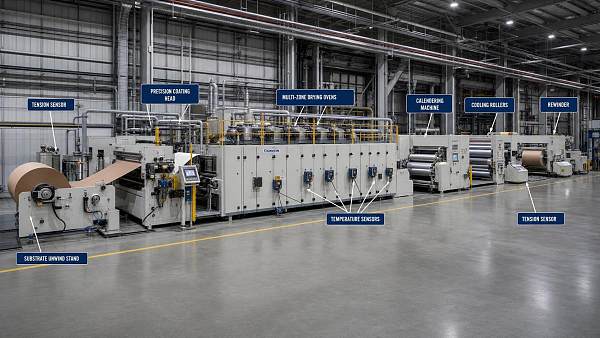
It shows whether a defect comes from viscosity drift, coating head instability, web tension, or drying imbalance.
That means faster root-cause action instead of repeated trial and error.
Core Signals to Track in Inline Quality Control
Effective micron-level coating intelligence depends on watching the right signals.
Not every line needs the same setup, but several indicators are widely useful.
- Coating thickness profile across the web width.
- Coating weight stability along machine direction.
- Surface defect frequency, including streaks, voids, pinholes, and skips.
- Drying performance, solvent or water removal, and residual variability.
- Adhesion-related signals linked to cure state and anchorage.
- Registration consistency when coatings must align with printing or security marks.
More importantly, these signals should not live in isolation.
Micron-level coating intelligence works best when process data is stitched together.
Coating weight should be viewed beside line speed, oven zones, viscosity, and tension.
That connected view makes decisions faster and far more reliable.
How Micron-Level Coating Intelligence Solves Common Packaging Problems
Barrier Film Inconsistency
High-barrier films fail quietly at first.
A slight coating gap may not be visible, yet shelf life drops later.
Micron-level coating intelligence flags those thin spots during production, not after complaints arrive.
That protects crispness, dryness, and long-distance logistics performance.
Label and Adhesive Failure
Pressure-sensitive labels need a narrow operating window.
Too little adhesive hurts initial tack.
Too much adhesive can squeeze out, contaminate edges, or reduce converting efficiency.
Micron-level coating intelligence helps maintain balance between tack, holding power, and release behavior.
That is especially important for cold-chain labels and tamper-evident constructions.
Thermal Ribbon Transfer Defects
Ribbon coatings must melt and release within milliseconds.
If the coating varies, printed codes may fade, smear, or scan poorly.
Micron-level coating intelligence supports consistent ink layer control across long runs.
That improves barcode readability after friction, weather exposure, and handling.
Premium Visual Defects on Foils
Cosmetic boxes and liquor cartons rely on visual precision.
Uneven coating can damage metallic shine, holographic sharpness, or transfer cleanliness.
Micron-level coating intelligence helps keep optical effects stable and commercially attractive.
That directly supports shelf impact and brand perception.
A Practical Inline Quality Control Framework
A workable system does not start with more data.
It starts with usable data linked to clear response rules.
In actual operations, the following framework is often effective.
- Define critical coating attributes by product type and end-use risk.
- Set control limits for normal drift, warning range, and intervention threshold.
- Connect sensors, operator screens, and line alarms in one routine workflow.
- Build defect codes that match real causes, not vague descriptions.
- Review trend data by shift, order, substrate, and coating batch.
- Use closed-loop feedback where equipment allows stable automatic correction.
This is where micron-level coating intelligence becomes operational, not theoretical.
The goal is simple.
See the drift early, understand the cause quickly, and correct it with minimal disruption.
That is how inline quality control protects yield and delivery confidence.
What to Watch During Daily Operation
Even a strong system can fail if daily routines are weak.
Micron-level coating intelligence needs disciplined line-side habits.
- Check sensor calibration before long runs or product changeovers.
- Confirm coating recipe, substrate lot, and environmental conditions together.
- Respond to trend shifts before alarm limits are fully reached.
- Separate recurring defects from one-time startup instability.
- Record interventions clearly so the next shift sees the real history.
One clear pattern appears on many lines.
Most major defects start as small signals that were visible but not acted on.
That is why micron-level coating intelligence should support action timing, not only measurement accuracy.
Business Impact Beyond Defect Reduction
The value goes well beyond fewer rejects.
Micron-level coating intelligence also improves material efficiency and process confidence.
This is especially relevant as sustainability pressure grows.
Lighter structures and thinner coatings leave less room for process variation.
Micron-level coating intelligence helps maintain performance while reducing unnecessary material use.
Building a Smarter Response Culture
Technology alone will not fix inline quality control.
The bigger advantage comes when data, process knowledge, and fast judgment work together.
That is the real promise of micron-level coating intelligence.
It helps teams move from checking defects to preventing them.
It also creates a stronger link between coating chemistry and line-floor execution.
For packaging systems that depend on safety, traceability, and visual impact, that link matters every day.
Start with the most critical coating risk on the line.
Define the signal, train the response, and review the trend weekly.
Once that routine becomes stable, expand the model across other products.
That is the most practical path to making micron-level coating intelligence deliver measurable results.
Recommended News
 Sep 02, 2026When do high clarity films for food wraps improve shelf appeal?High clarity films for food wraps boost shelf appeal by showcasing freshness, texture, and quality while balancing seal performance, protection, and retail-ready presentation.
 Sep 01, 2026How to prevent peeling when using printable transfer foilsTransfer foils printable: prevent peeling with proven tips on substrate prep, ink compatibility, curing, and transfer settings for durable, premium results.
 Aug 30, 2026How PET packaging sheets affect thermoforming consistencyPET packaging sheets directly influence thermoforming consistency. Explore how gauge profile, IV, thermal behavior, and rPET content affect quality, scrap, and line performance.
 Sep 02, 2026When a PVC Transfer Coating Line Fits Better Than Direct Coating in Flexible MaterialsPVC transfer coating line or direct coating? Learn when transfer coating delivers better surface quality, substrate protection, and process stability for flexible materials.
 Aug 23, 2026When does solvent free film coating technology improve coating consistency?Solvent free film coating technology improves coating consistency when drying variability, thermal stress, and residual solvent risks limit quality. Learn when it truly delivers repeatable performance.
 Aug 15, 2026What drives micro coating materials price in industrial use?Micro coating materials price depends on chemistry, process control, substrate fit, and compliance. Learn what really drives cost in industrial use and how to choose smarter.
 Jul 22, 2026Metallized Film Physics in Vacuum Deposition: Key Factors Behind Barrier and Optical PerformanceMetallized film physics vacuum deposition explained: discover how substrate, chamber control, and layer uniformity shape barrier, gloss, and converting performance across packaging applications.
 Jul 27, 2026How to Evaluate a Used PVC Coating Calendering Line Before PurchaseUsed PVC coating calendering line buyers: learn how to assess process fit, roller condition, controls, compliance, and total cost before purchase to avoid hidden risks.
 Jul 21, 2026Vacuum Metallized Paper: Key Properties, Uses, and LimitsVacuum metallized paper explained: discover its key properties, packaging uses, print benefits, and limits to choose the right premium, cost-effective material.
 Jul 18, 2026How to Evaluate Micro Coating Materials in Europe for Performance and ComplianceMicro coating materials Europe buyers can use this guide to compare performance, compliance, recyclability, and supplier quality for smarter sourcing and faster qualification.
 Jul 15, 2026Film Coating Technology for BOPP: Key Methods and Performance TradeoffsFilm coating technology for BOPP explained: compare acrylic, PVDC, water-based, and specialty coatings, understand barrier and sealing tradeoffs, and choose the right path for cost, compliance, and performance.
 Jul 09, 2026Packaging Supplier References for Films: What to Verify Before ApprovalPackaging supplier references for films help you verify quality, compliance, consistency, and delivery risk before approval. Learn what to check to avoid costly packaging failures.
 Jul 08, 2026Biaxial Film Europe: 2026 Supply, Pricing, and Regulation OutlookBiaxial film Europe in 2026 faces shifting supply, pricing, and PPWR pressure. Explore key BOPP and PET risks, cost drivers, and smart sourcing strategies.
 Jul 05, 2026How Thin Film Coating Technology Improves Barrier and Surface PerformanceThin film coating technology improves barrier strength, printability, adhesion, and durability across packaging and labels. Learn how to choose smarter coatings for performance, compliance, and cost.
 Jul 02, 2026Pharmaceutical Packaging Films in 2026: Barrier and Sustainability ShiftsPharmaceutical packaging films in 2026 face a new test: balancing barrier performance, compliance, and sustainability. Explore key shifts shaping smarter, lower-risk packaging decisions.
 Jul 11, 2026Artificial Leather Coating Line: Process, Risk and Procurement NotesBuyer notes on artificial leather coating line process flow, PVC coating calendering risks, used-machine checks and procurement decisions.
 Jul 01, 2026How to Evaluate a Coated Films Manufacturer for Quality and Lead TimeCoated films manufacturer selection affects quality, lead time, and total cost. Learn how to compare data, stability, compliance, and delivery reliability before you buy.
 Jun 28, 2026Oriented Polyester Film Rolls: Key Tolerance Checks Before ProductionOriented polyester film rolls require precise tolerance checks before production. Learn how thickness, width, tensile, and winding control reduce scrap, improve uptime, and protect converting quality.
 Jun 26, 2026Cosmetic Packaging Decoration Materials: Finish, Adhesion, and Compliance BasicsCosmetic packaging decoration materials explained: learn finish, adhesion, and compliance basics to improve durability, brand appeal, and global packaging confidence.
 Jun 25, 2026Visual Shelf Impact Materials: What Improves Standout Without ReworkVisual shelf impact materials that boost shelf standout without costly rework. Learn how to balance optics, printability, durability, and compliance across packaging applications.
 Jun 24, 2026Electronic Protective Materials: Key Barrier and ESD Specs ExplainedElectronic protective materials explained: learn key barrier and ESD specs, avoid hidden packaging failures, and choose safer, compliant protection for sensitive electronics.
 Jun 20, 2026Micron-Level Coating Intelligence: What It Means for Print ConsistencyMicron-level coating intelligence reveals how coating thickness, cure, and surface behavior drive print consistency, barcode clarity, and label durability—read the key factors that reduce defects and improve production confidence.
 Jun 19, 2026How Polymer Cast-Stretching Technology Improves Film Gauge ConsistencyPolymer cast-stretching technology improves film gauge consistency by stabilizing melt flow, cooling, and stretching—helping packaging lines cut waste, boost barrier performance, and improve yield.
 Jun 18, 2026Electronic Protective Materials: Key Factors for Heat and ESD ControlElectronic protective materials are critical for heat control, ESD protection, durability, and production fit. Discover how to compare options and choose materials that improve reliability.