Search News
Industry Portal
Hot Articles
- How to verify FDA compliance for packaging inks used on food packagingPackaging inks FDA compliant? Learn how to verify food-contact safety through regulatory citations, migration testing, supplier declarations, and process controls.
- When do holographic foils add value to luxury goods packaging?Packaging materials for luxury goods gain impact with holographic foils that elevate shelf appeal, authenticity, and premium unboxing—learn when this finish delivers real value.
- Can nano encryption technology stop counterfeit labels from being copied?Nano encryption technology anti counterfeit labels combine physical security, tamper evidence, and serialization to make copying harder. Explore smarter protection.
Popular Tags
Micron-Level Coating Technology: What Affects Line Quality
Time
Click Count
Micron-level coating technology can decide whether a converting line delivers uniform, saleable output or recurring waste. In films, labels, ribbons, and foils, tiny process shifts create visible and hidden quality loss.
When coating quality drifts, barrier stability, adhesion, print transfer, release behavior, gloss, and optical consistency often drift with it. That is why micron-level coating technology remains central across packaging consumable systems.
This guide answers the most common technical questions behind line quality. It focuses on variables, warning signs, comparison logic, and practical control methods that support stable, high-performance coated webs.
What does micron-level coating technology actually control?
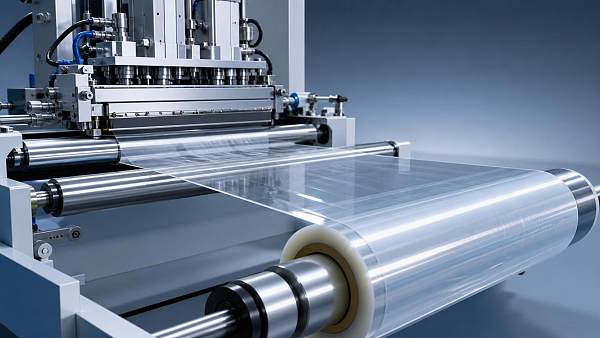
Micron-level coating technology controls how a liquid layer is applied, leveled, dried, and fixed onto a substrate with extreme thickness precision. The target may be adhesive, release, barrier, ink, primer, or functional topcoat.
In practical terms, it governs coating weight uniformity, edge definition, surface smoothness, anchorage, and defect frequency. Even one unstable parameter can disturb the full web path.
For BOPP and PET films, this may influence oxygen barrier and heat-seal consistency. For labels, it affects tack, die-cutting behavior, and anti-counterfeit layer integrity.
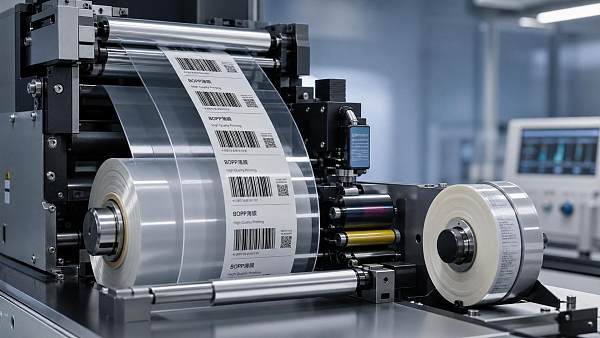
For thermal transfer ribbons, micron-level coating technology determines ink release, scratch resistance, and printhead compatibility. For stamping foils, it impacts brilliance, transfer completeness, and visual shelf impact.
Line quality is therefore not only a visual issue. It is a system outcome involving coating chemistry, machine settings, substrate behavior, and environmental stability.
Core outputs affected by coating precision
- Coating weight consistency across web width
- Defect control, including streaks, voids, and pinholes
- Surface functionality, such as release, wettability, and anchorage
- Optical appearance, including haze, gloss, and metallic effect
- Downstream converting performance
Which process variables most affect line quality in micron-level coating technology?
Several variables dominate performance, but five usually explain most coating line instability. These are viscosity, coating gap or transfer volume, substrate surface energy, drying profile, and web tension.
1. Viscosity and rheology
A coating can test correctly in a beaker yet fail on a line. Shear behavior matters as much as static viscosity.
Low viscosity may cause misting, edge flow, or insufficient coverage. High viscosity may create ribbing, poor leveling, or unstable transfer from gravure, slot-die, or Mayer systems.
2. Coating weight and metering accuracy
Micron-level coating technology depends on precise metering. Small deviations in pump pulsation, doctor blade pressure, or die lip alignment can generate long bands of off-spec material.
In anti-counterfeit labels, uneven coating can weaken tamper evidence. In barrier films, it can reduce protection against oxygen or moisture ingress.
3. Surface energy and cleanliness
Poor wetting remains one of the fastest routes to defects. If dyne level drops or contamination rises, the coating may retract, bead, or leave voids.
Corona treatment, plasma treatment, and clean handling help maintain adhesion. However, over-treatment may also affect chemistry and aging behavior.
4. Drying and solvent or water removal
Fast drying is not always better. If the skin forms too early, trapped solvent or water can create bubbles, pinholes, curl, or weak internal structure.
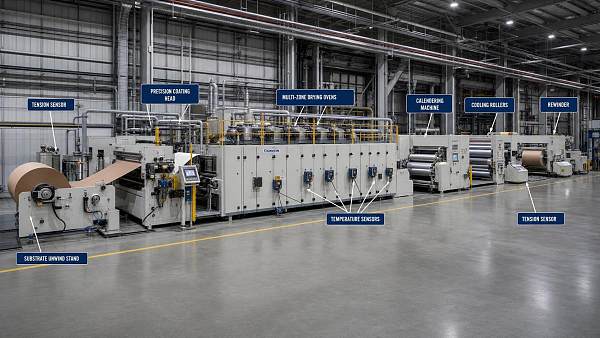
A staged oven profile usually works better. Early zones support leveling, while later zones complete drying and curing without damaging the web.
5. Web tension and line mechanics
Stable coating needs a stable web. Tension fluctuation changes coating geometry, nip behavior, registration, and drying response.
Thin films are especially sensitive. A few newtons of variation can amplify gauge bands, wrinkles, and edge defects.
How do defects show that micron-level coating technology is out of control?
Defects usually appear before full failure. The key is connecting each symptom to its likely cause instead of adjusting every setting at once.
Common defect patterns and likely triggers
In thermal transfer ribbons, poor control may appear as weak transfer or dusting. In metallized or stamped structures, it may appear as patchy brilliance or incomplete release.
The best response is structured diagnosis. Change one variable, verify with data, and track the result across machine direction and cross direction.
How should line quality be assessed across different packaging consumables?
Micron-level coating technology must be judged by end-use function, not only by coat weight. Different products fail in different ways, even when the same coating method is used.
Application-specific checkpoints
- Labels: peel, tack, shear, release, tamper response, die-cut cleanliness
- Barrier films: oxygen transmission, moisture barrier, seal consistency, haze
- Biodegradable cushioning: bond strength, flex cracking, sealing window
- Thermal ribbons: transfer sensitivity, barcode clarity, abrasion resistance
- Stamping foils: transfer completeness, gloss, metallic uniformity
A strong evaluation system combines inline and offline methods. Inline sensors can detect thickness drift quickly, while offline tests confirm functional fitness.
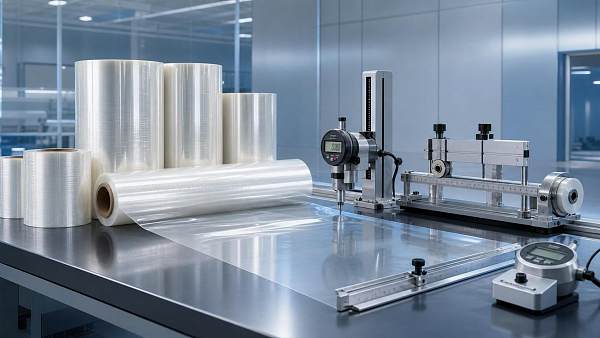
Useful tools include beta or infrared coat-weight measurement, dyne testing, microscopy, rub testing, peel testing, and optical inspection under controlled lighting.
What data should be trended?
Trend coating weight, viscosity by temperature, line speed, oven zones, tension, defect counts, and final functional tests. Without trends, recurring defects look random even when they are systematic.
What are the most common mistakes when improving micron-level coating technology?
One common mistake is treating coating defects as chemistry-only problems. Many failures start in machine mechanics, roll condition, pump stability, or web handling.
Another mistake is copying settings from one substrate to another. A formulation that performs on PET may behave very differently on BOPP, paper, or compostable structures.
A third mistake is optimizing one property at the expense of the system. Higher tack may hurt die-cutting. Faster drying may harm leveling. Lower coat weight may cut barrier margin.
Risk reminders
- Do not ignore room humidity and temperature
- Do not judge quality from appearance alone
- Do not skip surface preparation checks
- Do not adjust multiple variables without a trial plan
How can a stable control plan improve micron-level coating technology over time?
A stable control plan turns coating from reactive troubleshooting into repeatable process capability. It should link formulation windows, machine windows, and end-use requirements.
Recommended control framework
In advanced packaging systems, micron-level coating technology improves fastest when process data and application outcomes are reviewed together. Functional success is the final proof of line quality.
For PPCS-tracked sectors such as high-barrier films, anti-counterfeit labels, eco-cushioning materials, thermal ribbons, and stamping foils, the strongest lines are built on disciplined coating control.
Start with the basics: verify wetting, map viscosity under shear, confirm coat-weight uniformity, review oven balance, and stabilize web tension. Then connect every result to real product performance.
That is how micron-level coating technology moves from a narrow process topic to a strategic quality advantage. A better line does not only run cleaner. It protects function, appearance, and market credibility.
Recommended News
 Sep 02, 2026When do high clarity films for food wraps improve shelf appeal?High clarity films for food wraps boost shelf appeal by showcasing freshness, texture, and quality while balancing seal performance, protection, and retail-ready presentation.
 Sep 01, 2026How to prevent peeling when using printable transfer foilsTransfer foils printable: prevent peeling with proven tips on substrate prep, ink compatibility, curing, and transfer settings for durable, premium results.
 Aug 30, 2026How PET packaging sheets affect thermoforming consistencyPET packaging sheets directly influence thermoforming consistency. Explore how gauge profile, IV, thermal behavior, and rPET content affect quality, scrap, and line performance.
 Sep 02, 2026When a PVC Transfer Coating Line Fits Better Than Direct Coating in Flexible MaterialsPVC transfer coating line or direct coating? Learn when transfer coating delivers better surface quality, substrate protection, and process stability for flexible materials.
 Aug 23, 2026When does solvent free film coating technology improve coating consistency?Solvent free film coating technology improves coating consistency when drying variability, thermal stress, and residual solvent risks limit quality. Learn when it truly delivers repeatable performance.
 Aug 15, 2026What drives micro coating materials price in industrial use?Micro coating materials price depends on chemistry, process control, substrate fit, and compliance. Learn what really drives cost in industrial use and how to choose smarter.
 Jul 22, 2026Metallized Film Physics in Vacuum Deposition: Key Factors Behind Barrier and Optical PerformanceMetallized film physics vacuum deposition explained: discover how substrate, chamber control, and layer uniformity shape barrier, gloss, and converting performance across packaging applications.
 Jul 27, 2026How to Evaluate a Used PVC Coating Calendering Line Before PurchaseUsed PVC coating calendering line buyers: learn how to assess process fit, roller condition, controls, compliance, and total cost before purchase to avoid hidden risks.
 Jul 21, 2026Vacuum Metallized Paper: Key Properties, Uses, and LimitsVacuum metallized paper explained: discover its key properties, packaging uses, print benefits, and limits to choose the right premium, cost-effective material.
 Jul 18, 2026How to Evaluate Micro Coating Materials in Europe for Performance and ComplianceMicro coating materials Europe buyers can use this guide to compare performance, compliance, recyclability, and supplier quality for smarter sourcing and faster qualification.
 Jul 15, 2026Film Coating Technology for BOPP: Key Methods and Performance TradeoffsFilm coating technology for BOPP explained: compare acrylic, PVDC, water-based, and specialty coatings, understand barrier and sealing tradeoffs, and choose the right path for cost, compliance, and performance.
 Jul 09, 2026Packaging Supplier References for Films: What to Verify Before ApprovalPackaging supplier references for films help you verify quality, compliance, consistency, and delivery risk before approval. Learn what to check to avoid costly packaging failures.
 Jul 08, 2026Biaxial Film Europe: 2026 Supply, Pricing, and Regulation OutlookBiaxial film Europe in 2026 faces shifting supply, pricing, and PPWR pressure. Explore key BOPP and PET risks, cost drivers, and smart sourcing strategies.
 Jul 05, 2026How Thin Film Coating Technology Improves Barrier and Surface PerformanceThin film coating technology improves barrier strength, printability, adhesion, and durability across packaging and labels. Learn how to choose smarter coatings for performance, compliance, and cost.
 Jul 02, 2026Pharmaceutical Packaging Films in 2026: Barrier and Sustainability ShiftsPharmaceutical packaging films in 2026 face a new test: balancing barrier performance, compliance, and sustainability. Explore key shifts shaping smarter, lower-risk packaging decisions.
 Jul 11, 2026Artificial Leather Coating Line: Process, Risk and Procurement NotesBuyer notes on artificial leather coating line process flow, PVC coating calendering risks, used-machine checks and procurement decisions.
 Jul 01, 2026How to Evaluate a Coated Films Manufacturer for Quality and Lead TimeCoated films manufacturer selection affects quality, lead time, and total cost. Learn how to compare data, stability, compliance, and delivery reliability before you buy.
 Jun 28, 2026Oriented Polyester Film Rolls: Key Tolerance Checks Before ProductionOriented polyester film rolls require precise tolerance checks before production. Learn how thickness, width, tensile, and winding control reduce scrap, improve uptime, and protect converting quality.
 Jun 26, 2026Cosmetic Packaging Decoration Materials: Finish, Adhesion, and Compliance BasicsCosmetic packaging decoration materials explained: learn finish, adhesion, and compliance basics to improve durability, brand appeal, and global packaging confidence.
 Jun 25, 2026Visual Shelf Impact Materials: What Improves Standout Without ReworkVisual shelf impact materials that boost shelf standout without costly rework. Learn how to balance optics, printability, durability, and compliance across packaging applications.
 Jun 24, 2026Electronic Protective Materials: Key Barrier and ESD Specs ExplainedElectronic protective materials explained: learn key barrier and ESD specs, avoid hidden packaging failures, and choose safer, compliant protection for sensitive electronics.
 Jun 20, 2026Micron-Level Coating Intelligence: What It Means for Print ConsistencyMicron-level coating intelligence reveals how coating thickness, cure, and surface behavior drive print consistency, barcode clarity, and label durability—read the key factors that reduce defects and improve production confidence.
 Jun 19, 2026How Polymer Cast-Stretching Technology Improves Film Gauge ConsistencyPolymer cast-stretching technology improves film gauge consistency by stabilizing melt flow, cooling, and stretching—helping packaging lines cut waste, boost barrier performance, and improve yield.
 Jun 18, 2026Electronic Protective Materials: Key Factors for Heat and ESD ControlElectronic protective materials are critical for heat control, ESD protection, durability, and production fit. Discover how to compare options and choose materials that improve reliability.