Search News
Industry Portal
Hot Articles
- China Enforces Eco-Environment Code, Raising Export Packaging Compliance RequirementsChina enforces its Eco-Environment Code, tightening export packaging compliance for food, FMCG, e-commerce, and pharma. Learn the new risks, certification checks, and sourcing actions now.
- How to measure packaging sustainability metrics that actually matterPackaging sustainability metrics that actually matter: learn how to compare carbon, recyclability, performance, and operational yield to make smarter packaging decisions.
- What drives micro coating materials price in industrial use?Micro coating materials price depends on chemistry, process control, substrate fit, and compliance. Learn what really drives cost in industrial use and how to choose smarter.
Popular Tags
Pharmaceutical Packaging Films in 2026: Barrier and Sustainability Shifts
Time
Click Count
Pharmaceutical Packaging Films Are Entering a More Demanding Phase
In 2026, pharmaceutical packaging films are being judged by a different standard.
Basic protection is no longer enough.
The sharper question is whether a film structure can hold barrier integrity, satisfy tightening rules, and still make economic sense over time.
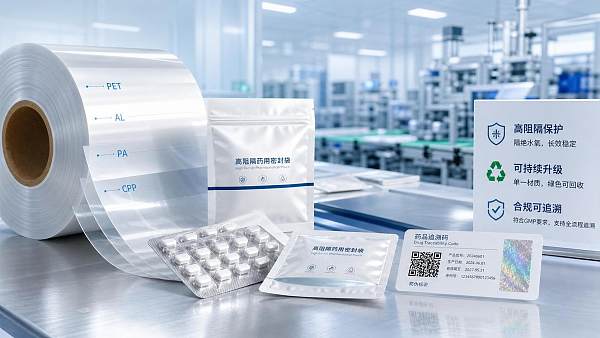
That shift is visible across blisters, sachets, pouches, overwraps, and label-linked secondary packs.
More drug formats are sensitive to oxygen, moisture, light, and transport stress.
At the same time, packaging teams face rising pressure around recyclability, material transparency, and data traceability.
This is why pharmaceutical packaging films now sit at the intersection of materials science, compliance strategy, and operational risk control.
From the broader packaging ecosystem, PPCS has been tracking the same pattern.
High-barrier films, anti-counterfeit labels, thermal transfer systems, and lightweight protective materials are no longer separate conversations.
They are becoming part of one integrated packaging logic.
Why the Market Is Moving Beyond Traditional Barrier Thinking
For years, pharmaceutical packaging films were selected mainly around shelf life and seal performance.
That framework still matters, but it no longer captures the full decision picture.
Recent market signals show a broader evaluation model taking shape.
- Regulatory expectations now reach deeper into material composition, recyclability claims, and supplier documentation.
- More sensitive formulations require stable performance across humidity swings and global distribution routes.
- Serialization and anti-counterfeit systems are pushing films and labels to work together, not in isolation.
- Cost reviews are focusing on total packaging risk, including waste, recalls, line downtime, and disposal fees.
The practical effect is clear.
Pharmaceutical packaging films are now being compared as system components, not just material layers.
A film that delivers strong oxygen barrier but complicates recycling may lose ground.
A film that reduces gauge but weakens machinability may also create hidden cost.
This is where the wider PPCS view becomes useful.
Micron-level coating chemistry, oriented film behavior, adhesive compatibility, and print durability increasingly shape one commercial outcome.
The Strongest Signal in 2026 Is the Barrier-Sustainability Tradeoff
The most important shift is not a simple move toward greener materials.
It is the effort to preserve pharmaceutical-grade protection while reducing structural complexity and end-of-life burden.
In many applications, legacy multi-material laminates still offer excellent protection.
Yet they are facing tougher scrutiny because recovery pathways remain limited.
That does not mean mono-material structures will replace everything immediately.
What is happening instead is more selective redesign.
Applications with moderate barrier needs are being reworked first.
Higher-risk products are seeing hybrid approaches, downgauged constructions, or coating-led improvements rather than full material conversion.
For pharmaceutical packaging films, this tradeoff will define most technical discussions through 2026.
Regulation Is No Longer a Background Issue
More obvious now is the role of regulation in material selection.
European packaging rules, extended producer responsibility models, and disclosure requirements are affecting film strategy well beyond Europe.
Global pharmaceutical supply chains rarely stay inside one jurisdiction.
That means packaging specifications increasingly need to survive cross-border scrutiny.
This is especially relevant where pharmaceutical packaging films include specialty coatings, foil substitutions, printable top webs, or tamper-evident layers.
The issue is not only whether a structure performs.
It is whether the supporting evidence is complete enough for validation, export, and future rule changes.
PPCS has emphasized this point across the consumables field.
A strong material position now depends on technical proof and eco-compliance discipline working together.
That combination is becoming a competitive filter, especially in regulated healthcare packaging.
Performance Expectations Are Expanding Across the Pack
Another important development is the widening definition of performance.
Barrier remains central, but film evaluation now extends to line efficiency, print clarity, seal consistency, and traceability integration.
In actual packaging environments, failures often emerge at interfaces.
A film may test well in isolation yet perform poorly with inks, labels, or coding systems.
That is why pharmaceutical packaging films are increasingly reviewed alongside adjacent consumables.
- Cold-chain products need film structures that remain stable when labels and adhesives face extreme temperatures.
- Unit-dose and small-format packs need printable surfaces that support sharp data coding and reliable scanning.
- Tamper-evident formats need compatibility between the primary film and the security label logic.
- Export packs need durable overwrap and secondary protection without adding unnecessary weight.
This broader view explains why insights from BOPP/PET film orientation, adhesive behavior, and thermal transfer durability matter in pharmaceutical settings too.
The pack is becoming a coordinated information and protection system.
Where the Commercial Impact Shows Up First
The consequences of these changes do not appear only in R&D discussions.
They show up in business cases, qualification timelines, and risk calculations.
Three areas stand out in 2026.
Specification decisions are taking longer
Material changes now require stronger justification.
Teams are asking how a new pharmaceutical packaging film affects validation scope, waste streams, and future compliance exposure.
Supplier evaluation is becoming more technical
Commercial fit depends on more than price and lead time.
Converters and material partners are expected to explain coating design, barrier stability, and documentation readiness with greater precision.
Lifecycle cost is getting harder to ignore
Lower-gauge pharmaceutical packaging films can create savings.
But those savings disappear quickly if sealing windows narrow or reject rates increase.
The best decisions now come from balancing material efficiency with operational resilience.
What Deserves Closer Attention Over the Next 12 Months
From a forward-looking perspective, a few signals deserve close tracking.
- Growth in coating-based barrier enhancement instead of full laminate complexity.
- More demand for pharmaceutical packaging films that support mono-material or near-mono-material recovery pathways.
- Tighter integration between primary films, anti-counterfeit labels, and thermal transfer coding.
- Higher interest in downgauging supported by robust machinability data, not only sustainability claims.
- More frequent use of evidence packages that combine barrier, migration, recyclability, and supply continuity information.
None of these signals points to a single winning structure.
They point instead to a new decision discipline.
Pharmaceutical packaging films will be favored when they solve multiple constraints at once.
Barrier alone will not secure that position.
A Practical Reading of the 2026 Direction
The market is not moving toward simpler packaging expectations.
It is moving toward smarter tradeoffs.
In that environment, pharmaceutical packaging films should be assessed through four linked questions.
- Does the structure protect the product under real distribution and storage conditions?
- Can its material logic withstand upcoming compliance and sustainability reviews?
- Will it perform reliably with coding, labeling, sealing, and handling systems?
- Does it improve total packaging economics rather than only reducing nominal material cost?
That is the useful next step for 2026 planning.
Map the current film portfolio against these questions.
Compare where barrier needs are truly critical, where redesign is feasible, and where documentation gaps could become future risk.
The strongest pharmaceutical packaging films in this cycle will be the ones that connect protection, proof, and practicality in one specification.
Recommended News
 Aug 15, 2026What drives micro coating materials price in industrial use?Micro coating materials price depends on chemistry, process control, substrate fit, and compliance. Learn what really drives cost in industrial use and how to choose smarter.
 Jul 22, 2026Metallized Film Physics in Vacuum Deposition: Key Factors Behind Barrier and Optical PerformanceMetallized film physics vacuum deposition explained: discover how substrate, chamber control, and layer uniformity shape barrier, gloss, and converting performance across packaging applications.
 Jul 27, 2026How to Evaluate a Used PVC Coating Calendering Line Before PurchaseUsed PVC coating calendering line buyers: learn how to assess process fit, roller condition, controls, compliance, and total cost before purchase to avoid hidden risks.
 Jul 21, 2026Vacuum Metallized Paper: Key Properties, Uses, and LimitsVacuum metallized paper explained: discover its key properties, packaging uses, print benefits, and limits to choose the right premium, cost-effective material.
 Jul 18, 2026How to Evaluate Micro Coating Materials in Europe for Performance and ComplianceMicro coating materials Europe buyers can use this guide to compare performance, compliance, recyclability, and supplier quality for smarter sourcing and faster qualification.
 Jul 15, 2026Film Coating Technology for BOPP: Key Methods and Performance TradeoffsFilm coating technology for BOPP explained: compare acrylic, PVDC, water-based, and specialty coatings, understand barrier and sealing tradeoffs, and choose the right path for cost, compliance, and performance.
 Jul 09, 2026Packaging Supplier References for Films: What to Verify Before ApprovalPackaging supplier references for films help you verify quality, compliance, consistency, and delivery risk before approval. Learn what to check to avoid costly packaging failures.
 Jul 08, 2026Biaxial Film Europe: 2026 Supply, Pricing, and Regulation OutlookBiaxial film Europe in 2026 faces shifting supply, pricing, and PPWR pressure. Explore key BOPP and PET risks, cost drivers, and smart sourcing strategies.
 Jul 05, 2026How Thin Film Coating Technology Improves Barrier and Surface PerformanceThin film coating technology improves barrier strength, printability, adhesion, and durability across packaging and labels. Learn how to choose smarter coatings for performance, compliance, and cost.
 Jul 02, 2026Pharmaceutical Packaging Films in 2026: Barrier and Sustainability ShiftsPharmaceutical packaging films in 2026 face a new test: balancing barrier performance, compliance, and sustainability. Explore key shifts shaping smarter, lower-risk packaging decisions.
 Jul 11, 2026Artificial Leather Coating Line: Process, Risk and Procurement NotesBuyer notes on artificial leather coating line process flow, PVC coating calendering risks, used-machine checks and procurement decisions.
 Jul 01, 2026How to Evaluate a Coated Films Manufacturer for Quality and Lead TimeCoated films manufacturer selection affects quality, lead time, and total cost. Learn how to compare data, stability, compliance, and delivery reliability before you buy.
 Jun 28, 2026Oriented Polyester Film Rolls: Key Tolerance Checks Before ProductionOriented polyester film rolls require precise tolerance checks before production. Learn how thickness, width, tensile, and winding control reduce scrap, improve uptime, and protect converting quality.
 Jun 26, 2026Cosmetic Packaging Decoration Materials: Finish, Adhesion, and Compliance BasicsCosmetic packaging decoration materials explained: learn finish, adhesion, and compliance basics to improve durability, brand appeal, and global packaging confidence.
 Jun 25, 2026Visual Shelf Impact Materials: What Improves Standout Without ReworkVisual shelf impact materials that boost shelf standout without costly rework. Learn how to balance optics, printability, durability, and compliance across packaging applications.
 Jun 24, 2026Electronic Protective Materials: Key Barrier and ESD Specs ExplainedElectronic protective materials explained: learn key barrier and ESD specs, avoid hidden packaging failures, and choose safer, compliant protection for sensitive electronics.
 Jun 20, 2026Micron-Level Coating Intelligence: What It Means for Print ConsistencyMicron-level coating intelligence reveals how coating thickness, cure, and surface behavior drive print consistency, barcode clarity, and label durability—read the key factors that reduce defects and improve production confidence.
 Jun 19, 2026How Polymer Cast-Stretching Technology Improves Film Gauge ConsistencyPolymer cast-stretching technology improves film gauge consistency by stabilizing melt flow, cooling, and stretching—helping packaging lines cut waste, boost barrier performance, and improve yield.
 Jun 18, 2026Electronic Protective Materials: Key Factors for Heat and ESD ControlElectronic protective materials are critical for heat control, ESD protection, durability, and production fit. Discover how to compare options and choose materials that improve reliability.
 Jun 14, 2026PLA PBAT Film Formulations: What Affects Strength and SealabilityPLA PBAT film formulations affect strength, sealability, and production stability. Learn how resin ratios, additives, and processing shape reliable compostable packaging performance.
 Jun 13, 2026Pharmaceutical Film Technology: Barrier Performance and Coating Methods ExplainedPharmaceutical film technology explained with a practical look at barrier performance, base films, and coating methods to help you compare options, reduce packaging risk, and improve compliance.
 Jun 12, 2026Food Grade Packaging Films: Key Tests for Safety and ComplianceFood grade packaging films: learn the key tests for safety, migration, seal integrity, barrier performance, and compliance to reduce audit risk and choose market-ready packaging.
 Jun 11, 2026PLA PBAT Film Formulations: What Affects Cost and SealabilityPLA PBAT film formulations affect far more than resin price. Discover what drives cost, sealability, scrap, and line efficiency to compare suppliers smarter.
 Jun 10, 2026Micron-Level Coating Intelligence in Inline Quality ControlMicron-level coating intelligence helps inline quality control catch drift, reduce scrap, improve coating consistency, and protect packaging performance on fast production lines.