Search News
Industry Portal
Hot Articles
- How to verify whether recyclable flexible packaging in Europe meets PPWR expectationsRecyclable flexible packaging Europe: learn how to verify PPWR readiness, assess sorting and barrier performance, and avoid weak claims with a practical evaluation framework.
- When do pre stretch films lower pallet wrap cost enough to switchPre stretch films can cut pallet wrap cost when they reduce film use, improve consistency, and maintain load containment. Learn when switching delivers real savings.
- Which pressure sensitive adhesive materials for tapes hold up best in cold storagePressure sensitive adhesive materials for tapes: discover which acrylic, rubber, and low-temperature options perform best in cold storage to reduce seal failure and improve traceability.
Popular Tags
Biaxial Film Europe: 2026 Supply, Pricing, and Regulation Outlook
Time
Click Count
Europe’s packaging chain is moving into a tighter operating window, and biaxial film Europe sits near the center of that shift. Resin volatility, capacity realignment, and stricter packaging rules are changing how BOPP and PET film are sourced, specified, and priced.
For 2026, the issue is no longer only material availability. It is also about compliance cost, recyclability fit, downgauging potential, and whether film structures still support shelf impact, barrier performance, and logistics resilience.
That is why biaxial film Europe matters well beyond film converters. Food, personal care, pharmaceuticals, e-commerce, and industrial goods all depend on oriented films as functional outer layers, printable substrates, and protective barriers.
Why the market is under closer watch
Biaxially oriented films are engineered by stretching polymer chains in two directions. In practical terms, that process improves strength, clarity, machinability, and barrier behavior compared with unstretched films.
In biaxial film Europe, BOPP remains closely tied to flexible food packaging, labels, overwrap, and tobacco applications. PET film holds a stronger position in higher-temperature uses, premium graphics, lidding, lamination, and specialty industrial formats.
The market deserves attention because films now carry more jobs at once. They must protect product integrity, run efficiently on fast lines, reduce material weight, and fit emerging recycling expectations without disrupting brand presentation.
This is also where PPCS-style intelligence becomes useful. Film performance is no longer a single-material question. It connects coating chemistry, printing behavior, adhesive compatibility, anti-counterfeit layers, and logistics durability.
Supply in 2026 will look available, but not evenly comfortable
Headline supply may appear adequate across much of the region. Even so, availability by grade, thickness, treatment level, and certification status will remain uneven.
Commodity BOPP could stay relatively competitive where regional production is stable and imports remain open. Specialty PET and higher-barrier structures may feel tighter, especially when qualification cycles limit substitution.
Some capacity additions in adjacent regions can soften pressure, but European buyers still face lead-time risk when energy costs rise or maintenance outages hit core lines. A nominally long market can become a short market very quickly in specialty segments.
Another point often missed is that not all tons are commercially equal. Corona treatment stability, slip performance, optical consistency, and sealing behavior decide whether a film is truly interchangeable.
Where supply stress is most likely to appear
- Ultra-thin downgauged films with proven machine stability.
- Mono-material structures aligned with recyclability goals.
- Coated grades for barrier, release, or premium print surfaces.
- Films paired with regulated applications such as pharma labeling and food contact.
Pricing will be driven by more than polymer costs
In biaxial film Europe, resin remains the base pricing lever, especially polypropylene and polyester feedstocks. Yet the 2026 pricing picture will be shaped by a wider cost stack.
Electricity and gas still matter because orientation lines are energy-intensive. Freight, labor, additives, coating inputs, and currency shifts can reshape margin expectations even when polymer benchmarks look stable.
A second pricing layer comes from specification complexity. A plain film and a high-clarity, printable, coated, low-gauge film may move under very different commercial logic.
That matters for procurement strategy. Chasing the lowest nominal price per kilogram can produce a higher delivered packaging cost if waste, line stoppage, or seal inconsistency rises.
Regulation is becoming a design constraint
The regulatory story around biaxial film Europe is increasingly shaped by the Packaging and Packaging Waste Regulation, or PPWR. Its practical impact reaches beyond reporting and into film architecture decisions.
Structures that once optimized only barrier and print quality may now be reassessed through recyclability, material reduction, and end-of-life compatibility. That creates pressure on multi-material laminates and non-essential complexity.
This does not mean every PET or BOPP solution becomes problematic. It means each structure must justify its function more clearly, especially when alternatives can deliver similar pack performance with simpler recovery pathways.
In addition, compliance risk can emerge from adjacent layers. Adhesives, inks, coatings, release systems, and decorative effects all influence whether a package remains acceptable in real collection and recycling systems.
Signals worth tracking
- Recyclability criteria for mono-material flexible packaging.
- Pressure to lightweight films without losing line performance.
- Greater scrutiny on coatings, metallization, and label interactions.
- Documentation requirements for food contact and environmental claims.
Where business value is still expanding
Despite regulatory pressure, biaxial film Europe remains commercially attractive because oriented films solve several cost and performance problems at once. They can protect product value while reducing pack weight and transport inefficiency.
Food remains the largest value pool. Crisp retention, aroma protection, puncture resistance, and print quality still determine the commercial success of many snack, confectionery, and dry goods formats.
Pharmaceutical and personal care formats add another layer. Here, tamper evidence, label anchorage, scannability, and migration compliance matter as much as appearance.
E-commerce and logistics are also relevant. Secondary packaging films, labels, ribbons, and cushioning systems increasingly work as one integrated consumable system, which fits the broader PPCS view of packaging performance.
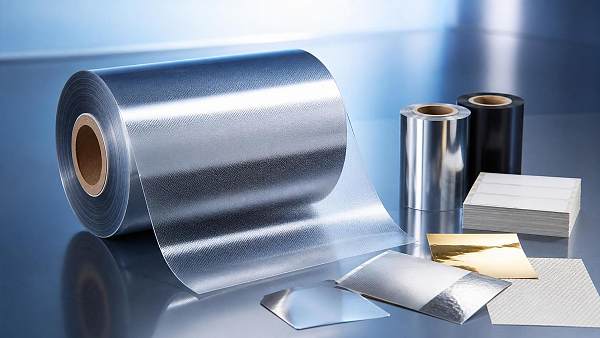
In premium retail packaging, the role of biaxial film Europe extends into optical impact. Metallized and coated surfaces still support shelf differentiation, although decorative choices must increasingly coexist with recyclability goals.
How to read film choices in practical terms
A useful decision framework starts with function, not with the catalog description. The first question is what the film must protect, preserve, or communicate.
The second question is where failure shows up. Sometimes failure is oxygen ingress. Sometimes it is poor ink anchorage, telescoping rolls, seal contamination, or unreadable logistics data after abrasion.
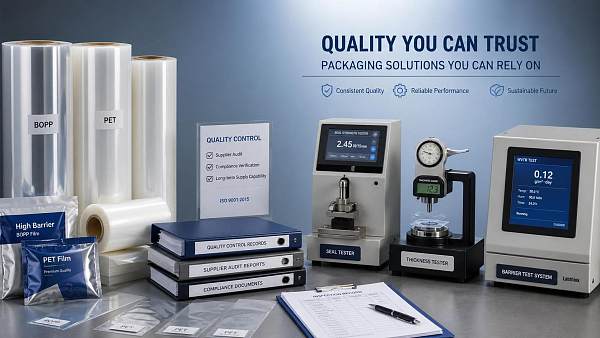
This is why film cannot be assessed in isolation. BOPP or PET choices interact with label stocks, adhesives, coatings, and thermal transfer ribbons, especially in high-speed distribution systems.
For many applications, downgauging still makes sense. But downgauging only works when stiffness, barrier, and converting stability are validated together. Saving microns while creating line loss is a false economy.
Useful evaluation points for 2026
- Cost per finished pack, not only cost per kilogram.
- Barrier retention after printing, lamination, and transport stress.
- Fit with PPWR-driven redesign pathways.
- Substitution options for dual sourcing by grade.
- Compatibility with labels, inks, and anti-counterfeit elements.
What the 2026 outlook suggests
The likely direction for biaxial film Europe is not simple shortage or simple oversupply. It is a more selective market where compliant, efficient, and technically proven films command stronger strategic value.
Buyers that rely on spot pricing alone may remain exposed. The more durable advantage will come from clearer specification control, better supplier qualification, and earlier testing of recyclable or downgauged alternatives.
For 2026 planning, it makes sense to review three things in parallel: supply resilience by grade, exposure to resin and energy swings, and the redesign burden created by regulation.
That review should also extend across the wider packaging consumables stack. Films, labels, coatings, cushioning, and coding systems increasingly determine each other’s real operating value.
A grounded next step is to map current film structures against compliance risk, performance criticality, and replacement difficulty. In biaxial film Europe, the strongest position in 2026 will come from decisions made before the market forces urgency.
Recommended News
 Aug 15, 2026What drives micro coating materials price in industrial use?Micro coating materials price depends on chemistry, process control, substrate fit, and compliance. Learn what really drives cost in industrial use and how to choose smarter.
 Jul 22, 2026Metallized Film Physics in Vacuum Deposition: Key Factors Behind Barrier and Optical PerformanceMetallized film physics vacuum deposition explained: discover how substrate, chamber control, and layer uniformity shape barrier, gloss, and converting performance across packaging applications.
 Jul 27, 2026How to Evaluate a Used PVC Coating Calendering Line Before PurchaseUsed PVC coating calendering line buyers: learn how to assess process fit, roller condition, controls, compliance, and total cost before purchase to avoid hidden risks.
 Jul 21, 2026Vacuum Metallized Paper: Key Properties, Uses, and LimitsVacuum metallized paper explained: discover its key properties, packaging uses, print benefits, and limits to choose the right premium, cost-effective material.
 Jul 18, 2026How to Evaluate Micro Coating Materials in Europe for Performance and ComplianceMicro coating materials Europe buyers can use this guide to compare performance, compliance, recyclability, and supplier quality for smarter sourcing and faster qualification.
 Jul 15, 2026Film Coating Technology for BOPP: Key Methods and Performance TradeoffsFilm coating technology for BOPP explained: compare acrylic, PVDC, water-based, and specialty coatings, understand barrier and sealing tradeoffs, and choose the right path for cost, compliance, and performance.
 Jul 09, 2026Packaging Supplier References for Films: What to Verify Before ApprovalPackaging supplier references for films help you verify quality, compliance, consistency, and delivery risk before approval. Learn what to check to avoid costly packaging failures.
 Jul 08, 2026Biaxial Film Europe: 2026 Supply, Pricing, and Regulation OutlookBiaxial film Europe in 2026 faces shifting supply, pricing, and PPWR pressure. Explore key BOPP and PET risks, cost drivers, and smart sourcing strategies.
 Jul 05, 2026How Thin Film Coating Technology Improves Barrier and Surface PerformanceThin film coating technology improves barrier strength, printability, adhesion, and durability across packaging and labels. Learn how to choose smarter coatings for performance, compliance, and cost.
 Jul 02, 2026Pharmaceutical Packaging Films in 2026: Barrier and Sustainability ShiftsPharmaceutical packaging films in 2026 face a new test: balancing barrier performance, compliance, and sustainability. Explore key shifts shaping smarter, lower-risk packaging decisions.
 Jul 11, 2026Artificial Leather Coating Line: Process, Risk and Procurement NotesBuyer notes on artificial leather coating line process flow, PVC coating calendering risks, used-machine checks and procurement decisions.
 Jul 01, 2026How to Evaluate a Coated Films Manufacturer for Quality and Lead TimeCoated films manufacturer selection affects quality, lead time, and total cost. Learn how to compare data, stability, compliance, and delivery reliability before you buy.
 Jun 28, 2026Oriented Polyester Film Rolls: Key Tolerance Checks Before ProductionOriented polyester film rolls require precise tolerance checks before production. Learn how thickness, width, tensile, and winding control reduce scrap, improve uptime, and protect converting quality.
 Jun 26, 2026Cosmetic Packaging Decoration Materials: Finish, Adhesion, and Compliance BasicsCosmetic packaging decoration materials explained: learn finish, adhesion, and compliance basics to improve durability, brand appeal, and global packaging confidence.
 Jun 25, 2026Visual Shelf Impact Materials: What Improves Standout Without ReworkVisual shelf impact materials that boost shelf standout without costly rework. Learn how to balance optics, printability, durability, and compliance across packaging applications.
 Jun 24, 2026Electronic Protective Materials: Key Barrier and ESD Specs ExplainedElectronic protective materials explained: learn key barrier and ESD specs, avoid hidden packaging failures, and choose safer, compliant protection for sensitive electronics.
 Jun 20, 2026Micron-Level Coating Intelligence: What It Means for Print ConsistencyMicron-level coating intelligence reveals how coating thickness, cure, and surface behavior drive print consistency, barcode clarity, and label durability—read the key factors that reduce defects and improve production confidence.
 Jun 19, 2026How Polymer Cast-Stretching Technology Improves Film Gauge ConsistencyPolymer cast-stretching technology improves film gauge consistency by stabilizing melt flow, cooling, and stretching—helping packaging lines cut waste, boost barrier performance, and improve yield.
 Jun 18, 2026Electronic Protective Materials: Key Factors for Heat and ESD ControlElectronic protective materials are critical for heat control, ESD protection, durability, and production fit. Discover how to compare options and choose materials that improve reliability.
 Jun 14, 2026PLA PBAT Film Formulations: What Affects Strength and SealabilityPLA PBAT film formulations affect strength, sealability, and production stability. Learn how resin ratios, additives, and processing shape reliable compostable packaging performance.
 Jun 13, 2026Pharmaceutical Film Technology: Barrier Performance and Coating Methods ExplainedPharmaceutical film technology explained with a practical look at barrier performance, base films, and coating methods to help you compare options, reduce packaging risk, and improve compliance.
 Jun 12, 2026Food Grade Packaging Films: Key Tests for Safety and ComplianceFood grade packaging films: learn the key tests for safety, migration, seal integrity, barrier performance, and compliance to reduce audit risk and choose market-ready packaging.
 Jun 11, 2026PLA PBAT Film Formulations: What Affects Cost and SealabilityPLA PBAT film formulations affect far more than resin price. Discover what drives cost, sealability, scrap, and line efficiency to compare suppliers smarter.
 Jun 10, 2026Micron-Level Coating Intelligence in Inline Quality ControlMicron-level coating intelligence helps inline quality control catch drift, reduce scrap, improve coating consistency, and protect packaging performance on fast production lines.