Search News
Industry Portal
Hot Articles
- How to verify FDA compliance for packaging inks used on food packagingPackaging inks FDA compliant? Learn how to verify food-contact safety through regulatory citations, migration testing, supplier declarations, and process controls.
- When do holographic foils add value to luxury goods packaging?Packaging materials for luxury goods gain impact with holographic foils that elevate shelf appeal, authenticity, and premium unboxing—learn when this finish delivers real value.
- Can nano encryption technology stop counterfeit labels from being copied?Nano encryption technology anti counterfeit labels combine physical security, tamper evidence, and serialization to make copying harder. Explore smarter protection.
Popular Tags
Pharmaceutical Packaging Films: Key Specs That Affect Compliance
Time
Click Count
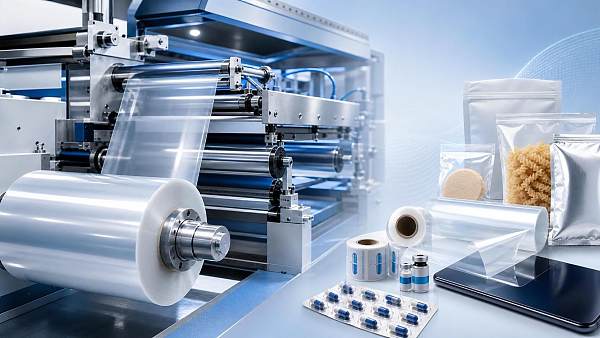
Pharmaceutical packaging films sit at the intersection of product protection, regulatory control, and supply chain reliability. In practice, they do far more than wrap a dose form. Film specifications influence moisture resistance, seal performance, print durability, serialization accuracy, and the stability data that supports market access across regions.
That is why film selection has become a strategic packaging decision rather than a narrow material purchase. For organizations managing global distribution, the wrong film can create compliance gaps, rejected batches, readability failures, or avoidable reformulation pressure. The right structure, by contrast, supports both safety and operational consistency.
Why film specifications matter more than ever
Regulators do not evaluate pharmaceutical packaging films as decorative layers. They look at how the material system protects the product throughout storage, transport, dispensing, and traceability workflows. A film that performs well in one climate or format may fail under another distribution profile.
This pressure is growing for several reasons. Drug portfolios are becoming more sensitive. Cross-border supply chains are longer. Serialization and anti-counterfeit rules are tighter. Sustainability expectations are also affecting material choices, especially where mono-material design and downgauging are under review.
From the broader packaging perspective, this is exactly where PPCS intelligence is relevant. High-barrier films, micro-coatings, anti-counterfeit labels, and thermal transfer systems no longer work as separate decisions. In pharmaceutical environments, they function as one compliance architecture.
What pharmaceutical packaging films actually include
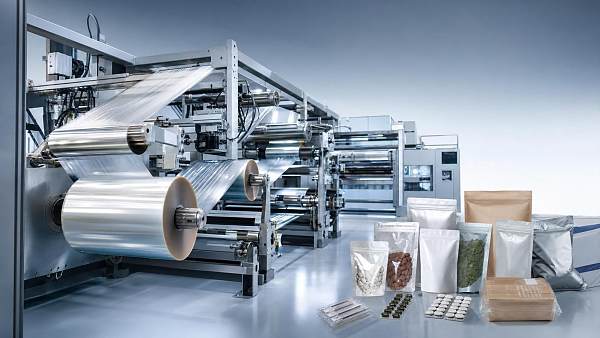
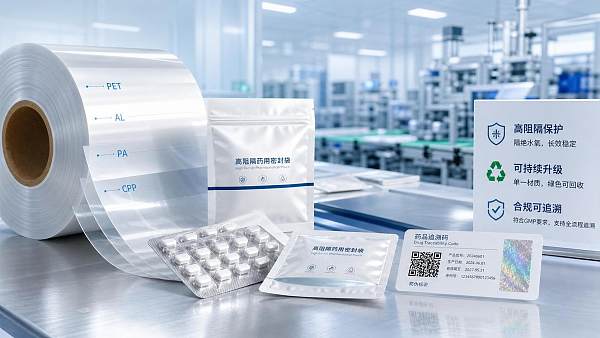
The term covers several material families used in primary, secondary, and supporting pharmaceutical packs. Common examples include blister lidding films, sachet laminates, pouch structures, overwrap films, and label facestocks designed for demanding cold-chain or tamper-evident conditions.
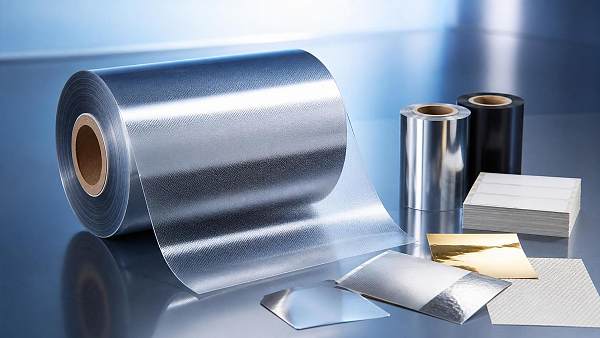
Some structures rely on PET, BOPP, PE, PVC, or aluminum-based laminations. Others use coated barrier layers or specialty sealant systems. The point is not only what resin appears in the structure, but how the full construction behaves under sealing, printing, sterilization, transport, and shelf-life conditions.
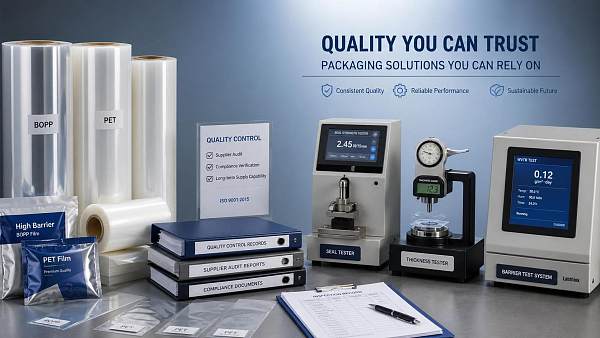
In compliance terms, pharmaceutical packaging films are evaluated as performance systems. Thickness alone does not define suitability. Barrier consistency, seal window, migration profile, machinability, and data-carrier compatibility all matter.
Key specs that shape compliance outcomes
Barrier performance
Oxygen transmission rate and water vapor transmission rate remain central. Moisture-sensitive tablets, powders, and biologics often depend on stable barrier performance throughout the full distribution cycle. Even small deviations can affect shelf life, potency retention, or packaging validation conclusions.
Seal integrity and seal window
A compliant film must seal consistently within real production tolerances. If the seal window is too narrow, line variation can produce weak seals, channel leaks, or visual defects. That becomes a quality risk long before a shipment reaches the market.
Mechanical strength
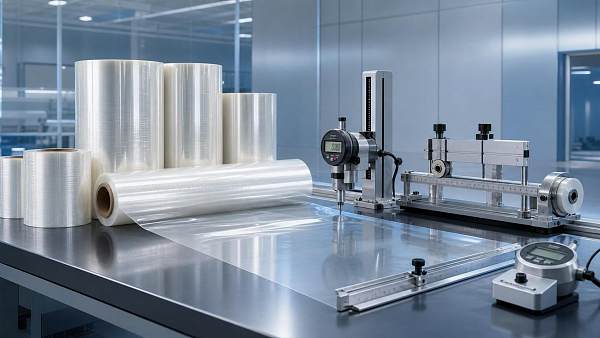
Tensile strength, puncture resistance, elongation, and tear behavior affect how pharmaceutical packaging films survive forming, filling, cartoning, palletization, and transit. Strong barrier properties mean little if the film is vulnerable to pinholes, cracking, or edge damage.
Chemical compatibility and extractables profile
Contact layers, coatings, inks, and adhesives must be assessed for interaction risk. Film selection should support the product’s stability package, not complicate it. For sensitive formulations, the chemistry behind coatings and sealants matters as much as the base film.
Printability and traceability support
Readable variable data is now a compliance requirement in many markets. Surface energy, coating quality, and ribbon compatibility affect barcode quality, human-readable text, and serial code permanence. If print rubs off or scans poorly, the issue quickly extends beyond packaging aesthetics.
Tamper evidence and authentication fit
In many pharmaceutical formats, pharmaceutical packaging films work together with security labels, VOID materials, or overt and covert markers. A film must support those elements without causing adhesion failure, delamination, or unreadable security features.
A practical view of the main decision criteria
The following matrix helps align technical film data with business risk.
Where the pressure points usually appear
In actual operations, compliance issues rarely begin as dramatic failures. They often start with small inconsistencies. A thermal transfer ribbon does not anchor well on a coated surface. A cold-chain label lifts at low temperature. A downgauged film passes lab testing but becomes unstable on a high-speed line.
That is why pharmaceutical packaging films should be evaluated in the same context as adjacent consumables. PPCS tracks this broader interaction closely. Barrier films, specialty adhesives, anti-counterfeit constructions, and print systems all influence whether a compliant design remains compliant during real execution.
This systems view is especially useful when packaging moves across multiple plants, CMOs, and regional labeling requirements. A film that works in isolation may still fail as part of the full packaging chain.
Typical use scenarios for pharmaceutical packaging films
- Blister formats that require strong moisture barriers and controlled push-through behavior.
- Sachets and pouches used for powders, diagnostics, and unit-dose applications.
- Cold-chain labeling environments where adhesion and print permanence face extreme temperatures.
- Tamper-evident secondary packs that combine films with security labels and serialized coding.
- Export packaging programs influenced by sustainability rules, recyclability targets, and material taxes.
Each scenario changes the weighting of film specifications. A dry solid dose may prioritize barrier and machinability. A biologic may require stronger focus on cold-chain labeling and traceability durability. An export-heavy portfolio may bring PPWR and material simplification into the same conversation.
How to assess options without reducing the decision to price
A useful review starts with the product risk profile, then moves outward. Look at sensitivity to moisture, oxygen, light, temperature, and handling stress. Then compare those needs against actual film data, not only marketing claims.
It also helps to ask whether the film supports the full packaging workflow:
- Can it hold seal quality across routine line variation?
- Does it support barcode grading and serial data permanence?
- Will it work with tamper-evident labels or overt security features?
- Does the material strategy create future regulatory or sustainability friction?
- Can suppliers provide technical evidence quickly during audits or change control?
Usually, the best decision is not the film with the highest theoretical barrier. It is the one that maintains compliant performance across manufacturing, logistics, and market-specific documentation requirements.
The next step is building a sharper specification framework
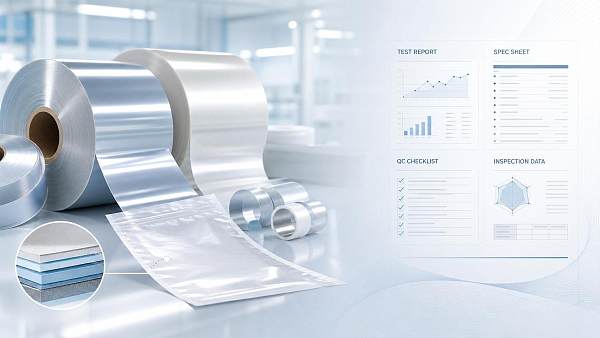
Pharmaceutical packaging films should be reviewed as part of a broader protection and identification system. That means connecting barrier science, coating chemistry, sealing behavior, label performance, and code readability into one decision framework.
A practical next move is to map current film structures against three filters: product stability needs, compliance evidence, and packaging line realities. Gaps usually appear quickly when those filters are applied together.
From there, comparison becomes more disciplined. Instead of debating materials in abstract terms, the evaluation centers on which pharmaceutical packaging films can protect the product, support traceability, and remain viable as regulations and sustainability pressures continue to evolve.
Recommended News
 Sep 02, 2026When do high clarity films for food wraps improve shelf appeal?High clarity films for food wraps boost shelf appeal by showcasing freshness, texture, and quality while balancing seal performance, protection, and retail-ready presentation.
 Sep 01, 2026How to prevent peeling when using printable transfer foilsTransfer foils printable: prevent peeling with proven tips on substrate prep, ink compatibility, curing, and transfer settings for durable, premium results.
 Aug 30, 2026How PET packaging sheets affect thermoforming consistencyPET packaging sheets directly influence thermoforming consistency. Explore how gauge profile, IV, thermal behavior, and rPET content affect quality, scrap, and line performance.
 Sep 02, 2026When a PVC Transfer Coating Line Fits Better Than Direct Coating in Flexible MaterialsPVC transfer coating line or direct coating? Learn when transfer coating delivers better surface quality, substrate protection, and process stability for flexible materials.
 Aug 23, 2026When does solvent free film coating technology improve coating consistency?Solvent free film coating technology improves coating consistency when drying variability, thermal stress, and residual solvent risks limit quality. Learn when it truly delivers repeatable performance.
 Aug 15, 2026What drives micro coating materials price in industrial use?Micro coating materials price depends on chemistry, process control, substrate fit, and compliance. Learn what really drives cost in industrial use and how to choose smarter.
 Jul 22, 2026Metallized Film Physics in Vacuum Deposition: Key Factors Behind Barrier and Optical PerformanceMetallized film physics vacuum deposition explained: discover how substrate, chamber control, and layer uniformity shape barrier, gloss, and converting performance across packaging applications.
 Jul 27, 2026How to Evaluate a Used PVC Coating Calendering Line Before PurchaseUsed PVC coating calendering line buyers: learn how to assess process fit, roller condition, controls, compliance, and total cost before purchase to avoid hidden risks.
 Jul 21, 2026Vacuum Metallized Paper: Key Properties, Uses, and LimitsVacuum metallized paper explained: discover its key properties, packaging uses, print benefits, and limits to choose the right premium, cost-effective material.
 Jul 18, 2026How to Evaluate Micro Coating Materials in Europe for Performance and ComplianceMicro coating materials Europe buyers can use this guide to compare performance, compliance, recyclability, and supplier quality for smarter sourcing and faster qualification.
 Jul 15, 2026Film Coating Technology for BOPP: Key Methods and Performance TradeoffsFilm coating technology for BOPP explained: compare acrylic, PVDC, water-based, and specialty coatings, understand barrier and sealing tradeoffs, and choose the right path for cost, compliance, and performance.
 Jul 09, 2026Packaging Supplier References for Films: What to Verify Before ApprovalPackaging supplier references for films help you verify quality, compliance, consistency, and delivery risk before approval. Learn what to check to avoid costly packaging failures.
 Jul 08, 2026Biaxial Film Europe: 2026 Supply, Pricing, and Regulation OutlookBiaxial film Europe in 2026 faces shifting supply, pricing, and PPWR pressure. Explore key BOPP and PET risks, cost drivers, and smart sourcing strategies.
 Jul 05, 2026How Thin Film Coating Technology Improves Barrier and Surface PerformanceThin film coating technology improves barrier strength, printability, adhesion, and durability across packaging and labels. Learn how to choose smarter coatings for performance, compliance, and cost.
 Jul 02, 2026Pharmaceutical Packaging Films in 2026: Barrier and Sustainability ShiftsPharmaceutical packaging films in 2026 face a new test: balancing barrier performance, compliance, and sustainability. Explore key shifts shaping smarter, lower-risk packaging decisions.
 Jul 11, 2026Artificial Leather Coating Line: Process, Risk and Procurement NotesBuyer notes on artificial leather coating line process flow, PVC coating calendering risks, used-machine checks and procurement decisions.
 Jul 01, 2026How to Evaluate a Coated Films Manufacturer for Quality and Lead TimeCoated films manufacturer selection affects quality, lead time, and total cost. Learn how to compare data, stability, compliance, and delivery reliability before you buy.
 Jun 28, 2026Oriented Polyester Film Rolls: Key Tolerance Checks Before ProductionOriented polyester film rolls require precise tolerance checks before production. Learn how thickness, width, tensile, and winding control reduce scrap, improve uptime, and protect converting quality.
 Jun 26, 2026Cosmetic Packaging Decoration Materials: Finish, Adhesion, and Compliance BasicsCosmetic packaging decoration materials explained: learn finish, adhesion, and compliance basics to improve durability, brand appeal, and global packaging confidence.
 Jun 25, 2026Visual Shelf Impact Materials: What Improves Standout Without ReworkVisual shelf impact materials that boost shelf standout without costly rework. Learn how to balance optics, printability, durability, and compliance across packaging applications.
 Jun 24, 2026Electronic Protective Materials: Key Barrier and ESD Specs ExplainedElectronic protective materials explained: learn key barrier and ESD specs, avoid hidden packaging failures, and choose safer, compliant protection for sensitive electronics.
 Jun 20, 2026Micron-Level Coating Intelligence: What It Means for Print ConsistencyMicron-level coating intelligence reveals how coating thickness, cure, and surface behavior drive print consistency, barcode clarity, and label durability—read the key factors that reduce defects and improve production confidence.
 Jun 19, 2026How Polymer Cast-Stretching Technology Improves Film Gauge ConsistencyPolymer cast-stretching technology improves film gauge consistency by stabilizing melt flow, cooling, and stretching—helping packaging lines cut waste, boost barrier performance, and improve yield.
 Jun 18, 2026Electronic Protective Materials: Key Factors for Heat and ESD ControlElectronic protective materials are critical for heat control, ESD protection, durability, and production fit. Discover how to compare options and choose materials that improve reliability.