Search News
Industry Portal
Hot Articles
- EU PPWR Rule Takes Effect for BOPP Barrier FilmsEU PPWR rule now reshapes BOPP barrier films in the EU market. Learn mandatory labeling, recyclability, traceability, and customs compliance risks before exports are delayed.
- Packaging Compliance in North America: Which Labels and Material Rules Matter Most?Packaging compliance North America explained: learn the label, bilingual, material, recyclability, and EPR rules that matter most to reduce risk and speed market access.
- EU PPWR Rules Now Apply to BOPP Barrier Film LabelsEU PPWR rules now apply to BOPP barrier film labels. Learn the new EU labeling, recyclability, and material disclosure requirements to avoid customs delays, fines, and compliance risks.
Popular Tags
How Polymer Cast-Stretching Technology Improves Film Gauge Consistency
Time
Click Count
How Polymer Cast-Stretching Technology Improves Film Gauge Consistency
For technical evaluators, film uniformity is never just a lab number.
It shapes barrier stability, sealing behavior, print quality, and line efficiency.
That is why polymer cast-stretching technology matters in modern film production.
It improves gauge consistency by stabilizing melt formation, quenching, and stretching.
In high-barrier packaging, those gains quickly become measurable commercial advantages.
Why film gauge consistency matters first
Gauge consistency means keeping film thickness variation within a tight target window.
When thickness drifts, properties drift with it.
Thinner spots often weaken oxygen barrier, puncture resistance, and web handling.
Thicker zones increase resin use, winding stress, and slitting instability.
In real operations, uneven gauge also disturbs metallizing, coating, and lamination quality.
That creates waste, customer complaints, and avoidable cost pressure.
For BOPP, PET, and specialty barrier films, consistency supports more than appearance.
It supports machine-direction balance, downstream yield, and compliance with demanding specifications.
This is where polymer cast-stretching technology becomes especially valuable.
What polymer cast-stretching technology actually controls
Polymer cast-stretching technology combines controlled casting with engineered orientation stages.
The goal is simple.
Create a stable precursor sheet, then stretch it without amplifying thickness defects.
That sounds straightforward, but the physics are demanding.
The process usually governs three linked zones:
- Melt delivery and die flow uniformity
- Cast roll cooling and sheet solidification
- Machine and transverse stretching stability
If one zone fluctuates, the next stage usually magnifies the problem.
If all three stay synchronized, gauge consistency improves significantly.
How melt flow stability reduces thickness variation
The first step in polymer cast-stretching technology is melt flow control.
A film cannot become uniform later if the melt curtain starts uneven.
Several variables matter here:
- Resin viscosity consistency across the batch
- Extruder pressure stability
- Die lip geometry and thermal balance
- Residence time distribution in the melt path
When these are tightly managed, the melt exits with a more even profile.
That reduces edge build-up, center sag, and local thickness waves.
More importantly, it gives the stretching section a stable starting point.
In recent evaluations, a stronger signal often comes from thermal uniformity.
Small die-zone temperature deviations can shift local viscosity enough to distort gauge.
This is why advanced polymer cast-stretching technology relies on finer thermal zoning.
Why cooling dynamics are critical to polymer cast-stretching technology
After the die, the molten sheet must cool fast and evenly.
This stage determines how much internal stress and thickness memory remain in the film.
A well-designed cast section improves gauge consistency through:
- Stable air-gap control between die and chill roll
- Uniform roll surface temperature
- Consistent electrostatic pinning or vacuum support
- Balanced line speed and quench rate
If cooling is uneven, one section shrinks differently from another.
Later stretching then pulls those differences into visible gauge bands.
That is a common reason films pass basic thickness checks but fail converting performance.
For high-barrier structures, even minor cooling inconsistency can compromise coating uniformity later.
This also affects metallization adhesion and optical appearance.
Stretching control is where uniform films are won or lost
Stretching creates strength, clarity, and barrier improvements.
It can also amplify every upstream defect if the profile is unstable.
Effective polymer cast-stretching technology keeps orientation conditions tightly balanced.
That includes preheat uniformity, draw ratio accuracy, clip-chain behavior, and tension control.
Here is the practical point.
A thinner local zone stretches faster than a thicker one.
Without responsive control, thickness variation grows instead of shrinking.
That is why real-time profile monitoring is now central to advanced lines.
From a technical evaluation view, stretching stability should be reviewed with three questions:
- Does the line maintain repeatable neck-in behavior?
- Can it hold draw ratios during speed changes?
- Does cross-web control respond fast enough to local drift?
If the answer is no, gauge consistency risk remains high.
What technical evaluators should measure
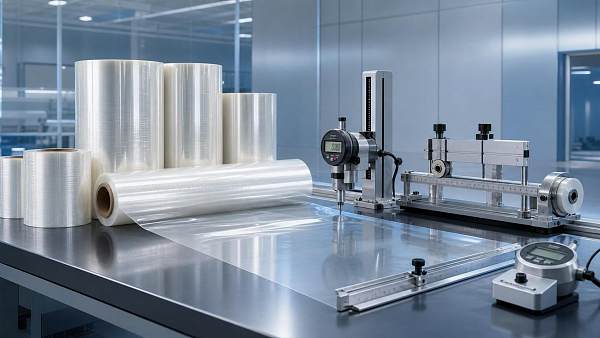
Evaluating polymer cast-stretching technology requires more than a single average thickness value.
A better approach combines process data, profile data, and downstream performance data.
This broader view avoids false confidence from average data alone.
A line may show acceptable average gauge while hiding harmful cross-web variation.
Common failure modes and how to respond
In practice, poor gauge consistency rarely comes from one cause alone.
It usually reflects stacked variation across resin, equipment, and operating windows.
- Recurring edge thickening often points to die balance or cooling asymmetry.
- Periodic bands may indicate pressure pulsation or mechanical vibration.
- Random cross-web drift can reflect unstable preheat or tension control.
- Excess trim loss may reveal poor neck-in predictability during stretching.
The best response is not isolated troubleshooting.
It is a linked process review across cast and stretch stages.
That approach is central to high-performance polymer cast-stretching technology programs.
Why this matters for high-barrier and precision packaging
For commodity packaging, consistency protects throughput and cost.
For high-barrier and precision uses, it protects product survival.
Food films need stable barrier to preserve crispness, flavor, and shelf life.
Pharma packaging needs predictable structure for safety and traceability.
Electronics packaging needs moisture control without weak spots.
Decorative film applications need smooth optics and coating acceptance.
Across all of these uses, polymer cast-stretching technology supports a better balance.
The balance is lower basis weight, tighter variation, and more reliable end performance.
That also aligns with lightweighting and sustainability goals.
A practical decision framework
When comparing suppliers or process upgrades, keep the assessment practical.
Focus on whether polymer cast-stretching technology delivers repeatability, not just peak performance.
- Request cross-web thickness maps, not only average gauge reports.
- Check performance during speed changes and long production runs.
- Link gauge data with barrier, sealing, and coating outcomes.
- Review how the system controls thermal and tension variation.
- Confirm material savings do not increase converting risk.
That final point matters more than ever.
Many lines can run thin film.
Fewer can run thin film with stable gauge consistency at commercial speed.
In the end, polymer cast-stretching technology improves film gauge consistency by managing the full chain of deformation.
It starts with melt uniformity, strengthens through controlled cooling, and finishes with disciplined orientation.
For packaging film manufacturers, that means lower variation, higher reliability, and better use of every micron.
For any technical review, the smartest next step is simple: evaluate the whole cast-to-stretch system, not isolated thickness data.
Recommended News
 Jul 22, 2026Metallized Film Physics in Vacuum Deposition: Key Factors Behind Barrier and Optical PerformanceMetallized film physics vacuum deposition explained: discover how substrate, chamber control, and layer uniformity shape barrier, gloss, and converting performance across packaging applications.
 Jul 27, 2026How to Evaluate a Used PVC Coating Calendering Line Before PurchaseUsed PVC coating calendering line buyers: learn how to assess process fit, roller condition, controls, compliance, and total cost before purchase to avoid hidden risks.
 Jul 21, 2026Vacuum Metallized Paper: Key Properties, Uses, and LimitsVacuum metallized paper explained: discover its key properties, packaging uses, print benefits, and limits to choose the right premium, cost-effective material.
 Jul 18, 2026How to Evaluate Micro Coating Materials in Europe for Performance and ComplianceMicro coating materials Europe buyers can use this guide to compare performance, compliance, recyclability, and supplier quality for smarter sourcing and faster qualification.
 Jul 15, 2026Film Coating Technology for BOPP: Key Methods and Performance TradeoffsFilm coating technology for BOPP explained: compare acrylic, PVDC, water-based, and specialty coatings, understand barrier and sealing tradeoffs, and choose the right path for cost, compliance, and performance.
 Jul 09, 2026Packaging Supplier References for Films: What to Verify Before ApprovalPackaging supplier references for films help you verify quality, compliance, consistency, and delivery risk before approval. Learn what to check to avoid costly packaging failures.
 Jul 08, 2026Biaxial Film Europe: 2026 Supply, Pricing, and Regulation OutlookBiaxial film Europe in 2026 faces shifting supply, pricing, and PPWR pressure. Explore key BOPP and PET risks, cost drivers, and smart sourcing strategies.
 Jul 05, 2026How Thin Film Coating Technology Improves Barrier and Surface PerformanceThin film coating technology improves barrier strength, printability, adhesion, and durability across packaging and labels. Learn how to choose smarter coatings for performance, compliance, and cost.
 Jul 02, 2026Pharmaceutical Packaging Films in 2026: Barrier and Sustainability ShiftsPharmaceutical packaging films in 2026 face a new test: balancing barrier performance, compliance, and sustainability. Explore key shifts shaping smarter, lower-risk packaging decisions.
 Jul 11, 2026Artificial Leather Coating Line: Process, Risk and Procurement NotesBuyer notes on artificial leather coating line process flow, PVC coating calendering risks, used-machine checks and procurement decisions.
 Jul 01, 2026How to Evaluate a Coated Films Manufacturer for Quality and Lead TimeCoated films manufacturer selection affects quality, lead time, and total cost. Learn how to compare data, stability, compliance, and delivery reliability before you buy.
 Jun 28, 2026Oriented Polyester Film Rolls: Key Tolerance Checks Before ProductionOriented polyester film rolls require precise tolerance checks before production. Learn how thickness, width, tensile, and winding control reduce scrap, improve uptime, and protect converting quality.
 Jun 26, 2026Cosmetic Packaging Decoration Materials: Finish, Adhesion, and Compliance BasicsCosmetic packaging decoration materials explained: learn finish, adhesion, and compliance basics to improve durability, brand appeal, and global packaging confidence.
 Jun 25, 2026Visual Shelf Impact Materials: What Improves Standout Without ReworkVisual shelf impact materials that boost shelf standout without costly rework. Learn how to balance optics, printability, durability, and compliance across packaging applications.
 Jun 24, 2026Electronic Protective Materials: Key Barrier and ESD Specs ExplainedElectronic protective materials explained: learn key barrier and ESD specs, avoid hidden packaging failures, and choose safer, compliant protection for sensitive electronics.
 Jun 20, 2026Micron-Level Coating Intelligence: What It Means for Print ConsistencyMicron-level coating intelligence reveals how coating thickness, cure, and surface behavior drive print consistency, barcode clarity, and label durability—read the key factors that reduce defects and improve production confidence.
 Jun 19, 2026How Polymer Cast-Stretching Technology Improves Film Gauge ConsistencyPolymer cast-stretching technology improves film gauge consistency by stabilizing melt flow, cooling, and stretching—helping packaging lines cut waste, boost barrier performance, and improve yield.
 Jun 18, 2026Electronic Protective Materials: Key Factors for Heat and ESD ControlElectronic protective materials are critical for heat control, ESD protection, durability, and production fit. Discover how to compare options and choose materials that improve reliability.
 Jun 14, 2026PLA PBAT Film Formulations: What Affects Strength and SealabilityPLA PBAT film formulations affect strength, sealability, and production stability. Learn how resin ratios, additives, and processing shape reliable compostable packaging performance.
 Jun 13, 2026Pharmaceutical Film Technology: Barrier Performance and Coating Methods ExplainedPharmaceutical film technology explained with a practical look at barrier performance, base films, and coating methods to help you compare options, reduce packaging risk, and improve compliance.
 Jun 12, 2026Food Grade Packaging Films: Key Tests for Safety and ComplianceFood grade packaging films: learn the key tests for safety, migration, seal integrity, barrier performance, and compliance to reduce audit risk and choose market-ready packaging.
 Jun 11, 2026PLA PBAT Film Formulations: What Affects Cost and SealabilityPLA PBAT film formulations affect far more than resin price. Discover what drives cost, sealability, scrap, and line efficiency to compare suppliers smarter.
 Jun 10, 2026Micron-Level Coating Intelligence in Inline Quality ControlMicron-level coating intelligence helps inline quality control catch drift, reduce scrap, improve coating consistency, and protect packaging performance on fast production lines.
 Jun 10, 2026Nano Encryption Coatings: Key Risks and Performance ChecksNano encryption coatings bring smarter packaging security, but hidden risks can hurt adhesion, scan accuracy, and durability. Learn the key checks before rollout.