Search News
Industry Portal
Hot Articles
- How to verify a mono material recyclable packaging manufacturerVerify a mono material recyclable packaging manufacturer with practical checks on composition, recyclability evidence, certifications, performance, and factory controls.
- How to verify FDA compliance for packaging inks used on food packagingPackaging inks FDA compliant? Learn how to verify food-contact safety through regulatory citations, migration testing, supplier declarations, and process controls.
- When do holographic foils add value to luxury goods packaging?Packaging materials for luxury goods gain impact with holographic foils that elevate shelf appeal, authenticity, and premium unboxing—learn when this finish delivers real value.
Popular Tags
How to verify a mono material recyclable packaging manufacturer
Time
Click Count
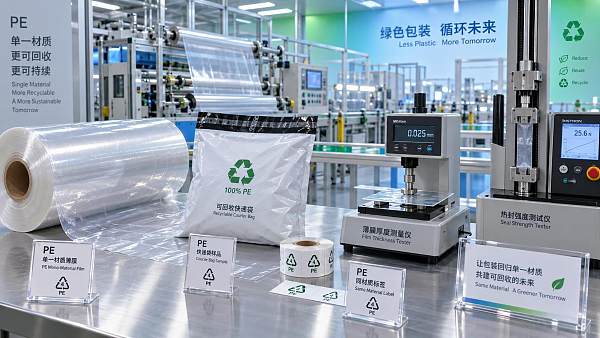
For procurement teams, selecting a mono material recyclable packaging manufacturer is not a matter of accepting a “recyclable” claim printed on a brochure. It is a verification exercise. The packaging may look simple—a clear film, a courier mailer, a pressure-sensitive label, a protective air cushion—but its actual end-of-life route can be affected by resins, coatings, inks, adhesives, barrier layers, closures, and even the geography where it will be collected.
The commercial pressure is understandable. Brand owners are being asked to reduce material complexity, meet evolving packaging rules, preserve product protection, and avoid claims that cannot withstand scrutiny. Procurement has to translate those broad goals into supplier requirements that work on real filling lines, survive logistics, and remain available at scale.
This guide focuses on the practical evidence buyers should request when assessing recyclable films, labels, cushioning systems, and related packaging consumables. The aim is not to find a supplier with the most ambitious vocabulary. It is to identify a manufacturer whose material design, test data, compliance process, and production controls support a credible circular-packaging decision.
Start by defining what “mono material” means for the specific pack
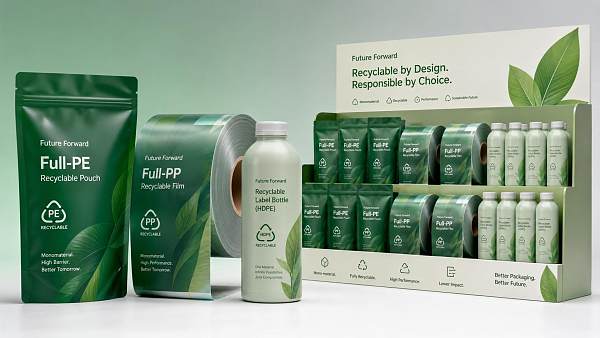
Mono-material packaging is often described as packaging made from one polymer family, such as polyethylene (PE), polypropylene (PP), polyethylene terephthalate (PET), or paper-based fibre. That definition is useful, but incomplete for purchasing purposes.
A pack can have a PE film substrate and still contain a different-polymer sealant, barrier coating, zipper, label stock, adhesive, or metallized layer. Some of these components may be acceptable at limited levels in a relevant recycling stream; others may interfere with sorting, washing, reprocessing, or the quality of recycled output. The key question is therefore not simply, “Is the main film PE?” It is: What is every functional component, at what proportion, and how does the complete structure behave in its intended recycling route?
Ask the manufacturer to provide a full bill of materials for the finished packaging structure. This should identify:
- Base film or substrate resin and grade family;
- Sealant, tie layers, coatings, primers, and barrier technologies;
- Printing inks, varnishes, pigments, and metallization where applicable;
- Label facestock, release liner, pressure-sensitive adhesive, and overlaminate;
- Closures, spouts, handles, zippers, valves, and tamper-evident features;
- Recycled content, if any, and whether it is post-consumer or post-industrial material.
“Compatible with recycling” and “made from one material” should not be treated as interchangeable statements. A capable supplier can explain the distinction without becoming defensive or vague.
Verify the recycling claim against a named collection and recycling pathway
Recyclability is always connected to a system. A flexible PE pouch may be technically suitable for a film-recycling stream, yet unavailable for household collection in a particular destination. A rigid PP pack may be widely collected in one market but not in another. Procurement specifications should name the target market, pack format, and likely disposal channel rather than relying on a global, unqualified recyclability statement.
Request the basis for the claim: a recognized design guideline, independent recyclability assessment, recycler trial, or other documented technical evaluation. Depending on the market and material, suppliers may reference organizations and protocols relevant to flexible packaging, rigid plastics, paper systems, or national collection schemes. The important point is not to demand one universal logo or standard. It is to see whether the evidence matches the product’s destination and construction.
Useful follow-up questions include:
- Which recycling stream is the pack designed for: PE film, PP rigid, PET bottle, fibre, or another stream?
- Is the conclusion based on laboratory screening, a design-for-recycling guideline, or an actual recycling trial?
- Does the assessment cover the printed, converted, and finished pack—not only the unprinted substrate?
- What assumptions are made about collection, sorting, consumer emptying, and pack size?
- Are there restrictions on dark colours, metallization, label coverage, adhesive chemistry, or residual product contamination?
A manufacturer should be willing to state the limits of its claim. That is often a sign of stronger technical discipline than a broad promise that every format is recyclable everywhere.
Read certifications carefully: what they prove, and what they do not
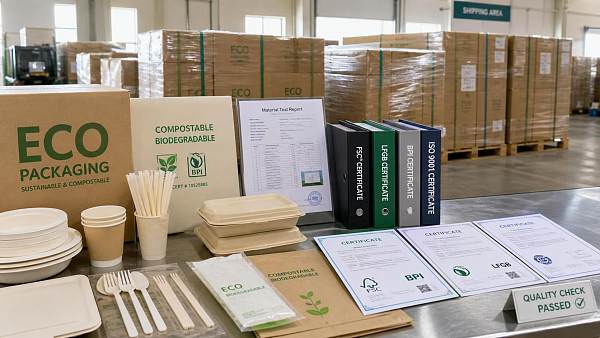
Certification documents can be highly valuable, but buyers should avoid treating any single certificate as proof of total packaging sustainability. Different documents answer different questions.
For example, a quality management certificate may demonstrate that a factory has documented production controls. An environmental management certificate may indicate a structured approach to environmental aspects and continual improvement. Food-contact declarations address material suitability under defined conditions. A recyclability assessment addresses design compatibility with a recycling process. Recycled-content certification may support chain-of-custody claims. None of these automatically confirms all the others.
When reviewing a manufacturer’s document package, check the issuing body, certificate number, validity period, legal entity, manufacturing site, and scope. A certificate for one plant does not automatically cover a sister factory. A declaration for a standard film grade may not extend to a coated, printed, or adhesive-laminated version. Dates matter as well: regulations, restricted-substance lists, and customer specifications can change faster than a supplier’s sales presentation.
For packaging intended for food, pharmaceutical, personal-care, or sensitive electronics applications, ask for the relevant declarations of compliance and migration-supporting documentation where appropriate. The supplier should identify the intended use conditions, including temperature, contact duration, and product type. A film suitable for dry ambient foods may require a different assessment from a structure used with fatty foods, frozen products, or aggressive chemical contents.
Do not let recyclability erase performance requirements
The greatest risk in a packaging conversion is not always a failed recycling claim. It may be a pack that arrives with pinholes, weak seals, unreadable data, crushed corners, moisture ingress, or adhesive failure after distribution. A mono-material solution must protect the product as reliably as the structure it replaces.
Ask for performance data that corresponds to the real application. For high-barrier films, this may include oxygen transmission rate, water-vapour transmission rate, puncture resistance, tensile strength, seal strength, coefficient of friction, and heat-seal window. For stretch or pallet-wrap applications, examine elongation, load retention, puncture resistance, gauge consistency, and unwinding behaviour. Ultra-thin film can reduce material use, but only if it performs predictably on the customer’s equipment and through the transport cycle.
Labels require their own discipline. A mono-material label project may involve matching the label facestock and adhesive system to the host container’s recycling stream. Yet the label must still apply at speed, remain legible, tolerate condensation or freezer conditions, and release or remain compatible during the recycling process as intended. For anti-counterfeit labels, tamper evidence, serialization, optical features, and scan reliability cannot be treated as optional extras.
For eco-friendly cushioning, test the package as a system. Honeycomb kraft paper, paper mouldings, and bio-based air cushions may reduce dependence on conventional foam, but buyers should verify compression recovery, abrasion behaviour, humidity sensitivity, drop-test performance, storage stability, and packing-line compatibility. A material that looks convincing in a sample box may behave differently after long-distance shipping or warehouse exposure.
A practical document request for supplier qualification
Before moving to a trial order, issue a structured request rather than collecting disconnected PDFs over several weeks. A well-prepared mono material recyclable packaging manufacturer should be able to organize the following information by product code and production site:
- Technical data sheet: thickness or basis weight, tolerances, mechanical properties, barrier values, sealing conditions, storage guidance, and recommended conversion parameters.
- Material composition statement: polymer families, functional layers, coatings, inks, adhesives, and intentionally added components relevant to recycling or compliance.
- Recyclability evidence: the assessment method, scope, target recycling stream, assumptions, and any conditions that apply to the claim.
- Regulatory declarations: documents appropriate to the intended market and end use, including restricted-substance and food-contact information where relevant.
- Quality-control plan: incoming resin controls, in-process checks, finished-goods testing, traceability procedures, and nonconformance handling.
- Change-control procedure: notice periods and approval processes for resin, additive, adhesive, ink, coating, site, or formulation changes.
- Traceability records: lot coding and retained-sample arrangements that allow investigation if a quality issue appears downstream.
The change-control point deserves particular attention. Packaging performance can shift when a supplier substitutes a resin grade, changes an adhesive source, adjusts coating weight, or moves production. Procurement should require advance notification and, where risk warrants it, requalification before shipment. This is especially important for high-speed labeling, thermal transfer printing, cold-chain applications, and packs with narrow sealing or barrier margins.
Audit the factory beyond its sustainability presentation
A remote or on-site audit should connect the supplier’s sustainability claim to its daily operating reality. Observe whether raw materials are clearly segregated, whether batch records link finished rolls to incoming resin and coating lots, and whether operators can identify the approved formulation for each product family.
For film producers, ask how gauge profile, orientation conditions, corona treatment, haze, and surface energy are controlled. In biaxially oriented film production, small process shifts can influence stiffness, printability, sealing behaviour, and downstream conversion. For coating and adhesive operations, inspect controls around mixing, viscosity, coat weight, curing, residual solvents where relevant, and retention samples. A sophisticated formula is only useful if it is reproduced consistently from batch to batch.
For converters, review print registration, colour management, ink curing, lamination or coating control, slitting cleanliness, roll-edge quality, and finished-roll inspection. Thermal transfer ribbon suppliers should demonstrate how they manage coating uniformity, backcoat performance, printhead compatibility, barcode durability, and lot-to-lot image consistency. These details matter because traceability marks are only valuable when they remain readable after handling, friction, humidity, and time.
Look for hidden material complexity in labels, decoration, and barrier layers
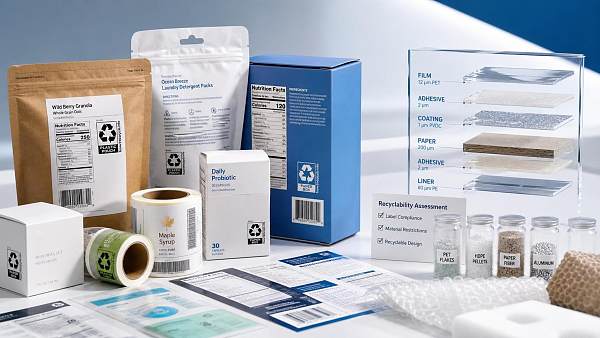
Many recyclable-packaging projects fail at the details. A PE pouch may be redesigned successfully, then receive a large PET label, an incompatible adhesive, a heavy metallic decoration, or a dark printed area that complicates sorting. Conversely, a supplier may offer a functional barrier coating or removable label system that preserves performance while reducing incompatibility. The answer is application-specific, which is why line-item material disclosure is more useful than generic claims.
Decorative finishes deserve early review. Hot stamping foils, holographic effects, metallic coatings, tactile varnishes, and security layers can create strong shelf impact and brand protection, but they add technical questions. Ask whether the decoration has been assessed in the intended recycling route, what coverage limits apply, and whether an alternative optical effect is available when the original specification conflicts with circularity goals.
The same scrutiny applies to anti-counterfeit features. A traceability label may need tamper evidence, variable data, thermal transfer compatibility, and high adhesion under cold-chain conditions. Rather than eliminating security functions, work with the supplier to identify a construction that protects the product while keeping the host packaging’s recycling pathway in view.
Use a controlled trial before approving a full conversion
Documentation is necessary, but it does not replace a production trial. Build the trial around the actual failure modes of the pack: line speed, sealing temperature, label application, print quality, warehouse storage, e-commerce handling, freezer exposure, vibration, compression, and consumer opening.
Agree on acceptance criteria before the material arrives. Include measurable requirements and a process for recording deviations. If the new structure needs equipment adjustments—different sealing settings, tension control, print energy, or label-application pressure—document them. A sustainable material that requires a manageable process adjustment may still be an excellent choice; an undisclosed adjustment that disrupts output is a procurement risk.
Where possible, retain samples from both the incumbent and trial materials. Comparing them after transport and storage often reveals issues that are invisible on day one, such as curl, odour, blocking, loss of barcode contrast, seal creep, or reduced cushioning recovery.
Choose transparency over a perfect claim
The most dependable mono-material packaging partners do not present recyclability as a one-word answer. They explain the polymer design, the intended recycling stream, the limits of available collection, the test conditions behind performance data, and the controls that keep production stable. That level of transparency gives purchasing teams something much more useful than a slogan: a defensible basis for specification, supplier approval, and internal reporting.
As packaging rules tighten and brand scrutiny increases, the role of procurement is becoming more technical. A careful evaluation of composition, certification scope, recycling compatibility, barrier and protection performance, factory controls, and change management helps ensure that a recyclable-packaging decision remains credible long after the first shipment leaves the plant.
Recommended News
 Sep 15, 2026How to verify a mono material recyclable packaging manufacturerVerify a mono material recyclable packaging manufacturer with practical checks on composition, recyclability evidence, certifications, performance, and factory controls.
 Aug 27, 2026Where to find packaging specification resources for compliance checksPackaging specification resources: discover trusted regulations, test standards, and supplier documents to streamline compliance checks, reduce risk, and approve packaging confidently.
 Aug 22, 2026How to verify whether recyclable flexible packaging in Europe meets PPWR expectationsRecyclable flexible packaging Europe: learn how to verify PPWR readiness, assess sorting and barrier performance, and avoid weak claims with a practical evaluation framework.
 Aug 16, 2026China Enforces Eco-Environment Code, Raising Export Packaging Compliance RequirementsChina enforces its Eco-Environment Code, tightening export packaging compliance for food, FMCG, e-commerce, and pharma. Learn the new risks, certification checks, and sourcing actions now.
 Aug 05, 2026Packaging Compliance in North America: Which Labels and Material Rules Matter Most?Packaging compliance North America explained: learn the label, bilingual, material, recyclability, and EPR rules that matter most to reduce risk and speed market access.
 Jul 14, 2026Packaging Compliance Materials Guide for Plastic Ban ReadinessPackaging compliance materials guide for plastic-ban readiness: compare films, labels, cushioning, and print systems to reduce risk, protect performance, and stay ahead of changing regulations.
 Jul 13, 2026Biodegradable Packaging Compostable: Key Claims, Standards, and Common MistakesBiodegradable Packaging compostable explained: learn the key differences, standards, compliance checks, and common claim mistakes before choosing or marketing sustainable packaging.
 Jul 10, 2026How Mono Material Packaging Affects Recyclability and Shelf AppealMono material packaging can improve recyclability without sacrificing shelf appeal. Discover key trade-offs, hidden risks, and practical evaluation tips for smarter packaging decisions.
 Jul 04, 2026Mono Material Packaging Europe: What Changes Under New Recycling RulesMono material packaging Europe is rapidly becoming a compliance and cost priority. Learn how new EU recycling rules reshape packaging design, market access, and competitive advantage.
 Jul 01, 2026Mono Material Flexible Packaging: When It Works and Where It Falls ShortMono material flexible packaging explained: discover where it improves recyclability and efficiency, where barrier and machinability limits remain, and how to judge the right fit.
 Jun 29, 2026Compostable Sustainable Packaging in 2026: What Regulations and Costs Are ChangingCompostable sustainable packaging in 2026 is being reshaped by stricter regulations and shifting costs. Learn where it fits, what compliance demands, and how to choose smarter, scalable packaging strategies.
 Jun 28, 2026PPWR Packaging Europe: What Changes for Packaging Specs in 2026PPWR packaging Europe in 2026 will reshape packaging specs across films, labels, adhesives, and cushioning. Learn the key compliance shifts, risks, and smart actions brands should take now.
 Jun 25, 2026Mono-Material Recyclable Science Explained for Practical Packaging DesignMono-material recyclable science explained for practical packaging design. Learn how to balance recyclability, barrier performance, compliance, and cost with smarter material choices.
 Jun 24, 2026Packaging Compliance Resources for PPWR and Plastic Ban ReadinessPackaging compliance resources for PPWR and plastic ban readiness: learn how to assess materials, labeling, recyclability, and supplier data to reduce risk and stay market-ready.
 Jun 21, 2026Sustainable Packaging Materials Certification: What Standards Matter in 2026Sustainable packaging materials certification in 2026: learn which standards truly matter for recyclability, compostability, fiber sourcing, and compliance to reduce risk and choose smarter packaging.
 Jun 21, 2026How to Evaluate PLA PBAT Packaging for Cost, Strength, and CompliancePLA PBAT packaging evaluation starts with real cost, strength, and compliance. Learn how to compare suppliers, reduce sourcing risk, and choose packaging that performs.
 Jun 20, 2026Sustainable Packaging Materials Trends Shaping 2026 Compliance PlansSustainable packaging materials are redefining 2026 compliance plans. Explore key trends, risks, and smart material choices that improve recyclability, traceability, and cost control.
 Jun 16, 2026Sustainable Packaging Science and the 2026 Compliance ShiftSustainable packaging science is reshaping 2026 compliance, helping brands balance recyclability, protection, traceability, and cost before new rules tighten.
 Jun 12, 2026How PLA Biodegradable Packaging Performs Under New Plastic Ban RulesPLA biodegradable packaging under new plastic ban rules: explore where it delivers compliance, protection, and cost efficiency—and where smart packaging design still matters.
 Jun 11, 2026Vietnam Requires ISPM15 and REACH Declarations for ImportsVietnam Requires ISPM15 and REACH Declarations for Imports from July 1, 2026. Learn how the new packaging compliance rule may impact customs clearance, costs, and shipment planning.
 Jun 10, 2026EU PPWR Rule Takes Effect July 1: Recyclability Proof Required for BOPP/PET Film ExportsEU PPWR rule takes effect July 1, requiring recyclability proof for BOPP/PET film exports. Learn compliance risks, EN 13432 or ISO 14855 document needs, and how to avoid EU customs delays.
 Jun 06, 2026Green Packaging Becomes an EU Market Entry RuleGreen packaging is becoming a real EU market entry rule. Learn how BOPP Barrier Films, Stretch Wrap Films, and RFID Smart Labels exporters can meet new compliance, certification, and packaging cost requirements.
![]() Jun 06, 2026Peru Tightens Mandatory Compliance for Food PackagingPeru Tightens Mandatory Compliance for Food Packaging: learn how WTO notice G/TBT/N/PER/178 may affect exporters, importers, and food-contact packaging supply chains.
Jun 06, 2026Peru Tightens Mandatory Compliance for Food PackagingPeru Tightens Mandatory Compliance for Food Packaging: learn how WTO notice G/TBT/N/PER/178 may affect exporters, importers, and food-contact packaging supply chains.![]() Jun 03, 2026Mono-Material Recyclable Packaging Under PPWDMono-material recyclable packaging helps brands meet PPWD/PPWR demands, cut compliance risk, and protect performance—learn how to redesign smarter for EU markets.
Jun 03, 2026Mono-Material Recyclable Packaging Under PPWDMono-material recyclable packaging helps brands meet PPWD/PPWR demands, cut compliance risk, and protect performance—learn how to redesign smarter for EU markets.