Search News
Industry Portal
Hot Articles
- AsiaFlexo 2026 Highlights Compliance-Driven Printing MaterialsAsiaFlexo 2026 spotlights compliance-driven printing materials, from low-migration UV Flexo Inks to Holographic Hot Foils, revealing how faster proofing and supplier validation can reshape packaging sourcing.
- LDPE Spike Pushes 12μm Stretch Wrap Into FocusLDPE Spike Pushes 12μm Stretch Wrap Into Focus as rising Asian resin costs drive demand for ultra-thin film. Discover how 12μm solutions may cut packaging costs and improve sourcing decisions.
- Middle East Drug Imports Face New Smart Label RuleMiddle East drug imports face a new smart label rule as Saudi SFDA and UAE MOHAP tighten pharma packaging compliance. Learn what importers must do before Q3 2026.
Popular Tags
Biaxially Oriented Film Technology: Key Performance Factors for Packaging Applications
Time
Click Count
For technical evaluation, biaxially oriented film technology is not just about stretching polymer. It directly shapes package durability, barrier consistency, converting speed, printability, and total system cost.
That is why film selection rarely works as a simple gauge comparison. A thinner film with better orientation balance may outperform a thicker one with weaker stiffness, haze control, or seal stability.
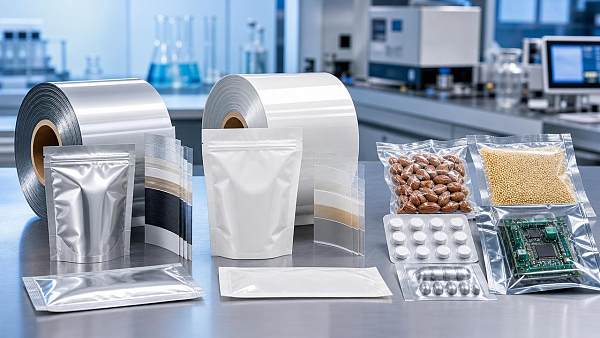
In the broader packaging ecosystem tracked by PPCS, BOPP and PET films act like polymer jackets for global commodities. They protect snacks, electronics, pharmaceuticals, logistics labels, and premium retail packs under very different stress conditions.
The practical question is simple: which performance factors in biaxially oriented film technology really matter before approval, qualification, or scale-up? The points below help narrow that decision with less guesswork.
Start with Orientation Balance, Not Just Film Type
The first useful check is the balance between machine direction and transverse direction. This part of biaxially oriented film technology controls stiffness, dimensional stability, tear behavior, and downstream handling.
When orientation is too aggressive in one direction, the film may look strong in a datasheet but behave poorly on line. Curling, splitting, poor lay-flat, and weak registration often show up later.
- Check MD/TD tensile balance early. A film that looks impressive in one direction can still fail in slitting, pouch forming, or label dispensing when stress becomes uneven.
- Compare tear propagation, not only ultimate strength. In many packaging applications, controlled tear matters more than peak force, especially for easy-open or consumer-facing formats.
- Review shrink response after heat exposure. Poor orientation balance often appears during sealing, lamination, or warehouse heat cycling rather than at incoming inspection.
- Look at web handling at real speed. Stable biaxially oriented film technology should support tension control, flat transport, and predictable registration without constant operator correction.
Why BOPP and PET behave differently
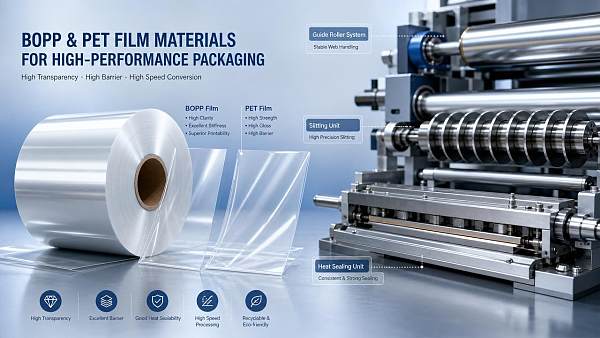
BOPP usually offers excellent moisture barrier, lower density, and strong economics. PET usually brings higher temperature resistance, better dimensional stability, and stronger mechanical rigidity.
So the better option depends less on habit and more on stress profile. If the line includes hot filling, retort-adjacent exposure, or demanding print register, PET may justify the higher cost.
Match Resin Family to Real Packaging Stress
A common mistake is treating all oriented films as process-defined materials. In reality, resin selection inside biaxially oriented film technology strongly affects clarity, seal window, toughness, and barrier retention.
Base polymer, copolymer content, additives, and skin-layer design all matter. Two films with similar thickness can deliver very different results in sealing jaws, warehouse stacking, or retail display.
- Confirm whether the structure uses homopolymer, copolymer, or co-extruded skins. This affects seal initiation temperature, stiffness, and the tolerance window during high-speed packing.
- Test additive impact on friction and optics. Slip and anti-block packages may improve machinability, but they can also interfere with coating anchorage or printing performance.
- Verify barrier under humidity and compression. Some structures keep lab values but lose practical protection once flexing, pallet load, or storage climate becomes more severe.
- Ask for layer design details when possible. In biaxially oriented film technology, skin-core balance often explains why one film runs cleanly and another causes persistent sealing variation.
A quick packaging reality check
Snack packaging usually values moisture barrier, dead-fold stability, seal consistency, and crisp appearance. Electronics packaging may care more about dimensional control, puncture resistance, and low contamination risk.
That difference is exactly why PPCS treats films, labels, ribbons, and cushioning as one connected system. The package survives only when each consumable performs under the same logistics reality.
Surface Treatment Often Decides Converting Success
Many approval failures come from surface issues, not core film strength. Corona, chemical coating, metallization readiness, and adhesion stability are critical parts of biaxially oriented film technology.
A film can pass basic mechanical tests and still fail in lamination, ink anchorage, or label application. Surface energy is only the starting point. Aging stability matters just as much.
- Measure dyne level close to the actual converting date. Surface treatment can decay over time, especially in storage conditions with heat, dust, or long inventory cycles.
- Check both initial and aged bond strength. Good early lamination data may hide later delamination if treatment uniformity or coating compatibility is weak.
- Evaluate print anchorage with the intended ink and ribbon system. In mixed packaging lines, film surface performance must align with coding, branding, and traceability layers.
- Review metallization or top-coat suitability separately. Not every film optimized for slip and speed will also support decorative or high-barrier secondary processing.
Where this gets overlooked
This issue often appears in export packaging. A film qualified in one region may reach another site after long transit, then show lower treatment performance during printing or adhesive bonding.
That is especially important when anti-counterfeit labels, thermal transfer printing, or premium visual decoration sit on the same package surface. Interface reliability becomes non-negotiable.
Barrier Data Must Reflect Use Conditions
Barrier claims are easy to overread. In biaxially oriented film technology, oxygen and moisture values depend on thickness, orientation quality, coatings, test climate, and final package structure.
A single number from a datasheet is rarely enough. What matters is how the film performs after converting, flexing, sealing, and moving through real storage and distribution cycles.
- Request barrier data under comparable standards. Without aligned test conditions, two films may look different on paper but perform nearly the same in service.
- Check barrier retention after converting. Adhesive curing, fold stress, or poor metallization handling can reduce the practical value of good base-film properties.
- Review package failure mode, not only target shelf life. Sometimes aroma loss, fogging, or moisture gain appears before a formal barrier threshold is exceeded.
Machinability and Cost Need the Same Attention
The best film is not always the one with the highest specification. In many cases, the better decision in biaxially oriented film technology is the film that runs steadily with lower waste and fewer stops.
That is where PPCS market intelligence becomes useful. A slightly upgraded film may reduce line waste, support downgauging, and lower annual consumable cost across logistics-heavy packaging networks.
- Track yield, break frequency, and startup waste together. Film economics should include running efficiency, not just price per kilogram or per square meter.
- Assess sealing window under real line speed. A narrow process window can erase any nominal savings through scrap, rework, or unstable package appearance.
- Review downgauging carefully. Stronger biaxially oriented film technology may allow thinner structures, but only if puncture, barrier, and handling remain acceptable across distribution steps.
- Use total system thinking. Film, label adhesive, ribbon printability, and cushioning design often interact, especially in e-commerce, cold chain, and export packaging.
A common decision trap
It is easy to approve a film using isolated lab numbers. It is harder, but more useful, to compare line efficiency, damage claims, shelf impact, and compliance exposure at the same time.
That wider view matters more now because packaging is under pressure from PPWR, lightweighting targets, mono-material goals, and stronger traceability expectations across global trade.
What deserves a final approval check
Before closing a material decision, it helps to run a short final review. This reduces the chance that a strong film trial hides a weak commercial rollout.
- Confirm orientation balance, surface treatment age, and seal window in one review. These three variables explain a large share of avoidable converting problems.
- Match barrier data to final structure and route conditions. Storage climate, transit time, and handling intensity should shape the approval logic.
- Check compatibility with adjacent consumables. Labels, coatings, ribbons, and decorative layers can turn a good film choice into a weak package if interfaces are ignored.
- Document downgrade or substitution limits clearly. A controlled approval range keeps later cost-saving changes from creating hidden quality drift.
Biaxially oriented film technology works best when evaluated as part of a full packaging system, not as an isolated substrate. That means balancing physics, converting behavior, compliance pressure, and commercial practicality.
If the next step is material screening, start with orientation balance, resin structure, surface stability, barrier relevance, and line efficiency. That short sequence usually leads to faster, safer comparisons and better packaging decisions.
Recommended News
 Jun 13, 2026EU PPWR Takes Effect Aug. 12: EPR Now Required for BOPP Barrier Film ExportsBOPP barrier film exporters face new EU PPWR rules from Aug. 12, 2026. Learn how EPR registration, recycling verification, and compliance readiness impact EU market access.
 Jun 12, 2026EU PPWR Rule Takes Effect Aug. 15 for BOPP ExportsEU PPWR rule takes effect Aug. 15 for BOPP exports, putting recycling-rate verification at the center of EU customs clearance. Learn the risks, deadlines, and actions exporters should take now.
 Jun 12, 2026How to Choose Moisture Barrier Packaging for Shelf-Life ProtectionMoisture barrier packaging guide: learn how to compare WVTR, sealing, material structures, and distribution risks to protect shelf life, reduce failures, and choose with confidence.
 Jun 11, 2026EU PPWR Deadline Nears for BOPP Film ExportersEU PPWR deadline is nearing for BOPP film exporters. Learn which barrier films need recyclability reports by June 30, 2026, and how to protect EU market access.
 Jun 11, 2026Food Grade Film Science: Common Barrier Myths That Cause FailuresFood grade film science explained: uncover common barrier myths that lead to leaks, shelf-life loss, and packaging failures, with practical tips to choose smarter films and improve performance.
 Jun 11, 2026Food Grade Packaging Films: 7 Key Checks Before Material SelectionFood grade packaging films: discover 7 essential checks for compliance, migration, barrier, sealing, durability, print quality, and supply stability before choosing the right material.
 Jun 09, 2026EU PPWR Rule Takes Effect: Recyclability Proof Required for BOPP/PET Film ExportsEU PPWR rule takes effect July 1, 2026: BOPP/PET film exports to the EU may need recyclability proof for customs clearance. Learn key compliance risks, timing impacts, and how exporters can prepare.
![]() Jun 09, 2026Moisture Barrier Films: How to Compare WVTR and Shelf-Life ImpactMoisture barrier films compared the right way: learn how WVTR, sealing, package design, and logistics shape shelf life, so you can choose smarter packaging with confidence.
Jun 09, 2026Moisture Barrier Films: How to Compare WVTR and Shelf-Life ImpactMoisture barrier films compared the right way: learn how WVTR, sealing, package design, and logistics shape shelf life, so you can choose smarter packaging with confidence. Jun 08, 2026EU PPWR Rule Takes Effect July 1 for BOPP/PET Film ExportsEU PPWR rule takes effect July 1 for BOPP/PET film exports, requiring recyclability verification and PFAS disclosure. Learn the compliance risks, customs impact, and actions exporters should take now.
 Jun 08, 2026When Oxygen Barrier Films Justify Higher Packaging CostsOxygen barrier films can justify higher packaging costs by reducing spoilage, extending shelf life, and protecting brand value. See when the ROI makes real business sense.
 Jun 08, 2026Extreme Barrier Films vs Standard Barriers: What Changes PerformanceExtreme barrier films vs standard barriers: discover how they impact shelf life, moisture control, sealing, and total packaging cost—so you can choose the best fit with confidence.
 Jun 07, 2026BOPP Film Prices Rise as Supply TightensBOPP film prices rise as supply tightens, with output cuts and longer lead times reshaping procurement, packaging, and trade decisions. See what buyers should watch now.
 Jun 07, 2026EU PPWR Rule Takes Effect July 1 for BOPP/PET Film ExportsEU PPWR rule takes effect July 1, 2026 for BOPP/PET film exports. Learn how recyclability verification, customs risks, fees, and lead times could impact EU-bound shipments.
 Jun 06, 2026Biaxially Oriented Film Technology: Key Performance Factors for Packaging ApplicationsBiaxially oriented film technology explained: discover the key factors behind barrier, printability, sealing, and cost efficiency for smarter packaging decisions.
 Jun 06, 2026VIKPRO Shows New BOPP Barrier Film Process in ChengduVIKPRO reveals a new BOPP Barrier Film process in Chengdu with TÜV Rheinland certification, strong OTR performance, and fast-track entry into China OEM supply chains.
 Jun 05, 2026EU PPWR Takes Effect for BOPP Barrier FilmsEU PPWR takes effect for BOPP barrier films: learn the 2026 labeling rules, 2030 35% recycled content target, and key compliance risks for exporters, importers, and EU sellers.
 Jun 05, 2026How to Compare High-Barrier Packaging Films for Shelf-Life GainsHigh-barrier packaging films compared the right way: learn how to assess barrier stability, seal integrity, machinability, and real shelf-life gains before you specify.
![]() Jun 04, 2026EU PPWR Now Enforced for BOPP Barrier FilmsEU PPWR now enforced for BOPP barrier films: learn how recycled content labeling, verifiable supply chain declarations, and compliance documents affect EU market access and export readiness.
Jun 04, 2026EU PPWR Now Enforced for BOPP Barrier FilmsEU PPWR now enforced for BOPP barrier films: learn how recycled content labeling, verifiable supply chain declarations, and compliance documents affect EU market access and export readiness.![]() Jun 04, 2026BOPP Films vs Barrier BOPP Films: What Changes in Real Packaging UseBOPP films vs barrier BOPP films: learn how real packaging performance changes in sealing, moisture control, shelf life, and line speed to choose the right film with confidence.
Jun 04, 2026BOPP Films vs Barrier BOPP Films: What Changes in Real Packaging UseBOPP films vs barrier BOPP films: learn how real packaging performance changes in sealing, moisture control, shelf life, and line speed to choose the right film with confidence.![]() Jun 04, 2026Pharmaceutical Barrier Films: How to Compare Moisture and Oxygen ProtectionPharmaceutical barrier films comparison starts with real moisture and oxygen risk. Learn how to evaluate WVTR, OTR, film structures, and formed-pack performance to choose smarter packaging.
Jun 04, 2026Pharmaceutical Barrier Films: How to Compare Moisture and Oxygen ProtectionPharmaceutical barrier films comparison starts with real moisture and oxygen risk. Learn how to evaluate WVTR, OTR, film structures, and formed-pack performance to choose smarter packaging. Jun 03, 2026EU PPWR Enforces Recycled Content Labels for BOPPEU PPWR alert: BOPP barrier film labels now face recycled content declarations, technical filing, and customs risks. Learn what exporters must do before shipping.
![]() Jun 03, 2026Oxygen Barrier Packaging for Longer Product LifeOxygen barrier packaging helps extend shelf life, protect product quality, reduce waste, and support safer storage, shipping, and retail performance.
Jun 03, 2026Oxygen Barrier Packaging for Longer Product LifeOxygen barrier packaging helps extend shelf life, protect product quality, reduce waste, and support safer storage, shipping, and retail performance. Jun 02, 2026EU PPWR Enforces Recycled Labels for BOPP FilmsEU PPWR recycled label rules for BOPP films start June 2, 2026. Learn key compliance steps on recycled content, traceability, customs risk and export documentation.
 Jun 02, 2026Mono-material Recyclable Science in Barrier FilmsMono-material recyclable science guides smarter barrier film choices—compare PE, PP, PET, coatings, sealing, and recycling proof to cut risk and boost packaging value.