Search News
Industry Portal
Hot Articles
- How to verify FDA compliance for packaging inks used on food packagingPackaging inks FDA compliant? Learn how to verify food-contact safety through regulatory citations, migration testing, supplier declarations, and process controls.
- When do holographic foils add value to luxury goods packaging?Packaging materials for luxury goods gain impact with holographic foils that elevate shelf appeal, authenticity, and premium unboxing—learn when this finish delivers real value.
- Can nano encryption technology stop counterfeit labels from being copied?Nano encryption technology anti counterfeit labels combine physical security, tamper evidence, and serialization to make copying harder. Explore smarter protection.
Popular Tags
VIKPRO Shows New BOPP Barrier Film Process in Chengdu
Time
Click Count
From May 28 to 31, 2026, at the AHK-organized Discover Germany 2026 brand week in Chengdu, VIKPRO presented a new generation of high-barrier BOPP Barrier Films. The announcement is notable not only for the material performance figures disclosed, but also because the technology has already received TÜV Rheinland certification and is being accelerated into Chinese contract manufacturing supply chains. For packaging material buyers, converters, OEM manufacturers, and supply chain teams, the update is worth watching as a practical signal around barrier performance, qualification standards, and supplier adoption readiness.
What was disclosed at the Chengdu event
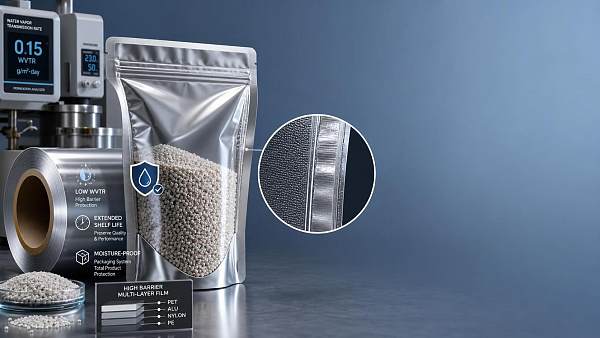
The confirmed information is clear on several points. During Discover Germany 2026 in Chengdu, hosted by the German Chambers of Commerce Abroad network (AHK), VIKPRO appeared with a new-generation high-barrier BOPP Barrier Films solution. The process uses double-sided vacuum-deposited silicon oxide (SiOx) together with low-temperature plasma surface activation. According to the disclosed specification, the film reaches an oxygen transmission rate (OTR) of 0.15 cm³/m²·day·atm, with barrier performance stated to be three times higher than that of conventional aluminized film. The technology has obtained TÜV Rheinland certification and is now being introduced into China-based contract manufacturing supply chains at a faster pace.
Why different parts of the packaging chain may pay attention
For contract manufacturers, the issue is qualification and process integration
From an industry perspective, Chinese OEM and contract manufacturing facilities are among the most directly affected parties because the summary explicitly states that the technology is being accelerated into their supply chains. The potential impact is likely to appear first in supplier onboarding, material validation, production compatibility checks, and customer communication on packaging specifications. What deserves closer attention is whether factories will need to adjust approval workflows, documentation handling, or trial schedules when evaluating a certified high-barrier BOPP film solution.
For packaging material buyers, the comparison benchmark may shift
Buyers responsible for flexible packaging materials may read this development through the lens of comparative performance. The disclosed reference point is conventional aluminized film, and the new process is positioned around stronger oxygen barrier performance. Analysis shows that this may affect how procurement teams compare film options, especially when barrier specifications, certification status, and manufacturability need to be reviewed together rather than as separate criteria. The business impact would likely be concentrated in technical sourcing, supplier review, and specification discussions with downstream customers.
For converters and processing partners, surface treatment is a practical point
The inclusion of low-temperature plasma surface activation makes this more than a simple performance announcement. For converters and processing partners, the implication may lie in how the material behaves in downstream converting and packaging workflows. Observably, the process description itself is a point to track because it can shape technical evaluation, trial priorities, and quality consistency checks. At this stage, the confirmed information does not establish a broad market outcome, but it does indicate a new process route that technical teams may need to assess.
For brand owners and end-use packaging teams, certification may become part of supplier dialogue
The TÜV Rheinland certification mentioned in the event summary is likely to matter in commercial communication. For brand owners and end-use packaging teams, certified performance claims can influence how supplier proposals are reviewed and how material substitution discussions are framed. The immediate effect is less about confirmed market replacement and more about raising the threshold for evidence in packaging material conversations.
What companies should monitor next
Track how the technical claim is presented in formal supply documents
Companies should focus on how the disclosed process and OTR performance are translated into actual supplier documents, qualification files, and customer-facing specifications. The current information confirms the performance figure and certification, but businesses still need to distinguish between event-stage disclosure and the exact terms used in procurement and manufacturing documentation.
Review supplier readiness inside China-based manufacturing networks
Because the summary states that the technology is being accelerated into Chinese contract manufacturing supply chains, a practical next step is to watch which parts of the supply chain are ready for implementation. This does not mean broad deployment is already complete. It means purchasing and operations teams may need to prepare for pilot discussions, supplier assessments, and delivery coordination tied to new material adoption.
Pay attention to the link between certification and operational acceptance
TÜV Rheinland certification is an important fact in this case, but companies should not automatically treat certification as equal to immediate production-wide acceptance. Analysis shows that commercial adoption usually depends on how certification, process stability, and supply execution are aligned in actual business settings. The difference between certified capability and accepted routine use is one of the most important practical issues to monitor.
Prepare customer communication around substitution or upgrade scenarios
For sales, account management, and technical service teams, this update may trigger questions from customers about barrier upgrades versus conventional aluminized film. What deserves closer attention is how to communicate performance claims, qualification status, and implementation timing without overstating rollout progress. Internal alignment between procurement, quality, and customer-facing teams will matter if discussions move from interest to trial planning.
How this development is best understood at this stage
Observably, this is best understood as an early but concrete supply-chain signal rather than a completed market shift. The combination of a disclosed high-barrier metric, a named process route, certification by TÜV Rheinland, and stated acceleration into Chinese contract manufacturing supply chains gives the update more practical weight than a general showcase announcement. At the same time, the available information does not confirm scale, adoption breadth, or downstream commercial results. Analysis shows that the industry should treat this as a development with operational relevance, while continuing to verify how fast it moves from presentation to routine sourcing and production use.
A measured takeaway for the market
The Chengdu presentation highlights a packaging materials development that sits at the intersection of performance, certification, and supply-chain localization. For the industry, the most relevant point is not simply that a new BOPP Barrier Films process was shown, but that it is already being positioned for entry into China-based OEM networks. It is more appropriate to understand this as a meaningful short-term signal with possible longer-term implications, rather than as proof that market adoption has already been fully established.
Basis of this article and what still needs verification
This article is based on the user-provided news title, event date, and event summary. For this type of industry update, commonly relevant source categories may include official event announcements, company statements, chamber or association releases, authoritative media coverage, and certification or standards-related documents. No specific official source link was provided in the input, so further verification is still needed. Areas that warrant continued monitoring include how the technology is described in formal commercial materials, how quickly it enters Chinese contract manufacturing workflows, and whether additional verified implementation details are later disclosed.
Recommended News
 Sep 10, 2026How pharmaceutical film technology affects moisture protection in blister packsPharmaceutical film technology for blister packs: learn how barrier films, WVTR, thermoforming, and seal integrity protect moisture-sensitive medicines and support reliable compliance.
 Sep 05, 2026How to choose food-grade flexible packaging films for dry foodsFlexible Packaging Films food grade guide: choose the right barrier, seal strength, compliance, and durability to protect dry foods and extend shelf life.
 Sep 03, 2026How film label materials affect label durability in refrigerated storageFilm label materials play a critical role in refrigerated durability. Learn how films, adhesives, printing, and moisture resistance protect labels in cold storage.
 Aug 24, 2026How to evaluate barrier film suppliers in Europe for food packagingBarrier film Europe sourcing made practical: learn how to assess food packaging suppliers on barrier performance, compliance, machinability, and total cost before you buy.
![]() Aug 14, 2026EU PPWR enforcement: BOPP high barrier film exports need to pay attention to labeling complianceEU PPWR enforcement makes BOPP high barrier film exports to Europe focus on labeling compliance. Learn the key rules on recycling marks, recycled content, and recyclability claims before 2026.
Aug 14, 2026EU PPWR enforcement: BOPP high barrier film exports need to pay attention to labeling complianceEU PPWR enforcement makes BOPP high barrier film exports to Europe focus on labeling compliance. Learn the key rules on recycling marks, recycled content, and recyclability claims before 2026. Aug 13, 2026EU PPWR Takes Effect for BOPP Barrier FilmsEU PPWR takes effect for BOPP barrier films on Aug 12, 2026. Learn the new labeling, recycled content, and life-cycle declaration rules shaping EU import compliance.
 Aug 13, 2026Barrier Packaging for Pet Food: How to Choose the Right Moisture and Oxygen BarrierBarrier packaging for pet food explained: learn how to choose the right moisture and oxygen barrier to protect freshness, shelf life, seals, and sustainability goals.
 Aug 12, 2026EU PPWR Now in Force: BOPP Barrier Films Face Labeling RulesEU PPWR now in force puts BOPP barrier films under stricter labeling rules. Learn how recyclability, composition, and recycled content disclosures affect EU market access.
 Aug 12, 2026How to Evaluate Recyclable Mono Material Packaging for Barrier Performance and ReprocessingRecyclable mono material packaging: learn how to assess barrier performance, seal reliability, and reprocessing suitability to choose packaging that supports recyclability without sacrificing product protection.
 Aug 11, 2026EU PPWR Rules Now Mandate Labels on BOPP Barrier FilmsEU PPWR rules now require labels on BOPP barrier films sold in Europe. Learn the 15% recycled content, material ID, and customs compliance steps exporters must act on now.
 Aug 10, 2026PPWR Rule Takes Effect for BOPP Barrier Film LabelsPPWR Rule takes effect for BOPP barrier film labels in the EU from August 10, 2026. Learn key ARL Code, recyclability, and compliance steps to avoid customs risk and penalties.
 Aug 09, 2026EU PPWR Rule Takes Effect for BOPP Barrier FilmsEU PPWR rule now applies to BOPP barrier films entering the EU. Learn the new labeling, material ratio, and recyclability requirements to avoid customs delays and rising compliance costs.
 Aug 08, 2026PPWR Rule Takes Effect for BOPP Barrier FilmsPPWR rule takes effect for BOPP barrier films in the EU from August 8, 2026. Learn how labeling, material ratio disclosure, customs compliance, and technical file updates may impact exports.
 Aug 07, 2026EU PPWR Rule Takes Effect for BOPP Barrier FilmsEU PPWR rule takes effect for BOPP barrier films, requiring recycling labels, material composition percentages, and recyclability claims. See what exporters must act on now.
 Aug 07, 2026How to Choose a Low WVTR Barrier Film for Moisture-Sensitive PackagingLow WVTR barrier film selection starts with product moisture sensitivity, seal performance, and converting reality. Learn how to compare structures, reduce risk, and choose packaging that protects shelf life.
 Aug 06, 2026EU PPWR Rule Takes Effect for BOPP Barrier Film LabelsEU PPWR rule now reshapes BOPP barrier film labels in the EU. Learn mandatory labeling, recyclability claims, customs risks, and how exporters can stay compliant.
 Aug 05, 2026EU PPWR Rule Takes Effect for BOPP Barrier FilmsEU PPWR rule now reshapes BOPP barrier films in the EU market. Learn mandatory labeling, recyclability, traceability, and customs compliance risks before exports are delayed.
 Aug 04, 2026EU PPWR Rules Now Apply to BOPP Barrier Film LabelsEU PPWR rules now apply to BOPP barrier film labels. Learn the new EU labeling, recyclability, and material disclosure requirements to avoid customs delays, fines, and compliance risks.
 Aug 03, 2026EU PPWR Rules Take Effect for BOPP Barrier Film LabelsEU PPWR rules now require BOPP barrier film labels to show recycling marks, material ratios, and recyclability claims. Learn how to avoid customs delays, fines, and supply chain disruption.
 Aug 02, 2026EU PPWR Rule Takes Effect for BOPP Barrier FilmsEU PPWR rule for BOPP barrier films takes effect from August 1, 2026. Learn key labeling, recyclability, customs, and supplier compliance steps to avoid fines and shipment delays.
 Aug 01, 2026EU PPWR Rule Takes Effect for BOPP Barrier FilmsEU PPWR rule for BOPP barrier films is now a critical compliance issue. Learn how material disclosure, recycling marks, and supplier documents affect EU customs, procurement, and delivery.
 Jul 31, 2026How to Choose Moisture Barrier Packaging Film by WVTR and Shelf-Life NeedsMoisture barrier packaging film selection should start with WVTR, shelf-life targets, and real package performance. Learn how to avoid overdesign, reduce risk, and choose the right barrier film.
 Jul 29, 2026EU PPWR Rule Takes Effect for BOPP Barrier Film ExportsEU PPWR rule takes effect for BOPP barrier film exports, reshaping labeling, recyclability marking, conformity files, and supplier certification. Learn the key compliance risks and trade impacts now.
 Jul 27, 2026EU PPWR Rule Takes Effect for BOPP Barrier Film ExportsEU PPWR Rule Takes Effect for BOPP Barrier Film Exports: learn how ISO 13431 recyclability labels and EN 13432 declarations now impact EU customs, buyer approval, and export compliance.