Search News
Industry Portal
Hot Articles
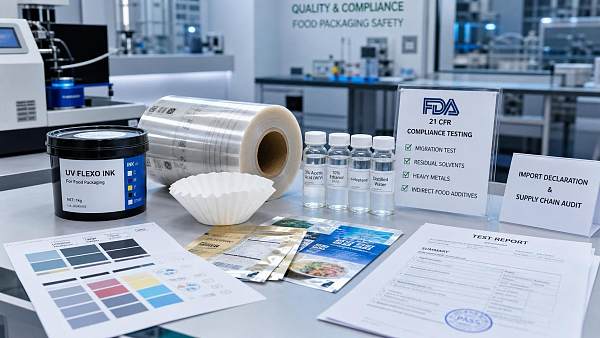
- How to verify FDA compliance for packaging inks used on food packagingPackaging inks FDA compliant? Learn how to verify food-contact safety through regulatory citations, migration testing, supplier declarations, and process controls.
- When do holographic foils add value to luxury goods packaging?Packaging materials for luxury goods gain impact with holographic foils that elevate shelf appeal, authenticity, and premium unboxing—learn when this finish delivers real value.
- Can nano encryption technology stop counterfeit labels from being copied?Nano encryption technology anti counterfeit labels combine physical security, tamper evidence, and serialization to make copying harder. Explore smarter protection.
Popular Tags
Saudi Arabia Updates Washer Energy/Water Efficiency Standard
Time
Click Count
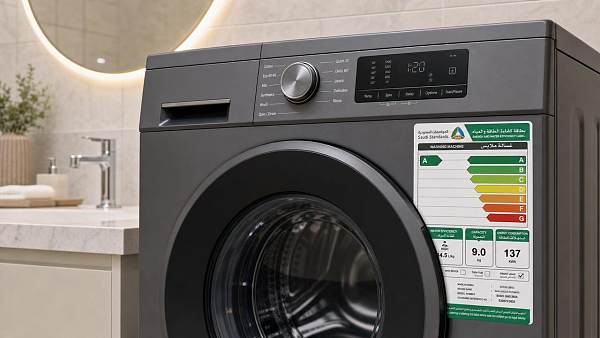
Saudi Arabia’s Standards, Metrology and Quality Organization (SASO) revised SASO 2663:2026 — the Energy and Water Efficiency Labelling Standard for Household Washing Machines — effective May 20, 2026. The update mandates that all imported washing machine control panel labels must withstand a 60°C steam cleaning test starting January 1, 2027. This technical requirement directly impacts manufacturers and suppliers of functional printing inks, particularly UV-curable flexographic inks, and signals a shift in regional compliance expectations for appliance labeling.
Event Overview
On May 20, 2026, SASO published the updated standard SASO 2663:2026. It specifies new durability requirements for energy and water efficiency labels affixed to household washing machines sold in Saudi Arabia. As of January 1, 2027, all such labels must pass a 60°C steam exposure test simulating routine cleaning conditions. The standard applies to all imported units entering the Saudi market.
Industries Affected
UV Flexo Ink Manufacturers
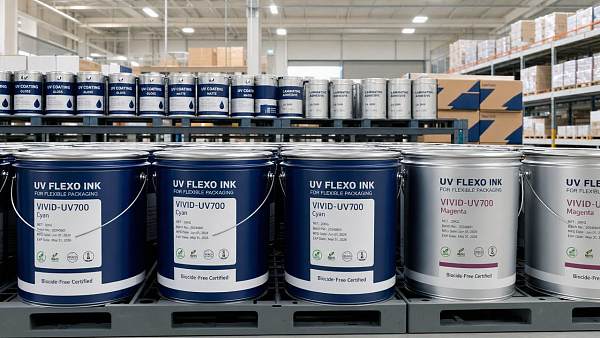
Manufacturers producing UV-curable flexographic inks for appliance labeling are directly affected. The 60°C steam resistance requirement necessitates higher crosslink density in acrylic-based resin systems. This drives demand for reformulated inks with enhanced thermal stability and abrasion resistance — capabilities not uniformly present in current commercial offerings.
Appliance OEMs & Exporters
OEMs exporting washing machines to Saudi Arabia must verify label durability compliance before shipment. Non-compliant labels risk rejection at customs or post-market enforcement actions. This adds a new validation step to product certification workflows and may delay time-to-market if ink suppliers cannot deliver verified formulations on schedule.
Printing Plate & Prepress Service Providers
Providers supporting label production must adapt to new ink specifications. Higher crosslink density inks often require adjustments in plate relief depth, curing energy dosage, and substrate priming — potentially affecting print consistency and throughput. These service providers need updated technical data sheets and compatibility testing support from ink suppliers.
Raw Material Suppliers (Acrylic Monomers & Oligomers)
Suppliers of specialty acrylates — especially high-functionality monomers and thermally stable oligomers — face increased inquiry volume from ink formulators. Demand is shifting toward materials enabling rapid, deep cure under industrial UV LED conditions while retaining post-cure thermal resilience.
Key Considerations and Recommended Actions
Monitor official SASO implementation guidance
SASO has not yet published detailed test protocols (e.g., exposure duration, steam pressure, substrate conditioning) for the 60°C requirement. Stakeholders should track SASO’s Technical Regulation Portal and authorized conformity assessment bodies for supplementary documentation expected before mid-2026.
Validate ink-substrate combinations under simulated conditions
Label durability depends on both ink formulation and substrate (e.g., polyester, polycarbonate). Companies should initiate internal or third-party steam testing using representative label constructions — not rely solely on supplier claims — to avoid late-stage compliance failures.
Distinguish between regulatory signal and operational readiness
The May 2026 publication is a regulatory milestone, but actual enforcement begins in 2027. Current procurement decisions (e.g., ink trials, plate re-engraving, substrate qualification) should prioritize scalability and documentation traceability — not just lab-scale pass/fail results.
Engage early with certified testing laboratories in GCC countries
Pre-certification testing capacity in Saudi Arabia and neighboring GCC states remains limited for this specific test. Firms should identify and pre-book slots at SASO-accredited labs now to avoid bottlenecks ahead of the 2027 deadline.
Editorial Perspective / Industry Observation
Observably, this revision functions primarily as a regulatory signal rather than an immediate operational constraint. While the 2027 enforcement date provides lead time, the technical specificity — linking label performance to a defined thermal stress condition — marks a departure from generic durability clauses seen in earlier SASO standards. Analysis shows that SASO is increasingly aligning appliance labeling requirements with real-world usage environments, suggesting similar updates may follow for other white goods categories (e.g., dishwashers, dryers) where steam cleaning is common. From an industry perspective, this reflects a broader trend: energy/water labeling is evolving from purely informational compliance into a functional performance specification — one that intersects material science, printing engineering, and regulatory affairs.
This development does not represent a standalone change but rather a node in a tightening web of regional technical barriers. Its significance lies less in novelty and more in its enforceability: unlike advisory guidelines, SASO 2663:2026 carries mandatory status under Saudi law. Continued attention is warranted not only for Saudi-bound shipments but also as a potential precedent for other Gulf Cooperation Council (GCC) members reviewing harmonized standards.
For stakeholders, it is more accurate to interpret this update as a targeted technical adjustment — not a systemic overhaul — but one requiring disciplined cross-functional coordination across R&D, procurement, quality assurance, and regulatory compliance teams.
In summary, SASO 2663:2026 introduces a concrete, testable requirement for washing machine label durability that cascades through multiple supply chain tiers. Its practical impact centers on material selection, validation rigor, and timing of preparatory activities — not broad market access restrictions. Currently, it is best understood as a focused compliance trigger demanding technical responsiveness, not strategic redirection.
Source: SASO Official Gazette (May 20, 2026), Standard SASO 2663:2026 — Energy and Water Efficiency Labelling for Household Washing Machines.
Further implementation details — including test methodology, conformity assessment procedures, and transitional arrangements — remain pending official publication and are subject to ongoing monitoring.
Recommended News
 Sep 14, 2026How to verify FDA compliance for packaging inks used on food packagingPackaging inks FDA compliant? Learn how to verify food-contact safety through regulatory citations, migration testing, supplier declarations, and process controls.
 Jul 19, 2026How to Verify Food-Safe Packaging Inks for CompliancePackaging inks food safe compliance starts with real-world verification. Learn how to assess migration, documents, barriers, and production controls to reduce risk.
 Jul 14, 2026FDA Tightens Migration Limit for UV Flexo InksFDA Tightens Migration Limit for UV Flexo Inks: learn how the new FDA rule cuts photoinitiator migration limits, requires toxicological dossiers, and impacts U.S. food packaging compliance after Dec 2026.
 Jul 13, 2026FDA Draft Tightens UV Flexo Ink Migration LimitFDA draft tightens UV flexo ink migration limits for TPO-L, signaling new LC-MS/MS validation rules in 2027. See how packaging, compliance, and North American market access may be affected.
 Jul 13, 2026Packaging Inks Guide: Choosing the Right Ink for Adhesion, Speed, and CompliancePackaging inks guide for choosing the right solution for adhesion, press speed, and compliance. Learn how to reduce risk, improve print performance, and make smarter packaging decisions.
 Jul 12, 2026FDA Requires Migration Filing for Food-Contact UV Flexo InksFDA requires migration filing for food-contact UV Flexo Inks before first U.S. import. Learn the compliance risks, CBP review impact, and what exporters must prepare now.
 Jun 30, 2026Packaging Inks Lamination: Common Adhesion Problems and FixesPackaging inks lamination issues can weaken bond strength and product safety. Discover common adhesion failures, root causes, and practical fixes to improve lamination reliability.
 Jun 29, 2026Vietnam Sets PFAS Testing Cost Rule for UV Flexo Ink ImportsVietnam Sets PFAS Testing Cost Rule for UV Flexo Ink Imports: learn how Vietnam’s new PFAS testing mandate affects costs, compliance, shipments, and supplier risk from July 2026.
 Jun 28, 2026Vietnam to Add 3% Green Surcharge on Imported UV Flexo InksVietnam to Add 3% Green Surcharge on Imported UV Flexo Inks from June 26, 2026. See how the new non-creditable cost affects pricing, sourcing, contracts, and Vietnam market strategy.
 Jun 27, 2026Vietnam Adds 3% Green Surcharge on Imported UV Flexo InksVietnam adds a 3% green surcharge on imported UV Flexo Inks from June 26, 2026. Learn who is affected, how VOC rules and certifications impact customs clearance, costs, and compliance.
 Jun 13, 2026AsiaFlexo 2026 Highlights Compliance-Driven Printing MaterialsAsiaFlexo 2026 spotlights compliance-driven printing materials, from low-migration UV Flexo Inks to Holographic Hot Foils, revealing how faster proofing and supplier validation can reshape packaging sourcing.
 Jun 12, 2026Qingdao Gravure Expo Puts Compliance Inks in FocusQingdao Gravure Expo puts compliance inks in focus, highlighting low-VOCs UV flexo inks and holographic foils aligned with EU REACH, US FDA, and GB 3095—2026. See what buyers now expect.
 Jun 10, 2026EU Tightens Phthalate Limit for UV Flexo InksEU Tightens Phthalate Limit for UV Flexo Inks: learn how the new 0.01% EU REACH rule impacts food-contact packaging, SGS testing, SDS updates, and export shipment compliance.
 May 24, 2026Vietnam Bans 12 Biocides, Tightens UV Flexo Ink ControlsVietnam bans 12 biocides & tightens UV flexo ink controls—urgent compliance guidance for exporters, formulators, and suppliers targeting ASEAN markets.
 May 24, 2026EN 1175:2025 Industrial Vehicle Electrical Safety Standard Enters ForceEN 1175:2025 industrial vehicle electrical safety standard takes effect May 2026—key for UV Flexo inks, AGV labels & functional printing compliance. Act now!
 May 23, 2026Saudi Arabia Updates Washer Energy/Water Efficiency StandardSaudi Arabia's new washer energy/water efficiency standard SASO 2663:2026 mandates 60°C steam-resistant labels—key for UV flexo ink makers, OEMs & GCC exporters. Act now to ensure compliance.
 May 23, 2026Vietnam Updates Pesticide Ban & Disclosure List, Affecting UV Flexo Ink SolventsVietnam bans TPO, HMPP & more UV flexo ink solvents—urgent compliance update for pesticide-adjacent printing chemistry exporters to food/pharma packaging markets.