Search News
Industry Portal
Hot Articles
- How to verify FDA compliance for packaging inks used on food packagingPackaging inks FDA compliant? Learn how to verify food-contact safety through regulatory citations, migration testing, supplier declarations, and process controls.
- When do holographic foils add value to luxury goods packaging?Packaging materials for luxury goods gain impact with holographic foils that elevate shelf appeal, authenticity, and premium unboxing—learn when this finish delivers real value.
- Can nano encryption technology stop counterfeit labels from being copied?Nano encryption technology anti counterfeit labels combine physical security, tamper evidence, and serialization to make copying harder. Explore smarter protection.
Popular Tags
Qingdao Gravure Expo Puts Compliance Inks in Focus
Time
Click Count
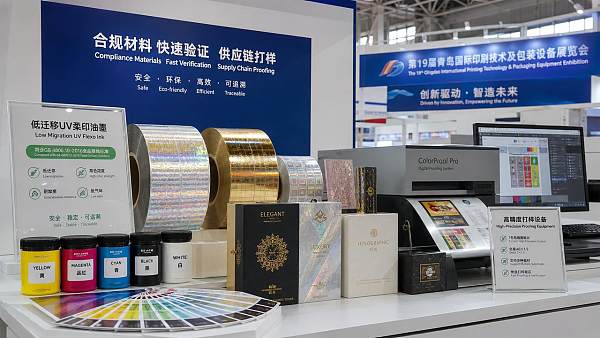
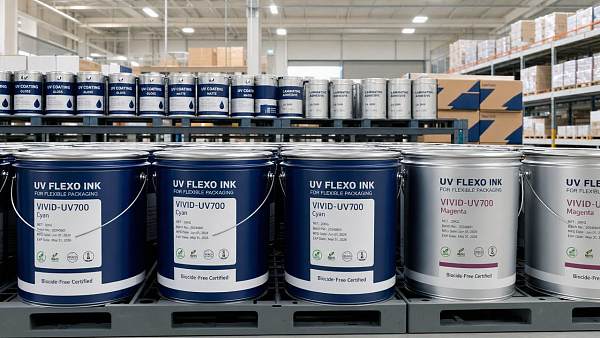
On July 8, 2026, the 2026 Asia-Pacific International Gravure Industry Exhibition opens in Qingdao with low-VOCs UV flexo inks and micro-nano structured holographic hot foils positioned as the main technical themes. The event is notable not simply as a product showcase, but as a visible signal that purchasing, material selection, and supplier screening in printing and packaging are increasingly being tied to compliance with EU REACH, US FDA, and China’s new GB 3095—2026 standard. For ink suppliers, foil producers, converters, procurement teams, and cross-border delivery partners, the practical issue is no longer only performance, but whether technical solutions can also withstand regulatory and documentation review.
What the event confirms at this stage
The confirmed information is limited but clear. The 2026 Asia-Pacific International Gravure Industry Exhibition is scheduled for July 8–11 at Qingdao International Expo Center. Organizers have identified low-VOCs UV flexo inks and micro-nano structured holographic hot foils as two core display directions. The exhibition has also attracted dedicated technical matching areas involving procurement teams from L’Oréal and Procter & Gamble Asia-Pacific, together with Southeast Asian fast-moving consumer goods brands. Their stated focus is the evaluation of green ink and hot foil solutions that align with EU REACH, US FDA, and China’s new GB 3095—2026 requirements.
Why the compliance signal matters across the chain
Material selection is moving closer to formal rule review
From an industry perspective, raw material suppliers and product developers may be affected first because the exhibition focus links product presentation directly to compliance expectations. When buyers evaluate UV flexo inks and holographic hot foils against EU REACH, US FDA, and GB 3095—2026, the impact is likely to appear in formulation review, product positioning, and technical file preparation. What deserves closer attention is whether suppliers can present consistent declarations, test-related materials, and specification documents that support procurement discussions.
Converters and processors may face tighter bid and delivery screening
For processing and manufacturing companies, the signal is relevant because customer acceptance may increasingly depend on whether selected inputs can be matched to downstream compliance requirements. This can affect bid alignment, approved material lists, and delivery confirmation steps. Analysis shows that where buyers set up dedicated technical matching areas, the review process may move upstream, meaning converters may need to confirm at an earlier stage whether ink and foil choices fit customer compliance language and intended market requirements.
Export and regional supply coordination may become more document-driven
Export-oriented businesses and supply chain service providers may also be affected because the summary ties product evaluation to multiple regulatory references rather than to a single domestic benchmark. That matters for cross-border orders, where product claims, shipment documentation, and customer acceptance criteria often need to stay internally consistent. Observably, the issue is not only whether a product can be sold, but whether the supporting records are clear enough for procurement review, handover, and later traceability if questions arise.
Testing and certification support functions may see earlier involvement
For testing-related and certification support businesses, the event points to a likely shift in timing rather than a confirmed expansion of mandatory requirements. If procurement teams are prioritizing compliance-aligned materials at the exhibition stage, technical support providers may be drawn in earlier to help suppliers prepare evidence packages, compare market-specific requirements, and answer buyer questions on documentation completeness.
What companies should watch before treating this as a settled rule change
Check whether product claims can be supported consistently
Companies showing or sourcing these materials should review whether environmental and compliance claims can be matched by technical descriptions and supporting records. The current information does not confirm a new enforcement action at the exhibition itself, but it does indicate that buyers are paying attention to whether green ink and hot foil solutions are aligned with named standards and regulatory frameworks.
Prepare technical files for procurement-facing conversations
What deserves closer attention is the practical value of documentation in commercial discussions. Suppliers may need to organize specification sheets, compliance statements, test-related materials, and application descriptions in a way that procurement teams can assess efficiently. This is especially relevant where technical matching areas are designed to connect product performance with rule-based screening.
Follow how purchasing language evolves in tenders and supplier approval
Analysis shows that one of the key variables after the exhibition will be whether buyers begin using more explicit compliance wording in tender files, supplier qualification criteria, or material approval processes. The input does not provide those downstream documents, so this should be treated as a point for monitoring rather than as a confirmed market-wide shift.
Watch lead-time and substitution risks in approved materials
If more buyers narrow attention to solutions aligned with EU REACH, US FDA, and GB 3095—2026, companies may need to monitor whether approved material choices become more selective. That could affect procurement planning, supplier backup arrangements, and delivery scheduling. At this stage, however, it is more appropriate to understand this as a risk-monitoring issue, not as a confirmed supply constraint.
How this signal is best understood now
Observably, this event is less about announcing a new law and more about showing how compliance references are entering commercial selection and technical matching at an earlier stage. Analysis shows that the combination of exhibition priorities and buyer participation makes this a meaningful execution signal for the printing and packaging supply chain. At the same time, it would be premature to treat it as proof of a uniform enforcement outcome across all markets or customers. The more balanced reading is that regulatory alignment is becoming a stronger procurement filter, but the exact execution threshold still depends on how buyers, specifications, and supporting documents develop after the exhibition.
A practical reading for the market
For the market, the significance of this development lies in the growing connection between material innovation and compliance readiness. Low-VOCs UV flexo inks and micro-nano structured holographic hot foils are being highlighted not only for technical interest, but for their relevance to procurement decisions shaped by EU REACH, US FDA, and GB 3095—2026 references. It is more appropriate to understand this news as an execution-oriented market signal: the direction is visible, but the detailed standards of acceptance, documentation depth, and downstream purchasing language still require continued observation.
Basis of this article and what still needs verification
This article is generated from the user-provided news title, event date, and event summary. For events of this type, relevant source categories commonly include official event announcements, regulatory publications, trade or customs authority information, industry association releases, standards organization documents, and reporting by established industry media. No specific official source link was provided in the input, so the underlying official references still need continued verification. What should continue to be monitored includes any later policy detail, certification interpretation, changes in tender wording, buyer feedback, and how participating companies implement these requirements in actual procurement and delivery processes.
Recommended News
 Sep 14, 2026How to verify FDA compliance for packaging inks used on food packagingPackaging inks FDA compliant? Learn how to verify food-contact safety through regulatory citations, migration testing, supplier declarations, and process controls.
 Jul 19, 2026How to Verify Food-Safe Packaging Inks for CompliancePackaging inks food safe compliance starts with real-world verification. Learn how to assess migration, documents, barriers, and production controls to reduce risk.
 Jul 14, 2026FDA Tightens Migration Limit for UV Flexo InksFDA Tightens Migration Limit for UV Flexo Inks: learn how the new FDA rule cuts photoinitiator migration limits, requires toxicological dossiers, and impacts U.S. food packaging compliance after Dec 2026.
 Jul 13, 2026FDA Draft Tightens UV Flexo Ink Migration LimitFDA draft tightens UV flexo ink migration limits for TPO-L, signaling new LC-MS/MS validation rules in 2027. See how packaging, compliance, and North American market access may be affected.
 Jul 13, 2026Packaging Inks Guide: Choosing the Right Ink for Adhesion, Speed, and CompliancePackaging inks guide for choosing the right solution for adhesion, press speed, and compliance. Learn how to reduce risk, improve print performance, and make smarter packaging decisions.
 Jul 12, 2026FDA Requires Migration Filing for Food-Contact UV Flexo InksFDA requires migration filing for food-contact UV Flexo Inks before first U.S. import. Learn the compliance risks, CBP review impact, and what exporters must prepare now.
 Jun 30, 2026Packaging Inks Lamination: Common Adhesion Problems and FixesPackaging inks lamination issues can weaken bond strength and product safety. Discover common adhesion failures, root causes, and practical fixes to improve lamination reliability.
 Jun 29, 2026Vietnam Sets PFAS Testing Cost Rule for UV Flexo Ink ImportsVietnam Sets PFAS Testing Cost Rule for UV Flexo Ink Imports: learn how Vietnam’s new PFAS testing mandate affects costs, compliance, shipments, and supplier risk from July 2026.
 Jun 28, 2026Vietnam to Add 3% Green Surcharge on Imported UV Flexo InksVietnam to Add 3% Green Surcharge on Imported UV Flexo Inks from June 26, 2026. See how the new non-creditable cost affects pricing, sourcing, contracts, and Vietnam market strategy.
 Jun 27, 2026Vietnam Adds 3% Green Surcharge on Imported UV Flexo InksVietnam adds a 3% green surcharge on imported UV Flexo Inks from June 26, 2026. Learn who is affected, how VOC rules and certifications impact customs clearance, costs, and compliance.
 Jun 13, 2026AsiaFlexo 2026 Highlights Compliance-Driven Printing MaterialsAsiaFlexo 2026 spotlights compliance-driven printing materials, from low-migration UV Flexo Inks to Holographic Hot Foils, revealing how faster proofing and supplier validation can reshape packaging sourcing.
 Jun 12, 2026Qingdao Gravure Expo Puts Compliance Inks in FocusQingdao Gravure Expo puts compliance inks in focus, highlighting low-VOCs UV flexo inks and holographic foils aligned with EU REACH, US FDA, and GB 3095—2026. See what buyers now expect.
 Jun 10, 2026EU Tightens Phthalate Limit for UV Flexo InksEU Tightens Phthalate Limit for UV Flexo Inks: learn how the new 0.01% EU REACH rule impacts food-contact packaging, SGS testing, SDS updates, and export shipment compliance.
 May 24, 2026Vietnam Bans 12 Biocides, Tightens UV Flexo Ink ControlsVietnam bans 12 biocides & tightens UV flexo ink controls—urgent compliance guidance for exporters, formulators, and suppliers targeting ASEAN markets.
 May 24, 2026EN 1175:2025 Industrial Vehicle Electrical Safety Standard Enters ForceEN 1175:2025 industrial vehicle electrical safety standard takes effect May 2026—key for UV Flexo inks, AGV labels & functional printing compliance. Act now!
 May 23, 2026Saudi Arabia Updates Washer Energy/Water Efficiency StandardSaudi Arabia's new washer energy/water efficiency standard SASO 2663:2026 mandates 60°C steam-resistant labels—key for UV flexo ink makers, OEMs & GCC exporters. Act now to ensure compliance.
 May 23, 2026Vietnam Updates Pesticide Ban & Disclosure List, Affecting UV Flexo Ink SolventsVietnam bans TPO, HMPP & more UV flexo ink solvents—urgent compliance update for pesticide-adjacent printing chemistry exporters to food/pharma packaging markets.