Search News
Industry Portal
Hot Articles
- What to check before choosing a cryogenic labels supplierCryogenic labels supplier selection starts with performance, not price. Learn what to check for adhesion, print durability, compliance, and supply reliability before you buy.
- How to choose cryogenic labels for laboratory samples that stay readable after freezingCryogenic labels for laboratory samples: learn how to choose labels that stay attached and readable after freezing, thaw cycles, wiping, and daily lab handling.
- China Enforces Eco-Environment Code, Raising Export Packaging Compliance RequirementsChina enforces its Eco-Environment Code, tightening export packaging compliance for food, FMCG, e-commerce, and pharma. Learn the new risks, certification checks, and sourcing actions now.
Popular Tags
What to check before choosing a cryogenic labels supplier
Time
Click Count
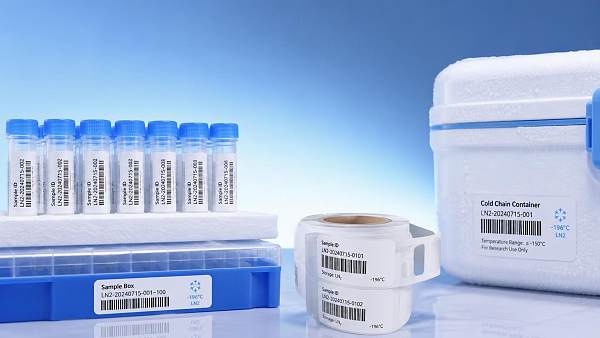
Choosing a cryogenic labels supplier is not just about unit price. For procurement teams, the real question is whether the supplier can consistently deliver labels that stay attached, remain readable, and support traceability after exposure to extreme cold, handling, and transportation. A low-cost option that fails in liquid nitrogen storage or during sample movement can quickly create relabeling costs, compliance risks, and data loss.
When buyers search for a cryogenic labels supplier, their core intent is practical and evaluative. They want to compare suppliers, understand the technical and commercial risks, and build a shortlist based on proof rather than marketing claims. The most useful content, therefore, is not a generic product overview, but a clear framework for checking material performance, adhesive suitability, print durability, compliance support, and supply reliability before signing a contract.
What procurement teams are really trying to verify
Most buyers are not looking for a definition of cryogenic labels. They are trying to avoid failure in real operating conditions. That means checking whether a supplier can support labels used on vials, tubes, boxes, and containers exposed to deep-freeze storage, dry ice shipping, liquid nitrogen environments, and frequent handling.
For procurement, the main concern is consistency across the full lifecycle. A label may look acceptable at receiving inspection, but still fail after freeze-thaw cycles, abrasion, condensation, or contact with laboratory chemicals. The right supplier must demonstrate stable performance over time, not just provide a technically attractive datasheet.
Another key concern is fit with the buyer’s workflow. Cryogenic labels are rarely used in isolation. They must work with existing printers, ribbon grades, barcode formats, scanning systems, and traceability procedures. A supplier that understands operational compatibility reduces implementation risk and shortens qualification time.
Start with the actual temperature and handling conditions
The first thing to check before choosing a cryogenic labels supplier is whether they ask detailed questions about your application. A credible supplier will want to know the lowest storage temperature, application temperature, container material, surface curvature, moisture exposure, and whether labels will face immersion, frost, or repeated handling.
This matters because cryogenic performance is application-specific. A label designed for storage at minus 80 degrees Celsius is not automatically suitable for direct liquid nitrogen exposure. Likewise, a product that performs well on flat polypropylene containers may behave differently on small-diameter cryovials with textured or slightly contaminated surfaces.
Procurement teams should be cautious if a supplier gives broad performance claims without narrowing the use case. The better approach is to request evidence matched to your actual environment, including storage temperature range, dwell time, thaw conditions, and any expected movement between freezers, benches, and transportation packaging.
Check adhesive performance, not just facestock durability
In cryogenic labeling, adhesive selection often determines whether the label succeeds or fails. Many buyers focus on the top material because it is visible, but the adhesive is what keeps identification intact when surfaces contract, moisture condenses, and containers are handled with gloves or exposed to frost.
A reliable cryogenic labels supplier should clearly explain adhesive behavior under low-temperature application and low-temperature storage. These are different issues. Some labels can survive deep-freeze storage after being applied at room temperature, but fail if applied directly in cold rooms or onto pre-frozen surfaces.
Ask the supplier whether the adhesive is intended for room-temperature application, refrigerated application, or direct application to frozen substrates. Also check tack development time, bond strength on common lab plastics, and resistance to edge lift after freeze-thaw cycling. These details are more useful than broad statements such as “excellent cold resistance.”
It is also worth asking for test data on container materials you actually use, such as polypropylene, polyethylene, glass, or stainless steel. Adhesion can vary significantly by substrate, and procurement decisions become stronger when the supplier’s validation aligns with real packaging formats.
Verify print quality and barcode readability after freezing
A cryogenic label is only useful if the information remains readable throughout storage and handling. This is especially important for procurement teams supporting laboratories, biobanks, pharmaceutical operations, healthcare logistics, and cold-chain product identification where barcode failure creates operational delays and traceability gaps.
When evaluating a cryogenic labels supplier, ask how the label performs after printing and freezing, not only before use. Print surfaces can react differently to thermal transfer ribbons, direct thermal processes, or specialized inks. Smudging, poor ribbon anchorage, or fading under condensation can undermine the entire identification system.
Suppliers should be able to recommend compatible ribbon grades, printer settings, and print durability standards. Resin ribbons are commonly preferred for harsh environments, but suitability still depends on the label surface and scanning requirements. A serious supplier should discuss scanner readability after abrasion, frost, and repeated movement.
Procurement should also request printed sample labels for in-house testing. It is one thing to review an unprinted material sample, and another to confirm that small text, 1D barcodes, 2D codes, and human-readable information remain sharp after exposure to actual operating conditions.
Ask for evidence from qualification testing
One of the most effective ways to evaluate a cryogenic labels supplier is to examine how they validate performance. Strong suppliers usually have structured qualification methods, including low-temperature dwell tests, freeze-thaw cycling, adhesion checks, chemical exposure review, and barcode verification after environmental stress.
Procurement teams should ask what standards, internal protocols, or customer acceptance criteria the supplier uses. Not every application follows the same formal testing standard, but there should still be a disciplined process. Suppliers who cannot describe how they test often rely too heavily on generic material assumptions.
Useful evidence may include test reports, application case histories, sample qualification records, and recommendations based on similar industries. This does not mean accepting marketing case studies at face value. The goal is to verify whether the supplier has experience with comparable temperature ranges, surfaces, and traceability requirements.
It is also sensible to ask whether the supplier supports pilot runs or pre-production trials. For procurement, small-scale validation before full approval reduces risk and provides stronger data for internal stakeholders in quality, operations, and regulatory functions.
Review compliance and traceability support early
For many buyers, especially in pharmaceuticals, healthcare, diagnostics, and regulated cold-chain environments, compliance is not a secondary issue. The supplier should be able to provide documentation that supports material traceability, product consistency, and any relevant declarations required by your internal approval process.
This may include lot traceability, technical data sheets, safety information, change notification practices, and statements related to restricted substances or sector-specific requirements. Even if the label itself is a small component, procurement cannot treat it as a low-governance item when it carries critical identity data.
It is also important to ask how the supplier manages formulation or manufacturing changes. A cryogenic labels supplier with poor change control can create costly requalification work later. Buyers should prefer partners who communicate material changes in advance and maintain stable product specifications over time.
If your organization serves global markets, confirm whether the supplier can support multi-site documentation and consistent specifications across regions. This becomes especially important when the same label format is used across international laboratories, warehouses, or manufacturing facilities.
Evaluate converting capability and format precision
Material quality alone is not enough. The supplier’s converting capability has a direct impact on application performance. Cryogenic labels are often used in small formats, wrapped around curved surfaces, or printed with dense data. Poor die-cutting, inconsistent liner release, or dimension variation can cause dispensing and printing issues.
Procurement teams should check whether the supplier can consistently produce the required label size, roll configuration, core size, gap, and orientation for your printers and application workflow. Seemingly minor format mismatches can slow operations and increase waste at the point of use.
For vial and tube labeling, precision matters even more. Labels may need to fit narrow surfaces while leaving enough space for scanner access or visual checks. A capable supplier should understand these constraints and help optimize label construction instead of simply quoting a custom size.
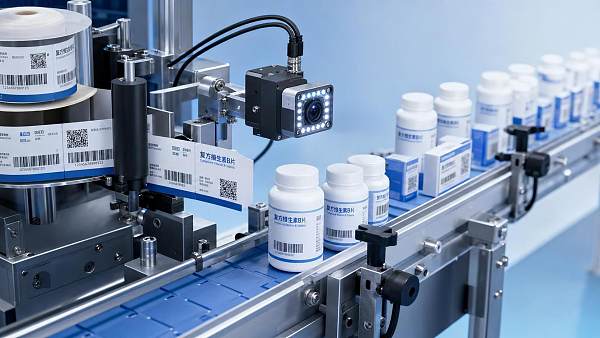
If automation is involved, ask whether the labels are suitable for machine dispensing and whether the supplier has experience supporting high-throughput environments. Procurement should treat converting accuracy as part of total functional performance, not just a production detail.
Do not overlook supply continuity and lead-time resilience
From a procurement perspective, the best cryogenic labels supplier is not only technically capable but operationally dependable. Many labeling problems emerge from supply disruptions rather than product failure. If a critical label goes out of stock, teams may be forced into emergency substitutions that have not been properly qualified.
Ask about manufacturing locations, safety stock policy, raw material sourcing, minimum order quantities, and lead-time stability. It is also useful to understand whether the supplier has alternate production capacity or approved backup materials in case of disruption.
Global buyers should confirm export experience, packaging standards for shipment, and support for regional distribution. Labels used in cold-chain programs often support essential product flows, so continuity matters as much as technical performance. A supplier with weak planning discipline can still become a serious operational risk.
Procurement should also review forecast flexibility. If usage fluctuates with project volume, seasonal demand, or laboratory throughput, the supplier’s willingness to support changing order patterns becomes part of the commercial value.
Compare total cost, not only unit price
Price remains important, but it should be evaluated in the context of total cost of ownership. A lower unit price can become far more expensive if labels fail, printers need constant adjustment, scanning errors increase, or operations spend time relabeling products and resolving traceability issues.
When comparing a cryogenic labels supplier, include qualification effort, failure risk, waste rate, downtime exposure, and logistics reliability in the analysis. Procurement decisions improve when the cost model reflects real operating consequences rather than invoice price alone.
This is especially relevant for regulated or high-value products. A failed label on a low-cost vial may still trigger a high-cost investigation, delayed release, or inventory uncertainty. The supplier that reduces those risks often provides better overall value even at a higher purchase price.
A useful practice is to build a supplier scorecard with weighted criteria covering performance, documentation, lead time, service responsiveness, and commercial terms. This creates a more defensible decision process and helps align procurement with quality and operations teams.
Questions buyers should ask before approval
Before final selection, procurement teams should ask a focused set of questions. Can the supplier show performance data for the exact temperature range and substrate? Can they support your print technology and barcode requirements? Can they provide lot traceability and controlled change notification?
You should also ask how they handle sample qualification, what lead times apply to standard and custom constructions, whether they hold safety stock, and what similar applications they already support. These questions quickly reveal whether the supplier understands cryogenic labeling as an operational system rather than a simple commodity item.
If answers remain vague, that is usually a warning sign. The strongest suppliers tend to be specific, evidence-based, and realistic about limitations. Procurement teams benefit more from honest boundaries and clear qualification guidance than from oversized performance claims.
Conclusion
Choosing a cryogenic labels supplier should be treated as a risk-management decision, not a routine label purchase. Procurement teams need proof that the supplier can support low-temperature adhesion, reliable printing, barcode readability, compliance documentation, and uninterrupted supply across the full lifecycle of use.
The most reliable choice is usually the supplier that asks the best technical questions, provides application-matched evidence, and supports validation with practical discipline. When procurement evaluates cryogenic labels through performance, traceability, and continuity instead of price alone, the result is a more resilient cold-chain labeling program and fewer downstream failures.
Recommended News
 Aug 18, 2026What to check before choosing a cryogenic labels supplierCryogenic labels supplier selection starts with performance, not price. Learn what to check for adhesion, print durability, compliance, and supply reliability before you buy.
 Aug 16, 2026How to measure packaging sustainability metrics that actually matterPackaging sustainability metrics that actually matter: learn how to compare carbon, recyclability, performance, and operational yield to make smarter packaging decisions.
 Aug 11, 2026How Low Migration Label Adhesive Technology Supports Food Packaging ComplianceLabel adhesive technology low migration explained: learn how to reduce migration risk, improve food packaging compliance, and choose label constructions that balance safety, performance, and approvals.
 Aug 10, 2026How to Choose Transfer Foils for Labels Based on Print Method and DurabilityTransfer foils for labels: learn how to choose the right option by print method, substrate, and durability needs to improve label performance, reduce rework, and achieve a premium finish.
 Aug 08, 2026How to Evaluate a Coating Materials Supplier for Consistent Quality and Lead TimesCoating materials supplier selection starts with the right questions. Learn how to compare quality consistency, process control, and lead-time reliability to reduce sourcing risk.
 Aug 03, 2026How High-Speed Labeling Technology Affects Accuracy and Throughput in PharmaceuticalsHigh-speed labeling technology pharmaceuticals depend on shapes accuracy, throughput, and compliance. Learn how materials, printing, and inspection drive reliable pharmaceutical packaging performance.
 Aug 02, 2026How to Choose Packaging for PCB Components Based on ESD and Moisture RiskPackaging for PCB components starts with risk, not bag type. Learn how to balance ESD, moisture, handling, and assembly needs to protect yield and choose smarter packaging.
 Jul 30, 2026How to Evaluate Throughput, Accuracy, and Downtime in High Speed Labeling SystemsHigh speed labeling systems should be judged by real throughput, labeling accuracy, and downtime recovery—not brochure speed. Learn how to compare machines for stable output and fewer stoppages.
 Jul 29, 2026How to Choose Food Grade Eco Friendly Packaging Materials for Moisture and Grease ResistanceEco friendly packaging materials food grade: learn how to choose options that balance moisture and grease resistance, food-contact compliance, and sustainability for safer, smarter packaging.
 Jul 27, 2026How to Evaluate a Thermal Labels Supplier for Cost, Quality, and Lead TimeThermal labels supplier evaluation guide: learn how to compare cost, print quality, adhesive performance, compliance, and lead time to reduce risk and choose a reliable partner.
 Jul 23, 2026How to Evaluate Industrial Label Systems for Durability and Total CostIndustrial label systems: learn how to compare durability, compliance, barcode performance, and total cost to reduce failures, control sourcing risk, and choose smarter long-term solutions.
 Jul 15, 2026Pressure Sensitive Label Materials Factory Audit Checklist for Stable QualityPressure sensitive label materials factory audit checklist for buyers: verify coating control, traceability, compliance, and lot consistency to reduce label failure risk.
 Jul 13, 2026How to Evaluate a Sustainable Cushioning Materials Supplier in 2026Sustainable cushioning materials supplier selection in 2026 starts with protection, proof, and scale. Learn how to compare claims, compliance, and total cost with confidence.
 Jul 12, 2026Metallic Cosmetic Packaging Materials: What Affects Finish, Durability, and Brand FitMetallic cosmetic packaging materials shape finish, durability, and brand appeal. Learn what affects gloss, scuff resistance, compliance, and cost before choosing the right premium pack.
 Jul 12, 2026How to Compare Metallic Luxury Packaging Materials for Premium Shelf ImpactMetallic luxury packaging materials compared: learn how to assess shelf impact, durability, print fit, compliance, and cost to choose premium packaging that converts.
 Jul 11, 2026Thermal Labels for Barcode Printing: Top Mistakes That Raise Replacement CostsThermal labels for barcode printing can drive hidden replacement costs when materials miss real conditions. Discover the top mistakes, how to prevent scan failures, and choose labels that cut waste.
 Jul 05, 2026Industrial Adhesive Technology for Laminating: Key Factors for Material SelectionIndustrial adhesive technology for laminating: discover how to choose the right chemistry for better bonding, faster converting, compliance, and lower total packaging cost.
 Jul 04, 2026Decorative Packaging Foils Supplier Middle East: 6 Checks Before You ShortlistDecorative packaging foils supplier Middle East guide: discover 6 practical checks to compare quality, compliance, lead times, and total value before you shortlist a vendor.
 Jul 03, 2026Protective Packaging Cost Breakdown: Material, Labor, Storage, and Damage RiskProtective Packaging cost goes beyond material price. Learn how labor, storage, and damage risk shape total packaging spend, and discover smarter ways to cut costs without hurting performance.
 Jul 02, 2026High Speed Labeling Supplier Checklist: Downtime, Accuracy, and SupportHigh speed labeling supplier checklist: compare downtime risk, label accuracy, material fit, and after-sales support to cut hidden costs and choose a more reliable production partner.
 Jun 30, 2026Embossed Shelf Packaging: When It Improves Impact and When It Adds CostEmbossed shelf packaging can boost shelf impact, grip, and premium appeal—but when does it justify the extra cost? Explore practical value, risks, and smarter packaging decisions.
 Jun 30, 2026How to Choose Thermal Labels for Barcode Printing That Scan ReliablyThermal labels for barcode printing: learn how to match face stock, adhesive, printer, and ribbon for reliable scans, fewer failures, and better supply chain performance.
 Jun 29, 2026How to Choose Packaging Materials for Luxury Goods Without Raising Damage RatesPackaging materials for luxury goods should balance premium appearance with real transit protection. Learn how to cut damage, control costs, and keep brand value intact.
 Jun 28, 2026Private Label Packaging Boxes: 7 Cost Risks Before You Place an OrderPrivate label packaging boxes can look cheap upfront but hide costly risks. Discover 7 pricing traps before you order and compare suppliers with more confidence.