Search News
Industry Portal
Hot Articles
- How to verify FDA compliance for packaging inks used on food packagingPackaging inks FDA compliant? Learn how to verify food-contact safety through regulatory citations, migration testing, supplier declarations, and process controls.
- When do holographic foils add value to luxury goods packaging?Packaging materials for luxury goods gain impact with holographic foils that elevate shelf appeal, authenticity, and premium unboxing—learn when this finish delivers real value.
- Can nano encryption technology stop counterfeit labels from being copied?Nano encryption technology anti counterfeit labels combine physical security, tamper evidence, and serialization to make copying harder. Explore smarter protection.
Popular Tags
EU PPWR Rules Hit BOPP Barrier Film Exports
Time
Click Count
On July 24, 2026, the EU began mandatory enforcement of core PPWR requirements affecting BOPP barrier films sold into the European market. For exporters, converters, procurement teams, and supply chain operators, the immediate issue is no longer only product performance, but whether labels and technical documents clearly state recyclability grade, the actual percentage of recycled plastic content (rPP), and a traceability declaration aligned with EN 15343:2023. The development matters because non-compliant shipments may be refused customs clearance or face administrative fines of up to €25,000 per batch.
What the Rule Now Requires
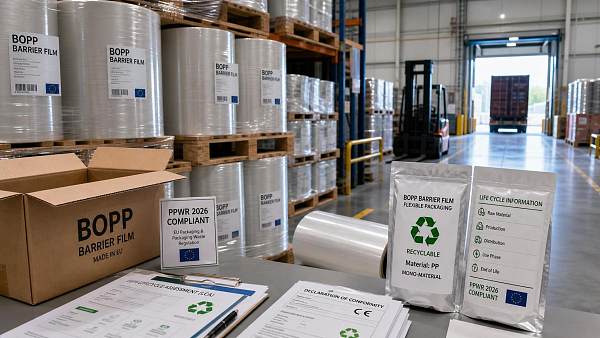
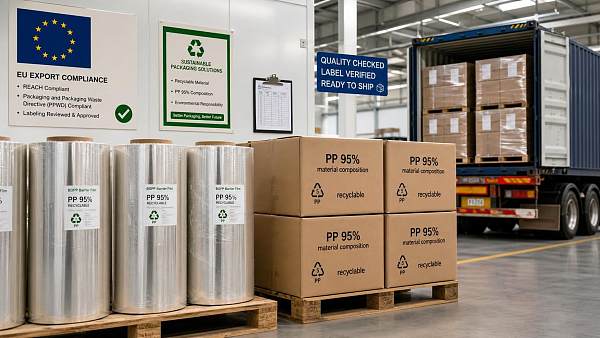
According to the provided information, the core provisions of the EU Packaging and Packaging Waste Regulation (PPWR) became mandatory on July 24, 2026. The requirement applies to all BOPP barrier films sold to the EU.
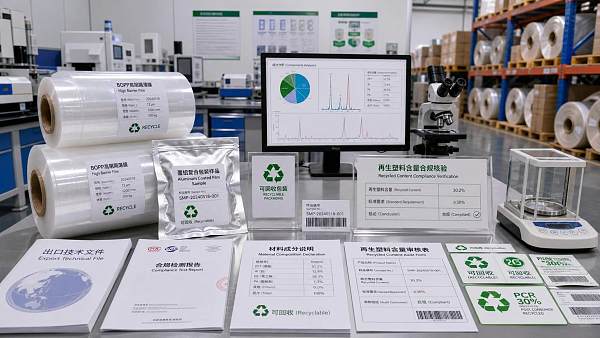
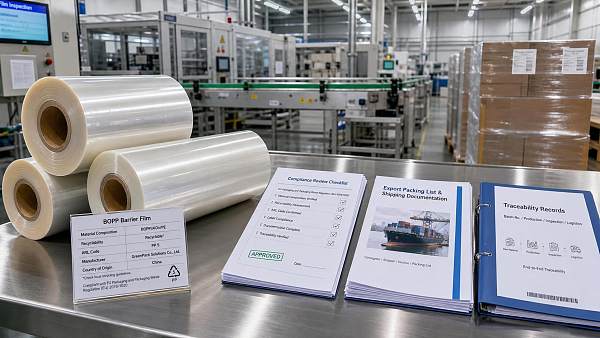
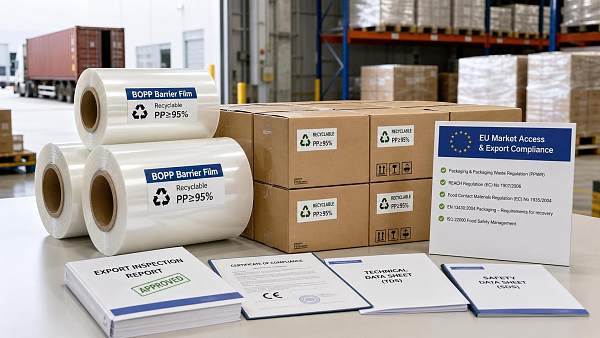
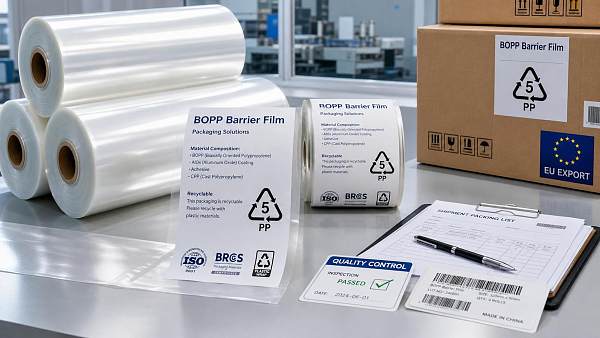
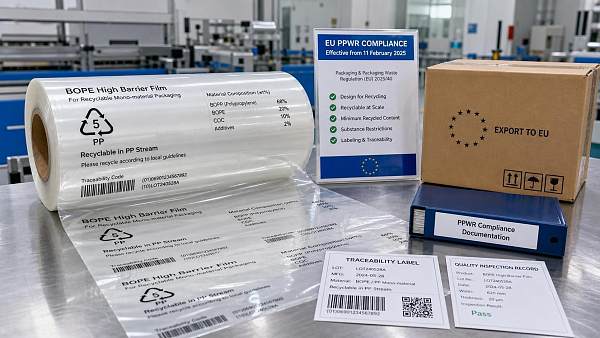
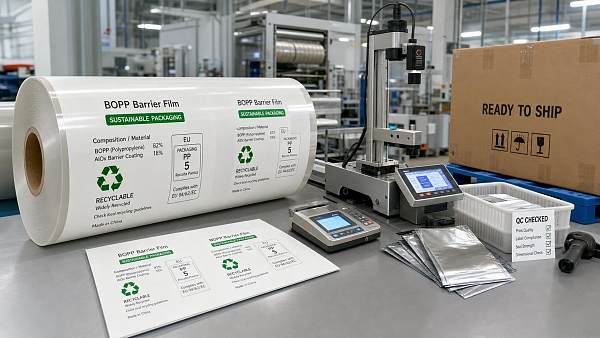
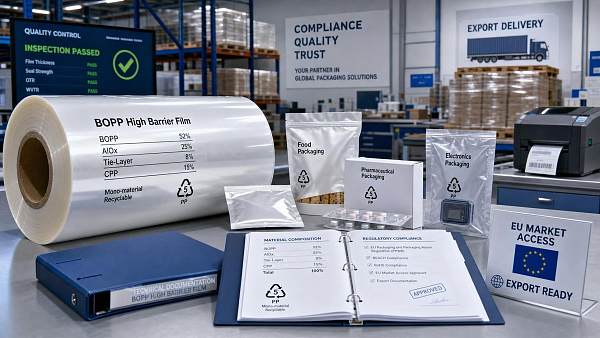
The required disclosures must appear on product labels and in technical documentation. These disclosures include the recyclability grade, the actual percentage of recycled plastic content expressed as rPP, and a traceability declaration that complies with EN 15343:2023.
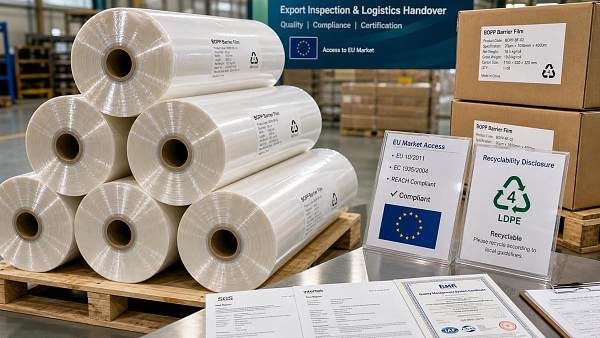
The same information states that the requirement directly affects the compliant delivery capability of Chinese BOPP film exporters. Products that do not meet the requirement may be denied customs clearance or be subject to administrative penalties of up to €25,000 for each batch.
Where the Pressure Appears Across the Supply Chain
Export-facing film suppliers face a documentation threshold
From an industry perspective, companies shipping BOPP barrier films to the EU are the first group exposed to direct risk because the requirement is tied to both labels and technical files. The impact is likely to appear in export documentation preparation, shipment release, and customer acceptance. What deserves closer attention is whether product information can be presented in a way that is consistent across commercial, technical, and customs-facing materials.
Manufacturing and converting teams may be pulled into compliance delivery
Analysis shows that manufacturing and processing functions may be affected even when they are not the legal exporter. The reason is practical: recyclability grading, rPP content disclosure, and traceability statements all depend on product-related information that must be translated into shipment-ready documents. The business pressure is therefore likely to show up in specification management, document coordination, and internal approval workflows.
Procurement and customer-facing roles will need clearer material claims
Buyers, sourcing teams, and commercial teams may also be affected because the new requirement changes what must be stated formally, not just what may be discussed commercially. The key area to watch is the gap between sales claims and verifiable document language. Where EU-bound business is involved, procurement communication and order confirmation may need closer alignment with the required disclosures.
Logistics and customs support providers may see higher pre-shipment scrutiny
Observably, supply chain service providers are likely to feel the effect through document checks and shipment readiness reviews. Their exposure comes from the risk of customs rejection and batch-level penalties if required statements are missing or incomplete. The operational focus is less about transport itself and more about whether compliance information is complete before goods move.
What Companies Should Review Now
Check whether labeling and technical files match the mandatory fields
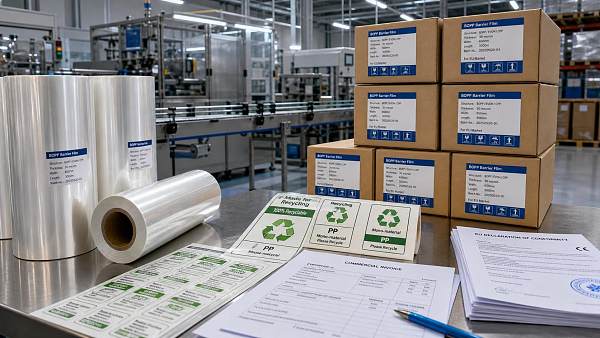
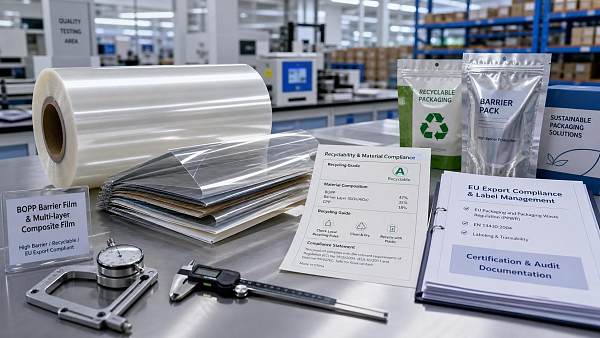
Companies involved in EU-bound BOPP barrier film business should first review whether existing labels and technical documentation explicitly include the recyclability grade, the actual rPP percentage, and the EN 15343:2023 traceability declaration. This is a practical compliance check tied directly to the stated requirement.
Separate product claims from document-ready evidence
What deserves closer attention is the distinction between having a product claim internally and being able to present that claim in the exact form required for delivery documents. In practice, this means firms should examine whether the information used in customer communication can also support customs and compliance review without contradiction.
Review supplier inputs and traceability readiness
Because the rule requires a traceability declaration aligned with EN 15343:2023, companies should pay attention to whether upstream material information and supporting records can sustain that declaration. This is not a broad management issue; it is directly tied to whether a shipment can move without compliance disputes.
Prepare for customer and shipment-level escalation
Analysis shows that the commercial consequence of non-compliance may emerge at the shipment level, given the stated risk of customs refusal or fines per batch. Firms should therefore review escalation procedures for document correction, customer communication, and shipment release timing where EU deliveries are involved.
Why This Looks Like an Immediate Compliance Signal
As an editorial observation, this development is better understood as an immediate compliance threshold rather than a distant policy signal. The reason is straightforward: the provided information describes mandatory enforcement from a specific date and links non-compliance to direct shipment and penalty risk.
At the same time, it is also appropriate to treat this as a longer-term signal about how market access is being tied more closely to documented material attributes and traceability. That interpretation remains an analysis, not an added fact, but it is consistent with the structure of the requirement described in the source information.
How the Market Should Read This Development
The industry meaning of this update is not limited to a labeling adjustment. Based on the confirmed facts, it points to a tighter connection between product specification, recycled content disclosure, traceability documentation, and export execution for EU-bound BOPP barrier films.
It is more appropriate to understand this as an active compliance development with immediate operational consequences, while also continuing to monitor how companies and service providers translate the rule into day-to-day delivery practice. The most relevant question now is not whether the requirement matters, but whether affected businesses can document compliance consistently at shipment level.
Basis of This Article
This article is based on the user-provided news title, event date, and event summary. The confirmed factual basis includes the July 24, 2026 enforcement date, the PPWR-related labeling and technical documentation requirements for BOPP barrier films sold to the EU, the need to state recyclability grade and actual rPP content, the requirement for an EN 15343:2023 traceability declaration, and the stated customs and penalty risks for non-compliant batches.
For this type of development, commonly relevant source categories may include official regulatory announcements, company compliance notices, industry association updates, authoritative media coverage, and standard-setting organization documents. A specific official source link was not provided in the input, so that point still requires continued verification. Any later clarification in official wording, enforcement practice, or supporting documentation expectations remains a key area to watch.
Recommended News
 Sep 10, 2026How pharmaceutical film technology affects moisture protection in blister packsPharmaceutical film technology for blister packs: learn how barrier films, WVTR, thermoforming, and seal integrity protect moisture-sensitive medicines and support reliable compliance.
 Sep 05, 2026How to choose food-grade flexible packaging films for dry foodsFlexible Packaging Films food grade guide: choose the right barrier, seal strength, compliance, and durability to protect dry foods and extend shelf life.
 Sep 03, 2026How film label materials affect label durability in refrigerated storageFilm label materials play a critical role in refrigerated durability. Learn how films, adhesives, printing, and moisture resistance protect labels in cold storage.
 Aug 24, 2026How to evaluate barrier film suppliers in Europe for food packagingBarrier film Europe sourcing made practical: learn how to assess food packaging suppliers on barrier performance, compliance, machinability, and total cost before you buy.
![]() Aug 14, 2026EU PPWR enforcement: BOPP high barrier film exports need to pay attention to labeling complianceEU PPWR enforcement makes BOPP high barrier film exports to Europe focus on labeling compliance. Learn the key rules on recycling marks, recycled content, and recyclability claims before 2026.
Aug 14, 2026EU PPWR enforcement: BOPP high barrier film exports need to pay attention to labeling complianceEU PPWR enforcement makes BOPP high barrier film exports to Europe focus on labeling compliance. Learn the key rules on recycling marks, recycled content, and recyclability claims before 2026. Aug 13, 2026EU PPWR Takes Effect for BOPP Barrier FilmsEU PPWR takes effect for BOPP barrier films on Aug 12, 2026. Learn the new labeling, recycled content, and life-cycle declaration rules shaping EU import compliance.
 Aug 13, 2026Barrier Packaging for Pet Food: How to Choose the Right Moisture and Oxygen BarrierBarrier packaging for pet food explained: learn how to choose the right moisture and oxygen barrier to protect freshness, shelf life, seals, and sustainability goals.
 Aug 12, 2026EU PPWR Now in Force: BOPP Barrier Films Face Labeling RulesEU PPWR now in force puts BOPP barrier films under stricter labeling rules. Learn how recyclability, composition, and recycled content disclosures affect EU market access.
 Aug 12, 2026How to Evaluate Recyclable Mono Material Packaging for Barrier Performance and ReprocessingRecyclable mono material packaging: learn how to assess barrier performance, seal reliability, and reprocessing suitability to choose packaging that supports recyclability without sacrificing product protection.
 Aug 11, 2026EU PPWR Rules Now Mandate Labels on BOPP Barrier FilmsEU PPWR rules now require labels on BOPP barrier films sold in Europe. Learn the 15% recycled content, material ID, and customs compliance steps exporters must act on now.
 Aug 10, 2026PPWR Rule Takes Effect for BOPP Barrier Film LabelsPPWR Rule takes effect for BOPP barrier film labels in the EU from August 10, 2026. Learn key ARL Code, recyclability, and compliance steps to avoid customs risk and penalties.
 Aug 09, 2026EU PPWR Rule Takes Effect for BOPP Barrier FilmsEU PPWR rule now applies to BOPP barrier films entering the EU. Learn the new labeling, material ratio, and recyclability requirements to avoid customs delays and rising compliance costs.
 Aug 08, 2026PPWR Rule Takes Effect for BOPP Barrier FilmsPPWR rule takes effect for BOPP barrier films in the EU from August 8, 2026. Learn how labeling, material ratio disclosure, customs compliance, and technical file updates may impact exports.
 Aug 07, 2026EU PPWR Rule Takes Effect for BOPP Barrier FilmsEU PPWR rule takes effect for BOPP barrier films, requiring recycling labels, material composition percentages, and recyclability claims. See what exporters must act on now.
 Aug 07, 2026How to Choose a Low WVTR Barrier Film for Moisture-Sensitive PackagingLow WVTR barrier film selection starts with product moisture sensitivity, seal performance, and converting reality. Learn how to compare structures, reduce risk, and choose packaging that protects shelf life.
 Aug 06, 2026EU PPWR Rule Takes Effect for BOPP Barrier Film LabelsEU PPWR rule now reshapes BOPP barrier film labels in the EU. Learn mandatory labeling, recyclability claims, customs risks, and how exporters can stay compliant.
 Aug 05, 2026EU PPWR Rule Takes Effect for BOPP Barrier FilmsEU PPWR rule now reshapes BOPP barrier films in the EU market. Learn mandatory labeling, recyclability, traceability, and customs compliance risks before exports are delayed.
 Aug 04, 2026EU PPWR Rules Now Apply to BOPP Barrier Film LabelsEU PPWR rules now apply to BOPP barrier film labels. Learn the new EU labeling, recyclability, and material disclosure requirements to avoid customs delays, fines, and compliance risks.
 Aug 03, 2026EU PPWR Rules Take Effect for BOPP Barrier Film LabelsEU PPWR rules now require BOPP barrier film labels to show recycling marks, material ratios, and recyclability claims. Learn how to avoid customs delays, fines, and supply chain disruption.
 Aug 02, 2026EU PPWR Rule Takes Effect for BOPP Barrier FilmsEU PPWR rule for BOPP barrier films takes effect from August 1, 2026. Learn key labeling, recyclability, customs, and supplier compliance steps to avoid fines and shipment delays.
 Aug 01, 2026EU PPWR Rule Takes Effect for BOPP Barrier FilmsEU PPWR rule for BOPP barrier films is now a critical compliance issue. Learn how material disclosure, recycling marks, and supplier documents affect EU customs, procurement, and delivery.
 Jul 31, 2026How to Choose Moisture Barrier Packaging Film by WVTR and Shelf-Life NeedsMoisture barrier packaging film selection should start with WVTR, shelf-life targets, and real package performance. Learn how to avoid overdesign, reduce risk, and choose the right barrier film.
 Jul 29, 2026EU PPWR Rule Takes Effect for BOPP Barrier Film ExportsEU PPWR rule takes effect for BOPP barrier film exports, reshaping labeling, recyclability marking, conformity files, and supplier certification. Learn the key compliance risks and trade impacts now.
 Jul 27, 2026EU PPWR Rule Takes Effect for BOPP Barrier Film ExportsEU PPWR Rule Takes Effect for BOPP Barrier Film Exports: learn how ISO 13431 recyclability labels and EN 13432 declarations now impact EU customs, buyer approval, and export compliance.