Search News
Industry Portal
Hot Articles
- How to verify FDA compliance for packaging inks used on food packagingPackaging inks FDA compliant? Learn how to verify food-contact safety through regulatory citations, migration testing, supplier declarations, and process controls.
- When do holographic foils add value to luxury goods packaging?Packaging materials for luxury goods gain impact with holographic foils that elevate shelf appeal, authenticity, and premium unboxing—learn when this finish delivers real value.
- Can nano encryption technology stop counterfeit labels from being copied?Nano encryption technology anti counterfeit labels combine physical security, tamper evidence, and serialization to make copying harder. Explore smarter protection.
Popular Tags
How BOPP Barrier Films Improve Oxygen and Moisture Control
Time
Click Count
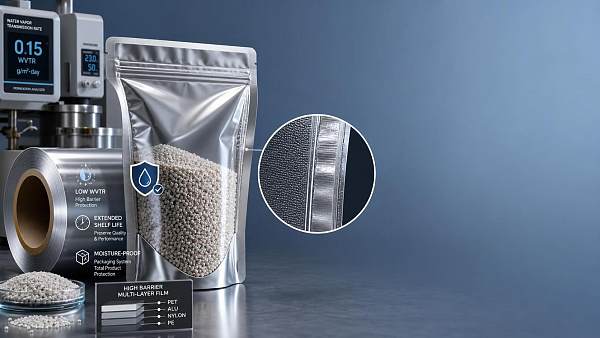
For technical evaluators, BOPP barrier films stand out by balancing processability, clarity, and protection in demanding packaging applications. Among today’s moisture barrier films, they offer a practical route to stronger oxygen and moisture control, helping preserve product quality, extend shelf life, and reduce failure risks across food, electronics, and consumer goods. This article examines how their structure and coating design translate into measurable barrier performance.
When evaluators search for how BOPP barrier films improve oxygen and moisture control, the real question is usually not whether BOPP works in theory. It is whether a specific film structure can deliver stable barrier performance under actual converting, filling, transport, and storage conditions.
The short answer is yes, but only when the film is engineered as a full system. Base resin selection, biaxial orientation, coating chemistry, seal design, metallization quality, and downstream handling all determine whether barrier targets survive beyond laboratory data sheets.
What Technical Evaluators Need to Confirm First
For most technical teams, the first concern is measurable protection. They want to know how effectively BOPP limits oxygen transmission rate and water vapor transmission rate, and whether those values remain acceptable after printing, lamination, pouch making, and filling.
The second concern is fit-for-process. A barrier film may test well in isolation, yet fail during high-speed conversion because of poor slip control, weak bond strength, curling, blocking, or seal inconsistency. Good moisture barrier films must protect the product without disrupting manufacturing efficiency.
The third concern is application risk. Food, nutraceuticals, electronics, and household goods each impose different exposure patterns. Evaluators need clarity on where BOPP performs strongly, where it needs additional layers, and where another substrate may be the safer choice.
That makes evaluation more practical when focused on three questions: what creates the barrier, what degrades it, and what test data best predicts real-world packaging performance. Those are the issues that matter more than generic claims about film strength or clarity.
Why BOPP Is a Strong Platform for Moisture Barrier Films
BOPP, or biaxially oriented polypropylene, gains much of its value from orientation. During stretching in machine and transverse directions, polymer chains become more ordered. This improves stiffness, dimensional stability, optics, and creates a naturally better moisture barrier than many commodity flexible packaging films.
Polypropylene itself is hydrophobic, which already helps resist water vapor transfer. That is why BOPP is often selected for dry foods, snacks, confectionery, bakery overwraps, and consumer goods where moisture pickup directly affects texture, clumping, corrosion, or shelf appearance.
For oxygen control, however, standard BOPP alone is usually not enough for highly sensitive products. Its real advantage is that it serves as an excellent carrier for added barrier technologies such as vacuum metallization, acrylic coatings, PVdC alternatives, or transparent high-barrier oxide layers.
In other words, BOPP is not valuable only because of the polymer. It is valuable because it combines baseline moisture resistance with good machinability and compatibility with functional coatings. That balance is why it remains central in the design of modern moisture barrier films.
How Film Structure Improves Oxygen and Moisture Control
Barrier performance in BOPP films comes from structure, not from one single material feature. A technical evaluator should look at the complete stack: outer skin, core layer, cavitated or solid construction, surface treatment, coating, metallization, adhesive system, and any sealant web paired with it.
A plain solid BOPP film already provides decent moisture resistance because water vapor does not easily diffuse through polypropylene. When improved moisture control is the main need, an optimized plain or coated BOPP structure may be sufficient without moving to more expensive laminates.
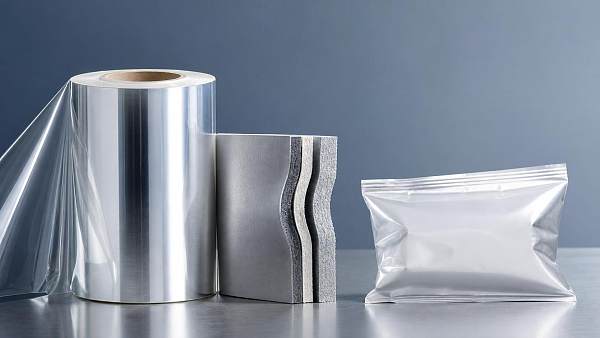
For stronger oxygen protection, metallized BOPP is one of the most common solutions. A very thin vacuum-deposited metal layer, usually aluminum, creates a far more tortuous path for gas transmission. This sharply reduces oxygen ingress and also further improves moisture barrier.
Transparent barrier BOPP films take a different route. Instead of a reflective metal layer, they use specialized coatings or oxide treatments to lower transmission while preserving visibility of the packaged product. These are useful where shelf presentation and product visibility are required.
Coatings matter because they can fill surface irregularities and create denser, less permeable interfaces. The quality of that coating, its adhesion to the treated BOPP surface, and its resistance to cracking or abrasion directly affect whether nominal barrier values remain stable over time.
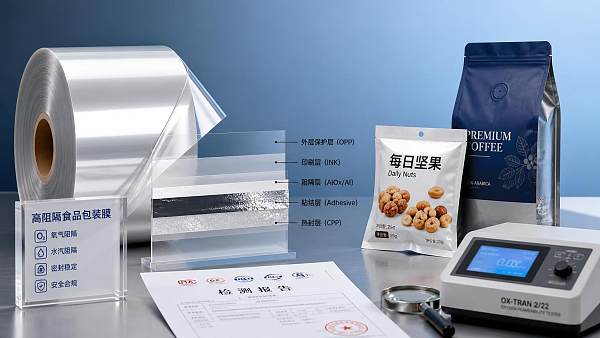
Laminated structures can enhance protection further. When BOPP is combined with sealant films such as CPP or PE, or with higher-barrier substrates in hybrid constructions, the package can be tuned for a specific balance of puncture resistance, seal performance, oxygen control, and moisture control.
Why Orientation and Surface Quality Matter More Than They Seem
Technical discussions often focus on coating chemistry, but the underlying film quality is equally important. Uniform orientation improves consistency in thickness, stiffness, and dimensional behavior. That consistency supports downstream metallization and coating, both of which depend on a stable film surface.
Surface energy also plays a major role. Corona or other treatment methods raise the surface energy of BOPP so inks, adhesives, and coatings can anchor properly. If treatment is weak or decays excessively before conversion, barrier layers may show poor adhesion or reduced continuity.
Pinholes, gels, surface contamination, and gauge variation can all reduce barrier integrity. Even if the average OTR or WVTR looks acceptable, localized defects create pathways for ingress. For evaluators, this means supplier process control is almost as important as target barrier numbers.
In high-barrier applications, the difference between stable production and field failures is often found in these details. A well-designed BOPP barrier film is not just a formulation achievement. It is also a precision manufacturing achievement with tight control over orientation, treatment, and cleanliness.
What Actually Reduces Barrier Performance in Real Use
One of the biggest mistakes in evaluation is treating laboratory barrier values as permanent. In practice, oxygen and moisture control can worsen after flexing, folding, compression, abrasion, or thermal exposure. The more brittle the functional layer, the greater this risk can become.
Metallized surfaces can lose performance if the metal layer is scratched, poorly protected inside the laminate, or disrupted by aggressive handling. Transparent coatings can also microcrack if the structure is over-stressed during slitting, pouch conversion, or package forming.
Seal areas are another common weak point. A package only performs as well as its seals. If the selected structure delivers excellent film barrier but poor hot tack, contamination tolerance, or seal robustness, oxygen and moisture can enter through channels rather than through the web itself.
Environmental conditions matter too. High humidity, temperature cycling, and long storage periods can alter adhesive behavior and layer interactions. For products moving through export logistics or challenging warehousing, evaluators should ask for barrier data that reflects expected service conditions.
Printing and lamination choices can also influence performance. Solvent retention, excessive web tension, incompatible primers, and uneven adhesive coating weight may reduce laminate integrity. In many cases, the barrier film is not the root problem; process mismatch is.
How to Evaluate BOPP Barrier Films Beyond the Datasheet
For technical selection, OTR and WVTR remain core metrics, but they should never be read alone. Evaluators should request test conditions, including temperature and relative humidity, because barrier values can shift significantly under different environments.
It is also useful to compare initial and post-conversion performance. A film that performs well before printing and lamination but drops after converting may be unsuitable for demanding applications. Post-flex, post-lamination, or post-pouch-making barrier data is often more decision-relevant.
Seal performance should be tested alongside barrier values. Hot tack, seal initiation temperature, seal strength, and contamination tolerance help reveal whether the package can preserve barrier integrity on real production lines. Excellent moisture barrier films still fail if seals are inconsistent.
Mechanical durability deserves equal attention. Flex crack resistance, coefficient of friction stability, puncture behavior, and dimensional stability affect whether the barrier layer survives handling. This is especially important for high-speed packaging, stack loads, and export distribution.
Optical and surface properties may also matter depending on the application. Haze, gloss, metal bond strength, print receptivity, and surface treatment retention can influence both converting performance and commercial acceptance. For shelf-facing products, barrier and appearance must be evaluated together.
Finally, ask whether the supplier can demonstrate process capability, not just product capability. Consistency across lots, treatment uniformity, metallization control, and defect inspection systems often tell more about long-term reliability than one excellent qualification roll.
Where BOPP Barrier Films Deliver the Most Value
BOPP barrier films are especially effective where moisture control is critical and product margins are sensitive to packaging cost, line efficiency, and appearance. Snack foods are an obvious example because crispness, aroma retention, and shelf life all depend on low oxygen and moisture ingress.
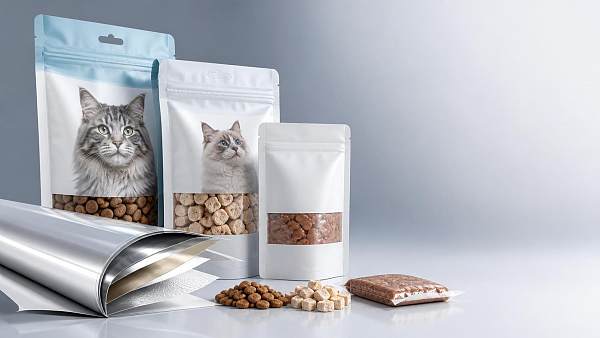
They are also valuable for confectionery, biscuits, tea, powdered mixes, dry pet treats, and many over-the-counter consumer products. In these categories, BOPP often offers a strong mix of barrier, machinability, low basis weight, and attractive print or metallized presentation.
In electronics and industrial goods, BOPP can help reduce moisture-related failures when used in protective bags, overwraps, or laminated structures. However, highly moisture-sensitive devices may still require more specialized barrier systems with desiccants or foil-based constructions.
For personal care and household products, BOPP barrier films can support fragrance retention, leak resistance in secondary wraps, and shelf-ready aesthetics. Their stiffness and gloss can also improve pack presentation without adding excessive material weight.
The value case is often strongest when a buyer wants a practical upgrade from commodity film without moving immediately to expensive foil laminates or highly complex multi-material structures. In that middle ground, BOPP becomes a very efficient engineering choice.
Key Selection Questions for Technical Evaluators
Before approving a structure, evaluators should define the actual product sensitivity. Is the main risk moisture pickup, oxidation, aroma loss, caking, corrosion, or a combination? The answer determines whether plain, coated, transparent barrier, or metallized BOPP is the better path.
They should then map the distribution environment. A package intended for domestic dry storage does not need the same protection as one moving through tropical export routes, cold-chain transitions, or long e-commerce cycles. Barrier targets should match realistic exposure profiles.
Another key question is whether the film must run on existing lines without modification. If line speed, sealing jaws, tension windows, or ink systems are fixed, the chosen barrier film must fit those parameters. A technically superior film that disrupts throughput may not create net value.
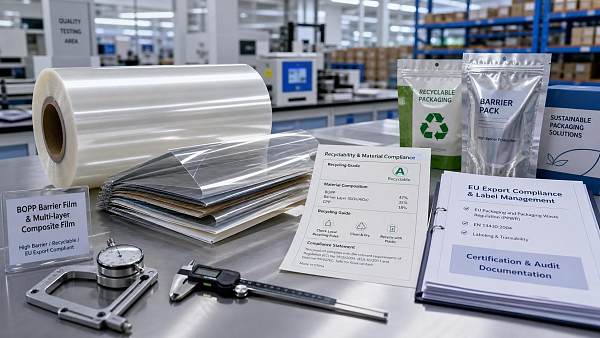
Recyclability and compliance may also shape the decision. As mono-material flexible packaging becomes more important, BOPP-based structures may offer strategic advantages over more complex laminates, provided the barrier level meets the application requirement.
Finally, evaluators should consider failure cost rather than material price alone. A slightly higher film cost can be justified if it lowers spoilage, rejects, warranty issues, or customer complaints. The most economical moisture barrier films are those that protect both product and process yield.
Conclusion
BOPP barrier films improve oxygen and moisture control by combining a naturally water-resistant polypropylene base with orientation-driven performance and advanced barrier layers such as coatings or metallization. Their strength lies not in one property, but in the balance of barrier, clarity, stiffness, and convertibility.
For technical evaluators, the best way to judge them is through system-level thinking. Look beyond headline OTR and WVTR values to surface treatment, defect control, seal reliability, post-conversion stability, and suitability for the actual distribution environment.
Used in the right structure, BOPP remains one of the most practical moisture barrier films for food, consumer goods, and selected industrial applications. It can deliver meaningful shelf-life protection and process efficiency, provided evaluation focuses on real-use performance rather than datasheet claims alone.
Recommended News
 Sep 10, 2026How pharmaceutical film technology affects moisture protection in blister packsPharmaceutical film technology for blister packs: learn how barrier films, WVTR, thermoforming, and seal integrity protect moisture-sensitive medicines and support reliable compliance.
 Sep 05, 2026How to choose food-grade flexible packaging films for dry foodsFlexible Packaging Films food grade guide: choose the right barrier, seal strength, compliance, and durability to protect dry foods and extend shelf life.
 Sep 03, 2026How film label materials affect label durability in refrigerated storageFilm label materials play a critical role in refrigerated durability. Learn how films, adhesives, printing, and moisture resistance protect labels in cold storage.
 Aug 24, 2026How to evaluate barrier film suppliers in Europe for food packagingBarrier film Europe sourcing made practical: learn how to assess food packaging suppliers on barrier performance, compliance, machinability, and total cost before you buy.
![]() Aug 14, 2026EU PPWR enforcement: BOPP high barrier film exports need to pay attention to labeling complianceEU PPWR enforcement makes BOPP high barrier film exports to Europe focus on labeling compliance. Learn the key rules on recycling marks, recycled content, and recyclability claims before 2026.
Aug 14, 2026EU PPWR enforcement: BOPP high barrier film exports need to pay attention to labeling complianceEU PPWR enforcement makes BOPP high barrier film exports to Europe focus on labeling compliance. Learn the key rules on recycling marks, recycled content, and recyclability claims before 2026. Aug 13, 2026EU PPWR Takes Effect for BOPP Barrier FilmsEU PPWR takes effect for BOPP barrier films on Aug 12, 2026. Learn the new labeling, recycled content, and life-cycle declaration rules shaping EU import compliance.
 Aug 13, 2026Barrier Packaging for Pet Food: How to Choose the Right Moisture and Oxygen BarrierBarrier packaging for pet food explained: learn how to choose the right moisture and oxygen barrier to protect freshness, shelf life, seals, and sustainability goals.
 Aug 12, 2026EU PPWR Now in Force: BOPP Barrier Films Face Labeling RulesEU PPWR now in force puts BOPP barrier films under stricter labeling rules. Learn how recyclability, composition, and recycled content disclosures affect EU market access.
 Aug 12, 2026How to Evaluate Recyclable Mono Material Packaging for Barrier Performance and ReprocessingRecyclable mono material packaging: learn how to assess barrier performance, seal reliability, and reprocessing suitability to choose packaging that supports recyclability without sacrificing product protection.
 Aug 11, 2026EU PPWR Rules Now Mandate Labels on BOPP Barrier FilmsEU PPWR rules now require labels on BOPP barrier films sold in Europe. Learn the 15% recycled content, material ID, and customs compliance steps exporters must act on now.
 Aug 10, 2026PPWR Rule Takes Effect for BOPP Barrier Film LabelsPPWR Rule takes effect for BOPP barrier film labels in the EU from August 10, 2026. Learn key ARL Code, recyclability, and compliance steps to avoid customs risk and penalties.
 Aug 09, 2026EU PPWR Rule Takes Effect for BOPP Barrier FilmsEU PPWR rule now applies to BOPP barrier films entering the EU. Learn the new labeling, material ratio, and recyclability requirements to avoid customs delays and rising compliance costs.
 Aug 08, 2026PPWR Rule Takes Effect for BOPP Barrier FilmsPPWR rule takes effect for BOPP barrier films in the EU from August 8, 2026. Learn how labeling, material ratio disclosure, customs compliance, and technical file updates may impact exports.
 Aug 07, 2026EU PPWR Rule Takes Effect for BOPP Barrier FilmsEU PPWR rule takes effect for BOPP barrier films, requiring recycling labels, material composition percentages, and recyclability claims. See what exporters must act on now.
 Aug 07, 2026How to Choose a Low WVTR Barrier Film for Moisture-Sensitive PackagingLow WVTR barrier film selection starts with product moisture sensitivity, seal performance, and converting reality. Learn how to compare structures, reduce risk, and choose packaging that protects shelf life.
 Aug 06, 2026EU PPWR Rule Takes Effect for BOPP Barrier Film LabelsEU PPWR rule now reshapes BOPP barrier film labels in the EU. Learn mandatory labeling, recyclability claims, customs risks, and how exporters can stay compliant.
 Aug 05, 2026EU PPWR Rule Takes Effect for BOPP Barrier FilmsEU PPWR rule now reshapes BOPP barrier films in the EU market. Learn mandatory labeling, recyclability, traceability, and customs compliance risks before exports are delayed.
 Aug 04, 2026EU PPWR Rules Now Apply to BOPP Barrier Film LabelsEU PPWR rules now apply to BOPP barrier film labels. Learn the new EU labeling, recyclability, and material disclosure requirements to avoid customs delays, fines, and compliance risks.
 Aug 03, 2026EU PPWR Rules Take Effect for BOPP Barrier Film LabelsEU PPWR rules now require BOPP barrier film labels to show recycling marks, material ratios, and recyclability claims. Learn how to avoid customs delays, fines, and supply chain disruption.
 Aug 02, 2026EU PPWR Rule Takes Effect for BOPP Barrier FilmsEU PPWR rule for BOPP barrier films takes effect from August 1, 2026. Learn key labeling, recyclability, customs, and supplier compliance steps to avoid fines and shipment delays.
 Aug 01, 2026EU PPWR Rule Takes Effect for BOPP Barrier FilmsEU PPWR rule for BOPP barrier films is now a critical compliance issue. Learn how material disclosure, recycling marks, and supplier documents affect EU customs, procurement, and delivery.
 Jul 31, 2026How to Choose Moisture Barrier Packaging Film by WVTR and Shelf-Life NeedsMoisture barrier packaging film selection should start with WVTR, shelf-life targets, and real package performance. Learn how to avoid overdesign, reduce risk, and choose the right barrier film.
 Jul 29, 2026EU PPWR Rule Takes Effect for BOPP Barrier Film ExportsEU PPWR rule takes effect for BOPP barrier film exports, reshaping labeling, recyclability marking, conformity files, and supplier certification. Learn the key compliance risks and trade impacts now.
 Jul 27, 2026EU PPWR Rule Takes Effect for BOPP Barrier Film ExportsEU PPWR Rule Takes Effect for BOPP Barrier Film Exports: learn how ISO 13431 recyclability labels and EN 13432 declarations now impact EU customs, buyer approval, and export compliance.