Search News
Industry Portal
Hot Articles
- How to verify FDA compliance for packaging inks used on food packagingPackaging inks FDA compliant? Learn how to verify food-contact safety through regulatory citations, migration testing, supplier declarations, and process controls.
- When do holographic foils add value to luxury goods packaging?Packaging materials for luxury goods gain impact with holographic foils that elevate shelf appeal, authenticity, and premium unboxing—learn when this finish delivers real value.
- Can nano encryption technology stop counterfeit labels from being copied?Nano encryption technology anti counterfeit labels combine physical security, tamper evidence, and serialization to make copying harder. Explore smarter protection.
Popular Tags
Biodegradable Protective Packaging: Cost Tradeoffs in 2026
Time
Click Count
In 2026, biodegradable protective packaging sits at the intersection of sustainability policy, logistics economics, and product risk control. The conversation is no longer about whether greener cushioning looks good in a report. It is about whether a higher material price can be justified by lower tax exposure, fewer damaged shipments, lighter loads, and stronger compliance positioning across global trade lanes.
That shift matters across consumer goods, electronics, healthcare, food-adjacent distribution, and cross-border e-commerce. It also explains why biodegradable protective packaging is being reviewed alongside films, labels, and transport consumables rather than as an isolated sustainability project.
Why cost tradeoffs are sharper in 2026
Several cost pressures are now converging. Plastic-related levies are expanding. Extended producer responsibility schemes are becoming more detailed. Packaging waste rules are moving from broad goals to measurable obligations.
At the same time, freight remains volatile. A small weight reduction can change parcel economics at scale. A small damage increase can erase those gains just as quickly.
This is where biodegradable protective packaging becomes a financial question. The right format can reduce total landed cost. The wrong one can create silent expense through breakage, repacking, or compliance failure.
PPCS tracks this issue from a materials-and-systems perspective. Cushioning performance cannot be judged separately from barrier films, label durability, or warehouse identification accuracy. Protective packaging works inside a full packaging chain.
What biodegradable protective packaging actually includes
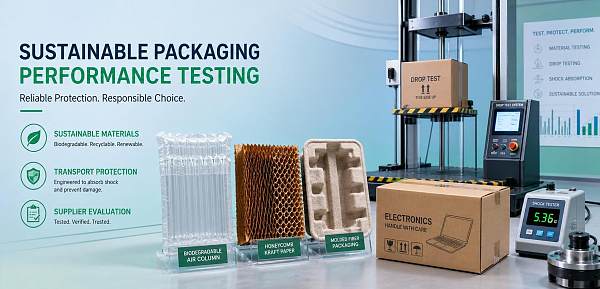
The term covers more than one material family. It may include PLA or PBAT air columns, molded fiber structures, starch-based loose fill, paper honeycomb, and hybrid paper-biopolymer cushioning systems.
Not all biodegradable protective packaging behaves the same way. Some formats are optimized for low-weight void fill. Others are built for compression strength, corner protection, or drop resistance for fragile goods.
A useful distinction is between “biodegradable in disposal conditions” and “financially efficient in the real supply chain.” The first is a material claim. The second is a business result.
The cost model should go beyond unit price
The most common error is comparing only cost per piece. Finance review is stronger when it compares cost per protected shipment, cost per damage-free delivery, and cost per compliant market entry.
Where the financial return really comes from
The strongest returns usually come from four areas, not one. Material substitution alone rarely tells the full story.
1. Regulatory cost avoidance
European PPWR developments, national plastic taxes, and packaging reporting rules are reshaping cost assumptions. A package that looks cheap at purchase can become expensive after reporting, fees, and redesign deadlines.
PPCS intelligence frequently shows that compliance cost is cumulative. It touches material declaration, labeling consistency, waste claims, and portfolio complexity across export markets.
2. Freight and cube efficiency
Biodegradable protective packaging can outperform foam when it reduces storage volume before inflation, improves flat-pack handling, or enables tighter shipper dimensions. This matters in parcel-heavy networks.
Savings become visible when measured across annual shipment counts, not pilot cartons. The economics of space often rival the economics of resin.
3. Damage prevention
A biodegradable format is financially attractive only if it protects at the same or better level. Drop performance, puncture resistance, rebound, and compression recovery should all be verified against actual product geometry.
One damaged electronic device, cosmetic set, or medical accessory can wipe out the savings from dozens of low-cost packs. That is why cushioning efficiency matters more than sustainability claims alone.
4. Brand and channel acceptance
Retailers and marketplaces increasingly review packaging waste, recyclability language, and presentation quality. Protective packaging that looks inconsistent, collapses early, or sheds fibers can create customer friction.
In some categories, visual shelf impact also matters. A packaging system may combine biodegradable cushioning with high-barrier films, tamper-evident labels, or thermal transfer identification to preserve both safety and presentation.
Typical scenarios where tradeoffs differ
Not every product should move to the same solution. The economics of biodegradable protective packaging are highly scenario-dependent.
- Consumer electronics: high damage sensitivity makes validated air columns or engineered paper structures more valuable than the lowest-cost fill.
- Beauty and premium goods: cushioning must protect finish quality while working with decorative foils, labels, and unboxing expectations.
- Pharmaceutical and healthcare accessories: traceability, tamper evidence, and material documentation matter as much as cushioning cost.
- Cross-border e-commerce: parcel weight, storage density, and return rates dominate the calculation.
- Food-adjacent non-contact shipments: moisture behavior and contamination control become part of the packaging decision.
In other words, biodegradable protective packaging should be selected as part of a use-case matrix, not a universal mandate.
How to evaluate a switch without overspending
A disciplined review usually starts with baseline data. Current damage rates, freight cost per shipped unit, packaging storage footprint, and region-specific compliance fees should all be visible before a conversion decision.
Key checkpoints in the review
- Measure total packaging cost by delivered unit, not by purchased component.
- Test drop, vibration, and compression with real product weights and outer cartons.
- Check biodegradation claims against target market rules and disposal realities.
- Review printability and label adhesion if barcodes or anti-counterfeit marks are applied.
- Map storage and line-side handling impacts, especially for inflated versus flat formats.
- Model downside scenarios, including product returns, customer complaints, and repacking labor.
This broader approach reflects how PPCS views packaging consumables. Cushioning is tied to coating chemistry, film structure, labeling behavior, and logistics performance. A financially sound decision respects those links.
Signals that a biodegradable format is likely to pay back
Some patterns suggest that biodegradable protective packaging will produce measurable return rather than symbolic value.
- The current package is overdesigned and heavier than necessary.
- The business ships high annual parcel volume into regulated regions.
- Damage costs are already quantified and linked to packaging failure.
- Warehouse storage space is constrained or expensive.
- The brand needs stronger alignment between sustainability claims and actual pack materials.
By contrast, payback is weaker when fragile products lack performance testing, when biodegradability claims are unclear, or when packaging redesign increases cube size more than it lowers compliance cost.
A practical way to move forward
The best next step is not a full portfolio conversion. It is a ranked review of SKU families where biodegradable protective packaging can replace plastic-based cushioning with the clearest economic logic.
Start with lanes exposed to plastic fees, products with repeat damage costs, or parcels where dimensional weight is the real burden. Then compare two or three material options under the same test protocol.
In 2026, biodegradable protective packaging should be judged the same way any serious capital decision is judged: by total system effect, not by purchase price alone. When that discipline is applied, the tradeoff becomes clearer, and in many cases, more favorable than it first appears.
Recommended News
 Sep 09, 2026How to assess a water based adhesive materials factory’s quality controlWater based adhesive materials factory quality control: learn how to audit traceability, batch consistency, testing, and change control for safer sourcing.
 Sep 08, 2026How to qualify an electronic protective materials supplier for ESD controlLearn how to qualify an electronic protective materials supplier for reliable ESD control with test data, traceability, lot consistency, and packaging checks.
 Aug 18, 2026What to check before choosing a cryogenic labels supplierCryogenic labels supplier selection starts with performance, not price. Learn what to check for adhesion, print durability, compliance, and supply reliability before you buy.
 Aug 16, 2026How to measure packaging sustainability metrics that actually matterPackaging sustainability metrics that actually matter: learn how to compare carbon, recyclability, performance, and operational yield to make smarter packaging decisions.
 Aug 11, 2026How Low Migration Label Adhesive Technology Supports Food Packaging ComplianceLabel adhesive technology low migration explained: learn how to reduce migration risk, improve food packaging compliance, and choose label constructions that balance safety, performance, and approvals.
 Aug 10, 2026How to Choose Transfer Foils for Labels Based on Print Method and DurabilityTransfer foils for labels: learn how to choose the right option by print method, substrate, and durability needs to improve label performance, reduce rework, and achieve a premium finish.
 Aug 08, 2026How to Evaluate a Coating Materials Supplier for Consistent Quality and Lead TimesCoating materials supplier selection starts with the right questions. Learn how to compare quality consistency, process control, and lead-time reliability to reduce sourcing risk.
 Aug 03, 2026How High-Speed Labeling Technology Affects Accuracy and Throughput in PharmaceuticalsHigh-speed labeling technology pharmaceuticals depend on shapes accuracy, throughput, and compliance. Learn how materials, printing, and inspection drive reliable pharmaceutical packaging performance.
 Aug 02, 2026How to Choose Packaging for PCB Components Based on ESD and Moisture RiskPackaging for PCB components starts with risk, not bag type. Learn how to balance ESD, moisture, handling, and assembly needs to protect yield and choose smarter packaging.
 Jul 30, 2026How to Evaluate Throughput, Accuracy, and Downtime in High Speed Labeling SystemsHigh speed labeling systems should be judged by real throughput, labeling accuracy, and downtime recovery—not brochure speed. Learn how to compare machines for stable output and fewer stoppages.
 Jul 29, 2026How to Choose Food Grade Eco Friendly Packaging Materials for Moisture and Grease ResistanceEco friendly packaging materials food grade: learn how to choose options that balance moisture and grease resistance, food-contact compliance, and sustainability for safer, smarter packaging.
 Jul 27, 2026How to Evaluate a Thermal Labels Supplier for Cost, Quality, and Lead TimeThermal labels supplier evaluation guide: learn how to compare cost, print quality, adhesive performance, compliance, and lead time to reduce risk and choose a reliable partner.
 Jul 23, 2026How to Evaluate Industrial Label Systems for Durability and Total CostIndustrial label systems: learn how to compare durability, compliance, barcode performance, and total cost to reduce failures, control sourcing risk, and choose smarter long-term solutions.
 Jul 15, 2026Pressure Sensitive Label Materials Factory Audit Checklist for Stable QualityPressure sensitive label materials factory audit checklist for buyers: verify coating control, traceability, compliance, and lot consistency to reduce label failure risk.
 Jul 13, 2026How to Evaluate a Sustainable Cushioning Materials Supplier in 2026Sustainable cushioning materials supplier selection in 2026 starts with protection, proof, and scale. Learn how to compare claims, compliance, and total cost with confidence.
 Jul 12, 2026Metallic Cosmetic Packaging Materials: What Affects Finish, Durability, and Brand FitMetallic cosmetic packaging materials shape finish, durability, and brand appeal. Learn what affects gloss, scuff resistance, compliance, and cost before choosing the right premium pack.
 Jul 12, 2026How to Compare Metallic Luxury Packaging Materials for Premium Shelf ImpactMetallic luxury packaging materials compared: learn how to assess shelf impact, durability, print fit, compliance, and cost to choose premium packaging that converts.
 Jul 11, 2026Thermal Labels for Barcode Printing: Top Mistakes That Raise Replacement CostsThermal labels for barcode printing can drive hidden replacement costs when materials miss real conditions. Discover the top mistakes, how to prevent scan failures, and choose labels that cut waste.
 Jul 05, 2026Industrial Adhesive Technology for Laminating: Key Factors for Material SelectionIndustrial adhesive technology for laminating: discover how to choose the right chemistry for better bonding, faster converting, compliance, and lower total packaging cost.
 Jul 04, 2026Decorative Packaging Foils Supplier Middle East: 6 Checks Before You ShortlistDecorative packaging foils supplier Middle East guide: discover 6 practical checks to compare quality, compliance, lead times, and total value before you shortlist a vendor.
 Jul 03, 2026Protective Packaging Cost Breakdown: Material, Labor, Storage, and Damage RiskProtective Packaging cost goes beyond material price. Learn how labor, storage, and damage risk shape total packaging spend, and discover smarter ways to cut costs without hurting performance.
 Jul 02, 2026High Speed Labeling Supplier Checklist: Downtime, Accuracy, and SupportHigh speed labeling supplier checklist: compare downtime risk, label accuracy, material fit, and after-sales support to cut hidden costs and choose a more reliable production partner.
 Jun 30, 2026Embossed Shelf Packaging: When It Improves Impact and When It Adds CostEmbossed shelf packaging can boost shelf impact, grip, and premium appeal—but when does it justify the extra cost? Explore practical value, risks, and smarter packaging decisions.
 Jun 30, 2026How to Choose Thermal Labels for Barcode Printing That Scan ReliablyThermal labels for barcode printing: learn how to match face stock, adhesive, printer, and ribbon for reliable scans, fewer failures, and better supply chain performance.