Search News
Industry Portal
Hot Articles
- Maine DEP Updates Packaging EPR Timeline, Plans to Revise Stewardship RFPMaine packaging EPR timeline updates and a revised stewardship RFP could affect business planning. Discover what companies should watch next.
- How run size affects the cost of holographic packaging for spiritsSee how holographic packaging for spirits costs change with run size. Compare setup fees, volume savings and inventory risks to choose the right quantity for your brand.
- How to choose printable clear PET film for your inkjet printerNeed clear PET film printable on your inkjet printer? Compare coatings, ink compatibility, clarity, and feeding to avoid costly misprints and choose confidently.
Popular Tags
EU PPWR enforcement: BOPP high barrier film exports need to pay attention to labeling compliance
Time
Click Count
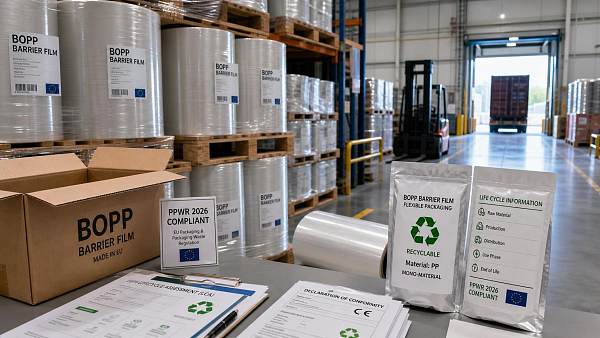
Starting from August 14, 2026, the EU's Packaging and Packaging Waste Regulations (PPWR) have entered the enforcement stage. BOPP high-barrier films sold to the EU need to clearly reflect the material recycling logo, recycled plastic content percentage and recyclability statement on the packaging or labels. For export companies, purchasers and related supply chain service links, this is not just an adjustment at the label level, but is directly related to the compliance requirements for delivery, customs clearance and entry into the retail and food and pharmaceutical supply chains, so it deserves simultaneous attention from the industry.
PPWR enforcement requirements have fallen to the delivery link of BOPP high barrier film
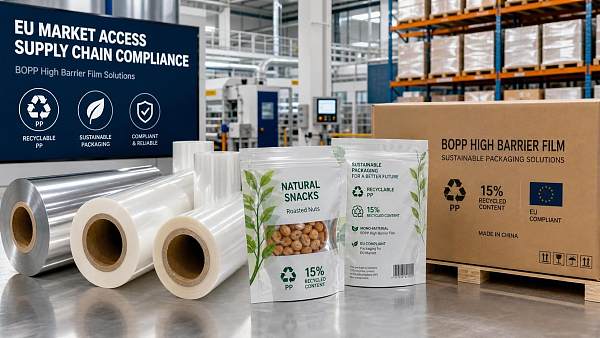
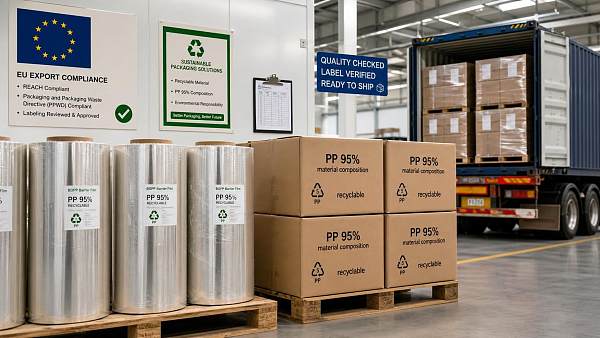
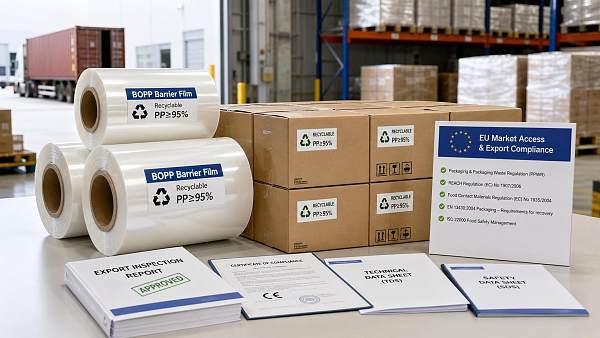
Confirmed information shows that starting from August 14, 2026, EU PPWR has officially entered the enforcement stage. All BOPP high-barrier film products sold to the EU must clearly indicate the material recycling logo, recycled plastic content percentage and recyclability statement on the packaging or label.
The same rule also clearly states that products that do not meet the requirements may be detained or rejected by EU customs and cannot enter the mainstream retail and food and pharmaceutical supply chains. This means that the requirement is directly embedded in cross-border delivery and market access, rather than remaining at the level of a general compliance initiative.
From the factory to the terminal, where will this change be transmitted?
The chain of labels and documents for export companies is tighter.
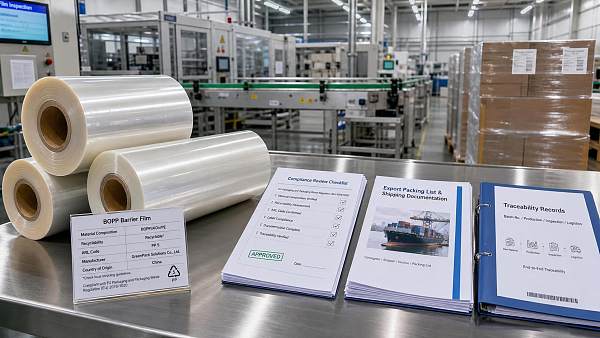
For BOPP film production and export companies that ship directly to the EU, the impact is first reflected in the three links of product labeling, shipping documents and customer review. Packaging and labeling information need to be consistent with actual product attributes, otherwise even if the goods have completed production, they may encounter compliance blocks when arriving at the port or being delivered.
From a business operation perspective, companies need to put logo content, product specifications, order requirements and delivery documents in the same set of review processes, rather than having them handled separately by different departments.
Purchasers will advance compliance requirements to the ordering stage
Purchasers, especially those oriented to retail and food and pharmaceutical channels, usually require earlier to confirm whether the labeling content, recycled content proportion instructions and recyclability statements meet their internal audit requirements. Observation shows that this will move the confirmation action originally placed after shipment to the inquiry, proofing, sample finalization and contract confirmation stages.
For the procurement chain, the focus is not only whether the product itself can be shipped, but also whether the supplier can maintain consistency in batch, version and label information to avoid the risk of replacement parts, relabeling or returns after delivery.
The role of compliance and testing services is closer to the front-end of transactions
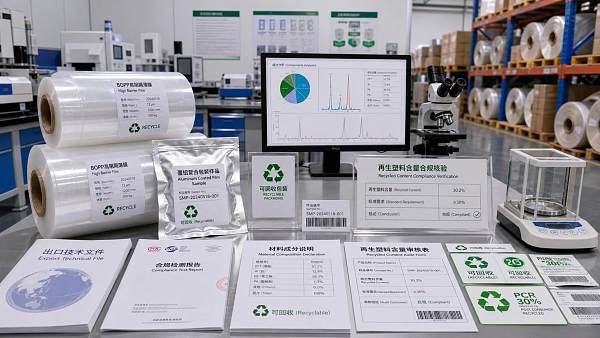
Under such rules, the value of certification, testing and compliance services will be closer to the front-end of transactions. What companies need to pay attention to is not only whether they have relevant information, but also whether the information can support the verification requirements of EU customers and customs clearance. For supply chain service organizations, they may undertake more work such as document verification, sample confirmation, and information consistency inspection in the future.
What is more noteworthy at present is that the rules have clearly pointed to the "must mark" delivery requirements, but the specific enforcement details, verification standards and acceptance standards of different customers still need to be continuously confirmed in combination with subsequent official statements and actual order requirements.
What compliance details should enterprises pay more attention to now?
First check whether the label information is consistent with product attributes.
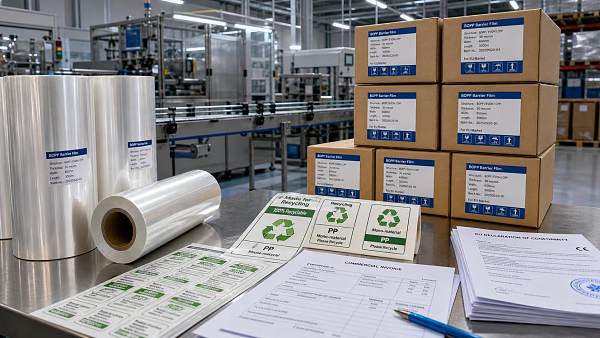
Enterprises should prioritize checking whether there are inconsistencies between existing labels, packaging copywriting and technical information. For BOPP high-barrier films, the material recycling label, recycled plastic content percentage and recyclability statement are all sensitive information. Any unclear expression may affect the EU's acceptance judgment.
Incorporate customer review requirements into pre-shipment review
From an industry perspective, subsequent orders are more likely to require data review to be completed before shipment, rather than correction after arrival. Enterprises need to synchronize the available technical documents, batch information and label versions to avoid repeated modifications due to differences in caliber between different customers and different channels.
Pay attention to supplier qualifications and batch stability
If there are many upstream raw materials, printing, packaging or outsourcing links involved, the company needs to ensure that relevant information can be stably output between batches. For export business, once the label content is out of touch with the actual supply batch, it will not only affect the delivery, but also affect the customer's judgment on the supplier's continued supply ability.
Continue to track follow-up enforcement standards
This information is more suitable to be understood as an enforcement signal that has been implemented, rather than a pure policy dynamic. From an analysis point of view, what really needs continuous observation is the EU's subsequent further explanations on verification methods, customer acceptance standards and execution rhythms of different channels, as well as the feedback formed by enterprises in practice.
This type of change is more like an execution signal than a simple prediction.
From the editor’s observation, the focus of this information is not on the “existence of PPWR”, but on the fact that it has entered the stage of affecting export delivery. For BOPP high-barrier film companies, rule changes have transformed from regulatory texts into practical requirements for labels, documents and customs clearance actions.
Therefore, it is currently more appropriate to understand it as a clear compliance enforcement node, rather than ordinary news waiting for the market to naturally digest it. What is worthy of continued attention in the future is not the abstract policy direction, but whether there will be more detailed marking standards, document requirements and channel differences in specific enforcement.
Compliance has entered the delivery judgment
Overall, the significance of this information to the industry is that the EU market’s judgment on the access of BOPP high barrier films has fallen more directly on packaging labels, recycled material disclosure and recyclability statements. For export companies, the next focus is not to explain the policy itself, but to actually implement the relevant requirements into the products, documents and delivery chain.
A safer understanding is that this is not a market signal that requires exaggerated interpretation, but a compliance threshold that has begun to affect order execution.
Public information based on this article
This article is compiled and generated based on the information title, event time and event summary provided by the user. Such events usually also correspond to source types such as official announcements, regulatory agency releases, customs or trade authority information, industry association information, standards organization documents, and authoritative media reports.
The current input does not provide a specific official source link. It is still necessary to continue to verify the relevant EU official statements, enforcement details, certification standards, changes in bidding or procurement documents, and actual enforcement feedback from the enterprise.
Recommended News
 Oct 21, 2026How vacuum metallization coating affects BOPP barrier performanceDiscover how vacuum metallization coating improves BOPP oxygen and moisture barriers. Learn what drives coating durability and how to select films for reliable packaging performance.
 Oct 20, 2026How to choose barrier lidding films for oxygen-sensitive foodsChoose barrier packaging films for lidding with confidence. Compare oxygen barriers, seal compatibility, and shelf-life validation to protect sensitive foods and reduce packaging risks.
 Oct 19, 2026Choosing BOPP laminated films for moisture-sensitive food packagingCompare food packaging materials: laminated films made with BOPP. Discover how to assess moisture barriers, seal integrity, and compliance to protect food quality and extend shelf life.
 Oct 06, 2026How moisture barrier coating polymers affect package shelf lifeMoisture barrier coating polymers can extend package shelf life. Learn how to evaluate WVTR, adhesion, seal integrity, processing, and recyclability for reliable protection.
 Oct 05, 2026How beverage labels stay secure at high production speedsHigh speed labeling materials for beverages: learn how to secure labels against moisture, abrasion, and fast-line failures while protecting print quality and traceability.
 Oct 03, 2026When does micron-level coating technology improve BOPP barrier film performance?Micron-level coating technology can elevate BOPP barrier film performance for oxygen, aroma, and moisture protection. Explore when coated structures deliver smarter, lightweight packaging results.
 Sep 24, 2026How to compare extreme barrier films in Europe for oxygen protectionExtreme barrier films Europe: compare OTR, coating durability, converting performance, recyclability and PPWR readiness for reliable oxygen protection.
 Sep 20, 2026How barrier packaging for pet food helps prevent fat oxidationBarrier packaging for pet food helps prevent fat oxidation by blocking oxygen, moisture, and light—protecting freshness, flavor, nutrition, and shelf life.
 Sep 16, 2026Pharma Compliance Protection Films: Migration, Barrier, and Documentation ChecksPharma compliance protection films: master migration, barrier performance, and documentation checks to build safer, audit-ready pharmaceutical packaging.
 Sep 16, 2026Selecting Protection Films Compliant with Pharma Regulations and Cleanroom UseCompliant to pharma regulations protection films: learn how to select cleanroom-ready materials with proven traceability, chemical resistance, low particle risk, and reliable validation support.
 Sep 10, 2026How pharmaceutical film technology affects moisture protection in blister packsPharmaceutical film technology for blister packs: learn how barrier films, WVTR, thermoforming, and seal integrity protect moisture-sensitive medicines and support reliable compliance.
 Sep 05, 2026How to choose food-grade flexible packaging films for dry foodsFlexible Packaging Films food grade guide: choose the right barrier, seal strength, compliance, and durability to protect dry foods and extend shelf life.
 Sep 03, 2026How film label materials affect label durability in refrigerated storageFilm label materials play a critical role in refrigerated durability. Learn how films, adhesives, printing, and moisture resistance protect labels in cold storage.
 Aug 24, 2026How to evaluate barrier film suppliers in Europe for food packagingBarrier film Europe sourcing made practical: learn how to assess food packaging suppliers on barrier performance, compliance, machinability, and total cost before you buy.
![]() Aug 14, 2026EU PPWR enforcement: BOPP high barrier film exports need to pay attention to labeling complianceEU PPWR enforcement makes BOPP high barrier film exports to Europe focus on labeling compliance. Learn the key rules on recycling marks, recycled content, and recyclability claims before 2026.
 Aug 13, 2026EU PPWR Takes Effect for BOPP Barrier FilmsEU PPWR takes effect for BOPP barrier films on Aug 12, 2026. Learn the new labeling, recycled content, and life-cycle declaration rules shaping EU import compliance.
 Aug 13, 2026Barrier Packaging for Pet Food: How to Choose the Right Moisture and Oxygen BarrierBarrier packaging for pet food explained: learn how to choose the right moisture and oxygen barrier to protect freshness, shelf life, seals, and sustainability goals.
 Aug 12, 2026EU PPWR Now in Force: BOPP Barrier Films Face Labeling RulesEU PPWR now in force puts BOPP barrier films under stricter labeling rules. Learn how recyclability, composition, and recycled content disclosures affect EU market access.
 Aug 12, 2026How to Evaluate Recyclable Mono Material Packaging for Barrier Performance and ReprocessingRecyclable mono material packaging: learn how to assess barrier performance, seal reliability, and reprocessing suitability to choose packaging that supports recyclability without sacrificing product protection.
 Aug 11, 2026EU PPWR Rules Now Mandate Labels on BOPP Barrier FilmsEU PPWR rules now require labels on BOPP barrier films sold in Europe. Learn the 15% recycled content, material ID, and customs compliance steps exporters must act on now.
 Aug 10, 2026PPWR Rule Takes Effect for BOPP Barrier Film LabelsPPWR Rule takes effect for BOPP barrier film labels in the EU from August 10, 2026. Learn key ARL Code, recyclability, and compliance steps to avoid customs risk and penalties.
 Aug 09, 2026EU PPWR Rule Takes Effect for BOPP Barrier FilmsEU PPWR rule now applies to BOPP barrier films entering the EU. Learn the new labeling, material ratio, and recyclability requirements to avoid customs delays and rising compliance costs.
 Aug 08, 2026PPWR Rule Takes Effect for BOPP Barrier FilmsPPWR rule takes effect for BOPP barrier films in the EU from August 8, 2026. Learn how labeling, material ratio disclosure, customs compliance, and technical file updates may impact exports.
 Aug 07, 2026EU PPWR Rule Takes Effect for BOPP Barrier FilmsEU PPWR rule takes effect for BOPP barrier films, requiring recycling labels, material composition percentages, and recyclability claims. See what exporters must act on now.