Search News
Industry Portal
Hot Articles
- Mark-and-Verify Solutions for Food Packaging: Choosing Codes, Labels, and ChecksMark and verify solutions for food packaging: choose reliable codes, durable labels, and automated checks to protect traceability, compliance, and brand trust.
- PPCS Compliance Explained: Packaging Data, Documentation, and Audit ControlsPPCS compliance explained: build traceable packaging data, controlled documentation, and audit-ready controls to reduce risk and strengthen market confidence.
- PPWD Compliance: How Packaging Producers Can Prepare for EU Waste RulesPPWD compliance guide for packaging producers: prepare for EU waste rules with smarter materials, recyclability, EPR planning, and practical design steps.
Popular Tags
High-Barrier Packaging Films: What Really Drives Shelf Life
Time
Click Count
High-Barrier Packaging Films: What Really Drives Shelf Life
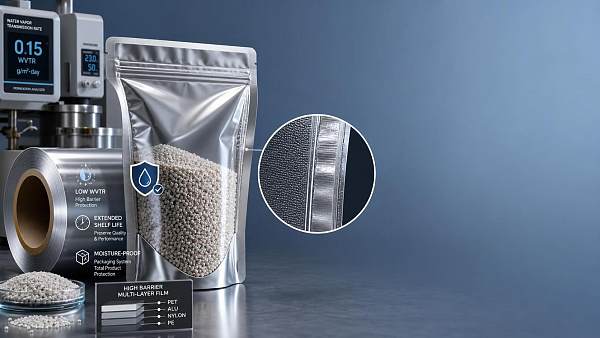
For technical evaluators, high-barrier packaging films are not judged by gauge alone. Real performance comes from how the structure controls oxygen, water vapor, aroma loss, and seal failure over time.
That sounds obvious, yet many buying decisions still lean too heavily on thickness, gloss, or a single lab number. In practice, shelf life depends on a system, not one film attribute.
This is why high-barrier packaging films matter across food, pharmaceuticals, electronics, and premium consumer goods. They protect product value only when barrier, sealing, converting, and logistics exposure work together.
Shelf Life Starts with Transmission Rates
The first checkpoint is transmission data. Oxygen transmission rate and water vapor transmission rate remain the core indicators behind most high-barrier packaging films.
OTR matters when oxidation drives rancidity, discoloration, vitamin loss, or flavor collapse. WVTR matters when moisture changes texture, caking behavior, microbial stability, or tablet integrity.
Still, a low number alone does not guarantee longer shelf life. Test conditions can flatter a structure that performs poorly in filling rooms, warehouses, or transport lanes.
A smart review always asks four questions. At what temperature, at what humidity, on what substrate, and before or after converting stress?
- Check whether OTR and WVTR were measured under end-use conditions.
- Confirm whether flexing, folding, or pinhole risk was included.
- Review lot-to-lot consistency, not just a best-case sample.
- Match the barrier data to the product’s failure mode.
Structure Beats Thickness Alone
Many teams still ask for a thicker film when shelf life slips. That can help mechanically, but it often misses the real issue.
High-barrier packaging films perform through structure design. Material selection, orientation, coating chemistry, and lamination quality usually matter more than extra microns.
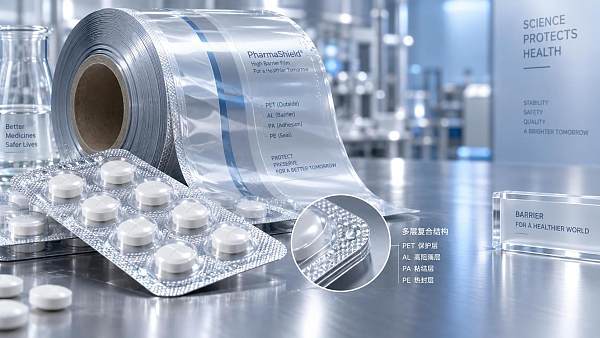
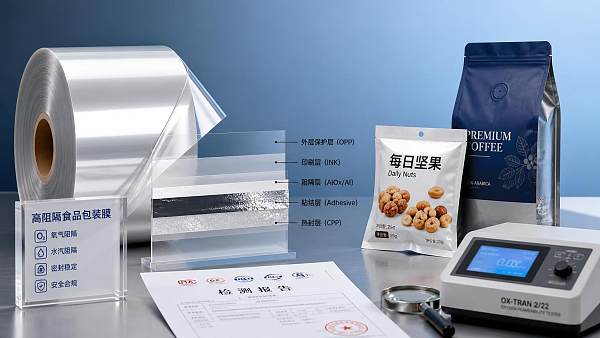
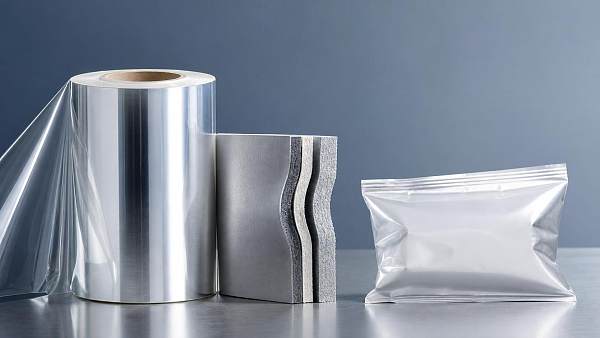
A biaxially oriented PET base may deliver dimensional stability. EVOH may provide oxygen barrier. Metallization may improve barrier further. Sealant layers then decide whether that protection survives packaging operations.
This is where evaluators should look beyond marketing language. “Ultra barrier” means little without a clear layer map and process window.
Common Performance Drivers in High-Barrier Packaging Films
- BOPP and PET orientation for stiffness, clarity, and machine stability.
- Barrier resin choice, especially EVOH, PVDC alternatives, or oxide coatings.
- Metallized layers for light, oxygen, and moisture control.
- Sealant chemistry for low-temperature sealing and contamination tolerance.
- Adhesive performance between layers under heat and humidity.
In short, the best high-barrier packaging films are engineered systems. They are not simply thicker versions of standard flexible packaging.
Seal Integrity Often Decides Real Shelf Life
Barrier properties attract attention, but seals often determine failure first. A package with excellent barrier can still lose shelf life through weak, contaminated, or inconsistent seals.
This becomes more obvious in powdered foods, sauces, frozen products, and medical packs. Product residue, line speed, jaw temperature, and dwell time can erase the advantage of premium high-barrier packaging films.
A good technical review connects seal strength with actual abuse conditions. Drop events, compression, vibration, and thermal cycling all matter.
More importantly, seal integrity should be assessed over time. Some structures pass initial testing, then weaken after humidity exposure or migration effects.
- Validate hot tack and seal initiation temperature.
- Test seal strength after storage and transit simulation.
- Include contamination tolerance with real product fines or oils.
- Check seal consistency across machine speed changes.
Processing Stability Is a Hidden Barrier Variable
From recent market changes, one signal is clearer than ever. Technical success now depends as much on runnability as on laboratory barrier numbers.
High-barrier packaging films must survive printing, lamination, slitting, pouch making, and filling without losing function. If the web curls, scratches, delaminates, or pinholes, shelf life falls quickly.
This is especially relevant for metallized films and thin high-performance structures. They can look excellent in data sheets, yet become unstable under aggressive converting conditions.
In practical purchasing reviews, converting stability should be treated as a barrier factor. A film that loses integrity during production does not remain a high-barrier packaging film in the final pack.
What to Verify During Trials
- Coefficient of friction stability across storage time.
- Resistance to cracking at folds and seal areas.
- Adhesion durability after lamination cure.
- Print surface compatibility and ink anchorage.
- Pinhole generation after slitting and pouch conversion.
Product Sensitivity Should Guide Film Selection
Not every product needs the same high-barrier packaging films. The right structure depends on the dominant degradation pathway.
For salty snacks, crispness and oxidation usually drive the decision. For coffee, aroma retention and oxygen control become central. For diagnostic products, moisture sensitivity may dominate.
This also means over-specification can be expensive. Using an unnecessarily complex barrier structure may add cost, recycling difficulty, and machine burden without extending sellable life.
A more effective method is to map the product’s failure threshold, then align the film package system to that exact limit.
Standards, Claims, and the Need for Comparable Data
Technical and standards-based search intent usually comes down to one issue. Can the data be compared fairly across suppliers?
That is where disciplined evaluation matters. High-barrier packaging films should be reviewed against recognized test methods, sample conditioning rules, and clear reporting conditions.
ASTM and ISO references are helpful, but consistency matters more than name-dropping. If suppliers test at different humidity levels, results may look comparable while meaning very different things.
In actual business reviews, the strongest suppliers are usually the ones that share full conditions, structure details, and aged performance data without hesitation.
- Request test method, temperature, and humidity with every barrier value.
- Ask whether the result is for film, laminate, or finished pack.
- Compare initial and post-conversion performance.
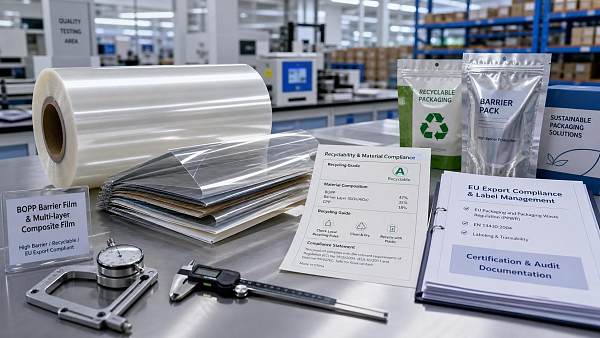
- Review migration, compliance, and recyclability implications together.
How to Make Better Selection Decisions
The best evaluation process is simple, but disciplined. Start from the product failure mechanism, not from a supplier brochure.
Then connect barrier targets with seal performance, converting stability, distribution stress, and sustainability constraints. This usually reveals which high-barrier packaging films are genuinely fit for purpose.
For organizations balancing protection, cost, and compliance, that broader view is now essential. Shelf life is no longer just a material property. It is an engineered packaging outcome.
That is also why intelligence-led screening has growing value. Teams that combine film physics, coating chemistry, labeling compatibility, and logistics exposure make faster and safer decisions.
When comparing high-barrier packaging films, focus on measurable shelf-life drivers: transmission rates, seal integrity, process stability, and product-specific risk. That approach turns material selection into a controlled technical decision, not a guess.
Recommended News
 Sep 10, 2026How pharmaceutical film technology affects moisture protection in blister packsPharmaceutical film technology for blister packs: learn how barrier films, WVTR, thermoforming, and seal integrity protect moisture-sensitive medicines and support reliable compliance.
 Sep 05, 2026How to choose food-grade flexible packaging films for dry foodsFlexible Packaging Films food grade guide: choose the right barrier, seal strength, compliance, and durability to protect dry foods and extend shelf life.
 Sep 03, 2026How film label materials affect label durability in refrigerated storageFilm label materials play a critical role in refrigerated durability. Learn how films, adhesives, printing, and moisture resistance protect labels in cold storage.
 Aug 24, 2026How to evaluate barrier film suppliers in Europe for food packagingBarrier film Europe sourcing made practical: learn how to assess food packaging suppliers on barrier performance, compliance, machinability, and total cost before you buy.
![]() Aug 14, 2026EU PPWR enforcement: BOPP high barrier film exports need to pay attention to labeling complianceEU PPWR enforcement makes BOPP high barrier film exports to Europe focus on labeling compliance. Learn the key rules on recycling marks, recycled content, and recyclability claims before 2026.
Aug 14, 2026EU PPWR enforcement: BOPP high barrier film exports need to pay attention to labeling complianceEU PPWR enforcement makes BOPP high barrier film exports to Europe focus on labeling compliance. Learn the key rules on recycling marks, recycled content, and recyclability claims before 2026. Aug 13, 2026EU PPWR Takes Effect for BOPP Barrier FilmsEU PPWR takes effect for BOPP barrier films on Aug 12, 2026. Learn the new labeling, recycled content, and life-cycle declaration rules shaping EU import compliance.
 Aug 13, 2026Barrier Packaging for Pet Food: How to Choose the Right Moisture and Oxygen BarrierBarrier packaging for pet food explained: learn how to choose the right moisture and oxygen barrier to protect freshness, shelf life, seals, and sustainability goals.
 Aug 12, 2026EU PPWR Now in Force: BOPP Barrier Films Face Labeling RulesEU PPWR now in force puts BOPP barrier films under stricter labeling rules. Learn how recyclability, composition, and recycled content disclosures affect EU market access.
 Aug 12, 2026How to Evaluate Recyclable Mono Material Packaging for Barrier Performance and ReprocessingRecyclable mono material packaging: learn how to assess barrier performance, seal reliability, and reprocessing suitability to choose packaging that supports recyclability without sacrificing product protection.
 Aug 11, 2026EU PPWR Rules Now Mandate Labels on BOPP Barrier FilmsEU PPWR rules now require labels on BOPP barrier films sold in Europe. Learn the 15% recycled content, material ID, and customs compliance steps exporters must act on now.
 Aug 10, 2026PPWR Rule Takes Effect for BOPP Barrier Film LabelsPPWR Rule takes effect for BOPP barrier film labels in the EU from August 10, 2026. Learn key ARL Code, recyclability, and compliance steps to avoid customs risk and penalties.
 Aug 09, 2026EU PPWR Rule Takes Effect for BOPP Barrier FilmsEU PPWR rule now applies to BOPP barrier films entering the EU. Learn the new labeling, material ratio, and recyclability requirements to avoid customs delays and rising compliance costs.
 Aug 08, 2026PPWR Rule Takes Effect for BOPP Barrier FilmsPPWR rule takes effect for BOPP barrier films in the EU from August 8, 2026. Learn how labeling, material ratio disclosure, customs compliance, and technical file updates may impact exports.
 Aug 07, 2026EU PPWR Rule Takes Effect for BOPP Barrier FilmsEU PPWR rule takes effect for BOPP barrier films, requiring recycling labels, material composition percentages, and recyclability claims. See what exporters must act on now.
 Aug 07, 2026How to Choose a Low WVTR Barrier Film for Moisture-Sensitive PackagingLow WVTR barrier film selection starts with product moisture sensitivity, seal performance, and converting reality. Learn how to compare structures, reduce risk, and choose packaging that protects shelf life.
 Aug 06, 2026EU PPWR Rule Takes Effect for BOPP Barrier Film LabelsEU PPWR rule now reshapes BOPP barrier film labels in the EU. Learn mandatory labeling, recyclability claims, customs risks, and how exporters can stay compliant.
 Aug 05, 2026EU PPWR Rule Takes Effect for BOPP Barrier FilmsEU PPWR rule now reshapes BOPP barrier films in the EU market. Learn mandatory labeling, recyclability, traceability, and customs compliance risks before exports are delayed.
 Aug 04, 2026EU PPWR Rules Now Apply to BOPP Barrier Film LabelsEU PPWR rules now apply to BOPP barrier film labels. Learn the new EU labeling, recyclability, and material disclosure requirements to avoid customs delays, fines, and compliance risks.
 Aug 03, 2026EU PPWR Rules Take Effect for BOPP Barrier Film LabelsEU PPWR rules now require BOPP barrier film labels to show recycling marks, material ratios, and recyclability claims. Learn how to avoid customs delays, fines, and supply chain disruption.
 Aug 02, 2026EU PPWR Rule Takes Effect for BOPP Barrier FilmsEU PPWR rule for BOPP barrier films takes effect from August 1, 2026. Learn key labeling, recyclability, customs, and supplier compliance steps to avoid fines and shipment delays.
 Aug 01, 2026EU PPWR Rule Takes Effect for BOPP Barrier FilmsEU PPWR rule for BOPP barrier films is now a critical compliance issue. Learn how material disclosure, recycling marks, and supplier documents affect EU customs, procurement, and delivery.
 Jul 31, 2026How to Choose Moisture Barrier Packaging Film by WVTR and Shelf-Life NeedsMoisture barrier packaging film selection should start with WVTR, shelf-life targets, and real package performance. Learn how to avoid overdesign, reduce risk, and choose the right barrier film.
 Jul 29, 2026EU PPWR Rule Takes Effect for BOPP Barrier Film ExportsEU PPWR rule takes effect for BOPP barrier film exports, reshaping labeling, recyclability marking, conformity files, and supplier certification. Learn the key compliance risks and trade impacts now.
 Jul 27, 2026EU PPWR Rule Takes Effect for BOPP Barrier Film ExportsEU PPWR Rule Takes Effect for BOPP Barrier Film Exports: learn how ISO 13431 recyclability labels and EN 13432 declarations now impact EU customs, buyer approval, and export compliance.