Search News
Industry Portal
Hot Articles
- How order volume affects OEM packaging material pricesSee how order volume affects OEM packaging materials price, compare total costs and MOQ tiers, and find practical ways to save without overbuying.
- Washington Fines 38 Companies Over Recycled Plastic RequirementsWashington recycled plastic requirements led to $246,548 in fines for 38 companies. See which products are affected and what businesses should review.
- How to check printer compatibility with a variable data printing materials manufacturerLearn how to assess a variable data printing materials manufacturer, verify printer compatibility, and run production trials before approving materials.
Popular Tags
Can serialized RFID labels prevent counterfeit packaging?
Time
Click Count
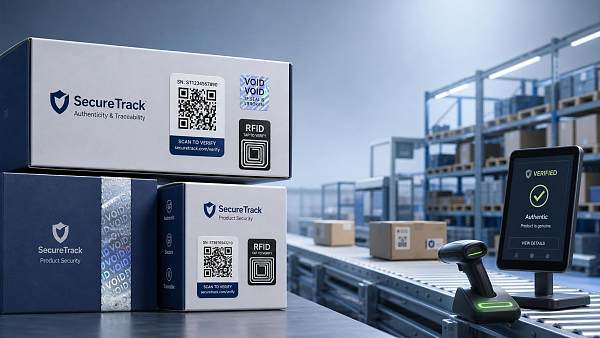
Can serialized RFID labels prevent counterfeit packaging? They can help quality control and security teams detect suspicious products by assigning unique digital identifiers to individual packages and checking them against trusted records. But RFID alone is not a guarantee: cloned identifiers, compromised data and weak inspection procedures can undermine protection. This article examines how anti-counterfeit packaging materials serialized with RFID work, where their limitations lie, and how combining them with tamper-evident features and supply chain verification can strengthen a practical anti-counterfeiting strategy.
A unique number is not the same as proof of authenticity
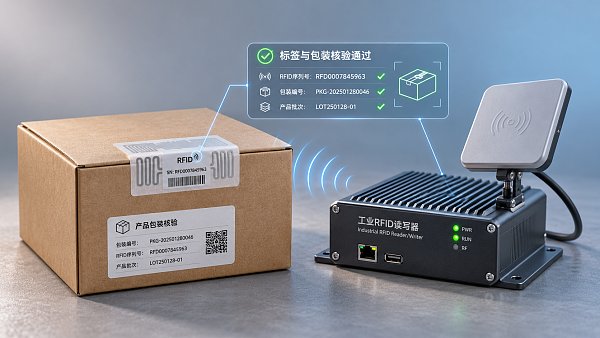
A serialized RFID label carries an identifier intended to distinguish one package from another. At commissioning, that identifier is associated with a product record. Later, an authorized reader captures it and a software system checks whether the identifier exists, what it belongs to and whether its observed history makes sense.
That last question is where useful security begins. A valid number observed on the wrong product, at an unexpected location or after the original item has already been dispensed deserves investigation. A simple “number found” response may miss all three situations.
Serialization also does not prove that the contents are genuine. A legitimate label can be removed and placed on a counterfeit package; a genuine container can be refilled; and a valid identifier can be copied where the tag and verification system do not prevent it. The goal is to make these attacks harder, detect them earlier and give investigators enough evidence to act.
How an RFID verification chain works
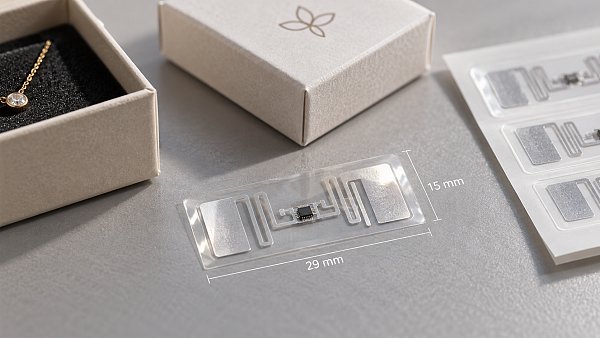
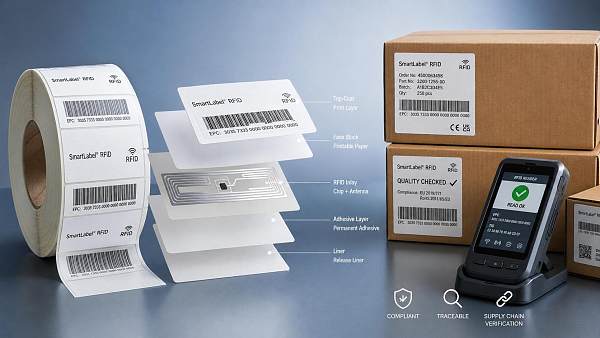
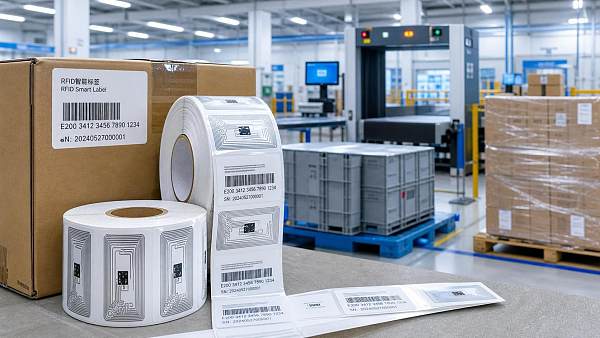
A typical label combines an antenna and integrated circuit with a face material, adhesive and sometimes a printed barcode or human-readable serial number. The RFID inlay stores or provides access to identifying data. The surrounding label structure determines whether the tag can be applied, read and retained on the package throughout its intended life.
The security system extends well beyond the label. Serial numbers need controlled allocation, encoding and reconciliation. The brand or an authorized partner must know which labels were successfully commissioned, which were rejected and which were destroyed. If unused but valid labels leave a converter or packaging line without an audit trail, the problem begins before the product ships.
After commissioning, events may be recorded at packing, shipment, receipt, return or other control points. Depending on the process, a reader might identify an individual item or capture multiple tags without line of sight. The software then compares the event with the product’s expected status and history.
For example, a warehouse receiving sealed cartons may scan cases rather than every unit. If the system relies on a recorded parent-child relationship between case and item serials, it can infer which units should be inside. That inference is only as reliable as the packing and aggregation process: a case-level scan alone does not prove that every expected unit is physically present.
Where counterfeiters and process failures exploit the gaps
Copied identifiers and replayed responses
If a system treats an identifier as a secret, copying that identifier can defeat a basic check. A duplicate might be detected when the same serial appears in incompatible locations or after a product has been marked as sold or consumed. But detection depends on timely event data and meaningful rules. If neither copy is scanned again, the duplicate may never trigger an alert.
Some RFID chips support cryptographic authentication, allowing a verifier to check a tag response using protected keys rather than relying only on a static number. This can make straightforward cloning more difficult, but it introduces key-management requirements. Provisioning, access control, key rotation and compromised-device response must be designed with the tag supplier and system operator. Cryptographic authentication still does not prove that an authentic tag remains attached to authentic contents.
Genuine labels on the wrong packages
Label transfer is a physical attack, not a database problem. A removable label can carry a valid RFID chip from an authentic item to a counterfeit one. A tamper-evident construction can help by leaving a visible pattern, destructing during removal or damaging an antenna linked to the seal. None of these effects should be assumed from a product description alone: the result depends on the adhesive, face stock, substrate, dwell time and removal conditions.
Even an antenna designed to break when a seal opens has limitations. A non-reading tag could indicate tampering, but it could also be damaged in handling or obscured by the package. Treat it as a reason to inspect, not as automatic proof of counterfeiting.
Bad records and unworked alerts
Incorrect commissioning, missed scans and delayed data exchange can produce suspicious histories for legitimate goods. Returns and repacking are particularly awkward: an item may legitimately reappear at a location that looks improbable unless its status was updated.
Before setting aggressive duplicate-scan rules, define what a normal journey looks like and who can explain exceptions. An alert queue that nobody owns is not an anti-counterfeiting control.
Choose the tag around the package and the inspection point
RFID performance is affected by frequency, antenna design, reader setup and the materials around the tag. Metals and liquids can change how a label performs, especially in UHF applications. A label that reads reliably on an empty carton at a laboratory bench may behave differently on a filled container, inside a packed case or beside other tagged items.
UHF RFID is often considered where operators need to read multiple tagged packages in logistics workflows. HF or NFC may be more suitable for close-range interactions, including some phone-based checks. These are design tendencies, not guarantees: device compatibility, tag features, read environment and local radio requirements all need confirmation. A standard RFID label should not be assumed readable by every smartphone.
Placement is a security decision as well as a radio decision. A label placed across a carton flap may show opening, but a metalized finish or the contents beneath it may affect read performance. Moving it to a more readable panel may make it easier to remove intact. Teams often need to test several positions rather than optimize for either read rate or tamper evidence in isolation.
The materials perspective matters here. PPCS’s focus on specialty adhesives, films and thermal transfer consumables is relevant because a serialized label must remain both attached and usable. Cold-chain condensation, curved containers, low-surface-energy plastics, abrasion and secondary packaging can each change the outcome. If a printed serial or barcode provides a backup path, qualify the face stock and ribbon together under expected handling conditions; a surviving chip is of limited help when staff cannot connect it to a damaged printed label.
Standards help systems communicate; they do not certify security
When specifying a system, distinguish identification, radio communication and event sharing. They solve related but different problems.
- GS1 identification standards can provide a structured way to identify trade items and individual instances, where the business and its trading partners use the GS1 system.
- GS1 EPC Tag Data Standard defines representations of identification data for EPC-enabled RFID tags and related uses. The applicable encoding and data structure should be agreed across the implementation.
- ISO/IEC 18000-63 specifies an air interface for UHF RFID in the 860 MHz to 960 MHz range. The permitted operating frequencies and power limits still depend on local regulation.
- GS1 EPCIS provides a standard for sharing supply chain event information. It does not, by itself, establish that an event is truthful or that a package is genuine.
Check the current editions, applicable product requirements and trading-partner specifications before procurement. Also ask suppliers to identify exactly which tag functions are being claimed: compliance with an air-interface standard is not the same as cryptographic authentication, tamper evidence or regulatory approval for a finished package.
Build a qualification test that reflects actual misuse
A useful pilot starts with a defined threat. Is the main concern copied identifiers, diversion into an unauthorized channel, refilling, label transfer or theft of unused labels? The answer determines what should be tested and where spending is justified. A premium authentication chip may be a poor first investment if labels can be peeled off intact or the receiving site never checks them.
Test the finished label on the finished package, using representative production, storage and distribution conditions. Include normal opening, attempted removal and reapplication, moisture or temperature exposure where relevant, abrasion, and reads through the actual case configuration. Record both successful detections and failures that legitimate handling could cause. For cold-chain products, specify application and service temperatures separately: an adhesive that performs after application at room temperature may not bond properly when applied to a cold, wet surface.
Measure the process as well as the tag. Reconcile issued, encoded, applied, rejected and destroyed serials. Challenge the database with an unknown number, a duplicate, a retired serial and an item scanned outside its expected route. Confirm whether each result reaches a named person and whether the item can be held without disrupting legitimate stock indefinitely.
What should happen when a check fails?
A failed read is not automatically a counterfeit finding, and a successful read is not a release decision on its own. Staff need a practical escalation path: repeat the read using the approved method, inspect the seal and printed identifier, check the record, and segregate the item when the discrepancy remains unexplained. Preserve packaging and event details for investigation rather than repeatedly handling a potentially compromised label.
The strongest serialized RFID program is one in which the physical seal, digital history and inspection procedure support each other. Before rolling it out across a product range, verify that the chosen label survives the real supply chain, that suspicious events can be distinguished from routine exceptions, and that someone has authority to act on the result.
Recommended News
 Nov 08, 2026Can serialized RFID labels prevent counterfeit packaging?Discover how anti counterfeit packaging materials serialized with RFID help detect suspicious products—and why tamper evidence and verification are essential.
 Oct 20, 2026Hana RFID Introduces Ultra-Compact MARQUEE UCODE 9 RFID InlayDiscover Hana RFID’s MARQUEE UCODE 9 RFID inlay, featuring a 29 × 15 mm antenna and ARC Spec Q certification. Explore flexible tagging options for small labels and retail packaging.
 Sep 17, 2026Mono-Material Labeling: How to Preserve Recyclability Across Label ComponentsMono material labeling explained: discover how compatible facestocks, adhesives, inks, and coatings help protect package recyclability from sorting through reprocessing.
 Jul 16, 2026RFID Smart Labels Europe: Key Compliance and Supplier Checks for 2026RFID smart labels Europe sourcing for 2026 demands more than low pricing. Discover key compliance checks, supplier risk controls, and performance tests to avoid costly failures.
 Jul 14, 2026GCC Tightens EMC Rules for RFID Smart LabelsGCC tightens EMC rules for RFID smart labels: learn how the new 800-960MHz immunity test and GSO-recognized lab reports may impact exports, customs clearance, and delivery plans.
 Jul 14, 2026Labeling Systems for Logistics: Common Errors That Delay ShipmentsLabeling systems for logistics often fail due to poor placement, weak materials, or data errors. Discover the most common shipment-delay mistakes and how to fix them fast.
 Jul 13, 2026GCC Updates RFID Label EMC Test Rule for 5G BandsGCC updates RFID label EMC test rules for 5G bands, making G-mark compliance an urgent issue for Saudi Arabia, UAE, and wider GCC market access. See who is affected and what to do now.
 Jul 13, 2026Variable Data Printing Materials Price: Cost Factors and Quality Trade-OffsVariable data printing materials price depends on ribbons, facestock, adhesives, and durability. Learn how to compare true cost, reduce failures, and source smarter.
 Jul 11, 2026FDA Updates RFID Label Rules for Food PackagingFDA Updates RFID Label Rules for Food Packaging: learn how the 2026 guidance affects food-contact compliance, migration testing, and U.S. export packaging decisions.
 Jul 06, 2026Vietnam Sets RFID Label UID Pre-Registration RuleVietnam Sets RFID Label UID Pre-Registration Rule: learn how Vietnam’s new RFID Smart Label import requirement impacts customs clearance, delivery timelines, and compliance planning.
 Jul 05, 2026Vietnam Tests RFID Fast-Clearance Lane From JulyVietnam tests RFID fast-clearance lane from July, requiring GS1 EPC Gen2v2 and national RFID registration. See how exporters and suppliers can stay compliant and move faster.
 Jul 05, 2026Security Labeling for Traceability: How to Reduce Counterfeit and Tracking RisksSecurity labeling for traceability helps brands reduce counterfeit exposure, improve tracking accuracy, and protect products with tamper-evident, serialized, and durable label solutions.
 Jul 03, 2026GCC Cuts RFID Label Tariff to 2.8% With Cloud Traceability RuleGCC cuts RFID label tariff to 2.8% under the new GCC-DTS rule, but cloud traceability via GCP-Auth is now mandatory. Learn the compliance risks, cost impact, and what importers must prepare.
 Jul 02, 2026GCC Cuts RFID Label Tariff to 2.8% Under New Digital Customs RuleGCC Cuts RFID Label Tariff to 2.8% under the new digital customs rule. Learn who qualifies, how GCPFP serial binding works, and how to avoid the 15% surcharge.
 Jul 01, 2026GCC Tariff Shift Cuts RFID Label Duty to 2.8%GCC Tariff Shift cuts RFID label duty to 2.8%, but real-time GCC cloud compliance is now mandatory. Learn the risks, costs, and supply chain impact.
 Jun 30, 2026GCC Launches Unified Tariff System for RFID Smart LabelsGCC Launches Unified Tariff System for RFID Smart Labels: learn how the 2.8% tariff, GCC-TRUST API rules, and real-time UID data uploads reshape compliance, customs clearance, and delivery risk.
 Jun 29, 2026UDI Traceability Labeling Mistakes That Create Audit and Recall RisksUDI traceability labeling mistakes can trigger audit findings and costly recall expansion. Learn how data errors, barcode quality, and material failures put compliance at risk.
 Jun 28, 2026FDA Requires Migration Tests for Food-Contact RFID LabelsFDA Requires Migration Tests for Food-Contact RFID Labels: learn what the new FDA rule means for packaging, compliance documents, supplier selection, and U.S. food export readiness.
 Jun 27, 2026FDA Sets Migration Test Rule for RFID Food LabelsFDA Sets Migration Test Rule for RFID Food Labels: learn how the new FDA guidance impacts RFID food packaging, supplier qualification, SML test reports, and U.S. export compliance.
 Jun 27, 2026How to Compare Traceability Label Materials for Heat, Moisture, and AbrasionTraceability label materials manufacturer guide: compare facestock, adhesives, and print compatibility for heat, moisture, and abrasion to improve scan reliability and reduce compliance risk.
 Jun 23, 2026Gulf Customs Tighten RFID Label Rules Under SAR 2026.1RFID label rules under SAR 2026.1 are tightening across Saudi, UAE, and Qatar. Learn how Gulf customs changes may cause 72-hour delays and what importers must check now.
 Jun 23, 2026Industrial Labeling Systems for High-Speed Production LinesIndustrial labeling systems for high-speed production lines improve print accuracy, traceability, compliance, and uptime. Discover how the right solution boosts efficiency and reduces labeling failures.
 Jun 22, 2026Gulf Customs Tighten RFID Label Rules for ClearanceRFID label rules tighten across Gulf customs from Sept 2026. Learn how Saudi, UAE, and Qatar clearance changes affect high-value imports, compliance risk, and supply chain planning.
 Jun 20, 2026Mexico Tightens RFID Label Entry Rules at EXPO PACKMexico Tightens RFID Label Entry Rules at EXPO PACK: learn how GS1 Mexico certification, EPC Gen2v2, encryption, and Spanish metadata rules may impact customs clearance and supply chain planning.