Search News
Industry Portal
Hot Articles
- When do foam-in-place systems make sense for North America shipping operations?Foam-in-place systems North America: learn when they truly pay off for shipping operations through lower damage, faster packing, and better fit—and when paper or fixed inserts are the smarter choice.
- What to check before choosing a cryogenic labels supplierCryogenic labels supplier selection starts with performance, not price. Learn what to check for adhesion, print durability, compliance, and supply reliability before you buy.
- How to choose cryogenic labels for laboratory samples that stay readable after freezingCryogenic labels for laboratory samples: learn how to choose labels that stay attached and readable after freezing, thaw cycles, wiping, and daily lab handling.
Popular Tags
Vietnam Tests RFID Fast-Clearance Lane From July
Time
Click Count
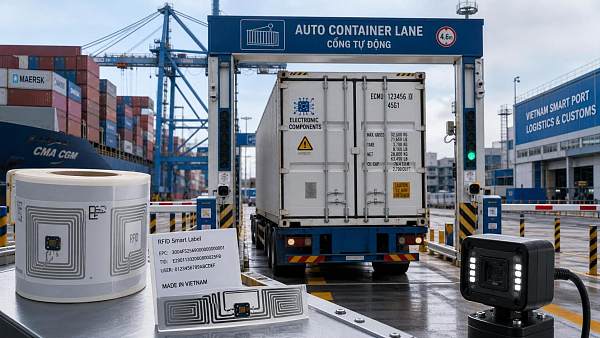
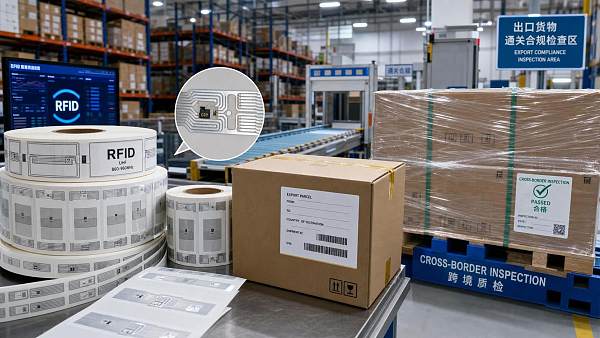
On July 5, 2026, Vietnam’s Ministry of Industry and Trade and the General Department of Customs announced a pilot fast-clearance mechanism for RFID Smart Labels in Ho Chi Minh City and Hai Phong Port. The pilot accepts only smart labels that comply with the GS1 EPC Gen2v2 protocol and have completed Vietnam’s national RFID registration. This is worth close attention from exporters, importers, label suppliers, manufacturers of electronics components and medical devices, and supply chain service providers, because it links customs efficiency directly to RFID technical compliance and registration status rather than to shipment value alone.
What the pilot covers at this stage
According to the information provided, the pilot starts on July 5, 2026 and is being introduced in Ho Chi Minh City and Hai Phong Port. It is a priority customs clearance channel for RFID Smart Labels. The mechanism only accepts smart labels containing chips that comply with GS1 EPC Gen2v2 and that have completed Vietnam’s national RFID registration. The summary also states that the arrangement is expected to speed up clearance for high-value goods, including electronic components and medical devices.
Where the immediate pressure points may appear
For exporters shipping into Vietnam
From an industry perspective, exporters are likely to be affected first at the shipment preparation stage. Where goods are intended to use the priority channel, the technical specification of the RFID label and the completion of Vietnam registration become operational conditions, not secondary details. What deserves closer attention is whether existing label configurations already match GS1 EPC Gen2v2 and whether shipment planning assumes access to the pilot lane.
For RFID label suppliers and integrators
Analysis shows the direct commercial impact falls on suppliers whose products are not aligned with the accepted protocol. The information provided specifically indicates that Chinese RFID label exporters that have not adapted to this protocol may face a technical market-access barrier. In practical terms, that can affect product offering, order qualification, and customer discussions around compatibility.
For electronics and medical device supply chains
Observably, the categories named in the summary, electronic components and medical devices, are the ones most immediately tied to the promised clearance benefit. For these supply chains, the issue is not only whether faster customs processing is available, but also whether internal labeling, sourcing, and documentation practices are ready to support use of the pilot mechanism.
For logistics and customs-facing service providers
Service providers involved in customs handling, shipment coordination, or cross-border compliance may need to track whether consignments are eligible for the priority lane before cargo reaches the port. The likely impact is concentrated in pre-clearance coordination, customer communication, and exception handling when a label does not meet the protocol or registration condition.
What companies should monitor now
Protocol compatibility should be checked early
Companies shipping through the pilot locations should verify whether the RFID Smart Labels in use comply with GS1 EPC Gen2v2. This is especially relevant for businesses that currently rely on established label suppliers and may assume existing products are sufficient for all destinations.
Registration status is separate from chip specification
What deserves closer attention is that the pilot is defined by two conditions: protocol compliance and completion of Vietnam’s national RFID registration. In operational terms, meeting the chip requirement alone may not be enough for access to the fast-clearance mechanism.
Priority treatment and general market access are not the same issue
Analysis shows companies should distinguish between eligibility for the pilot priority lane and broader shipment feasibility. The information provided confirms a technical barrier for non-adapted RFID label exporters, but businesses still need to watch how official wording and implementation practice develop before treating every non-eligible shipment scenario as identical.
Customer and supplier coordination may need adjustment
For procurement teams, exporters, and service providers, the immediate practical task is to align on label specifications, registration readiness, and shipment expectations. This matters most where customers expect shorter customs timelines for high-value goods and where suppliers may need to confirm whether their products are compatible with the pilot rules.
Why this reads as more than a local process tweak
Observably, this development is not just about adding a faster lane at two Vietnamese logistics nodes. It also signals that technical standards and local registration can be used together as a gatekeeping mechanism in customs-facing workflows. That matters for companies that sell into Vietnam using RFID-enabled identification, because compliance now appears linked to trade facilitation outcomes. At the same time, it is more appropriate to understand this as an early-stage policy and operational signal rather than a final, market-wide conclusion, since the information provided describes a pilot rather than a full rollout.
How this update is best understood for now
At this stage, the announcement is best read as a near-term operational change with broader strategic implications. In the short term, it affects clearance planning for high-value categories and raises an immediate compatibility issue for non-adapted RFID label exporters. In the longer view, it suggests that protocol selection and registration status may become more important in cross-border execution. For now, the most balanced conclusion is that the pilot deserves close monitoring, especially by companies shipping through the named locations or supplying RFID labels into these trade flows.
Basis of this article and points for further verification
This article is based on the user-provided news title, event date, and event summary. Source types typically relevant to this kind of update may include official government announcements, customs notices, company statements, industry association materials, authoritative media coverage, and standard-setting organization documents. A specific official source link was not provided in the input, so the exact wording and later implementation details still require ongoing verification. Further attention should remain on any follow-up official clarification regarding pilot scope, operational procedures, and whether the accepted RFID conditions remain limited to GS1 EPC Gen2v2 plus Vietnam national RFID registration.
Recommended News
 Jul 16, 2026RFID Smart Labels Europe: Key Compliance and Supplier Checks for 2026RFID smart labels Europe sourcing for 2026 demands more than low pricing. Discover key compliance checks, supplier risk controls, and performance tests to avoid costly failures.
 Jul 14, 2026GCC Tightens EMC Rules for RFID Smart LabelsGCC tightens EMC rules for RFID smart labels: learn how the new 800-960MHz immunity test and GSO-recognized lab reports may impact exports, customs clearance, and delivery plans.
 Jul 14, 2026Labeling Systems for Logistics: Common Errors That Delay ShipmentsLabeling systems for logistics often fail due to poor placement, weak materials, or data errors. Discover the most common shipment-delay mistakes and how to fix them fast.
 Jul 13, 2026GCC Updates RFID Label EMC Test Rule for 5G BandsGCC updates RFID label EMC test rules for 5G bands, making G-mark compliance an urgent issue for Saudi Arabia, UAE, and wider GCC market access. See who is affected and what to do now.
 Jul 13, 2026Variable Data Printing Materials Price: Cost Factors and Quality Trade-OffsVariable data printing materials price depends on ribbons, facestock, adhesives, and durability. Learn how to compare true cost, reduce failures, and source smarter.
 Jul 11, 2026FDA Updates RFID Label Rules for Food PackagingFDA Updates RFID Label Rules for Food Packaging: learn how the 2026 guidance affects food-contact compliance, migration testing, and U.S. export packaging decisions.
 Jul 06, 2026Vietnam Sets RFID Label UID Pre-Registration RuleVietnam Sets RFID Label UID Pre-Registration Rule: learn how Vietnam’s new RFID Smart Label import requirement impacts customs clearance, delivery timelines, and compliance planning.
 Jul 05, 2026Vietnam Tests RFID Fast-Clearance Lane From JulyVietnam tests RFID fast-clearance lane from July, requiring GS1 EPC Gen2v2 and national RFID registration. See how exporters and suppliers can stay compliant and move faster.
 Jul 05, 2026Security Labeling for Traceability: How to Reduce Counterfeit and Tracking RisksSecurity labeling for traceability helps brands reduce counterfeit exposure, improve tracking accuracy, and protect products with tamper-evident, serialized, and durable label solutions.
 Jul 03, 2026GCC Cuts RFID Label Tariff to 2.8% With Cloud Traceability RuleGCC cuts RFID label tariff to 2.8% under the new GCC-DTS rule, but cloud traceability via GCP-Auth is now mandatory. Learn the compliance risks, cost impact, and what importers must prepare.
 Jul 02, 2026GCC Cuts RFID Label Tariff to 2.8% Under New Digital Customs RuleGCC Cuts RFID Label Tariff to 2.8% under the new digital customs rule. Learn who qualifies, how GCPFP serial binding works, and how to avoid the 15% surcharge.
 Jul 01, 2026GCC Tariff Shift Cuts RFID Label Duty to 2.8%GCC Tariff Shift cuts RFID label duty to 2.8%, but real-time GCC cloud compliance is now mandatory. Learn the risks, costs, and supply chain impact.
 Jun 30, 2026GCC Launches Unified Tariff System for RFID Smart LabelsGCC Launches Unified Tariff System for RFID Smart Labels: learn how the 2.8% tariff, GCC-TRUST API rules, and real-time UID data uploads reshape compliance, customs clearance, and delivery risk.
 Jun 29, 2026UDI Traceability Labeling Mistakes That Create Audit and Recall RisksUDI traceability labeling mistakes can trigger audit findings and costly recall expansion. Learn how data errors, barcode quality, and material failures put compliance at risk.
 Jun 28, 2026FDA Requires Migration Tests for Food-Contact RFID LabelsFDA Requires Migration Tests for Food-Contact RFID Labels: learn what the new FDA rule means for packaging, compliance documents, supplier selection, and U.S. food export readiness.
 Jun 27, 2026FDA Sets Migration Test Rule for RFID Food LabelsFDA Sets Migration Test Rule for RFID Food Labels: learn how the new FDA guidance impacts RFID food packaging, supplier qualification, SML test reports, and U.S. export compliance.
 Jun 27, 2026How to Compare Traceability Label Materials for Heat, Moisture, and AbrasionTraceability label materials manufacturer guide: compare facestock, adhesives, and print compatibility for heat, moisture, and abrasion to improve scan reliability and reduce compliance risk.
 Jun 23, 2026Gulf Customs Tighten RFID Label Rules Under SAR 2026.1RFID label rules under SAR 2026.1 are tightening across Saudi, UAE, and Qatar. Learn how Gulf customs changes may cause 72-hour delays and what importers must check now.
 Jun 23, 2026Industrial Labeling Systems for High-Speed Production LinesIndustrial labeling systems for high-speed production lines improve print accuracy, traceability, compliance, and uptime. Discover how the right solution boosts efficiency and reduces labeling failures.
 Jun 22, 2026Gulf Customs Tighten RFID Label Rules for ClearanceRFID label rules tighten across Gulf customs from Sept 2026. Learn how Saudi, UAE, and Qatar clearance changes affect high-value imports, compliance risk, and supply chain planning.
 Jun 20, 2026Mexico Tightens RFID Label Entry Rules at EXPO PACKMexico Tightens RFID Label Entry Rules at EXPO PACK: learn how GS1 Mexico certification, EPC Gen2v2, encryption, and Spanish metadata rules may impact customs clearance and supply chain planning.
 Jun 19, 2026Mexico RFID Label Rule Tied to GS1 CompatibilityMexico RFID Label Rule tied to GS1 compatibility signals a major compliance shift for exporters and buyers. Learn how GS1 Mexico, MX-EPCIS, and Spanish metadata may impact packaging access from Q3 2026.
 Jun 17, 2026RFID Smart Label Shipments Rise 38% as Southeast Asian FMCG Channels Tighten NFC RulesRFID Smart Label shipments rise 38% as Southeast Asian FMCG channels mandate NFC+RFID and GS1 EPCIS integration. Learn what this means for compliance, traceability, and supply readiness.
 Jun 16, 2026RFID Smart Label Shipments Rise 38% in Q1 as Southeast Asia Expands NFC AuthenticationRFID smart label shipments rose 38% in Q1 as Southeast Asia accelerates NFC authentication. Explore buyer requirements, encoding speed, and supply chain opportunities.