Search News
Industry Portal
Hot Articles
- How order volume affects OEM packaging material pricesSee how order volume affects OEM packaging materials price, compare total costs and MOQ tiers, and find practical ways to save without overbuying.
- Washington Fines 38 Companies Over Recycled Plastic RequirementsWashington recycled plastic requirements led to $246,548 in fines for 38 companies. See which products are affected and what businesses should review.
- How to check printer compatibility with a variable data printing materials manufacturerLearn how to assess a variable data printing materials manufacturer, verify printer compatibility, and run production trials before approving materials.
Popular Tags
Washington Fines 38 Companies Over Recycled Plastic Requirements
Time
Click Count
In November 2026, Washington’s Department of Ecology imposed $246,548 in fines on 38 plastic producers for failing to meet minimum recycled plastic requirements established under a 2021 state law. The action covers specified beverage containers, plastic trash bags and packaging for household cleaning and personal care products. For producers and their supply chains, it places renewed attention on how post-consumer recycled content is specified, documented and assessed against applicable requirements.
Fines tied to recycled content shortfalls
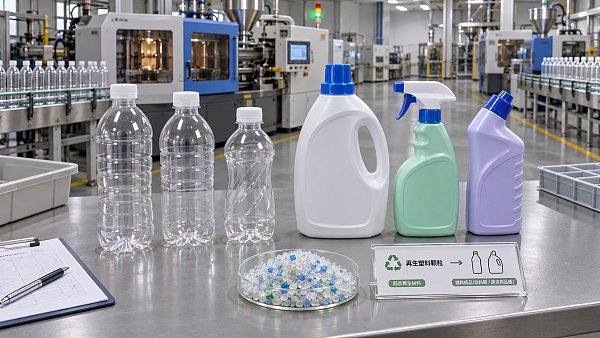
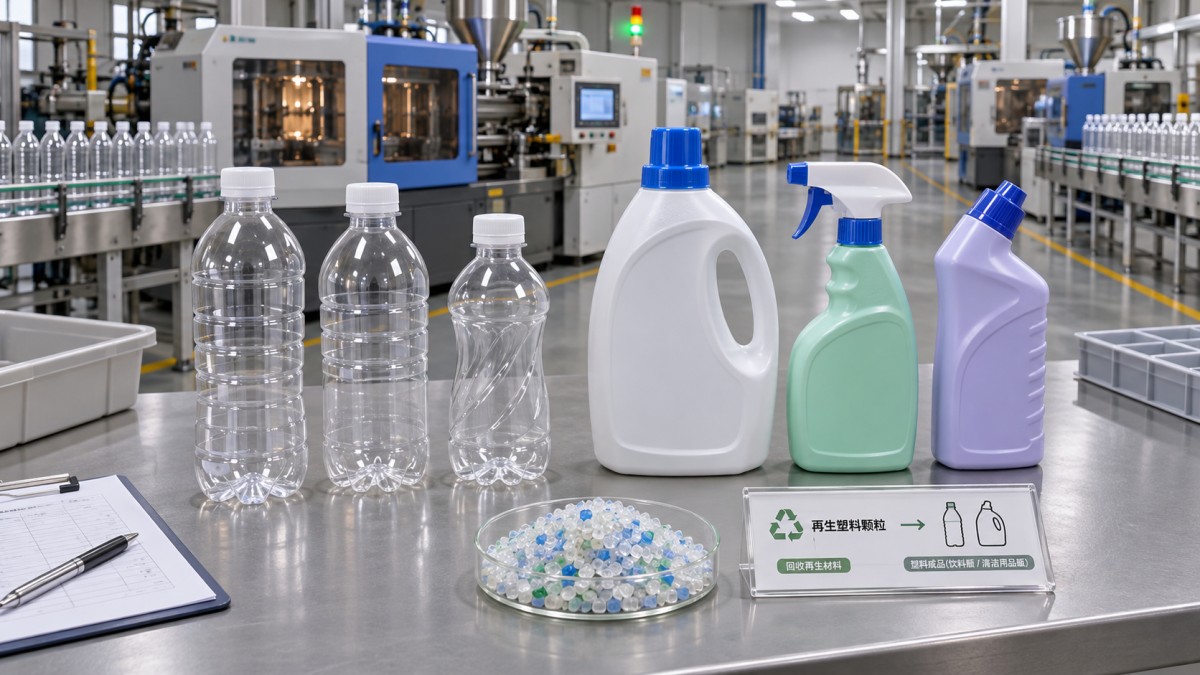
The Department of Ecology fined 38 plastic producers a combined $246,548 because they did not use the legally required minimum proportion of recycled plastic in covered products. The affected categories were single-use beverage containers, plastic trash bags, and household cleaning and personal care product packaging.
Washington said 70% of companies had met the requirements. The fines were calculated on the basis of the shortfall in post-consumer recycled, or PCR, content. The underlying state law was enacted in 2021.
Where the requirements may reach through the supply chain
Producers and packaging buyers
From an industry perspective, the fines make recycled content a matter for product planning as well as legal review. Producers associated with the covered categories may need to examine whether the plastic used in each relevant product or package aligns with the applicable minimum. The input does not specify the minimum percentages, the assessment period or how individual products are assessed, so those details would need to be checked before a company draws a conclusion about its own position.
Packaging buyers may also face questions from producers about the composition of containers and other packaging they purchase. Analysis suggests that a buyer’s specification could become more consequential if it influences the amount of PCR material a supplier can use. A product that meets a buyer’s appearance or performance expectations would still need its recycled content assessed against any applicable requirement; the enforcement action alone does not establish how such assessments must be performed.
Material suppliers and processors
Suppliers of recycled plastic and processors that incorporate it into finished products may be asked for clearer information about material content. This is a possible commercial response to enforcement, rather than a confirmed new documentation requirement. The practical question for suppliers is whether information provided with a material is sufficiently specific for customers to understand what was supplied and evaluate its relevance to a covered product.
For processors, analysis suggests that material selection, production records and communication with customers could become more closely connected. If a customer seeks a different PCR proportion, a processor may need to assess whether the proposed material can be used in the relevant product and whether the resulting product meets the customer’s specifications. The input does not establish that substitutions have occurred or that any particular material has been approved.
Commercial contracts and delivery planning
Companies buying or supplying products for the affected market may need to clarify who will provide recycled content information and when it will be available. From a commercial perspective, uncertainty over material composition could affect the time needed to agree specifications, confirm an order or resolve a question about a delivery. These are possible operational effects; the reported enforcement action does not confirm delays or changes to contractual terms.
Trade participants handling covered products may also benefit from checking whether their customers have specific information requests. The event does not establish a new border measure or trade restriction. Its relevance to a transaction would depend on the product, the parties’ roles and the applicable state requirements, all of which require verification against authoritative information.
Turning the enforcement signal into a practical review
Identify products and applicable thresholds
A starting point for companies is to map their products against the categories identified in the enforcement action: single-use beverage containers, plastic trash bags, and packaging for household cleaning and personal care products. This exercise can help teams identify which products warrant a closer legal review. It should not be treated as a substitute for confirming the law’s definitions, scope and applicable minimum percentages.
Businesses may also want to identify which entity is responsible for each product and what information it holds. The summary refers to fines on plastic producers, but it does not explain every circumstance in which a particular company would be considered responsible. Where ownership, manufacturing and purchasing are divided among different parties, that distinction may affect how a company organizes its review.
Check the basis for PCR claims
Because the reported fines were based on PCR content shortfalls, companies could review how they determine and communicate PCR content for relevant products. Useful questions include what material information is available from suppliers, how that information relates to a finished item, and whether purchasing and production teams use consistent descriptions. These are suggested checks, not reporting obligations established by the input.
Where supporting documents or test results are available, a company could assess whether they answer the questions raised by its customers and its own compliance review. The event summary does not identify a required test method, certificate, verification body or form of proof. Businesses should therefore confirm the applicable evidence and documentation requirements before relying on a particular approach.
Review supplier commitments and alternatives
Analysis suggests that procurement teams may wish to discuss PCR availability and specification changes with suppliers before making commitments to customers. Those discussions could cover the information a supplier can provide, the material characteristics relevant to the product, and the time needed to evaluate a proposed change. No supply shortage or delivery disruption is established by the reported facts.
If a different material or product design is being considered, companies can assess the alternative against both the relevant recycled content requirement and their product specifications. The enforcement action does not identify an accepted substitute or establish that a change in material alone would resolve a shortfall. Any decision would depend on the product and on verified requirements.
Follow further guidance and customer requests
Companies may wish to monitor further official information on calculation methods, covered products and enforcement. They can also check whether customers revise purchasing specifications or ask for additional supporting information. Such changes are possibilities to watch, not developments confirmed in the event summary.
For businesses with several products in the affected categories, assigning responsibility for these checks may help avoid inconsistent responses across procurement, production and sales. The immediate objective would be to establish what is known, identify missing information and verify it through appropriate sources.
What the penalties signal about implementation
At this stage, the action is best understood as a confirmed enforcement event under an existing 2021 law, rather than evidence that a new recycled content law was introduced in November 2026. The reported fines show that the state applied penalties to identified shortfalls. They do not, by themselves, explain the detailed calculation for each company or establish how future cases will be handled.
Washington’s statement that 70% of companies met the requirements provides a snapshot of reported compliance, but the summary does not define the group measured or explain the circumstances of the remaining companies. It would therefore be speculative to infer a product-by-product compliance rate, a market-wide cost or a particular reason for the shortfalls.
Further official detail could affect business assessments, especially clarification of product coverage, measurement periods, calculation methods and the evidence used to substantiate PCR content. Industry feedback may also help show whether companies encounter practical difficulties in obtaining or documenting suitable material. Neither such difficulties nor any subsequent change in enforcement is confirmed by the information provided.
A measured response to an established requirement
The central business implication is that recycled content in the specified product categories has been the subject of monetary enforcement. For companies potentially connected to those products, the proportion of PCR material and the information supporting it merit attention across purchasing, manufacturing and customer discussions.
A proportionate response is to treat the fines as an execution signal, identify potentially relevant products and verify the rules that apply to each situation. The available information supports attention to compliance and supply chain coordination; it does not support a forecast of particular price changes, delivery outcomes or further penalties.
Basis for this report and points to verify
This article is based on the user-provided news title, event date and event summary. No specific official source link was provided in the input, so the underlying details still require verification. Relevant materials to consult as they become available may include official announcements and releases from the responsible regulator.
Further review should focus on the detailed requirements, calculation and documentation practices, any subsequent official guidance, company implementation and industry feedback. Changes to customer purchasing documents or trade execution should also be assessed if evidence of them emerges.
Recommended News
 Nov 17, 2026Washington Fines 38 Companies Over Recycled Plastic RequirementsWashington recycled plastic requirements led to $246,548 in fines for 38 companies. See which products are affected and what businesses should review.
 Nov 16, 2026University of Georgia Study Links Lighter Packaging to Lower RecyclingUniversity of Georgia research links lightweight packaging to lower recycling rates. Discover what the findings mean for sustainable packaging design.
 Nov 13, 2026Germany Seeks PPWR Changes to Ease Compliance for Small RetailersGermany seeks PPWR changes to ease compliance for small retailers. Explore the proposed exemptions, simpler registration and implications for EU trade.
 Nov 13, 2026How does the EU PPWR affect flexible packaging compliance?Flexible packaging compliance is changing under the EU PPWR. Explore key timelines, recyclability rules, documentation and practical steps to prepare.
 Nov 12, 2026EU Delays Adoption of PPWR Packaging Labelling Rules Until 2027EU PPWR packaging labelling rules are now expected in 2027. Explore what the delay means for suppliers, compliance planning and production decisions.
 Nov 11, 2026CEN Approves Four Specifications for Recyclable Biodegradable PackagingRecyclable biodegradable packaging faces new CEN specifications. Discover what the four approvals could mean for packaging design and EU PPWR assessments.
 Nov 09, 2026German Union Leader Thorsten Frei Questions Planned Plastics TaxGerman plastics tax plans face scrutiny as Union leader Thorsten Frei raises questions. Explore what the debate could mean for packaging businesses.
 Nov 07, 2026EU Packaging Waste Rules Raise Compliance Concerns for Small BusinessesEU packaging waste rules are raising compliance concerns for small businesses. Explore PPWR, PFAS, packaging costs and practical preparation steps.
 Nov 06, 2026EU PPWR Implementation: Small Businesses Face Compliance HurdlesEU PPWR implementation poses compliance hurdles for small businesses. Explore PFAS restrictions, EPR registration and practical steps for cross-border sellers.
 Nov 03, 2026Nigeria Sets Recycled PET Target and Chemical Restrictions for Plastic PackagingNigeria’s plastic packaging rules set a 25% recycled PET target and chemical restrictions. Explore what exporters need to know about scope and compliance.
 Nov 01, 2026How Europe's New Green Rules Affect Packaging Compliance for Printers and PublishersEU packaging compliance is changing for printers and publishers. Explore how the PPWR may affect procurement, transport packaging and environmental claims.
 Oct 31, 2026How are extended producer responsibility packaging fees calculated?Extended producer responsibility packaging fees depend on material weight, rates and local rules. Learn how to calculate costs and build a reliable budget.
 Oct 29, 2026Maine DEP Updates Packaging EPR Timeline, Plans to Revise Stewardship RFPMaine packaging EPR timeline updates and a revised stewardship RFP could affect business planning. Discover what companies should watch next.
 Oct 27, 2026HERMA Gains Cold-Wash Certification for PP and PE Labels, Supporting PPWR AlignmentHERMA earns cold-wash certification for PP and PE labels, proving complete removal at 40°C. Discover how this supports cleaner recycling and PPWR alignment.
 Oct 26, 2026Plastic is Fantastic Association Plans Middle East Debut at GPCA ForumPlastic is Fantastic Association plans its Middle East debut at the GPCA Forum in Dubai in November 2026. Discover its goals for regional partnerships and evidence-based plastic packaging dialogue.
 Oct 25, 2026Freiburg to Limit Packaging Tax to Disposable Cups from 2027Freiburg’s packaging tax will target disposable drink and ice cream cups at €0.50 each from January 1, 2027. Explore what this means for purchasing costs and reusable alternatives.
 Oct 23, 2026UK Confirms Plastic Packaging Tax Rules Introducing Chemical Recycling Mass BalanceUK Plastic Packaging Tax changes introduce chemical recycling mass balance from 1 April 2027. Explore what packaging businesses should review to prepare for compliance.
 Oct 22, 2026Avery Dennison AD CleanFlake Earns First RecyClass Approval for PET Tray RecyclingAvery Dennison AD CleanFlake earns the first RecyClass approval for PET tray recycling. Discover how its label separation technology helps preserve recycled PET quality.
 Oct 12, 2026How to verify whether flexible barrier packaging is recyclableIs flexible barrier packaging recyclable? Learn how to verify materials, barriers, inks, collection routes, and evidence for credible recycling claims.
 Oct 11, 2026How PPWR rules may change customs checks for packaged goodsPPWR customs checks may reshape EU imports. Learn how to prepare packaging evidence, manage border risks, and keep packaged goods moving.
 Oct 10, 2026What a PPWR packaging label should show for compliant EU shipmentsPPWR packaging label guidance for compliant EU shipments: show accurate material details, sorting instructions, recyclability evidence, and component-level disposal information.
 Oct 01, 2026How to verify whether PLA PBAT compostable film meets compostability standardsPLA PBAT compostable film verification guide: check EN 13432, ASTM D6400, certificates, thickness, inks, layers, and industrial composting scope.
 Sep 18, 2026How to verify BPI certification for compostable packaging materialsCompostable packaging materials BPI verification made practical: learn how to confirm certified products, documentation, labels, coatings, and supplier traceability.
 Sep 16, 2026How to verify compostability claims for eco friendly packaging filmsEco friendly packaging films require more than a logo. Learn to verify compostability certificates, finished-film scope, components, and disposal claims.