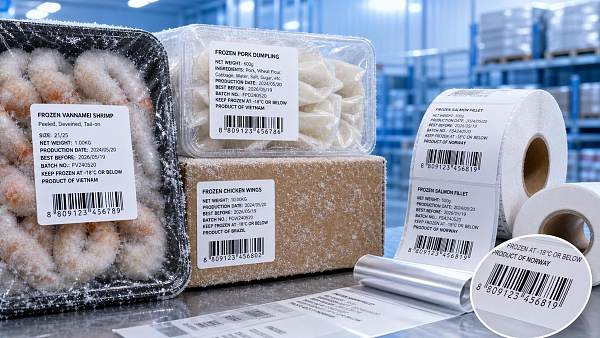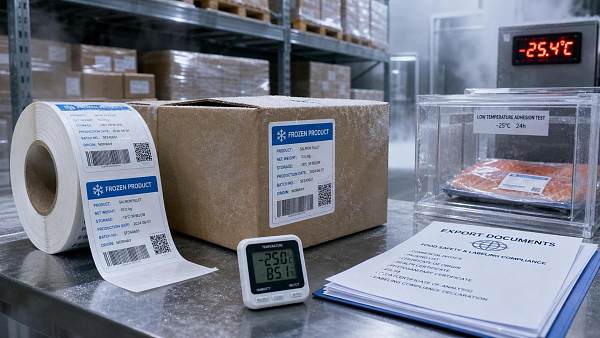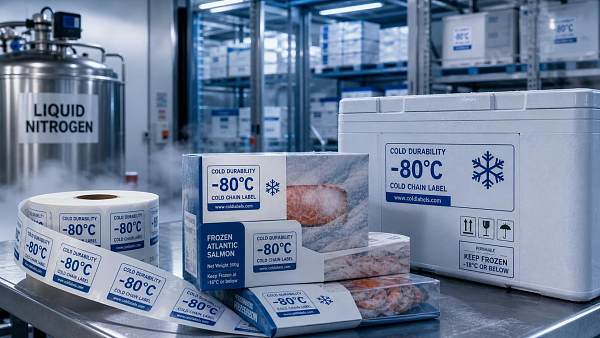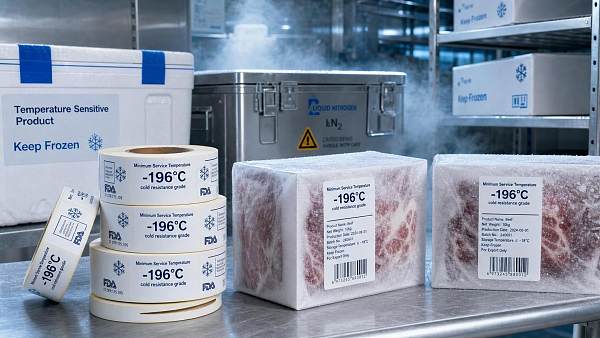
For quality control and safety managers, label failure is never a minor inconvenience—it can break traceability, compromise compliance, and expose products to risk in cold chains, sterilization zones, outdoor storage, or high-heat processing.
Pressure-sensitive adhesives engineered for extreme temperature labels must balance initial tack, long-term holding power, substrate compatibility, and resistance to condensation, chemicals, and thermal shock.
This article explores how advanced adhesive chemistry helps labels remain readable, secure, and audit-ready when ordinary materials crack, lift, or lose performance under demanding operating conditions.
Why Extreme Temperature Label Failure Becomes a Quality and Safety Risk
When a label lifts, curls, smears, or detaches, the problem is not cosmetic. It can destroy product identity at the worst moment.
Quality teams may lose batch numbers, expiration dates, handling instructions, sterilization indicators, or barcode links to electronic records and release documentation.
Safety managers face a different exposure. A missing warning label can create misuse risks, shipment errors, or regulatory findings during inspection.
Extreme temperature environments make this risk more likely because labels experience stress from heat, cold, moisture, substrate movement, and handling abrasion.
The right pressure-sensitive adhesives are selected not only for bonding strength, but for predictable performance across the full product journey.
What Users Usually Mean by “Extreme Temperature”
Extreme temperature is not one condition. It may mean frozen storage, cryogenic exposure, autoclave sterilization, hot filling, outdoor weathering, or heated processing.
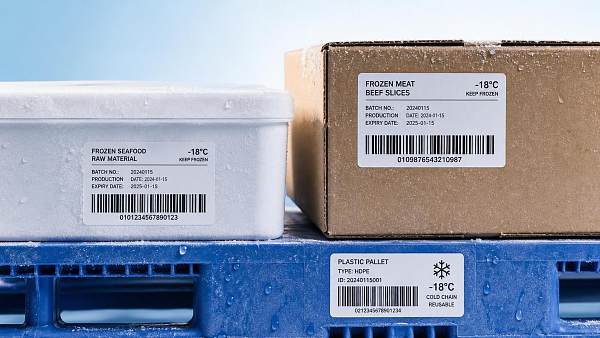
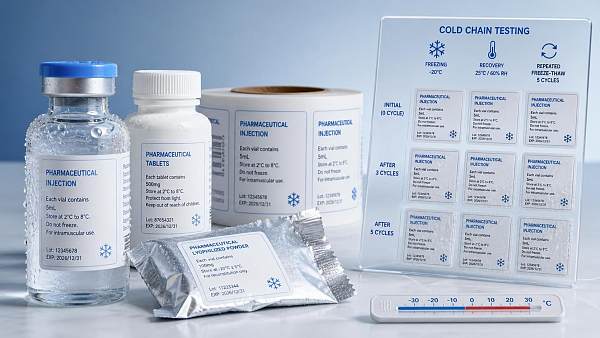
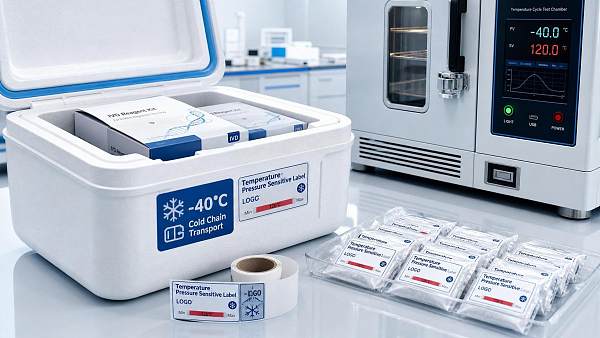
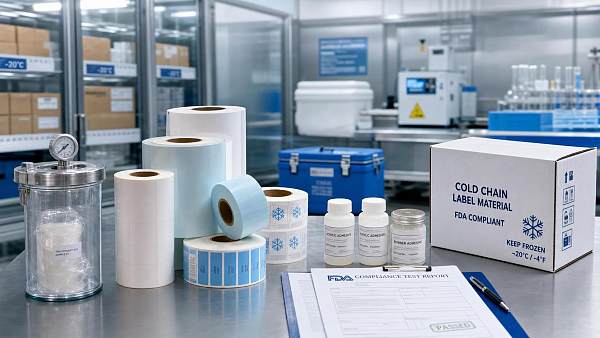
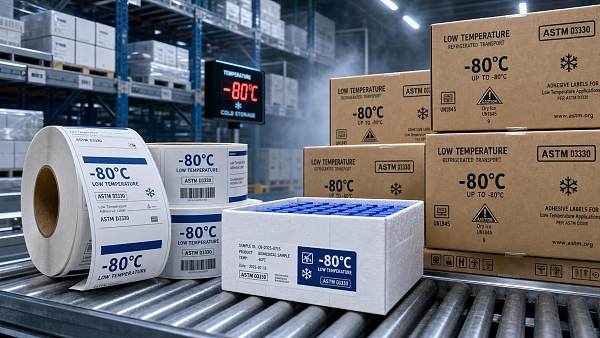
A cold-chain label may be applied at room temperature, then stored at minus 20°C, transported with condensation, and scanned repeatedly.
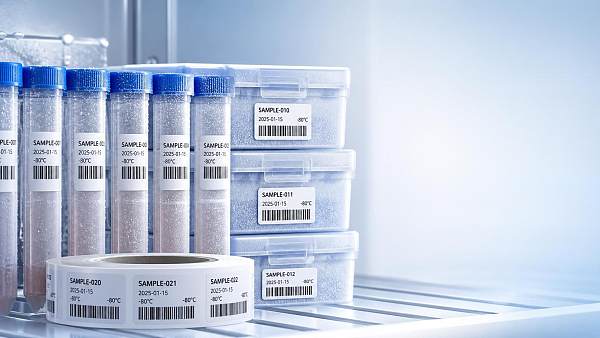
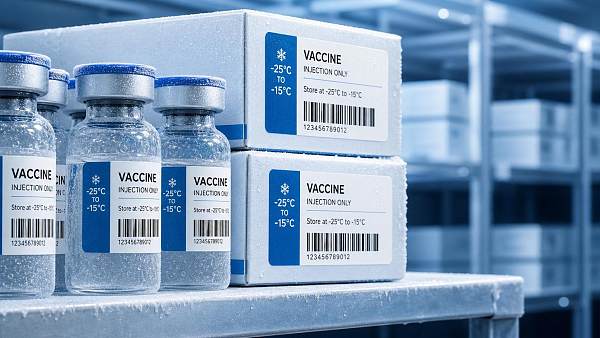
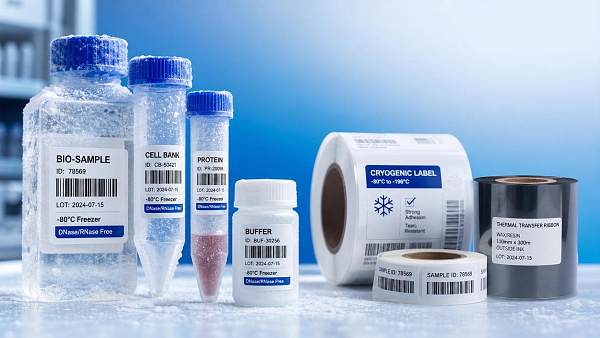
A laboratory label may be attached to a vial before liquid nitrogen storage, where adhesive flexibility and face-stock integrity become critical.
A high-heat industrial label may need to survive powder coating, circuit board processing, metal fabrication, or short-term oven exposure.
For accurate specification, managers should define application temperature, service temperature, dwell time, surface material, and expected handling after labeling.
How Pressure-Sensitive Adhesives Work Under Thermal Stress
Pressure-sensitive adhesives bond through contact, wet-out, and molecular attraction. They do not require heat, water, or solvent activation during application.
At normal conditions, good adhesives flow slightly into microscopic surface irregularities, creating sufficient tack and long-term anchorage after pressure is applied.
Low temperatures reduce adhesive flow and flexibility. The adhesive can become glassy, losing the ability to wet the surface properly.
High temperatures can soften the adhesive too much. Labels may slide, ooze, edge bleed, or lose shear resistance under load.
Extreme temperature formulations aim to maintain an effective balance between tack, peel adhesion, shear strength, and cohesive integrity across changing conditions.
Cold-Chain Labels: Tack, Condensation, and Frozen Surfaces
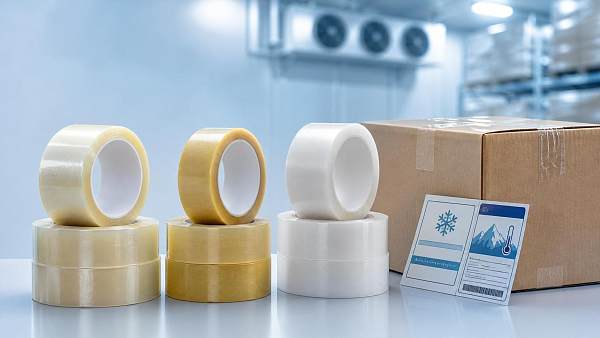
Cold-chain labeling often fails because the surface is damp, frosted, curved, or too cold for standard adhesive wet-out.
For quality control teams, the first decision is whether labels are applied before freezing or directly onto chilled packaging.
If labels are applied at room temperature, the adhesive must resist later embrittlement, condensation cycles, and carton or film movement.
If labels are applied to cold surfaces, specialized freezer-grade pressure-sensitive adhesives with stronger initial tack are usually required.
Cold-chain managers should also test labels after freeze-thaw cycles, not only immediately after application under controlled laboratory conditions.
Cryogenic Labels: When Ordinary Adhesives Become Brittle
Cryogenic applications are among the most demanding because adhesive, facestock, and ink must survive severe contraction and handling shock.
Labels on vials, tubes, and sample containers may face liquid nitrogen vapor phases or deep-freezer storage for long periods.
In these applications, adhesive flexibility matters as much as peel strength. Brittle adhesive layers may crack and allow edge lifting.
Small-diameter containers increase stress because the label constantly tries to return to a flat shape after wrapping around a curve.
Safety teams should validate complete label systems, including adhesive, film, print method, ribbon, barcode grade, and scanner readability after exposure.
High-Heat Labels: Holding Power Matters More Than Initial Stick
At elevated temperatures, many labels appear acceptable immediately after application but fail after hours of thermal exposure or mechanical load.
High-heat pressure-sensitive adhesives must resist softening, adhesive flow, residue transfer, and loss of shear strength during service.
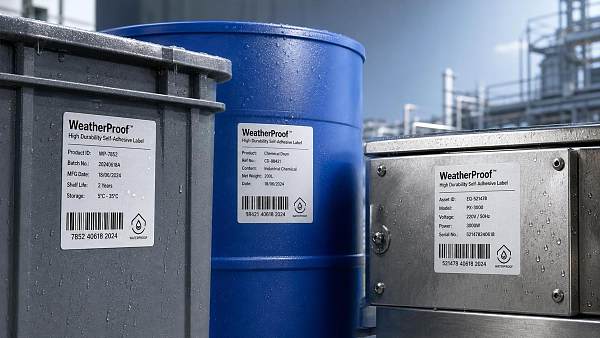
Applications may include automotive parts, electronics, metal goods, appliances, chemical drums, and components moving through heated production stages.
For quality managers, the question is not simply whether the label remains attached, but whether it remains readable and scannable.
Heat can distort films, discolor inks, reduce barcode contrast, or cause adhesive bleed that contaminates nearby surfaces or printing zones.
Adhesive Chemistry Choices: Acrylic, Rubber, and Silicone Systems
Acrylic adhesives are widely used for durable labels because they offer good UV resistance, aging stability, and chemical resistance.
Modified acrylic pressure-sensitive adhesives can be engineered for freezer use, outdoor exposure, high shear, or balanced performance across broad temperatures.
Rubber-based adhesives often provide strong initial tack, especially on challenging surfaces, but may have lower heat and aging resistance.
Silicone adhesives are preferred for very high temperatures and difficult low-energy surfaces, though they typically carry higher material costs.
The best chemistry depends on risk level, substrate, application timing, operating window, compliance needs, and total cost of failure.
Substrate Compatibility Is Often the Hidden Cause of Failure
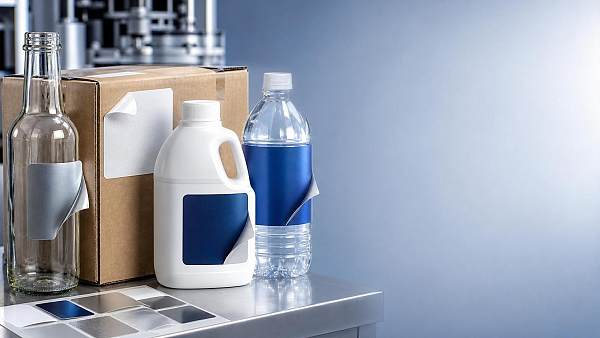
Adhesive performance cannot be judged without knowing the surface. Stainless steel, glass, HDPE, PP, PET, cardboard, and painted metals behave differently.
Low-surface-energy plastics such as polyethylene and polypropylene are difficult because adhesives do not wet them as easily as metals or glass.
Rough cardboard may require more adhesive mass to bridge surface irregularities and maintain contact during cold storage or vibration.
Curved containers, flexible pouches, and shrink-wrapped surfaces introduce additional stress because the substrate changes shape during handling.
Procurement teams should avoid approving a label based only on generic data sheets without testing the actual package surface.
Application Conditions Decide Whether the Adhesive Can Perform
Even the best pressure-sensitive adhesives can fail when applied with insufficient pressure, dirty surfaces, or temperatures below the recommended range.
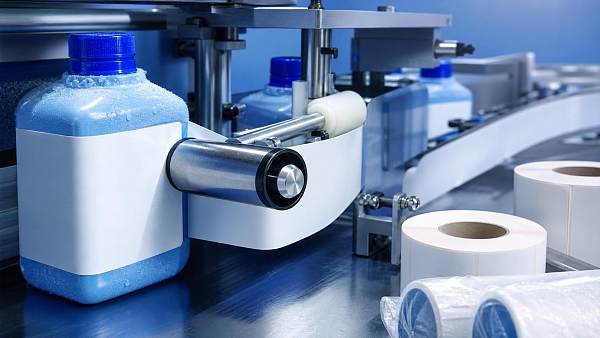
Labels require firm contact to remove trapped air and help the adhesive wet the surface before temperature exposure begins.
Dust, oil, mold release agents, moisture, frost, and chemical residues reduce the contact area available for reliable bonding.
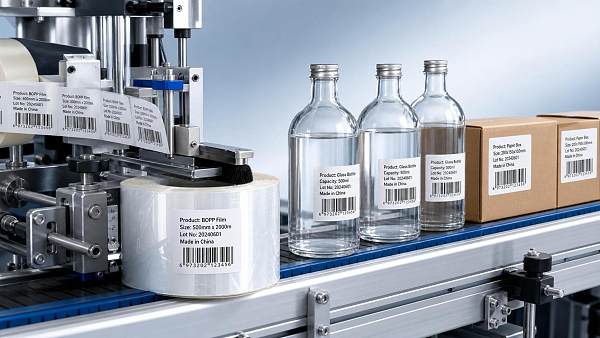
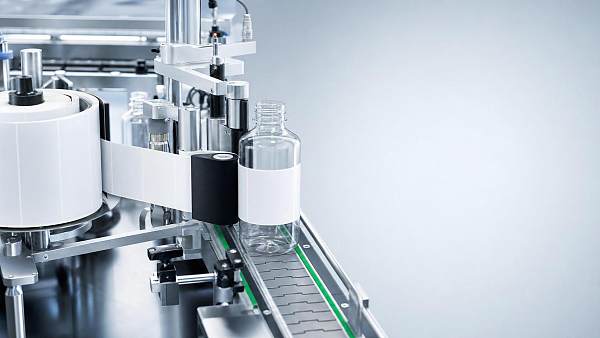
High-speed labeling lines introduce another variable. Short dwell time may prevent the adhesive from developing enough early bond strength.
Quality teams should define standard work instructions for surface cleanliness, label pressure, application temperature, and minimum dwell time before stress exposure.
What Quality Control Should Test Before Approval
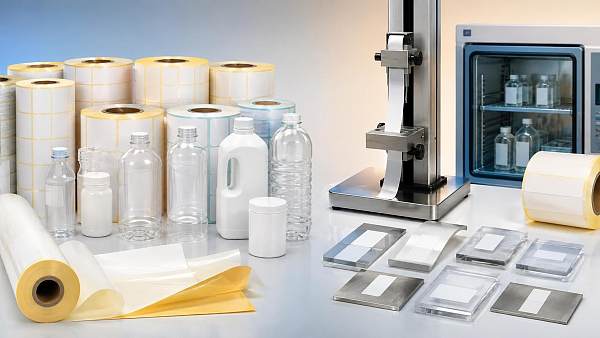
Real approval requires more than a thumb test or short room-temperature trial. Extreme labels need application-specific validation.
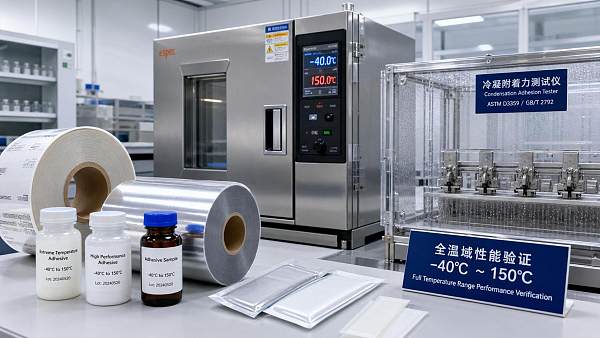
Start with peel adhesion tests on the actual substrate after the expected dwell time and after simulated thermal exposure.
Add shear testing when labels carry weight, face downward, wrap around curves, or remain under tension during service.
For cold-chain use, include freeze-thaw cycling, condensation exposure, abrasion, scanner verification, and label inspection after transportation simulation.
For high-heat use, test dimensional stability, adhesive bleed, print durability, barcode readability, and residue behavior after the defined exposure profile.
Audit Readiness: Labels Must Preserve Data, Not Just Stay Attached
Many organizations overemphasize adhesion and underemphasize information survival. A firmly attached label is still a failure if data becomes unreadable.
QC teams should treat adhesive, facestock, ink, thermal transfer ribbon, and barcode design as one integrated identification system.
In regulated environments, inspectors may require evidence that labels preserve identity under normal and reasonably foreseeable conditions.
Traceability labels should be checked for ANSI barcode grade, human-readable clarity, chemical resistance, and database matching after exposure.
For safety managers, audit-ready labeling reduces recall complexity, prevents handling mistakes, and supports faster containment when deviations occur.
Common Failure Modes and What They Usually Indicate
Edge lifting usually suggests poor surface wet-out, insufficient pressure, excessive curvature, contamination, or an adhesive too stiff for cold conditions.
Complete detachment may indicate wrong adhesive chemistry, application below minimum temperature, incompatible substrate, or moisture blocking adhesive contact.
Adhesive ooze or edge bleed often points to excessive heat exposure, low cohesive strength, or an adhesive coat weight unsuitable for service.
Label sliding under heat suggests inadequate shear resistance, particularly on vertical surfaces or packages exposed to vibration and load.
Print fading or barcode failure may not be an adhesive issue, but it still means the label construction failed operational requirements.
How to Compare Suppliers Without Relying on Marketing Claims
Supplier comparison should begin with a written performance profile rather than a catalog search for the highest temperature number.
Ask for data covering application temperature, service temperature, substrate recommendations, test methods, dwell time, and exposure duration.
Temperature range claims can be misleading if they do not specify whether exposure is short-term, continuous, dry, humid, or cyclic.
Request representative samples converted in the final label format, because die-cutting, liner release, and label size can influence performance.
Strong suppliers should help design validation protocols, explain adhesive trade-offs, and provide change-control support for regulated or safety-critical applications.
Cost of Failure Versus Cost of Better Adhesive Technology
Extreme temperature labels often look expensive when compared by unit price, but cheap labels can create much larger downstream losses.
Failures may cause rework, rejected shipments, delayed release, inventory quarantine, customer complaints, recalls, or nonconformance reports requiring investigation.
In cold-chain logistics, missing labels can break chain-of-custody records and force conservative disposal of otherwise acceptable products.
In industrial safety, a lost hazard label or misidentified part can lead to incorrect handling, installation errors, or incident exposure.
The correct purchasing question is not “Which label is cheapest?” but “Which label protects traceability at the lowest total risk?”
Practical Specification Checklist for QC and Safety Teams
Define the lowest and highest temperatures the label will experience, including application, storage, transit, processing, cleaning, and end-use conditions.
List the exact substrate, surface texture, curvature, cleanliness level, and any coatings, mold releases, oils, or sterilization residues present.
Identify whether the label must resist water, condensation, alcohol, disinfectants, oils, fuels, acids, alkalis, UV exposure, or abrasion.
Specify required information durability, including barcode grade, print contrast, human-readable text, tamper evidence, and retention period.
Finally, document acceptance criteria, sampling frequency, test conditions, and responsibilities for approving any supplier or material change.
When to Use Custom Adhesive Development
Standard products may be sufficient for common freezer cartons, outdoor drums, or moderate high-temperature industrial tracking.
Custom development becomes valuable when products combine multiple stressors, such as cryogenic storage, curved plastic tubes, and solvent wiping.
It is also useful when labels must meet anti-counterfeit, tamper-evident, sterilization, or sustainability requirements in the same construction.
Advanced coating design can tune adhesive coat weight, polymer architecture, release behavior, liner choice, and compatibility with printing systems.
For critical operations, custom pressure-sensitive adhesives can reduce failures while preserving line speed, scan reliability, and compliance documentation.
Building a Reliable Extreme Temperature Labeling Program
A reliable program combines material selection, process control, operator training, inspection routines, and supplier change management.
Operators should understand that touch contamination, weak wipe-down procedures, or hurried application can undermine even premium adhesive technology.
Incoming inspection should verify label construction, roll condition, liner release, print compatibility, and certificate alignment with approved specifications.
Periodic field audits are equally important because warehouse temperatures, cleaning chemicals, packaging suppliers, and logistics routes may change over time.
When failures occur, teams should preserve samples, record conditions, photograph evidence, and separate adhesive failure from print or substrate failure.
Conclusion: Choose Labels for the Journey, Not the Moment of Application
Extreme temperature labels succeed when they are designed for the entire journey, from application line to storage, transit, use, and audit.
For QC and safety managers, pressure-sensitive adhesives should be evaluated as risk-control materials, not simple consumables.
The strongest decisions come from matching adhesive chemistry to substrate, temperature profile, information durability, and real operating stress.
By validating complete label systems under realistic conditions, organizations protect traceability, reduce compliance exposure, and prevent avoidable safety risks.
In demanding environments, the right adhesive does more than hold a label. It holds together identity, accountability, and product confidence.