Search News
Industry Portal
Hot Articles
- When do pre stretch films lower pallet wrap cost enough to switchPre stretch films can cut pallet wrap cost when they reduce film use, improve consistency, and maintain load containment. Learn when switching delivers real savings.
- Which pressure sensitive adhesive materials for tapes hold up best in cold storagePressure sensitive adhesive materials for tapes: discover which acrylic, rubber, and low-temperature options perform best in cold storage to reduce seal failure and improve traceability.
- When do foam-in-place systems make sense for North America shipping operations?Foam-in-place systems North America: learn when they truly pay off for shipping operations through lower damage, faster packing, and better fit—and when paper or fixed inserts are the smarter choice.
Popular Tags
Cold-Chain Labeling Failures: 7 Causes and Fixes
Time
Click Count
Cold-Chain Labeling Failures Usually Start Before the Shipment Moves
Cold-chain labeling problems rarely begin at the point of scan failure. In most operations, the label already started losing adhesion, print contrast, or data integrity much earlier.
That is why cold-chain labeling deserves the same level of scrutiny as barrier films, cushioning protection, and ribbon performance. A weak label can break traceability even when the package itself survives.
In practice, failures appear across pharmaceuticals, frozen foods, biologics, meal kits, seafood exports, and parcel logistics. The temperatures differ, the surfaces differ, and the compliance stakes differ.
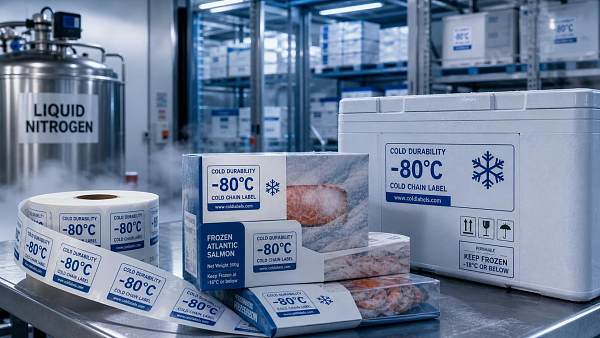
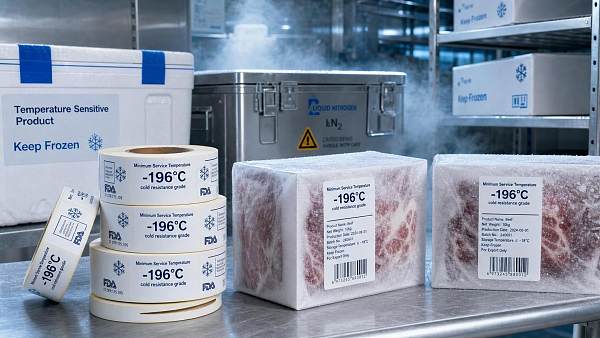
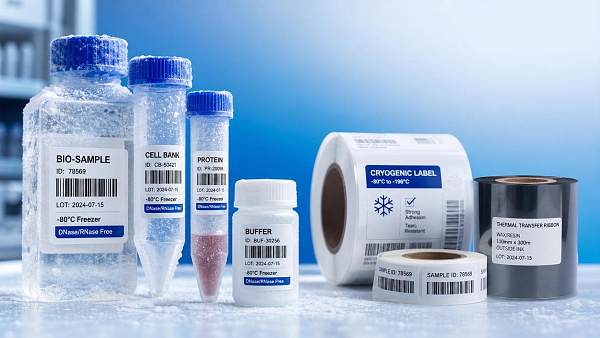
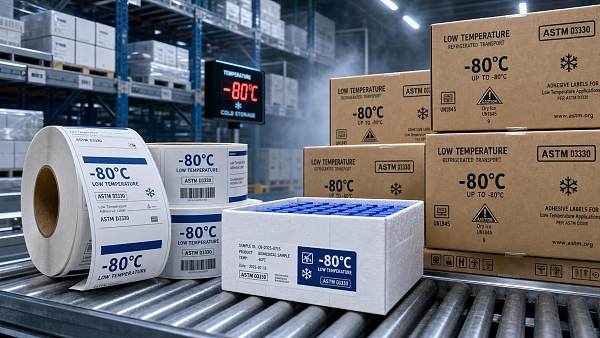
A label that works on a dry corrugated case at 4°C may fail completely on a frosted PET vial at -20°C. That gap explains why cold-chain labeling cannot be selected by datasheet alone.
Different Cold Environments Create Different Labeling Demands
The first useful judgment is not label type. It is the actual cold-chain labeling environment, including application temperature, storage temperature, condensation risk, substrate energy, and scan frequency.
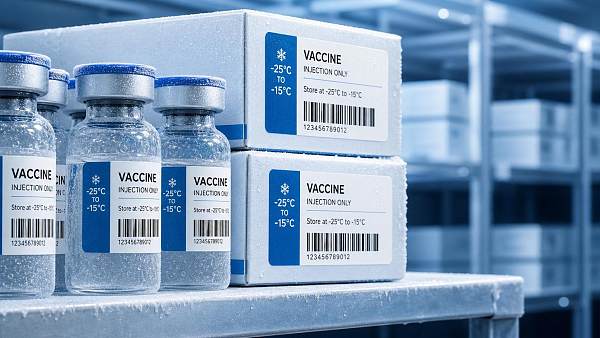
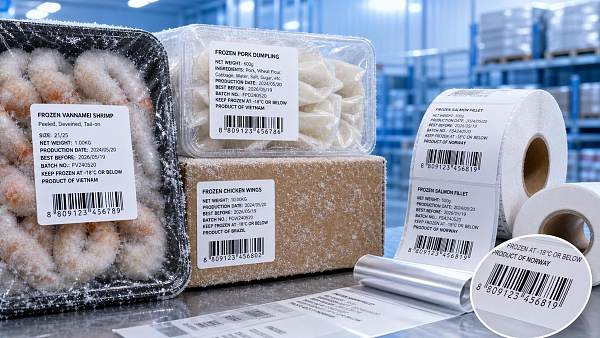
For example, vaccine cartons often prioritize reliable barcode readability after repeated handling. Frozen seafood cartons may care more about wet-surface adhesion after salt exposure and rough transport.
PPCS has long tracked this intersection of coating chemistry, adhesive behavior, and logistics stress. The lesson is consistent: labels fail when the material stack is not matched to the full route.
Where Cold-Chain Labeling Breaks Down Most Often
1. Applying labels below their real minimum application temperature
This is one of the most common cold-chain labeling failures. A label may be rated for frozen storage, yet still require a much warmer application window to build initial bond.
The fix is straightforward but often missed. Separate storage temperature from application temperature, and validate bond strength after the actual line dwell time, not only after 24 hours.
2. Choosing the wrong adhesive for moisture or frost
Cold-chain labeling on dry board is very different from labeling damp polymer trays or frosted vials. Acrylic systems may offer stability, but not every acrylic formula handles wet-out equally well.
In actual use, the better decision is based on the surface condition at application. If fogging, meltwater, or fine ice is present, test for immediate grab and edge lifting under real handling.
3. Ignoring substrate energy and surface texture
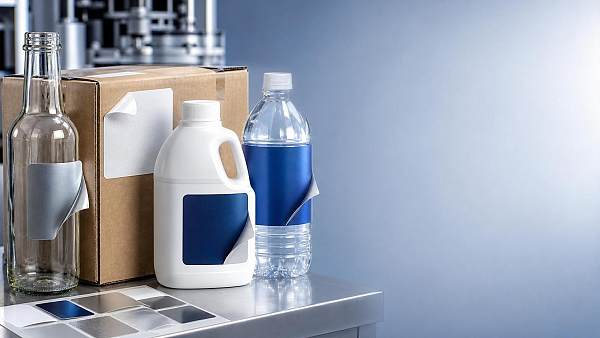
A label that performs well on corrugated fiberboard may struggle on HDPE totes, stretch-wrapped pallets, or slick BOPP overlaminates. Surface energy changes how the adhesive wets and anchors.
This matters in mixed packaging lines. Cold-chain labeling often moves across paper, PET, PE, and coated films in one workflow. The fix is a substrate-specific qualification matrix, not one universal label.
4. Using facestocks that turn brittle or curl in deep cold
Some failures are blamed on adhesive when the real issue is the facestock. Paper labels can absorb moisture and distort. Certain films lose flexibility and start lifting at edges or corners.
A better cold-chain labeling choice depends on handling style. Static cartons may accept one construction, while squeeze bottles, curved vials, or flexible pouches need higher conformability.
5. Poor ribbon and label compatibility
Barcode failure in cold-chain labeling is often a print system issue. The wrong thermal transfer ribbon can leave weak resin anchorage, low contrast, or smearing after condensation and abrasion.
PPCS follows this closely because ribbon chemistry is not secondary. In high-volume logistics, resin or mixed ribbons must be matched to topcoat chemistry, print speed, and scanner tolerance.
6. Underestimating transport stress after labeling
Cold-chain labeling may pass a freezer test and still fail in transit. Vibration, carton rubbing, shrink-wrap compression, and repeated loading can destroy edges or reduce scan reliability.
This is more common in export lanes and last-mile distribution. Labels should be checked after palletization, stretch wrapping, and unpacking, not only after they leave the labeling station.
7. Treating compliance labels like ordinary logistics labels
Some cold-chain labeling carries more than routing data. It may include expiry dates, serial numbers, anti-counterfeit elements, warning language, or evidence of tampering.
In those cases, failure is not just operational. It can affect product release, chain-of-custody records, or regulatory acceptance. The fix is to define which data must remain legible at each checkpoint.
The Same Failure Looks Different Across Real Workflows
Cold-chain labeling issues should be judged by route behavior, not only by laboratory claims. Similar temperatures can still produce different outcomes because moisture patterns and handling loads are different.
A meal-kit liner pack may move rapidly from packing room to doorstep. A biologic carton may stay stable in insulated storage but face strict scan verification at every handoff.
- Short-cycle chilled distribution usually needs fast initial tack and strong print contrast.
- Deep-freeze warehousing places more pressure on adhesive flexibility and facestock stability.
- Cross-border medical logistics often require durable variable data and stronger tamper visibility.
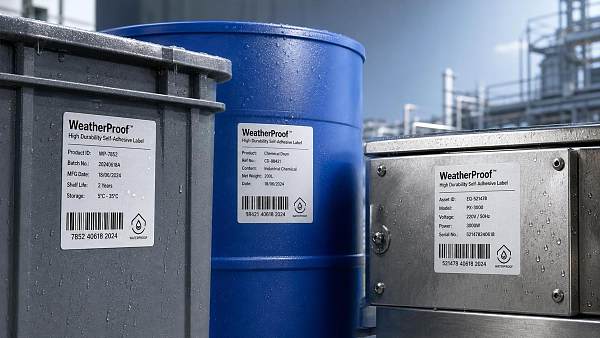
- Reusable crates and totes need better tolerance for residue, abrasion, and uneven surfaces.
That is why cold-chain labeling should be validated by route segment. One label may work in storage, then fail at receiving because the scanner sees moisture haze and damaged print edges.
Misjudgments That Keep Repeating in Cold-Chain Labeling Projects
A frequent mistake is selecting by unit price while ignoring replacement, relabeling, delayed release, and rejected shipment costs. In cold-chain labeling, a cheap label can create expensive traceability gaps.
Another common misread is assuming that one successful pilot equals route-wide stability. Seasonal humidity, substrate substitutions, and faster line speeds often change the result months later.
There is also a tendency to test labels on clean surfaces only. Real cold-chain labeling surfaces may carry release dust, condensation, oil traces, or frost films that sharply reduce adhesion.
Finally, some teams separate label selection from ribbon selection and scanner settings. In practice, those decisions are linked, especially where high-density data and cold abrasion resistance matter.
What a Better Cold-Chain Labeling Evaluation Looks Like
A practical evaluation framework is usually more useful than another generic specification sheet. The goal is to compare actual route conditions against the label construction as a system.
A More Reliable Next Step Is to Build Around the Route, Not the Label Alone
Cold-chain labeling becomes more reliable when the route is mapped first. That means documenting application temperature, substrate type, moisture state, transport stress, and scan checkpoints.
From there, compare at least two label constructions under the same route simulation. Include adhesive performance, facestock behavior, and ribbon compatibility in the same trial.
For operations dealing with anti-counterfeit labeling, high-barrier films, or durable thermal transfer systems, the stronger approach is integrated evaluation. The label must survive physically and communicate digitally.
That is where cold-chain labeling decisions become less reactive. Clear route data, realistic testing, and material-level matching usually prevent the failures that are hardest to fix once shipments are moving.
Recommended News
 Aug 20, 2026Which pressure sensitive adhesive materials for tapes hold up best in cold storagePressure sensitive adhesive materials for tapes: discover which acrylic, rubber, and low-temperature options perform best in cold storage to reduce seal failure and improve traceability.
 Aug 17, 2026How to choose cryogenic labels for laboratory samples that stay readable after freezingCryogenic labels for laboratory samples: learn how to choose labels that stay attached and readable after freezing, thaw cycles, wiping, and daily lab handling.
 Aug 14, 2026How to Evaluate Cold Chain Adhesive for Pharmaceuticals Under Freeze-Thaw ConditionsCold chain adhesive for pharmaceuticals: learn how to evaluate freeze-thaw performance, label durability, print readability, and real-world package compatibility before approval.
 Jul 10, 2026Korea Tightens Data Filing for Extreme-Temp AdhesivesKorea tightens data filing for extreme-temp adhesives: learn how MFDS’s new ASTM D4498-22 thermal-cycle report rule could reshape IVD, vaccine label compliance, lab scheduling, and Korea market entry.
 Jul 10, 2026High Tack Labeling Adhesives: Common Failure Causes and FixesHigh tack labeling adhesives can still fail from poor wet-out, temperature mismatch, contamination, or wrong construction. Discover common causes and practical fixes to improve label performance.
 Jul 10, 2026Cold Chain Labeling Materials for Vaccines: Key Risks Below -20CCold chain labeling materials for vaccines: discover the key risks below -20C, from adhesive failure to barcode loss, and learn how to choose safer, compliant labeling solutions.
 Jul 09, 2026FDA Adds Full-Range Testing for Extreme-Temp AdhesivesFDA Adds Full-Range Testing for Extreme-Temp Adhesives: learn how the 2026 FDA rule affects food-contact packaging, ASTM D429-24 compliance, and U.S. market access before Oct. 1.
 Jul 08, 2026FDA Adds Full-Range Testing to 21 CFR 175.105FDA Adds Full-Range Testing to 21 CFR 175.105: learn how new migration testing rules for food-contact adhesives may affect U.S. packaging compliance, sourcing, and documentation.
 Jul 08, 2026How to Compare Pressure Sensitive Adhesive Materials for Heat, Peel, and Surface FitPressure sensitive adhesive materials compared for heat resistance, peel control, and surface fit. Discover how to choose the right option for reliable packaging and labeling performance.
![]() Jul 07, 2026FDA Expands Food-Contact Adhesive TestsFDA Expands Food-Contact Adhesive Tests: learn how the 2026 FDA update changes extreme-temp adhesive compliance, migration reports, supplier reviews, and shipment planning before enforcement.
Jul 07, 2026FDA Expands Food-Contact Adhesive TestsFDA Expands Food-Contact Adhesive Tests: learn how the 2026 FDA update changes extreme-temp adhesive compliance, migration reports, supplier reviews, and shipment planning before enforcement.![]() Jul 07, 2026Cold-Chain Labeling Failures: 7 Causes and FixesCold-chain labeling failures often start before shipping. Discover 7 common causes, practical fixes, and smarter route-based strategies to improve adhesion, scan accuracy, and compliance.
Jul 07, 2026Cold-Chain Labeling Failures: 7 Causes and FixesCold-chain labeling failures often start before shipping. Discover 7 common causes, practical fixes, and smarter route-based strategies to improve adhesion, scan accuracy, and compliance. Jul 06, 2026How to Choose Waterproof Adhesive Labels That Last OutdoorsAdhesive Labels waterproof solutions for outdoor use: learn how to choose durable materials, adhesives, and print methods that resist rain, UV, and abrasion.
 Jul 05, 2026FDA Tightens Part 177 Testing for Cold-Chain Label AdhesivesFDA Tightens Part 177 Testing for Cold-Chain Label Adhesives: learn how new migration limits and third-party reports may impact compliance, costs, lead times, and U.S. export readiness.
 Jul 05, 2026Freezer Grade Adhesive Technology: Common Failure Causes and Fix StrategiesFreezer grade adhesive technology explained: uncover common cold-chain label failure causes, from frost and poor tack to print loss, and learn practical fix strategies to improve reliability.
 Jul 03, 2026FDA Rule Adds Cold-Resistance Grade for Frozen LabelsFDA Rule Adds Cold-Resistance Grade for Frozen Labels: learn how the new ASTM D3359 4B disclosure requirement affects frozen food labels, export documents, importer reviews, and cold-chain compliance before Oct. 1, 2026.
 Jul 02, 2026FDA Requires Cold-Resistance Labeling for Extreme-Temp Adhesive LabelsFDA Requires Cold-Resistance Labeling for Extreme-Temp Adhesive Labels: learn how the 2026 FDA rule affects food packaging, cold-chain compliance, supplier documentation, and labeling decisions.
 Jul 01, 2026FDA Tightens Low-Temperature Labeling for Food AdhesivesFDA tightens low-temperature labeling for food adhesives, requiring minimum service temperature and tested cold-resistance grades. Learn what it means for suppliers, exporters, and U.S. food chain compliance.
 Jul 01, 2026Extreme-Temp Adhesives for Cryogenic Labels: Failure Causes and FixesExtreme-temp adhesives for cryogenic labels: learn the real failure causes—embrittlement, condensation, substrate mismatch, and print breakdown—and discover practical fixes for reliable cold-chain labeling.
 Jun 30, 2026FDA Updates Food Label Adhesive Rules for Extreme ColdFDA updates food label adhesive rules for extreme cold: learn the new ASTM D3330 disclosure requirement, compliance deadline, and what exporters and cold-chain suppliers must do now.
 Jun 24, 2026Fix Label Lift at Speed: Choosing the Right High-Speed Labeling AdhesivesHigh-speed labeling adhesives are key to preventing label lift on fast lines. Learn how to match adhesive performance to substrates, cold storage, and packaging stress for reliable results.
 Jun 22, 2026High-Speed Labeling Adhesives: How to Reduce Lift, Ooze, and DowntimeHigh-speed labeling adhesives: learn how to reduce label lift, adhesive ooze, and costly downtime with smarter material selection, setup checks, and surface-specific labeling strategies.
 Jun 19, 2026Industrial Adhesive Systems: How to Compare Heat, Bond, and Cure PerformanceIndustrial adhesive systems compared the smart way: evaluate heat resistance, bond strength, and cure performance together to reduce failure risk, improve packaging reliability, and choose with confidence.
 Jun 17, 2026How to Evaluate a Water-Based Acrylic Adhesives Manufacturer for Long-Term SupplyWater-based acrylic adhesives manufacturer selection affects quality, compliance, and cost. Learn how to compare suppliers for stable long-term supply and smarter sourcing.
 Jun 15, 2026RFID Smart Label Shipments Rise 38% as Southeast Asia Expands NFC AuthenticationRFID Smart Label shipments rise 38% as Southeast Asia accelerates NFC authentication. Explore market growth, tougher IP68 durability standards, and new opportunities for labels, adhesives, and packaging suppliers.