Search News
Industry Portal
Hot Articles
- How to verify FDA compliance for packaging inks used on food packagingPackaging inks FDA compliant? Learn how to verify food-contact safety through regulatory citations, migration testing, supplier declarations, and process controls.
- When do holographic foils add value to luxury goods packaging?Packaging materials for luxury goods gain impact with holographic foils that elevate shelf appeal, authenticity, and premium unboxing—learn when this finish delivers real value.
- Can nano encryption technology stop counterfeit labels from being copied?Nano encryption technology anti counterfeit labels combine physical security, tamper evidence, and serialization to make copying harder. Explore smarter protection.
Popular Tags
Stretch Wrap Films Cost Drivers in High-Volume Shipping
Time
Click Count
For high-volume logistics, stretch wrap films influence more than packaging spend. They affect freight stability, warehouse speed, damage rates, and the total economics of every pallet moved across supply chains.
That is why understanding stretch wrap films cost drivers matters. Price per roll tells only part of the story. Real cost comes from resin inputs, film design, machine settings, load profile, and containment performance.
In broad industrial distribution, the best decisions connect film specification with transport risk, automation level, and sustainability goals. This creates a clearer basis for reducing waste without weakening load protection.
Understanding the cost structure of stretch wrap films
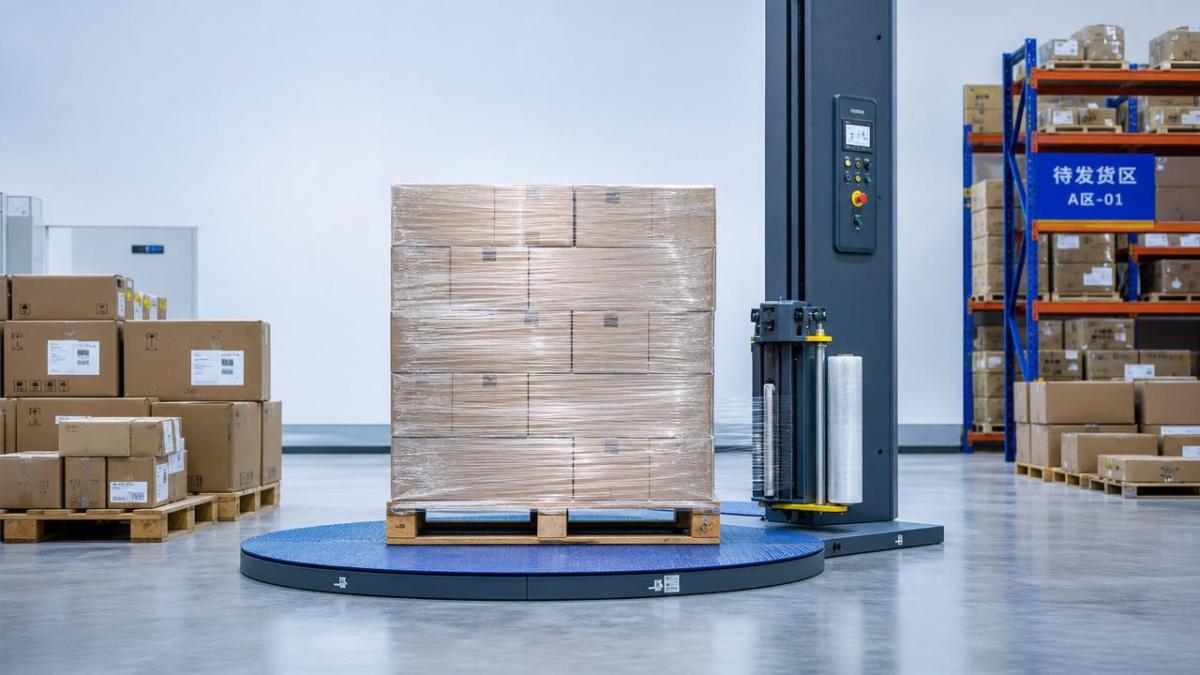
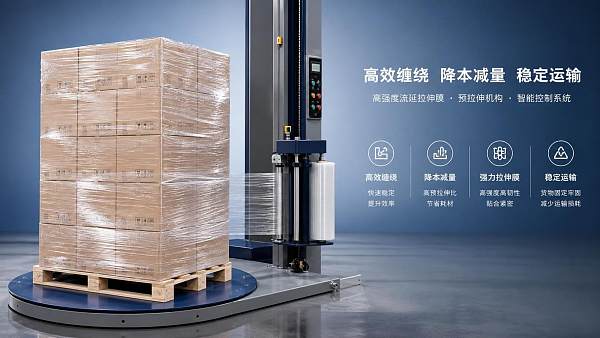
Stretch wrap films are highly extensible plastic films used to secure palletized goods. They create unitized loads by applying elastic tension around cartons, cases, drums, or irregular shipments.
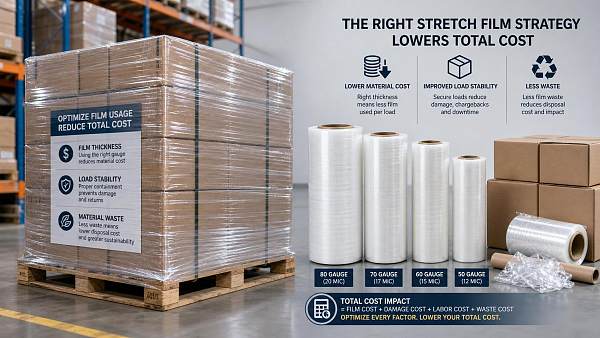
Their cost is shaped by both material value and performance value. A lower-priced film can increase total spend if it breaks often, requires more wraps, or fails during transport.
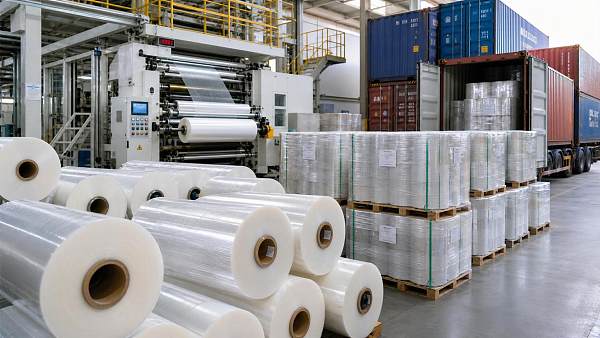
Most stretch wrap films are based on linear low-density polyethylene. Additives, multilayer structures, cling chemistry, and processing quality then determine stretch capability, puncture resistance, and load retention.
From a budgeting perspective, five elements usually define actual cost:
- resin and raw material pricing
- film gauge and downgauging potential
- machine or hand application efficiency
- load containment performance
- damage, rework, and freight disruption costs
This is why evaluating stretch wrap films by cost per pallet is usually more accurate than comparing cost per kilogram or cost per roll alone.
Market signals shaping stretch wrap films pricing
The market for stretch wrap films is influenced by petrochemical cycles, energy costs, freight conditions, and environmental regulation. These factors move together and can quickly change buying conditions.
Recent industry attention often centers on thinner films, stronger pre-stretch performance, and recyclable mono-material solutions. Those trends are pushing suppliers to balance lower material use with stable containment force.
For many operations, the biggest pricing opportunity is not waiting for resin declines. It is improving stretch wrap films utilization through specification discipline and tighter application control.
Key cost drivers in high-volume shipping environments
Resin composition and multilayer design
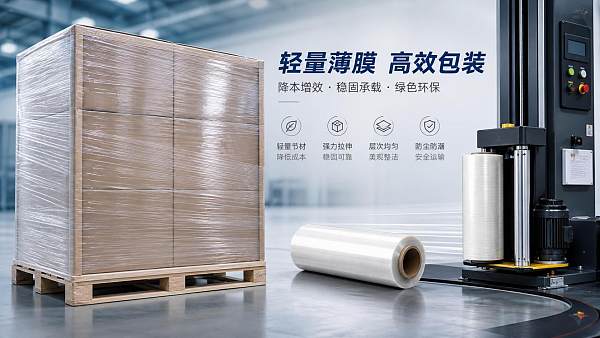
Advanced stretch wrap films may cost more upfront because they use engineered resins and multilayer cast structures. However, they often deliver better puncture resistance and higher usable stretch percentages.
That performance can reduce film consumption per pallet. In many shipping programs, fewer grams used with consistent containment produces a lower total packaging cost.
Gauge and downgauging strategy
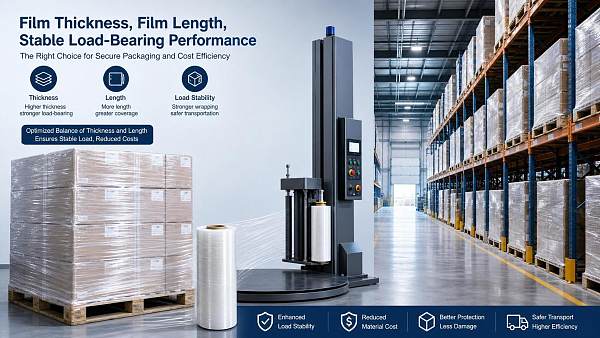
Gauge is one of the most visible cost variables. Thicker film seems safer, yet over-specified gauge often hides avoidable waste. High-performance stretch wrap films can replace heavier films in many stable load profiles.
Effective downgauging depends on testing, not assumption. Load weight, corner sharpness, trailer vibration, and stacking geometry all influence whether a thinner film will hold reliably.
Pre-stretch ratio and machine efficiency
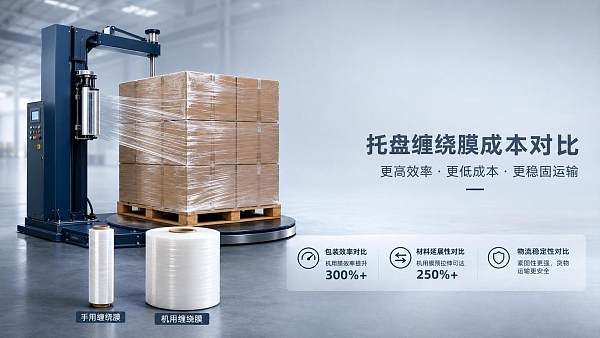
Machine-applied stretch wrap films usually offer the best cost control when pre-stretch systems are calibrated correctly. Poor settings waste film, weaken containment, and increase roll change frequency.
A film rated for high pre-stretch can look expensive on invoice. Yet it often lowers cost per load because it covers more pallets with less material.
Load containment versus failure cost
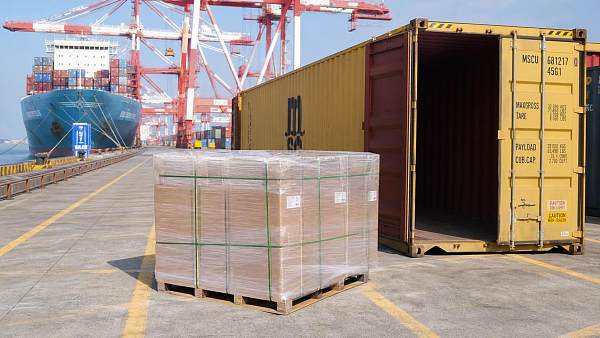
The cheapest stretch wrap films become expensive when loads shift, lean, or collapse. Product damage, claims, labor rewrap, delayed shipments, and customer penalties quickly exceed film savings.
For that reason, containment force should be measured as a cost driver, not just a technical metric. Stable wrapping directly protects freight economics.
Business value of optimized stretch wrap films selection
Well-selected stretch wrap films create value across operations. They reduce material usage, improve line throughput, lower film breaks, and support better pallet consistency during storage and transit.
In integrated packaging systems, this matters even more. Film performance affects barcode readability, label adhesion, pallet dimensions, warehouse automation flow, and the appearance of outbound goods.
For organizations working with broader consumables such as labels, barrier films, and thermal ribbons, stretch wrap films should be reviewed as part of a packaging performance ecosystem, not a single commodity line.
- less film used per shipment
- fewer product losses in transit
- better uptime on automated wrap lines
- stronger sustainability reporting outcomes
- more predictable annual logistics budgeting
Typical shipping scenarios and film requirement differences
Not all pallet loads need the same stretch wrap films. Matching film type to shipment profile is one of the fastest ways to improve cost efficiency.
This scenario-based view prevents generic buying. It helps align stretch wrap films with real operational stresses rather than historical habit.
Practical steps for reducing stretch wrap films total cost
A structured review usually reveals measurable savings. The most reliable path combines testing, data tracking, and machine discipline.
- Measure film use per pallet, not only roll price.
- Segment loads by weight, shape, and transport distance.
- Test downgauged stretch wrap films under real shipping conditions.
- Audit pre-stretch settings and containment force regularly.
- Track break rates, rewrap labor, and damage claims together.
- Review recyclability and packaging compliance requirements early.
It is also useful to compare annualized scenarios. A slightly higher-performing film may reduce total wrapped pallets, labor interruption, and damage events enough to justify a premium.
Where packaging intelligence is available, combine film data with broader consumables analysis. That approach can identify linked savings across labels, pallet presentation, automation, and outbound reliability.
A grounded next step for cost control
Stretch wrap films are not simply a consumable purchase. They are a controllable operating variable that affects material spend, freight protection, labor efficiency, and sustainability performance at the same time.
The most effective next step is a focused cost-per-pallet review. Compare current film gauge, applied wraps, pre-stretch level, break rate, and damage outcomes across representative shipping lanes.
That data will show whether current stretch wrap films are truly cost-efficient or only familiar. In high-volume shipping, evidence-based film selection often unlocks durable savings with lower operational risk.
Recommended News
 Aug 25, 2026When do high strength cast films outperform blown film in pallet wrapping?High strength cast films outperform blown film in pallet wrapping when pre-stretch efficiency, load stability, and downgauging matter most. Learn when they cut film use and boost uptime.
 Aug 21, 2026When do pre stretch films lower pallet wrap cost enough to switchPre stretch films can cut pallet wrap cost when they reduce film use, improve consistency, and maintain load containment. Learn when switching delivers real savings.
 Jul 24, 2026Packaging Stretch Films Price: Cost Drivers and Smart Buying BenchmarksPackaging stretch films price depends on more than roll cost. Learn key cost drivers, supplier benchmarks, and smart buying tips to reduce waste, downtime, and total pallet wrap spend.
 Jul 13, 2026Ocean Freight Eases for Stretch Wrap Film ExportsStretch Wrap Film exports gain momentum as ocean freight eases and RMB-USD stays stable. Discover how lower shipping costs can improve quotes, restocking timing, and Q3 delivery planning.
 Jul 12, 2026Ocean Freight Spike Adds USD 860 per FEU for Stretch Wrap FilmsStretch Wrap Films face a USD 860 per FEU ocean freight spike on Asia-North Europe routes. See how exporters, EU buyers, and logistics teams can respond fast to rising costs.
 Jul 11, 2026Vietnam Adds Eco Surcharge on Stretch Wrap Film ImportsVietnam Adds Eco Surcharge on Stretch Wrap Film Imports: learn how the new Vietnam import rule may raise costs, affect classification, and reshape pricing, sourcing, and customs planning.
 Jul 09, 2026SKC optical PET cut extends wrap film lead timesSKC optical PET cut extends wrap film lead times, pushing China stretch wrap film exports to 10 weeks. Learn the Q3 supply-chain impact, buyer risks, and smart procurement actions now.
 Jul 08, 2026SKC PET Film Cut Extends China Wrap Lead TimesStretch Wrap Films lead times in China have extended from 6 to 10 weeks after SKC PET film cuts. Learn the supply impact, suspended 12 μm orders, and key procurement risks.
 Jul 06, 2026CPSC Sets ASTM F3209-26 Test for Stretch Wrap FilmsCPSC sets ASTM F3209-26 test for stretch wrap films, making toy and infant packaging compliance critical before Dec. 1, 2026. Learn key exporter actions and risks now.
 Jul 04, 2026Stretch Wrap Film Freight Jumps 18% on Asia-Europe Capacity SqueezeStretch Wrap Film freight jumps 18% as Asia-Europe capacity tightens. Learn how Red Sea rerouting, surcharges, and booking delays may impact costs, delivery, and planning.
 Jun 29, 2026Packaging Stretch Films Wholesale: How Gauge, Yield, and Price Affect Total SpendPackaging stretch films wholesale decisions should go beyond roll price. Learn how gauge, yield, and load stability shape total spend and help buyers cut waste, claims, and cost per pallet.
 Jun 27, 2026Stretch Films Price Per Roll: Cost Drivers and Hidden Specification GapsStretch films price per roll explained: compare thickness, resin, roll length, and hidden spec gaps to avoid false savings and choose cost-efficient, reliable pallet wrapping.
 Jun 25, 2026Stretch Wrap Film Prices Firm as July Lead Times Reach 28 DaysStretch Wrap Film Prices firm as July lead times reach 28 days. See how rising FOB China quotes, tighter documentation, and supply-chain risks may impact buyers and distributors.
 Jun 23, 2026Stretch Wrap Films: Machine vs Hand Wrap Cost ComparisonStretch wrap films cost less only when you compare the right metrics. Discover how machine vs hand wrap affects labor, waste, load stability, and true cost per pallet.
 Jun 21, 2026Indonesia’s PPH Duty Pressures Stretch Wrap Film CostsIndonesia’s PPH duty pressures Stretch Wrap Film costs as an 18.01% anti-dumping ruling hits Chinese supply. See who faces 8–11% price hikes and how ASEAN buyers should respond.
 Jun 19, 2026Stretch Wrap Films Cost Breakdown: Film Gauge, Load Stability, and WasteStretch wrap films cost more than the roll price alone. Learn how film gauge, load stability, and waste affect total packaging cost, shipment protection, and smarter procurement decisions.
 Jun 18, 2026LDPE Price Surge Pushes 12μm Stretch Wrap OutputLDPE price surge is accelerating 12μm stretch wrap output as Asian resin costs jump 12% in one week. See how ultra-thin high-strength films help protect margins and export competitiveness.
 Jun 17, 2026LDPE Spike Pushes 12μm Stretch Film ShiftLDPE spike drives the 12μm stretch film shift, reshaping resin buying, lightweight packaging, and export compliance. See what procurement and suppliers should review now.
 Jun 17, 2026Polymer Cast-Stretching Films: How to Compare Load Stability and Material CostPolymer cast-stretching films compared: learn how to balance load stability, containment force, and true material cost to reduce damage, improve efficiency, and choose smarter packaging.
 Jun 16, 2026LDPE Spike Pushes 12μm Stretch Film OutputLDPE Spike Pushes 12μm Stretch Film Output as rising resin costs reshape packaging supply. Learn how thinner film, longer lead times, and sourcing risks may impact buyers and exporters.
 Jun 15, 2026LDPE Spike Pushes 12μm Stretch Wrap OutputLDPE spike reshapes Stretch Wrap Films strategy as 12μm output expands. Learn how rising resin costs, BOPP/PET substitution, and export delivery pressure are changing pricing and supply decisions.
 Jun 15, 2026Commodity Security Films vs Standard Wraps: What Changes Protection Performance?Commodity security films outperform standard wraps through better barrier control, tamper evidence, and stress resistance. Discover what really improves protection.
 Jun 14, 2026LDPE Price Spike Pushes 12μm Stretch Wrap OutputLDPE price spike pushes 12μm stretch wrap output as film makers race to cut costs. See how rising resin prices, mass production, and pallet savings are reshaping packaging decisions.
 Jun 13, 2026LDPE Spike Pushes 12μm Stretch Wrap Into FocusLDPE Spike Pushes 12μm Stretch Wrap Into Focus as rising Asian resin costs drive demand for ultra-thin film. Discover how 12μm solutions may cut packaging costs and improve sourcing decisions.