Search News
Industry Portal
Hot Articles
- EU PPWR Rule Takes Effect for BOPP Barrier FilmsEU PPWR rule now applies to BOPP barrier films entering the EU. Learn the new labeling, material ratio, and recyclability requirements to avoid customs delays and rising compliance costs.
- How to Choose Polyester Security Labeling Materials for Heat, Moisture, and Tamper ResistanceSecurity labeling materials polyester guide: learn how to choose PET labels for heat, moisture, and tamper resistance with practical checkpoints that reduce failure and improve performance.
- PPWR Rule Takes Effect for BOPP Barrier FilmsPPWR rule takes effect for BOPP barrier films in the EU from August 8, 2026. Learn how labeling, material ratio disclosure, customs compliance, and technical file updates may impact exports.
Popular Tags
Stretch Wrap Films: Machine vs Hand Wrap Cost Comparison
Time
Click Count
Stretch Wrap Films: where does the real cost difference start?
Stretch wrap films look simple on paper, yet the cost gap between machine wrapping and hand wrapping is rarely simple in daily operations.
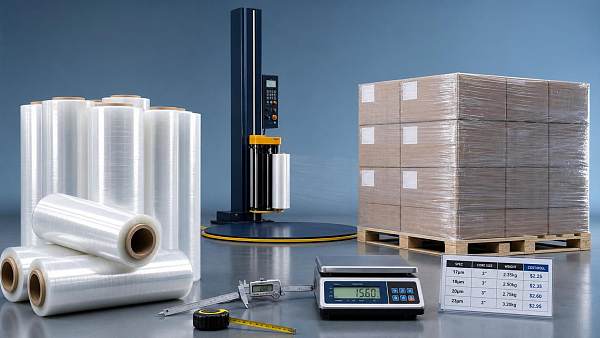
A lower roll price does not always mean a lower pallet cost. Film yield, stretch ratio, break frequency, labor minutes, and load consistency usually decide the final number.
That is why stretch wrap films are often reviewed together with throughput, pallet profile, and damage risk rather than as a stand-alone consumable.
In broader packaging intelligence work, PPCS often tracks this same pattern across films, labels, cushioning, and ribbons: the material cost matters, but process behavior matters more.
For pallet unitization, the practical question is not only machine versus hand wrap. It is which option gives the lowest stable cost per wrapped load.
Is machine wrap always cheaper than hand-applied stretch wrap films?
Not always at the beginning, but very often over time. The answer changes with pallet volume, labor rates, and how consistent the loads need to be.
Hand wrapping usually has the lower entry cost. There is no capital equipment, setup is quick, and it works for low daily pallet counts.
Machine wrapping usually wins when throughput rises. It uses film more efficiently, applies repeatable tension, and reduces the labor time tied to each pallet.
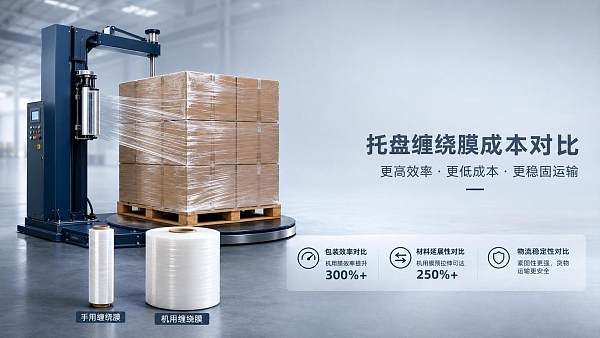
Pre-stretch is the biggest reason. A wrapping machine can stretch film far beyond what an operator can consistently achieve by hand.
That means one kilogram of machine-grade stretch wrap films can often secure more loads than a hand roll used under field conditions.
The more common mistake is comparing only roll prices. Machine film may look more expensive per roll, while costing less per pallet after actual usage is measured.
A quick comparison makes the gap easier to see
The table does not mean machine wrap is universal. It shows where cost usually moves once volume and consistency become important.
Which cost drivers matter more than film price?
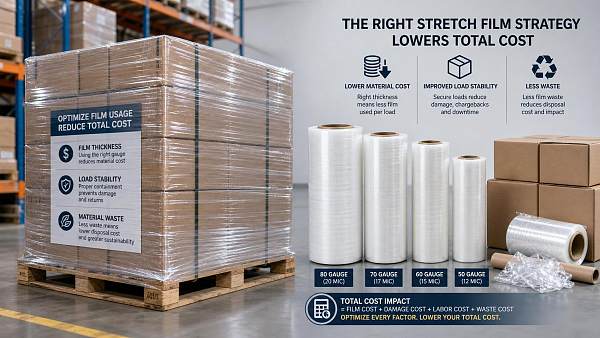
When comparing stretch wrap films, four drivers usually matter more than the invoice price of a roll.
- Film yield per pallet. Gauge, width, roll length, and usable stretch all affect how many loads each roll can cover.
- Labor consumption. Hand wrapping adds walking time, bending, roll changes, and operator fatigue.
- Damage and rework. A poorly wrapped load may survive dispatch but fail during transit or unloading.
- Downtime and inconsistency. Film breaks, poor cling, and unstable tension create hidden operating losses.
In actual operations, the most expensive pallet is often not the one with the highest film usage. It is the one that collapses, gets rewrapped, or triggers a claim.
This is where material science starts to matter. Cast film behavior, puncture resistance, cling balance, and downgauging potential directly affect real cost.
PPCS follows these details across packaging categories because micro-level coating or film structure often changes macro-level logistics spending more than expected.
When does hand wrap still make financial sense?
Hand-applied stretch wrap films still make sense in several situations, especially where flexibility is more valuable than automation.
A common example is low daily pallet volume. If only a small number of loads are wrapped, machine payback may be too slow.
Another case is highly irregular loads. Mixed-height pallets, oversized items, or temporary packing areas can reduce the efficiency of standard wrapping equipment.
Hand wrap can also be useful as a backup method. When the line is down or peak season creates overflow, manual wrapping protects outbound flow.
Still, hand wrapping only stays economical if usage is controlled. Without basic wrap standards, material consumption can rise quickly.
Signs that hand wrap is still acceptable
- Pallet volume is low and uneven by day or shift.
- Floor layout changes often.
- Loads are too varied for a fixed wrap program.
- Capital budget is limited in the short term.
- A backup wrapping method is required for continuity.
Even then, it helps to define target wraps per load, approved gauges, and acceptable film stretch behavior. Otherwise cost drift becomes hard to notice.
At what volume do machine stretch wrap films usually pay back?
There is no single threshold, but the payback point often appears sooner than expected once labor and waste are included.
Many operations start by asking how many pallets per day justify a machine. A better question is how much wrapping cost exists per year, including hidden losses.
If loads move through regular shifts, follow standard dimensions, and require repeatable containment, machine-grade stretch wrap films usually create a clearer savings path.
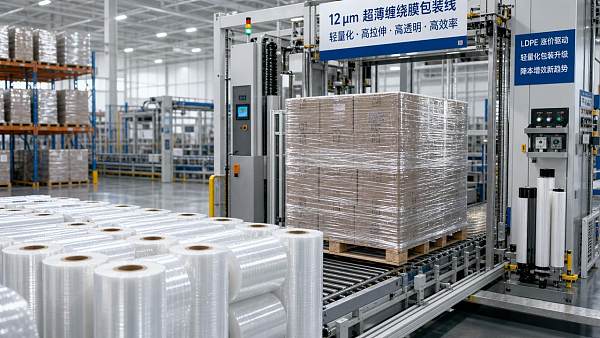
This becomes even stronger when ultra-thin films can replace heavier hand rolls without reducing stability. That downgauging effect often changes the economics.
Specialists in packaging intelligence have highlighted cases where 12-micron optimized films save substantial annual spend when matched with the correct machine settings.
A practical payback checklist
This kind of checklist prevents one common error: delaying a machine decision because the equipment cost is visible, while current inefficiency stays hidden.
What mistakes distort a machine vs hand wrap cost comparison?
Several mistakes make stretch wrap films look cheaper or more expensive than they really are.
- Comparing rolls by unit price only, without measuring cost per pallet.
- Ignoring prestretch capability and assuming all film gauges perform the same way.
- Using one month of film purchases as the full cost model.
- Leaving out labor fatigue, injury exposure, and inconsistent wrap quality.
- Testing film on a poorly tuned machine and blaming the film alone.
Another overlooked issue is sustainability pressure. Thinner, better-engineered stretch wrap films can reduce plastic use, but only if the application method supports that design.
That matters more as packaging systems face recyclability targets, material reduction goals, and policy pressure such as PPWR in export-linked markets.
So the right comparison is not just machine versus hand. It is current total cost versus optimized total cost under future operating conditions.
How should the final decision be made?
A good decision usually comes from a short structured trial rather than a broad assumption.
Start by measuring current film use per pallet, wrap time, load failures, and monthly wrapped volume. Those numbers create a useful baseline.
Then compare hand and machine scenarios using the same load types. Include film gauge, roll yield, labor minutes, and containment performance after transport simulation if possible.
It also helps to ask whether the film supplier understands resin behavior, machine tuning, and downgauging strategy rather than only quoting a lower roll price.
That is where intelligence-led sourcing becomes useful. In packaging, durable savings often come from matching material physics with operational reality.
For most growing operations, machine stretch wrap films become the stronger long-term cost choice. For smaller or irregular flows, hand wrap may still be justified.
The next step is straightforward: document current wrapping cost per load, test both methods under realistic conditions, and decide based on delivered cost, not estimated roll price.
Recommended News
 Jul 24, 2026Packaging Stretch Films Price: Cost Drivers and Smart Buying BenchmarksPackaging stretch films price depends on more than roll cost. Learn key cost drivers, supplier benchmarks, and smart buying tips to reduce waste, downtime, and total pallet wrap spend.
 Jul 13, 2026Ocean Freight Eases for Stretch Wrap Film ExportsStretch Wrap Film exports gain momentum as ocean freight eases and RMB-USD stays stable. Discover how lower shipping costs can improve quotes, restocking timing, and Q3 delivery planning.
 Jul 12, 2026Ocean Freight Spike Adds USD 860 per FEU for Stretch Wrap FilmsStretch Wrap Films face a USD 860 per FEU ocean freight spike on Asia-North Europe routes. See how exporters, EU buyers, and logistics teams can respond fast to rising costs.
 Jul 11, 2026Vietnam Adds Eco Surcharge on Stretch Wrap Film ImportsVietnam Adds Eco Surcharge on Stretch Wrap Film Imports: learn how the new Vietnam import rule may raise costs, affect classification, and reshape pricing, sourcing, and customs planning.
 Jul 09, 2026SKC optical PET cut extends wrap film lead timesSKC optical PET cut extends wrap film lead times, pushing China stretch wrap film exports to 10 weeks. Learn the Q3 supply-chain impact, buyer risks, and smart procurement actions now.
 Jul 08, 2026SKC PET Film Cut Extends China Wrap Lead TimesStretch Wrap Films lead times in China have extended from 6 to 10 weeks after SKC PET film cuts. Learn the supply impact, suspended 12 μm orders, and key procurement risks.
 Jul 06, 2026CPSC Sets ASTM F3209-26 Test for Stretch Wrap FilmsCPSC sets ASTM F3209-26 test for stretch wrap films, making toy and infant packaging compliance critical before Dec. 1, 2026. Learn key exporter actions and risks now.
 Jul 04, 2026Stretch Wrap Film Freight Jumps 18% on Asia-Europe Capacity SqueezeStretch Wrap Film freight jumps 18% as Asia-Europe capacity tightens. Learn how Red Sea rerouting, surcharges, and booking delays may impact costs, delivery, and planning.
 Jun 29, 2026Packaging Stretch Films Wholesale: How Gauge, Yield, and Price Affect Total SpendPackaging stretch films wholesale decisions should go beyond roll price. Learn how gauge, yield, and load stability shape total spend and help buyers cut waste, claims, and cost per pallet.
 Jun 27, 2026Stretch Films Price Per Roll: Cost Drivers and Hidden Specification GapsStretch films price per roll explained: compare thickness, resin, roll length, and hidden spec gaps to avoid false savings and choose cost-efficient, reliable pallet wrapping.
 Jun 25, 2026Stretch Wrap Film Prices Firm as July Lead Times Reach 28 DaysStretch Wrap Film Prices firm as July lead times reach 28 days. See how rising FOB China quotes, tighter documentation, and supply-chain risks may impact buyers and distributors.
 Jun 23, 2026Stretch Wrap Films: Machine vs Hand Wrap Cost ComparisonStretch wrap films cost less only when you compare the right metrics. Discover how machine vs hand wrap affects labor, waste, load stability, and true cost per pallet.
 Jun 21, 2026Indonesia’s PPH Duty Pressures Stretch Wrap Film CostsIndonesia’s PPH duty pressures Stretch Wrap Film costs as an 18.01% anti-dumping ruling hits Chinese supply. See who faces 8–11% price hikes and how ASEAN buyers should respond.
 Jun 19, 2026Stretch Wrap Films Cost Breakdown: Film Gauge, Load Stability, and WasteStretch wrap films cost more than the roll price alone. Learn how film gauge, load stability, and waste affect total packaging cost, shipment protection, and smarter procurement decisions.
 Jun 18, 2026LDPE Price Surge Pushes 12μm Stretch Wrap OutputLDPE price surge is accelerating 12μm stretch wrap output as Asian resin costs jump 12% in one week. See how ultra-thin high-strength films help protect margins and export competitiveness.
 Jun 17, 2026LDPE Spike Pushes 12μm Stretch Film ShiftLDPE spike drives the 12μm stretch film shift, reshaping resin buying, lightweight packaging, and export compliance. See what procurement and suppliers should review now.
 Jun 17, 2026Polymer Cast-Stretching Films: How to Compare Load Stability and Material CostPolymer cast-stretching films compared: learn how to balance load stability, containment force, and true material cost to reduce damage, improve efficiency, and choose smarter packaging.
 Jun 16, 2026LDPE Spike Pushes 12μm Stretch Film OutputLDPE Spike Pushes 12μm Stretch Film Output as rising resin costs reshape packaging supply. Learn how thinner film, longer lead times, and sourcing risks may impact buyers and exporters.
 Jun 15, 2026LDPE Spike Pushes 12μm Stretch Wrap OutputLDPE spike reshapes Stretch Wrap Films strategy as 12μm output expands. Learn how rising resin costs, BOPP/PET substitution, and export delivery pressure are changing pricing and supply decisions.
 Jun 15, 2026Commodity Security Films vs Standard Wraps: What Changes Protection Performance?Commodity security films outperform standard wraps through better barrier control, tamper evidence, and stress resistance. Discover what really improves protection.
 Jun 14, 2026LDPE Price Spike Pushes 12μm Stretch Wrap OutputLDPE price spike pushes 12μm stretch wrap output as film makers race to cut costs. See how rising resin prices, mass production, and pallet savings are reshaping packaging decisions.
 Jun 13, 2026LDPE Spike Pushes 12μm Stretch Wrap Into FocusLDPE Spike Pushes 12μm Stretch Wrap Into Focus as rising Asian resin costs drive demand for ultra-thin film. Discover how 12μm solutions may cut packaging costs and improve sourcing decisions.
 Jun 12, 2026LDPE Price Spike Speeds Shift to 12μm Stretch FilmsLDPE price spike is accelerating the shift to 12μm stretch films as manufacturers cut material use, protect export contract pricing, and maintain high-strength performance under rising resin costs.
 Jun 11, 2026LDPE Spike Pushes 12μm Stretch Film ExportsLDPE Spike Pushes 12μm Stretch Film Exports as rising resin costs drive exporters toward lighter, high-strength wrap. Explore cost savings, EU rebate relevance, and global tender impacts.