Search News
Industry Portal
Hot Articles
- How to verify FDA compliance for packaging inks used on food packagingPackaging inks FDA compliant? Learn how to verify food-contact safety through regulatory citations, migration testing, supplier declarations, and process controls.
- When do holographic foils add value to luxury goods packaging?Packaging materials for luxury goods gain impact with holographic foils that elevate shelf appeal, authenticity, and premium unboxing—learn when this finish delivers real value.
- Can nano encryption technology stop counterfeit labels from being copied?Nano encryption technology anti counterfeit labels combine physical security, tamper evidence, and serialization to make copying harder. Explore smarter protection.
Popular Tags
LDPE Spike Raises Stretch Film Export Costs
Time
Click Count
On June 7, 2026, the stretch wrap film export market faced a clear execution signal from raw-material pricing and buyer-side specification acceptance. International LDPE quotations jumped to USD 1,620 per ton in the second week of June 2026 amid conflict in the Middle East, lifting average FOB costs for stretch wrap films by 8.3%. At the same time, written recognition from the procurement departments of UPS and DHL for 12μm ultra-thin pre-stretched film highlights that cost pressure is no longer only a pricing issue, but also a specification, procurement, and delivery issue for exporters, converters, and logistics-facing suppliers.
What has been confirmed in the market this week
The confirmed facts are limited but commercially significant. In the second week of June 2026, international LDPE prices rose to USD 1,620 per ton, representing a 12% week-on-week increase. Against that backdrop, the average FOB cost of stretch wrap film exports increased by 8.3%.
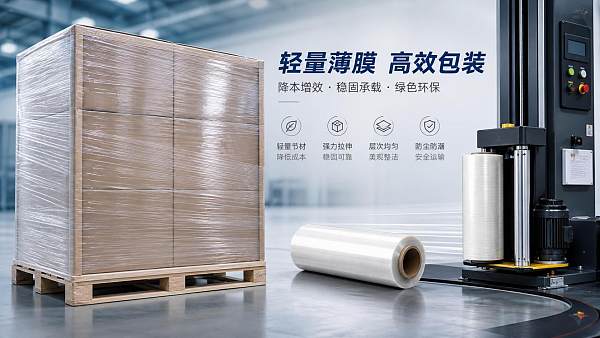
Leading manufacturers are accelerating the use of 12μm ultra-thin pre-stretched film to replace the traditional 23μm specification. The measured result cited in the event summary is a 37% reduction in material consumption per unit area. The same summary also confirms that this thinner specification has received written recognition from the logistics procurement departments of UPS and DHL.
Why procurement and trade execution are being affected
Export quotations now face tighter specification scrutiny
For export-oriented producers and trading companies, the immediate pressure is on quotation validity, margin control, and specification alignment. When raw-material costs move sharply within a week, buyers are more likely to review whether film thickness, pre-stretch performance, and supply terms still match the quoted FOB structure. From an industry perspective, what deserves closer attention is whether thinner-gauge substitution is reflected consistently in commercial offers, technical descriptions, and delivery commitments.
Raw-material buyers must watch cost pass-through discipline
For companies responsible for LDPE sourcing, the main impact is not only higher input cost, but also the speed at which procurement assumptions can become outdated. Analysis shows that a sharp weekly increase in LDPE pricing can force reassessment of purchasing windows, stock planning, and supplier discussions. In practice, procurement teams should pay closer attention to how raw-material changes affect export pricing formulas, internal approval thresholds, and order acceptance discipline.
Converters and manufacturers face a documentation issue, not just a production issue
For processing and manufacturing businesses, the shift from 23μm to 12μm is not simply a matter of reducing resin usage. Once a thinner specification is being advanced in export business, technical documents, product descriptions, and any buyer-facing compliance materials need to remain consistent with the actual film supplied. Observably, written recognition from major logistics procurement departments gives commercial support to this transition, but it does not automatically replace each buyer's own technical or quality review process.
Logistics-facing suppliers may see changes in buyer acceptance criteria
For supply-chain service providers and suppliers serving logistics customers, the event suggests that buyer evaluation may increasingly focus on performance-per-unit-material rather than on traditional thickness familiarity alone. This can affect tender responses, sample approval processes, and downstream delivery communication. What deserves closer attention is whether procurement teams begin to reference thinner pre-stretched alternatives more explicitly in technical requests or purchasing documentation.
What companies should monitor next in daily operations
Check whether technical files match thinner-gauge offers
Companies promoting 12μm ultra-thin pre-stretched film should review whether product specifications, test descriptions, sales sheets, and bid materials are aligned with the offered grade. This is especially important where customers compare traditional 23μm products with thinner alternatives during procurement review.
Track buyer-side wording and written acceptance carefully
The confirmed written recognition from UPS and DHL procurement departments is commercially relevant, but companies should avoid treating it as a universal market rule. Analysis shows that exporters should pay attention to the exact wording used in customer correspondence, procurement files, and approval documents, because acceptance in one procurement context does not by itself establish a general compliance standard for all transactions.
Reassess delivery planning under faster cost movement
With LDPE prices moving sharply in a short period, exporters and manufacturers should closely monitor how long quoted terms remain workable. In operational terms, this affects purchase scheduling, shipment planning, and customer communication around validity periods, substitution options, and delivery expectations.
Prepare for closer quality traceability discussions
Where thinner film is used as a cost-control response, companies should be ready for more questions around performance consistency, product identification, and after-sales traceability. Observably, this is less about a newly confirmed regulation and more about buyer-side execution discipline that may become stricter when cost pressure is high.
How this signal should be understood at this stage
Analysis shows that this development is better understood as a market execution signal with procurement and specification implications, rather than as a standalone regulatory change already formalized through a new public rule. The combination of a rapid LDPE increase, higher FOB export costs, and written buyer recognition of thinner pre-stretched film indicates that commercial practice may be shifting faster than formal rulemaking.
From an industry perspective, continued attention is warranted because the next meaningful changes may appear in tender language, buyer qualification standards, technical review criteria, and internal procurement policies rather than in a single headline announcement. That means companies should treat the current event as an operational warning sign, while still waiting for broader confirmation through repeated market adoption and clearer execution patterns.
What the event means for the market now
At this stage, the event points to a practical change in how stretch wrap film exporters may defend margins under raw-material volatility: not only through price revision, but through thinner-gauge product substitution that has already received written buyer recognition in at least part of the logistics procurement chain. That is commercially meaningful, but it should not yet be overstated as a fully settled industry rule.
It is more appropriate to understand this as a verified market development with direct implications for procurement, technical alignment, and export delivery decisions, while the broader execution standard still requires further observation.
Basis of this article and what still needs verification
This article is generated based on the user-provided news title, event date, and event summary. For events of this kind, relevant source types may typically include official announcements, regulator releases, customs or trade authority information, industry association updates, standards organization documents, and reporting by authoritative media.
No specific official source link was provided in the input, so further verification remains necessary. Areas that still require continued observation include any later policy wording, procurement execution criteria, certification or compliance interpretations, tender document changes, market feedback, and how enterprises implement thinner-gauge substitution in actual export business.
Recommended News
 Aug 25, 2026When do high strength cast films outperform blown film in pallet wrapping?High strength cast films outperform blown film in pallet wrapping when pre-stretch efficiency, load stability, and downgauging matter most. Learn when they cut film use and boost uptime.
 Aug 21, 2026When do pre stretch films lower pallet wrap cost enough to switchPre stretch films can cut pallet wrap cost when they reduce film use, improve consistency, and maintain load containment. Learn when switching delivers real savings.
 Jul 24, 2026Packaging Stretch Films Price: Cost Drivers and Smart Buying BenchmarksPackaging stretch films price depends on more than roll cost. Learn key cost drivers, supplier benchmarks, and smart buying tips to reduce waste, downtime, and total pallet wrap spend.
 Jul 13, 2026Ocean Freight Eases for Stretch Wrap Film ExportsStretch Wrap Film exports gain momentum as ocean freight eases and RMB-USD stays stable. Discover how lower shipping costs can improve quotes, restocking timing, and Q3 delivery planning.
 Jul 12, 2026Ocean Freight Spike Adds USD 860 per FEU for Stretch Wrap FilmsStretch Wrap Films face a USD 860 per FEU ocean freight spike on Asia-North Europe routes. See how exporters, EU buyers, and logistics teams can respond fast to rising costs.
 Jul 11, 2026Vietnam Adds Eco Surcharge on Stretch Wrap Film ImportsVietnam Adds Eco Surcharge on Stretch Wrap Film Imports: learn how the new Vietnam import rule may raise costs, affect classification, and reshape pricing, sourcing, and customs planning.
 Jul 09, 2026SKC optical PET cut extends wrap film lead timesSKC optical PET cut extends wrap film lead times, pushing China stretch wrap film exports to 10 weeks. Learn the Q3 supply-chain impact, buyer risks, and smart procurement actions now.
 Jul 08, 2026SKC PET Film Cut Extends China Wrap Lead TimesStretch Wrap Films lead times in China have extended from 6 to 10 weeks after SKC PET film cuts. Learn the supply impact, suspended 12 μm orders, and key procurement risks.
 Jul 06, 2026CPSC Sets ASTM F3209-26 Test for Stretch Wrap FilmsCPSC sets ASTM F3209-26 test for stretch wrap films, making toy and infant packaging compliance critical before Dec. 1, 2026. Learn key exporter actions and risks now.
 Jul 04, 2026Stretch Wrap Film Freight Jumps 18% on Asia-Europe Capacity SqueezeStretch Wrap Film freight jumps 18% as Asia-Europe capacity tightens. Learn how Red Sea rerouting, surcharges, and booking delays may impact costs, delivery, and planning.
 Jun 29, 2026Packaging Stretch Films Wholesale: How Gauge, Yield, and Price Affect Total SpendPackaging stretch films wholesale decisions should go beyond roll price. Learn how gauge, yield, and load stability shape total spend and help buyers cut waste, claims, and cost per pallet.
 Jun 27, 2026Stretch Films Price Per Roll: Cost Drivers and Hidden Specification GapsStretch films price per roll explained: compare thickness, resin, roll length, and hidden spec gaps to avoid false savings and choose cost-efficient, reliable pallet wrapping.
 Jun 25, 2026Stretch Wrap Film Prices Firm as July Lead Times Reach 28 DaysStretch Wrap Film Prices firm as July lead times reach 28 days. See how rising FOB China quotes, tighter documentation, and supply-chain risks may impact buyers and distributors.
 Jun 23, 2026Stretch Wrap Films: Machine vs Hand Wrap Cost ComparisonStretch wrap films cost less only when you compare the right metrics. Discover how machine vs hand wrap affects labor, waste, load stability, and true cost per pallet.
 Jun 21, 2026Indonesia’s PPH Duty Pressures Stretch Wrap Film CostsIndonesia’s PPH duty pressures Stretch Wrap Film costs as an 18.01% anti-dumping ruling hits Chinese supply. See who faces 8–11% price hikes and how ASEAN buyers should respond.
 Jun 19, 2026Stretch Wrap Films Cost Breakdown: Film Gauge, Load Stability, and WasteStretch wrap films cost more than the roll price alone. Learn how film gauge, load stability, and waste affect total packaging cost, shipment protection, and smarter procurement decisions.
 Jun 18, 2026LDPE Price Surge Pushes 12μm Stretch Wrap OutputLDPE price surge is accelerating 12μm stretch wrap output as Asian resin costs jump 12% in one week. See how ultra-thin high-strength films help protect margins and export competitiveness.
 Jun 17, 2026LDPE Spike Pushes 12μm Stretch Film ShiftLDPE spike drives the 12μm stretch film shift, reshaping resin buying, lightweight packaging, and export compliance. See what procurement and suppliers should review now.
 Jun 17, 2026Polymer Cast-Stretching Films: How to Compare Load Stability and Material CostPolymer cast-stretching films compared: learn how to balance load stability, containment force, and true material cost to reduce damage, improve efficiency, and choose smarter packaging.
 Jun 16, 2026LDPE Spike Pushes 12μm Stretch Film OutputLDPE Spike Pushes 12μm Stretch Film Output as rising resin costs reshape packaging supply. Learn how thinner film, longer lead times, and sourcing risks may impact buyers and exporters.
 Jun 15, 2026LDPE Spike Pushes 12μm Stretch Wrap OutputLDPE spike reshapes Stretch Wrap Films strategy as 12μm output expands. Learn how rising resin costs, BOPP/PET substitution, and export delivery pressure are changing pricing and supply decisions.
 Jun 15, 2026Commodity Security Films vs Standard Wraps: What Changes Protection Performance?Commodity security films outperform standard wraps through better barrier control, tamper evidence, and stress resistance. Discover what really improves protection.
 Jun 14, 2026LDPE Price Spike Pushes 12μm Stretch Wrap OutputLDPE price spike pushes 12μm stretch wrap output as film makers race to cut costs. See how rising resin prices, mass production, and pallet savings are reshaping packaging decisions.
 Jun 13, 2026LDPE Spike Pushes 12μm Stretch Wrap Into FocusLDPE Spike Pushes 12μm Stretch Wrap Into Focus as rising Asian resin costs drive demand for ultra-thin film. Discover how 12μm solutions may cut packaging costs and improve sourcing decisions.