Search News
Industry Portal
Hot Articles
- EU PPWR Rule Takes Effect for BOPP Barrier FilmsEU PPWR rule now reshapes BOPP barrier films in the EU market. Learn mandatory labeling, recyclability, traceability, and customs compliance risks before exports are delayed.
- Packaging Compliance in North America: Which Labels and Material Rules Matter Most?Packaging compliance North America explained: learn the label, bilingual, material, recyclability, and EPR rules that matter most to reduce risk and speed market access.
- EU PPWR Rules Now Apply to BOPP Barrier Film LabelsEU PPWR rules now apply to BOPP barrier film labels. Learn the new EU labeling, recyclability, and material disclosure requirements to avoid customs delays, fines, and compliance risks.
Popular Tags
Nano Anti-Counterfeit Coatings vs Traditional Security Layers
Time
Click Count
Nano Anti-Counterfeit Coatings vs Traditional Security Layers
As counterfeit risks become more complex, security choices are no longer a packaging detail.
They now influence compliance exposure, product trust, channel control, and long-term brand economics.
That is why nano anti-counterfeit coatings are drawing serious attention across pharmaceuticals, cosmetics, electronics, and premium food packaging.
Traditional security layers still matter, of course.
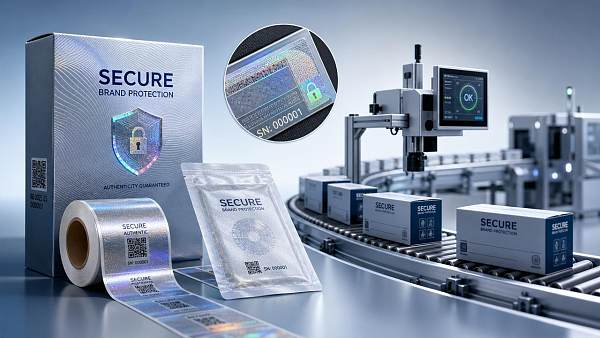
Holograms, tamper-evident labels, overprint varnishes, and layered foils remain widely used because they are familiar, scalable, and easier to source.
But counterfeiters have also learned to imitate familiar features with surprising speed.
In practical terms, the decision is not about chasing novelty.
It is about selecting the security architecture that matches product value, market exposure, and operational reality.
This comparison looks at nano anti-counterfeit coatings and traditional security layers through performance, cost, integration, and business impact.
What Makes Nano Anti-Counterfeit Coatings Different
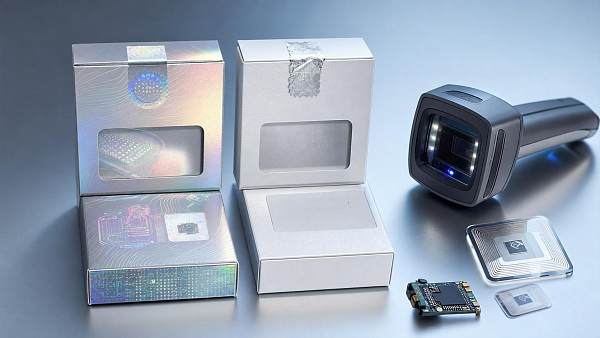
Nano anti-counterfeit coatings use microscopic or nanostructured materials to create authentication features that are difficult to detect and harder to copy.
These features may respond to light, heat, scanning devices, or specific reading angles.
Some systems rely on nano pigments.
Others use encoded optical effects, forensic markers, or covert chemical signatures embedded within thin coating layers.
The biggest difference is not just size.
It is complexity.
A strong nano anti-counterfeit coating can combine visible branding, hidden verification, and machine-readable traceability in one layer.
That combination is valuable in supply chains where manual checks alone are too slow or unreliable.
Traditional security layers usually depend on features that are easier to recognize visually.
Examples include holographic foils, destructible labels, microtext, guilloche patterns, and color-shifting inks.
These remain effective when paired with good enforcement.
However, many are now more vulnerable to reverse engineering than before.
Performance Comparison in Real Packaging Environments
On paper, both approaches can protect products.
In actual operations, performance depends on durability, readability, and compatibility with packaging lines.
Resistance to copying
Nano anti-counterfeit coatings usually outperform traditional security layers when copy resistance is the top concern.
Their covert structures are harder to identify, reproduce, and validate without specialized knowledge or tools.
Traditional layers still deter casual fraud.
They are less reliable against organized counterfeit networks with access to advanced printing and replication equipment.
Durability across logistics stress
Cold-chain handling, abrasion, UV exposure, and chemical contact can damage security layers.
A well-designed nano anti-counterfeit coating often integrates better with films, labels, or varnish systems.
That lowers the risk of delamination or visible wear.
Traditional security layers, especially added top layers, may face more mechanical stress at edges and corners.
Authentication speed
This area is more balanced.
Traditional security layers are often easier for frontline teams to inspect quickly.
A hologram or tamper label can be checked without any device.
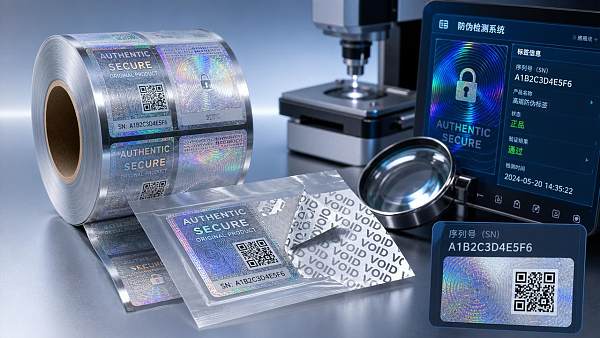
Nano anti-counterfeit coatings may require scanners, UV readers, or smartphone-linked apps for full authentication.
That improves accuracy, but it adds process requirements.
Cost, Scale, and Operational Trade-Offs
The best security choice is rarely the most advanced one.
It is the one that protects value without slowing commercial execution.
Nano anti-counterfeit coatings often carry higher development and qualification costs upfront.
Formulation testing, substrate matching, reader calibration, and supplier validation all take time.
That said, total cost should not be judged by unit coating price alone.
If a nano anti-counterfeit coating reduces diversion, chargebacks, recalls, or channel disputes, the business case can change quickly.
Traditional security layers typically win on simpler implementation.
They fit established printing and labeling workflows, and procurement teams understand the supply base better.
For high-volume, lower-margin products, that simplicity can be decisive.
A useful selection rule is to compare protection cost against counterfeit damage per shipment, not just per pack.
- Choose nano anti-counterfeit coatings when fraud loss is high and brand exposure is global.
- Choose traditional security layers when speed, familiarity, and lower implementation risk matter most.
- Use a hybrid model when visible deterrence and covert verification are both needed.
Where Each Option Fits Best
Application context often settles the debate faster than theory.
Best uses for nano anti-counterfeit coatings
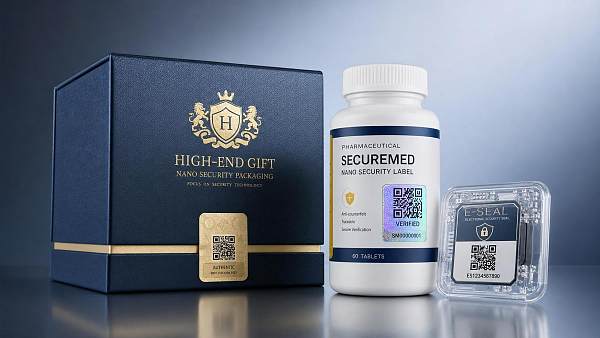
- Pharmaceutical packaging that requires covert authentication and compliance-ready traceability.
- Luxury goods facing organized grey-market diversion and premium brand imitation.
- Electronics labels exposed to heat, friction, and multi-country logistics handling.
- High-value cosmetics needing shelf appeal with hidden verification beneath decorative finishes.
Best uses for traditional security layers
- Mass retail packaging where visual tamper evidence is the primary need.
- Short product cycles where rapid sourcing and fast rollout are critical.
- Regional programs with limited scanning infrastructure in distribution networks.
- Budget-sensitive SKUs where counterfeit exposure is present but not severe.
From a market direction standpoint, more companies are moving toward layered security.
They use traditional security layers for instant visual trust, then add nano anti-counterfeit coatings for deeper verification.
Decision Framework for Security Layer Selection
A practical decision should start with risk mapping, not material preference.
- Measure counterfeit impact by revenue loss, recall risk, legal exposure, and channel disruption.
- Identify where authentication happens: factory, warehouse, customs, retail, or consumer level.
- Check substrate compatibility with films, labels, foils, inks, and existing converting processes.
- Review whether field teams have the devices and training needed for nano anti-counterfeit coatings.
- Test durability under actual storage, transport, and handling conditions before full rollout.
- Model return on protection, not only the added material or printing cost.
This is where many projects succeed or fail.
A technically impressive nano anti-counterfeit coating can still underperform if verification is too difficult in daily operations.
Likewise, a low-cost traditional layer can become expensive if it is copied within months.
Final Take: Which One Should You Choose?
If the goal is basic deterrence and simple rollout, traditional security layers still make sense.
They remain useful, visible, and operationally efficient.
If the goal is advanced protection against sophisticated fraud, nano anti-counterfeit coatings offer a stronger strategic position.
They are especially compelling where traceability, covert verification, and premium brand protection intersect.
For many enterprises, the smartest answer is not either-or.
It is a tiered system that combines visible deterrence with hidden authentication.
In the current packaging landscape, nano anti-counterfeit coatings are no longer an experimental add-on.
They are becoming a serious decision point in security design.
The next step is simple: validate the threat level, test both options on real substrates, and select the security model that protects both product integrity and commercial momentum.
Recommended News
 Jun 21, 2026Nano Encryption Technology vs Traditional Anti-Counterfeiting: What Actually ChangesNano encryption technology vs traditional anti-counterfeiting: discover how embedded, covert verification improves copy resistance, traceability, and brand protection across modern supply chains.
 Jun 20, 2026Nano Anti-Counterfeit Coatings vs Traditional Security LayersExplore how nano anti-counterfeit coatings compare with traditional security layers in cost, durability, authentication, and brand protection. Find the right fit for smarter packaging security.
 Jun 17, 2026How Nano Encryption Technology Reduces Counterfeit Risk in Premium PackagingNano encryption technology helps premium packaging fight counterfeits with covert protection, faster verification, and smarter material matching. See how to choose the right security layer.
 Jun 13, 2026Nano Encryption Technology in Packaging: Anti-Counterfeit Value and Adoption TrendsNano encryption technology is reshaping packaging security with covert authentication, traceability, and anti-counterfeit protection. Discover key adoption trends and business value.
 Jun 11, 2026Nano Anti-Counterfeit Coatings: How to Verify Security PerformanceNano anti-counterfeit coatings: learn how to verify security performance through stability, tamper, durability, and authentication testing before deployment.
 Jun 06, 2026Nano Anti-Counterfeit Coatings: 2026 Trends in Brand Protection and TraceabilityNano anti-counterfeit coatings are reshaping 2026 brand protection with covert authentication, stronger traceability, and smarter packaging security. Explore key trends and use cases.
 Jun 01, 2026Holographic Embossing: Security or Decoration?Holographic embossing can be more than decoration. Learn how to specify, inspect, and integrate it for security, brand protection, and reliable packaging performance.
 May 31, 2026Commodity Security Films: Key Risks Before Switching SuppliersCommodity security films supplier switch? Discover key risks in barrier performance, tamper evidence, compliance, cold-chain use, and total cost before you approve a new source.
 May 23, 2026Nano Anti-Counterfeit Coatings: What Actually Prevents CopyingNano anti-counterfeit coatings explained: learn which covert markers, optical structures, and verification systems truly prevent copying—and how to evaluate real business value.