Search News
Industry Portal
Hot Articles
- How to verify FDA compliance for packaging inks used on food packagingPackaging inks FDA compliant? Learn how to verify food-contact safety through regulatory citations, migration testing, supplier declarations, and process controls.
- When do holographic foils add value to luxury goods packaging?Packaging materials for luxury goods gain impact with holographic foils that elevate shelf appeal, authenticity, and premium unboxing—learn when this finish delivers real value.
- Can nano encryption technology stop counterfeit labels from being copied?Nano encryption technology anti counterfeit labels combine physical security, tamper evidence, and serialization to make copying harder. Explore smarter protection.
Popular Tags
Nano Anti-Counterfeit Coatings: What Actually Prevents Copying
Time
Click Count
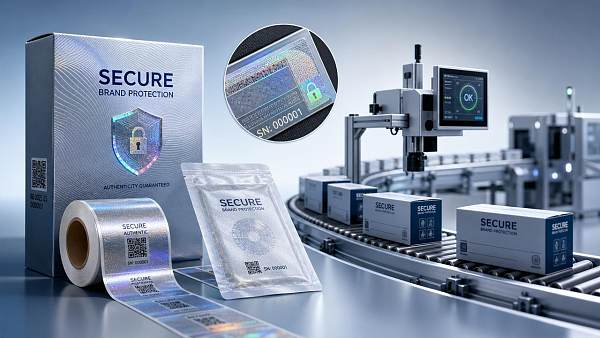
For business evaluators, nano anti-counterfeit coatings are more than a packaging upgrade—they are a measurable defense against imitation, diversion, and brand risk. But what truly prevents copying is not a single magic layer; it is the integration of covert markers, micro-structured optics, material chemistry, and verification systems. This article explains which technologies create real barriers to replication and how to assess their commercial value.
In print, packaging, and labeling, the key question is practical: which coating features raise the cost, time, and technical difficulty of unauthorized replication enough to protect commercial value? For sectors such as pharmaceuticals, premium consumer goods, electronics, logistics, and regulated exports, the answer often sits at the intersection of nano-engineered coatings, specialty adhesives, high-barrier films, and traceability workflows.
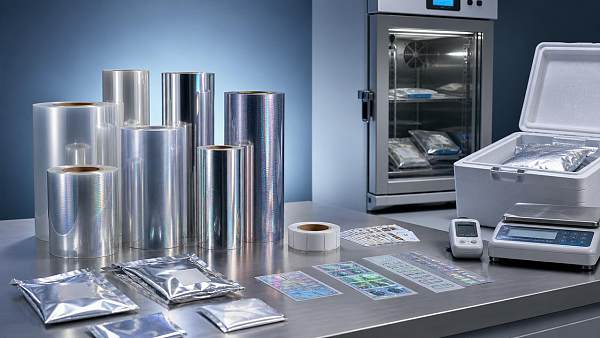
For PPCS-oriented buyers and evaluators, the decision is rarely about a decorative effect alone. It is about whether a coating can survive transport, humidity, abrasion, freeze-thaw cycles, and conversion on high-speed packaging lines running at 100–300 units per minute, while still supporting fast field verification and acceptable total cost of ownership.
What Nano Anti-Counterfeit Coatings Actually Do
Nano anti-counterfeit coatings do not stop copying simply because they are “nano.” They work because they combine at least 3 protective layers: difficult-to-reproduce material composition, difficult-to-detect embedded signals, and difficult-to-fake verification logic. A copied print effect without matching chemistry or verification data is only a visual imitation, not a successful counterfeit defense.
Four technical barriers that matter in real procurement
In commercial packaging, effective barriers usually come from four sources. First is particle or pigment engineering at nano or sub-micron scale, often below 500 nm. Second is optical structure, such as angle-shift, interference color, or micro-texture. Third is coating-process control, including layer thickness tolerances often held within ±1–3 microns. Fourth is the verification system, which may include handheld readers, smartphone checks, or linked batch databases.
- Covert markers invisible under normal lighting but detectable under UV, IR, or filtered optics
- Multi-layer interference effects that change appearance at 15°, 45°, and 90° viewing angles
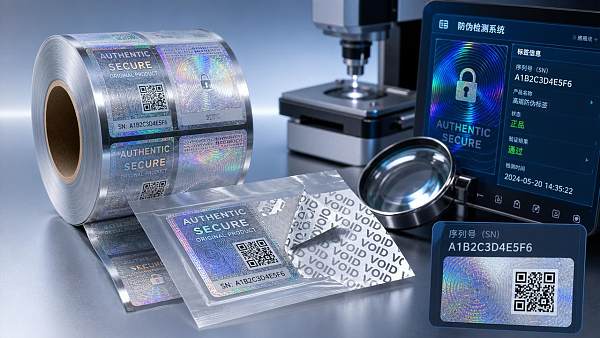
- Tamper evidence linked to adhesive failure patterns such as destructible facestock or VOID transfer
- Serialization or digital identity systems that validate the coated label against production records
Why simple visual complexity is not enough
Many brands still overvalue overt shine, holographic flair, or metallic reflection. Those features may improve shelf impact, but counterfeiters can sometimes approximate them with commodity foils or standard printing in 2–6 weeks. What they struggle to replicate is a coating whose optical effect depends on a controlled layer stack, embedded taggants, and a specific substrate-adhesive interaction.
This is especially relevant in BOPP, PET, and label constructions. A nano anti-counterfeit coating applied to a high-barrier PET label may perform very differently from the same chemistry on porous paper or biodegradable film. Evaluators therefore need to examine the whole laminate structure, not just the topcoat specification.
Which Technologies Create the Strongest Copy Barrier
The strongest copy barrier usually comes from combining 2 or more technologies rather than relying on one premium feature. Below is a practical comparison of commonly evaluated options in the print and packaging consumables market.
The table shows why nano anti-counterfeit coatings are rarely stand-alone products in successful programs. The highest-performing solutions usually combine covert chemistry with visible deterrence and a verification path. In commercial terms, that reduces both casual copying and organized substitution.
Covert markers: powerful when the supply chain can verify them
Covert markers can include fluorescent particles, spectral markers, rare-earth signatures, or dispersed additives detectable only under specific wavelengths. Their strength is discretion. A counterfeiter may not even know what to copy. Their weakness is operational: if inspectors, distributors, or brand teams cannot verify within 2–10 seconds, the feature may have limited field value.
Optical complexity: effective when tied to process control
Interference coatings, holographic overlays, and angle-shift surfaces can create a strong first-line screen. However, business evaluators should ask whether the optical behavior depends on controlled coating thickness, emboss depth, or metallization quality. If the appearance can be approximated by conventional foil transfer, the barrier is lower than it seems.
Tamper evidence: essential in pharmaceuticals and premium logistics
In many channels, diversion and relabeling create more damage than perfect counterfeiting. Destructible films, fiber-tear labels, and permanent VOID release systems can make package opening obvious. When combined with nano anti-counterfeit coatings, they support both authenticity and chain-of-custody protection across 5–7 logistics touchpoints.
How to Evaluate Commercial Value, Not Just Technical Novelty
A technically impressive coating is not automatically a good business decision. Evaluators should compare anti-copy strength against line compatibility, inspection practicality, sustainability pressure, and cost per protected unit. In many industries, a 15% stronger deterrent is not worth a 40% slowdown in packaging throughput.
Five procurement questions to ask suppliers
- What is the coating’s functional life under heat, humidity, friction, and light exposure for 6–24 months?
- Can the feature be verified inline, onsite, or remotely, and what equipment is required?
- What substrates are validated: BOPP, PET, paper, synthetic paper, mono-material recyclable films, or biodegradable structures?
- How does the coating perform with thermal transfer printing, hot stamping, lamination, and die cutting?
- What is the lead time for pilot, qualification, and commercial volume—typically 2 weeks, 4 weeks, or longer?
Cost should be measured per risk reduced
A coating premium of $0.003–$0.03 per label may appear small or large depending on product value and counterfeit exposure. For high-value cosmetics, medical devices, and specialty electronics, the decision should be modeled against recall risk, channel leakage, claim disputes, and re-inspection labor. For mass FMCG, the threshold may be much tighter, favoring layered but scalable features.
PPCS-aligned assessment also requires looking at adjacent consumables. A nano anti-counterfeit coating may fail commercially if the label adhesive loses tack below -20°C, if the thermal ribbon smears after 50 rub cycles, or if the barrier film causes poor topcoat anchorage during conversion.
Performance Criteria Across Packaging Materials and Supply Chains
Because anti-counterfeit performance depends on the full packaging structure, evaluators should review coating behavior across films, labels, inks, and handling conditions. The next table summarizes the most common decision points in packaging consumables procurement.
The most important conclusion is that anti-copy performance cannot be separated from logistics reality. A coating that performs well in lab samples but fails after cross-border handling, condensation, or ribbon overprint will not protect revenue in market conditions.
Material compatibility is often the hidden success factor
On high-barrier films, surface energy treatment and primer choice can determine whether a nano anti-counterfeit coating anchors properly. On anti-counterfeit labels, the balance between face stock, topcoat, adhesive, and release liner affects die cutting, peel behavior, and hidden feature exposure. For eco-friendly packaging, compostability or mono-material recycling targets may restrict certain additive systems.
Do not ignore print and conversion interactions
Thermal transfer ribbons, flexographic inks, varnishes, and hot/cold stamping layers can all alter the readability or stability of coated security features. A 3-layer security concept may become unreliable if one converter changes drying energy, press speed, or corona treatment level without validation.
Implementation Strategy for Business Evaluators
The best rollout strategy is phased. Most organizations should avoid nationwide or multi-market deployment before validating process stability and verification discipline. A 3-stage approach usually reduces cost and rework.
Stage 1: Risk mapping and feature selection
Identify where copying occurs: manufacturing substitution, distributor diversion, returns fraud, gray-market relabeling, or shelf-level imitation. Then match one visible feature, one covert feature, and one data check. This can usually be scoped in 1–2 weeks for a focused product line.
Stage 2: Pilot on actual packaging materials
Run pilots on the intended substrate and line conditions, not generic lab film. Include at least 4 test dimensions: adhesion, readability, tamper response, and transport durability. For labels, evaluate application speed, peel force, and post-application stability. For films and foils, check optical consistency lot to lot.
Stage 3: Verification workflow and supplier control
A good coating fails commercially if verification is weak. Define who checks authenticity, with what device, at which of the 3–5 supply chain checkpoints, and how exceptions are escalated. Also confirm supply protection: restricted formulation access, controlled batch coding, and documented change management for raw materials.
- Set acceptance criteria before ordering commercial volume
- Require retained sample comparison for each batch or campaign
- Document storage conditions and shelf life, often 6–12 months for coated materials
- Align anti-counterfeit goals with recyclability and compliance expectations
Common Misjudgments and How to Avoid Them
Mistaking premium appearance for secure authentication
Aesthetic effects attract attention, but they do not automatically stop counterfeiters. Security value rises when appearance is linked to a material signature or a validation step that cannot be reproduced with standard commercial equipment.
Choosing features that field teams cannot verify
If a distribution center or customs team needs a specialist tool, training, and 30 seconds per item, inspection rates will collapse. The practical benchmark is often under 10 seconds for suspicious units and near-instant screening for routine flows.
Overlooking sustainability and regulation
For exporters and brand owners, anti-counterfeit performance now sits beside recyclability, downgauging, and packaging compliance. Some coating systems may complicate mono-material recycling or conflict with eco-design goals. Evaluators should include compliance review early, especially for Europe-facing packaging programs.
The real power of nano anti-counterfeit coatings lies in system design, not marketing language. Covert markers, optical structures, adhesive behavior, and verification protocols must work together across films, labels, ribbons, and logistics conditions. For business evaluators, the strongest solution is usually the one that delivers a clear copy barrier, stable line performance, fast authentication, and manageable cost across the full packaging lifecycle.
If you are assessing anti-counterfeit labels, barrier films, thermal transfer compatibility, or tamper-evident packaging strategies, PPCS can help you compare technical routes and commercial trade-offs with greater precision. Contact us to discuss your application, request a tailored evaluation framework, or explore more packaging security solutions for global supply chains.
Recommended News
 Sep 12, 2026Can nano encryption technology stop counterfeit labels from being copied?Nano encryption technology anti counterfeit labels combine physical security, tamper evidence, and serialization to make copying harder. Explore smarter protection.
 Jun 21, 2026Nano Encryption Technology vs Traditional Anti-Counterfeiting: What Actually ChangesNano encryption technology vs traditional anti-counterfeiting: discover how embedded, covert verification improves copy resistance, traceability, and brand protection across modern supply chains.
 Jun 20, 2026Nano Anti-Counterfeit Coatings vs Traditional Security LayersExplore how nano anti-counterfeit coatings compare with traditional security layers in cost, durability, authentication, and brand protection. Find the right fit for smarter packaging security.
 Jun 17, 2026How Nano Encryption Technology Reduces Counterfeit Risk in Premium PackagingNano encryption technology helps premium packaging fight counterfeits with covert protection, faster verification, and smarter material matching. See how to choose the right security layer.
 Jun 13, 2026Nano Encryption Technology in Packaging: Anti-Counterfeit Value and Adoption TrendsNano encryption technology is reshaping packaging security with covert authentication, traceability, and anti-counterfeit protection. Discover key adoption trends and business value.
 Jun 11, 2026Nano Anti-Counterfeit Coatings: How to Verify Security PerformanceNano anti-counterfeit coatings: learn how to verify security performance through stability, tamper, durability, and authentication testing before deployment.
 Jun 06, 2026Nano Anti-Counterfeit Coatings: 2026 Trends in Brand Protection and TraceabilityNano anti-counterfeit coatings are reshaping 2026 brand protection with covert authentication, stronger traceability, and smarter packaging security. Explore key trends and use cases.
 Jun 01, 2026Holographic Embossing: Security or Decoration?Holographic embossing can be more than decoration. Learn how to specify, inspect, and integrate it for security, brand protection, and reliable packaging performance.
 May 31, 2026Commodity Security Films: Key Risks Before Switching SuppliersCommodity security films supplier switch? Discover key risks in barrier performance, tamper evidence, compliance, cold-chain use, and total cost before you approve a new source.
 May 23, 2026Nano Anti-Counterfeit Coatings: What Actually Prevents CopyingNano anti-counterfeit coatings explained: learn which covert markers, optical structures, and verification systems truly prevent copying—and how to evaluate real business value.